Uapesi Dwarf Cichlid Sao Gabriel — tropical fish for sale UK — AI hero driftwood view

Apistogramma uapesi

Uapesi Dwarf Cichlid Sao Gabriel (Apistogramma uapesi) — 3-3,5cm

Moderate Care
Semi-Aggressive
£51.99In Stock

A striking blackwater dwarf cichlid from São Gabriel, ideal for soft, acidic aquariums with peaceful tankmates. Moderate care, semi-aggressive. 23-29C, pH 4.0-6.0.

care:moderatediet:carnivorefamily:cichlidaeorigin:south-americasite:tropical-fish-cosize:smalltemperament:semi-aggressivetype:freshwater-fish

Care at a Glance

Scientific Name
Apistogramma uapesi
Adult Size
3 cm
Lifespan
5 years
Care Level
Moderate
Temperament
Semi-aggressive
Temperature
23–29°C
pH Range
4–6
Minimum Tank
40L
Diet
Carnivore

Water Parameters

Maintain these water conditions for optimal health and vibrant colors

Temperature
23–29°C
23°CIdeal Range29°C
pH Level
4–6
4Ideal Range6

Overview

The Uapesi Dwarf Cichlid Sao Gabriel (Apistogramma uapesi) is a captivating blackwater specialist that represents one of the most beautiful and sought-after dwarf cichlids from the Rio Negro basin. Native to the dark, acidic tributaries near São Gabriel da Cachoeira in Amazonas, Brazil, this rare species showcases extraordinary coloration with males displaying vivid patterns of red, blue, and yellow that intensify during breeding displays. Reaching a diminutive adult size of just 3cm, these tiny cichlids are ideally suited to smaller biotope aquariums where their intricate behaviors and stunning appearance can be appreciated at close range. The Sao Gabriel locality variant exhibits particularly refined coloration compared to other Apistogramma populations. For advanced aquarists seeking to maintain challenging blackwater species, A. uapesi available for sale UK-wide represents the pinnacle of dwarf cichlid keeping, requiring very soft, highly acidic water conditions that replicate their specialized Amazonian habitat.

Appearance and Distinctive Features

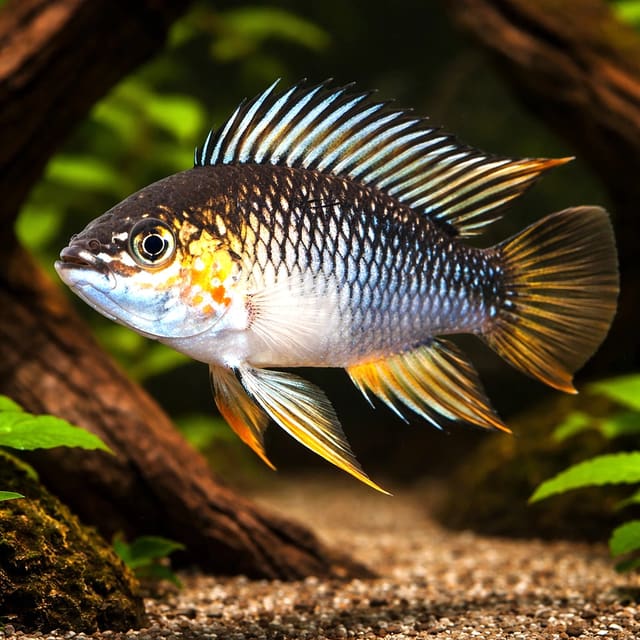
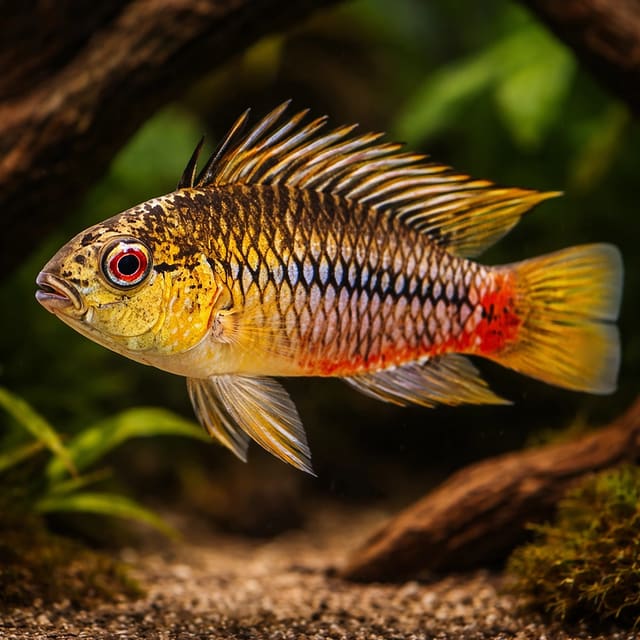
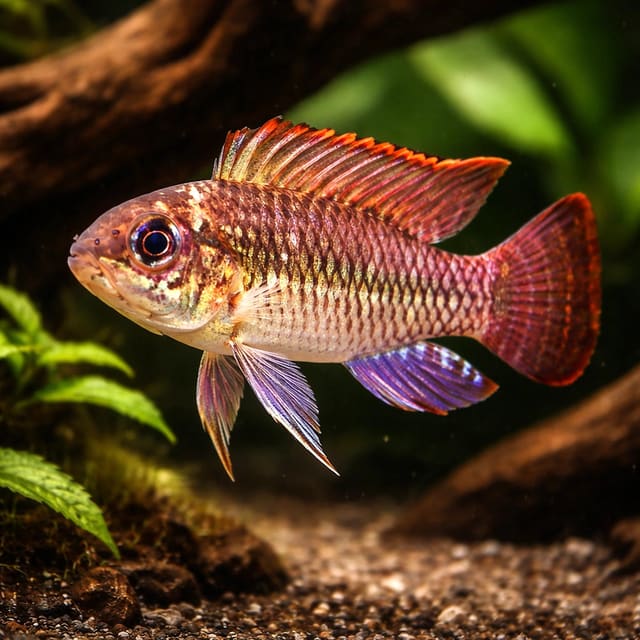
Male Apistogramma uapesi from the São Gabriel locality display breathtaking coloration that ranks among the most spectacular in the genus. The body features a base color of pale yellow-cream overlaid with iridescent blue-green spangling across the scales, whilst vibrant red-orange pigmentation concentrates in the facial region and ventral body. The dorsal fin develops dramatic elongated rays in mature males, displaying alternating bands of red, blue, and clear membranes. The caudal fin exhibits a distinctive rounded to slightly lyrate shape with red pigmentation and blue highlights. Females are substantially smaller and less colorful, showing brown-tan base coloration with a prominent dark lateral stripe and subtle yellow highlights that intensify dramatically during breeding. The species displays pronounced sexual dimorphism, with males developing extended finnage and much more intense coloration. Juveniles resemble subdued females until sexual differentiation occurs around 3-4 months. The exceptionally small adult size makes this one of the most diminutive Apistogramma species regularly maintained in aquariums.

Natural Habitat and Wild Behavior

In their native blackwater environment near São Gabriel da Cachoeira, Apistogramma uapesi inhabit extremely specialized conditions characterized by water chemistry at the acidic extreme of what tropical fish can tolerate. These shallow forest streams feature pH values often below 5.0, virtually no measurable hardness, and tea-dark staining from massive tannin concentrations. The substrate consists of fine sand and dense accumulations of decomposing leaf litter that create a complex three-dimensional habitat. Submerged root systems, fallen branches, and overhanging riparian vegetation provide shelter whilst creating the heavily shaded conditions these fish prefer. Wild populations feed on minute invertebrates including copepods, insect larvae, and microcrustaceans extracted from leaf litter crevices. Males establish territories centered on suitable cave structures, whilst females range more widely when not guarding broods. Water temperatures remain consistently warm year-round, with minimal seasonal variation. The extreme water parameters and pristine environmental conditions of their habitat make A. uapesi one of the more demanding dwarf cichlids to maintain successfully in captivity.

Water Parameters

  • Temperature: 23-29°C (26-28°C ideal)
  • pH: 4.0-6.0 (highly acidic essential)
  • Minimum Tank Size: 40 litres (pair)
  • Water Hardness: Extremely soft (0-2 dGH)
  • Filtration: Gentle flow, impeccable water quality

Aquarium Setup and Environmental Requirements

A minimum 40-litre aquarium provides adequate space for a breeding pair, with 60-80 litres recommended for community setups with compatible tankmates. The substrate must be fine sand that allows natural foraging without injury to sensory barbels. Incorporate abundant driftwood pieces, preferably Malaysian driftwood or mopani that release tannins naturally, arranged to create multiple cave structures using coconut shells, small terracotta pots, or leaf litter accumulations. Add substantial quantities of dried Indian almond leaves, oak leaves, or alder cones—both as decorative elements and continuous tannin sources that naturally acidify and soften water. Dense planting with shade-tolerant species including various Cryptocoryne, Anubias varieties, Java fern, and floating plants creates the heavily shaded environment these fish require. Lighting should be very subdued—consider using only ambient room light or heavily diffused aquarium lighting. Filtration must provide excellent biological capacity whilst creating minimal current—sponge filters or small canister filters with spray bar diffusion work well. Water preparation requires reverse osmosis water with minimal or no remineralization, supplemented with blackwater extracts or naturally through tannin-releasing botanicals. Maintaining extremely soft, highly acidic water is non-negotiable for this species' long-term health.

Feeding Requirements and Nutrition

As obligate carnivores, Uapesi Dwarf Cichlids require protein-rich diets emphasizing appropriately sized live and frozen foods. Their exceptionally small mouths necessitate correspondingly minute food particles—select the smallest available options. High-quality micro pellets formulated specifically for dwarf cichlids provide convenient supplemental nutrition but should not constitute the dietary foundation. Excellent primary foods include live or frozen daphnia, cyclops, newly hatched brine shrimp, microworms, grindal worms, and finely chopped bloodworms. White worms and mosquito larvae provide conditioning foods for breeding pairs. Feed twice daily in small portions they can consume within two minutes, adjusting quantities based on body condition and breeding activity. Conditioning breeding pairs requires increased live food offerings, particularly foods with high protein and lipid content. Their diminutive size means they have high metabolic rates relative to body mass, requiring frequent small feedings rather than infrequent large meals. Variety in food types ensures complete nutrition and optimal coloration development. These fish actively hunt small prey items, so live foods also provide behavioral enrichment that stimulates natural hunting instincts.

Behavior and Social Dynamics

Apistogramma uapesi males exhibit territorial behavior centered on selected caves, defending these areas against conspecific males and other bottom-dwelling fish. Despite their diminutive size, males display surprising assertiveness when establishing and maintaining territories. Aggression typically manifests through lateral displays, fin spreading, and color intensification rather than physical combat. Females range more freely throughout the aquarium when not spawning, though breeding females become intensely defensive of their caves and immediate surroundings. In appropriately sized aquariums with sufficient territories, one male can be maintained with multiple females in a harem arrangement. These substrate-oriented fish spend most time foraging through leaf litter, investigating caves, and resting on broad leaves or driftwood surfaces. They are noticeably shy compared to some Apistogramma species, often remaining hidden unless they feel secure. Spawning pairs demonstrate fascinating behavioral interactions including elaborate courtship displays where males exhibit exaggerated swimming movements and intense color displays. Their small size and peaceful nature toward upper-level fish make them excellent inhabitants for carefully planned blackwater community aquariums with compatible species that share their specialized water requirements.

Expert Tip

Use reverse osmosis water exclusively for water changes, as even small additions of harder tapwater can destabilize the very soft, acidic chemistry this species requires. Invest in a quality pH meter rather than relying on test strips, which lack accuracy at the low pH range necessary for A. uapesi.

Compatible Tank Mates

Suitable companions for Apistogramma uapesi must tolerate or prefer extremely soft, highly acidic blackwater conditions—this immediately eliminates most commonly available aquarium fish. Excellent choices include small blackwater tetras such as ember tetras, green neon tetras, Hyphessobrycon amandae, and various pencilfish species. Smaller Nannostomus pencilfish including N. marginatus or N. mortenthaleri make authentic biotope companions. Dwarf Corydoras species like C. pygmaeus, C. hastatus, or C. habrosus occupy similar bottom zones but generally coexist peacefully. Otocinclus catfish provide algae control whilst tolerating acidic conditions. Small peaceful surface dwellers including hatchetfish work in larger setups. Absolutely avoid any fin-nipping species, large aggressive fish, or active boisterous tankmates that would stress these shy cichlids. Other territorial dwarf cichlids should not be combined in aquariums under 80 litres due to competition for limited cave territories. Most commonly available community fish are incompatible due to differing water parameter requirements—select tankmates specifically adapted to extreme blackwater conditions. Shrimp may be consumed, though adult shrimp often coexist if adequate plant cover exists.

Breeding and Reproduction

Uapesi Dwarf Cichlids are cave spawners exhibiting classic Apistogramma maternal care patterns. Breeding requires extremely soft, very acidic water (pH 4.5-5.5 ideal), warm temperatures (27-29°C), and conditioning with abundant live foods for 2-3 weeks. The female selects and meticulously cleans a cave, typically choosing spaces with narrow openings she can defend effectively. She deposits 30-60 eggs on the cave ceiling or walls, with the male fertilizing them before being expelled from the immediate area. The female alone guards and tends the eggs, fanning constantly to maintain water circulation. Eggs hatch within 48-72 hours at 28°C, producing tiny larvae that remain attached to the cave surfaces via adhesive glands. After 5-7 days, the fry become free-swimming under close maternal supervision. Feed newly free-swimming fry infusoria or liquid fry foods initially, progressing within days to microworms, newly hatched brine shrimp (nauplii), and finely powdered prepared foods. The female continues intensive brood care for 2-3 weeks, aggressively defending fry against all tankmates. For best survival rates, remove the male or other tankmates that may pose predation threats. Separate rearing tanks for fry optimize survival and growth rates. Females may spawn every 3-4 weeks under optimal conditions, though allowing recovery periods between spawns promotes long-term health.

Health Care and Special Considerations

Maintaining extremely soft, highly acidic water with impeccable quality is absolutely critical for Apistogramma uapesi health—this species is highly sensitive to parameter deviations and water quality issues. Require very soft, acidic, low-mineral water maintained through reverse osmosis filtration and careful preparation—tapwater additions can prove fatal. Provide abundant cover using caves, driftwood, dense leaf litter, and heavy planting to reduce stress and support security needs. Males exhibit territoriality especially during breeding, so smaller aquariums should house only single males with one to three females. Regular partial water changes of 20-25% weekly using temperature-matched, parameter-matched water prevents stress from chemistry fluctuations. Monitor closely for disease as these small, sensitive fish succumb rapidly to infections—maintain quarantine protocols for new additions and practice excellent husbandry. Particularly sensitive to elevated nitrates—maintain below 10ppm through regular maintenance, appropriate stocking, and efficient biological filtration. Never use copper-based medications, which are toxic to these sensitive cichlids—treat diseases with formalin-based or natural remedies when possible. Their exceptionally small size and shy nature mean they are easily stressed by aggressive tankmates, excessive water movement, or bright lighting. This is an advanced species unsuitable for beginners—successful long-term maintenance requires commitment to specialized water chemistry management and patient, attentive care.

Why Buy from Tropical Fish Co

Tropical Fish Co is proud to offer rare, specialist South American dwarf cichlids including Apistogramma uapesi from the São Gabriel locality. Our specimens are sourced from reputable breeders and importers who maintain authentic blackwater conditions, ensuring fish arrive pre-acclimated to the extreme water parameters they require. Each specimen undergoes extended quarantine in very soft, acidic water with careful health monitoring, with only vigorously feeding, active fish offered for sale. We provide comprehensive detailed care guidance specific to this challenging species, including water chemistry preparation using reverse osmosis systems, cave placement recommendations, breeding protocols, and compatible tankmate selection for blackwater biotopes. Our expert team has extensive experience with demanding Apistogramma species and offers ongoing support for troubleshooting water chemistry challenges and breeding questions. We can recommend appropriate water conditioners, botanicals, and equipment for maintaining the specialized conditions this species requires. Secure packaging with insulated boxes, heat packs when needed, and minimal transport water ensures your dwarf cichlids arrive safely via next-day courier delivery anywhere in the UK. When you purchase from Tropical Fish Co, you're investing in premium rare cichlids backed by genuine expertise in advanced South American species and our commitment to your long-term success with these extraordinary dwarf cichlids.

Premium Quality

Healthy, vibrant fish from trusted suppliers

Expert Care

Detailed care guides and support

Live Arrival Guarantee

Your fish arrives healthy or we'll replace it

Acclimated

Properly quarantined and ready for your tank