
Advanced
Red Fin Tropheops (Tropheops sp.)
23–27°C · pH 8–8.6
£11.99

Territorial Lake Malawi mbuna for hard, alkaline rock aquariums. Best for 250L+ setups with vegetable-led feeding and robust cichlid tank mates.
Adult size is the maximum length this species reaches at full maturity (scientific sources). The livestock you receive will be younger and smaller — pick a size variant above for the actual shipping size. Product-photo provenance and any image-specific limitations are stated on the listing.
Tropheops tropheops
Red Fin Cichlid are a shoaling species — they need 6+ to feel safe and show their full colour.
Confirm your email, then we’ll send an availability message for this exact item if it returns within 180 days.
This request is only for this product—no newsletter or other promotions. A mail-provider retry may very rarely duplicate the same availability message. Unconfirmed addresses are removed after 48 hours. See our privacy policy.
Territorial Lake Malawi mbuna for hard, alkaline rock aquariums. Best for 250L+ setups with vegetable-led feeding and robust cichlid tank mates.
Adult size is the maximum length this species reaches at full maturity (scientific sources). The livestock you receive will be younger and smaller — pick a size variant above for the actual shipping size. Product-photo provenance and any image-specific limitations are stated on the listing.
23–27°C · pH 8–8.6
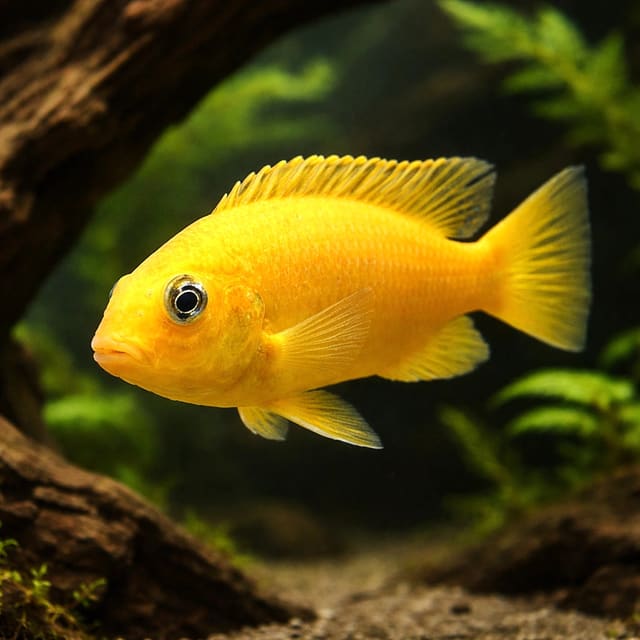
24–26°C · pH 7.5–8.5 · 400L
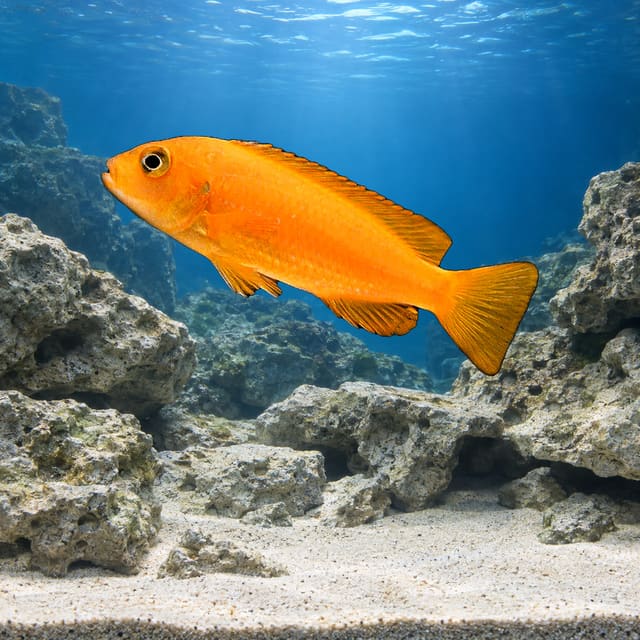
23–27°C · pH 7.4–8.4 · 150L
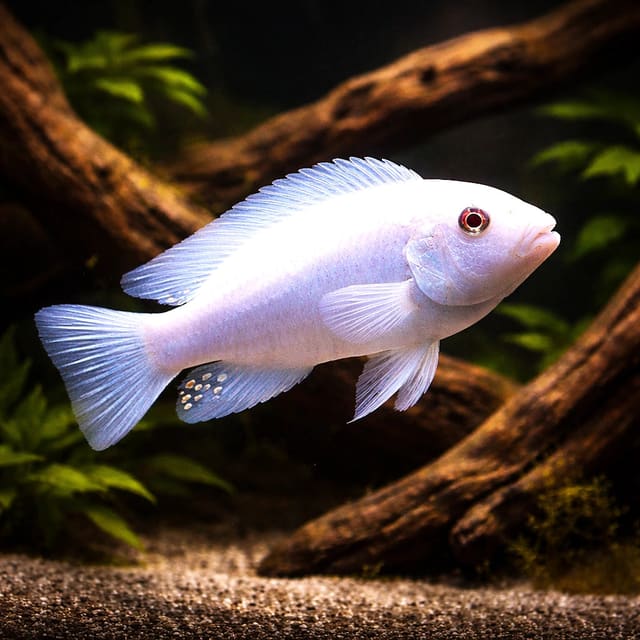
24–28°C · pH 7.6–8.8
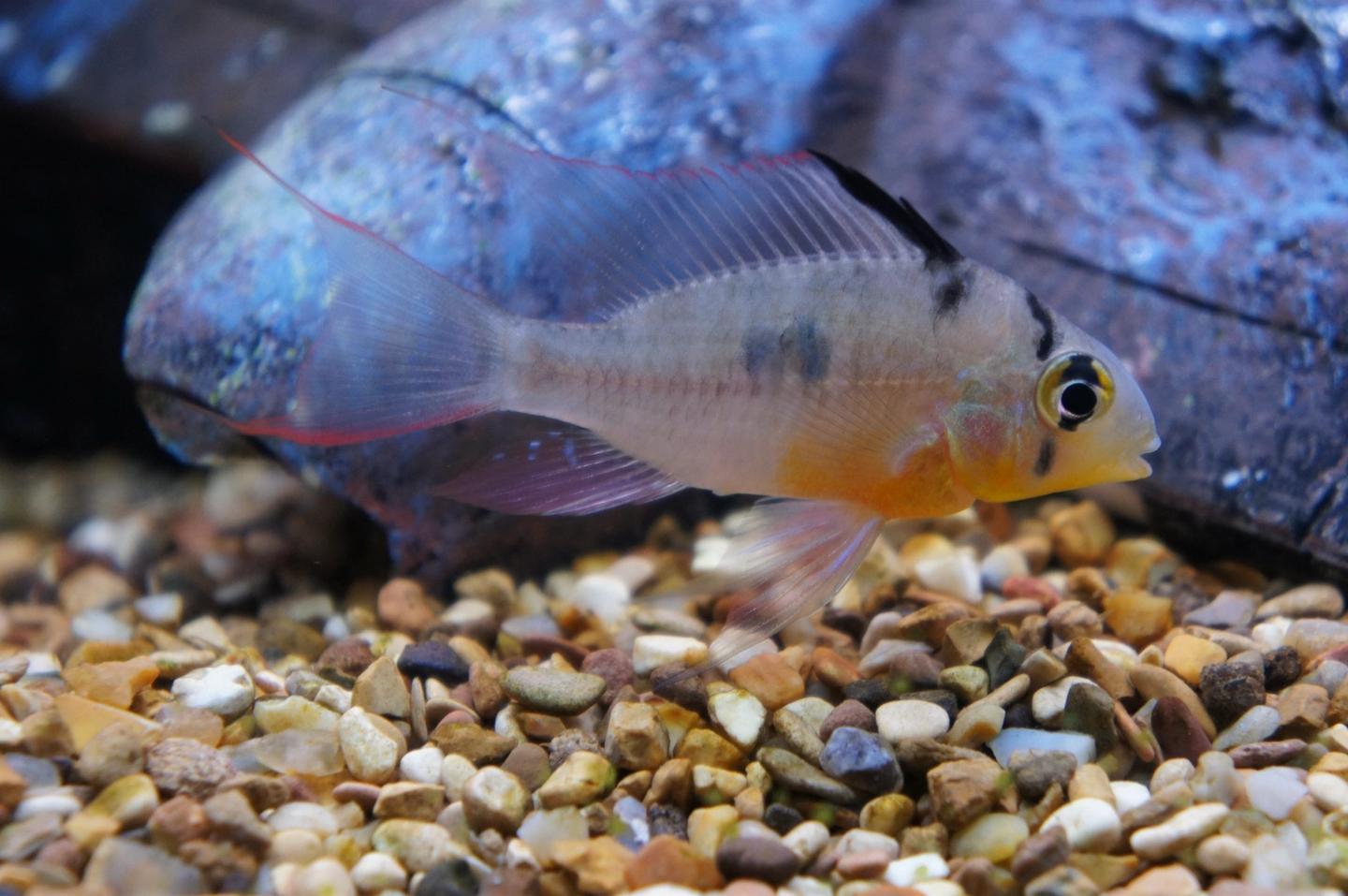
Cichlids are a family of roughly 1,800 accepted species, not one care type. Before buying, identify the exact species and source, then compare adult measurement, usable tank dimensions, social system, territory, tested water, diet and an exit plan. No family-wide minimum tank, water range or tank-mate list is safe.
Maintain these water conditions for optimal health and vibrant colors
Red Fin Cichlid (Tropheops tropheops) is a rock-dwelling Lake Malawi mbuna for aquarists who deliberately want an active, territorial African cichlid rather than a peaceful community fish. The common name refers to the warm red/orange fin colour seen in suitable individuals, while body colour and intensity can vary with sex, locality, age, hierarchy and condition.
This listing includes several supplied-size variants when stock is available. Choose the live size shown in the variant selector; that variant is the authority for the fish you are ordering. The listing does not guarantee sex or exact colour unless a variant explicitly says so.
Tropheops are specialised rocky-shore mbuna. Their body shape and feeding behaviour suit constant browsing over rock surfaces, and mature fish establish clear social territories. Red/orange fin colour can be strongest in settled dominant fish, but one product photograph cannot represent every individual or every stage of maturity.
Use the gallery to confirm the general body form and trade identity. Do not expect juveniles to display the same intensity as mature fish immediately after transport.
Keep Red Fin Cichlids in a mature Malawi aquarium with extensive stable rockwork, open feeding space and powerful biological filtration. Our house planning starts around 250 litres for a managed mbuna community, with a long footprint preferred. The correct final size depends on the number of fish, sex ratio, adult tank mates and how much usable territory the rock layout creates.
Build several separate rock piles and caves rather than one central structure controlled by a dominant fish. Break lines of sight from end to end. Use sand or fine gravel and place heavy rockwork securely so digging cannot destabilise it.
Use stable, mineral-rich alkaline water. A practical Malawi range is approximately 24–28°C and pH 7.5–8.5, with moderate to hard water. Do not chase pH with chemicals if the source water is already stable and suitable; test first and make gradual changes only when necessary.
Ammonia and nitrite should remain at zero. Because active mbuna can create a high bioload, strong filtration, good oxygenation and regular water changes are important.
Red Fin Cichlids should receive a diet that reflects their aufwuchs-grazing biology. Use a quality mbuna or herbivore-leaning African-cichlid pellet/flakes as the staple, with spirulina and other plant/algal ingredients forming a meaningful component.
Suitable invertebrate foods can be offered in moderation, but rich meaty foods should not dominate. Avoid routine feeding of mammalian meat or other fatty foods that have no place in a normal mbuna diet.
Feed modest portions across more than one area of the aquarium where necessary so subordinate fish are not excluded by one dominant individual.
This species is territorial. Aggression is influenced by sex, stocking, tank dimensions and visual structure, and the same fish can behave differently as it matures. Buying a pair is not automatically the safest arrangement, particularly if the male focuses all courtship or aggression on one female.
Many Malawi setups manage territorial species in carefully structured groups with more females than males, but that approach only works when sex can be identified and there is enough room. Juvenile variants should not be treated as guaranteed male or female fish.
Persistent cornering, torn fins, refusal to feed or one fish being kept away from all shelter are signs that the social structure needs intervention.
Choose robust Lake Malawi cichlids with compatible hard-water requirements and similar confidence. Avoid small peaceful fish, slow long-finned species and soft-water community fish. Mixing with gentler peacocks or haps requires substantial space and careful feeding because mbuna can be more aggressive and more herbivore-oriented.
Like many Malawi mbuna, Tropheops are maternal mouthbrooders. Courtship can intensify male territorial behaviour, and brooding females need places to retreat. Breeding is interesting natural behaviour, but the product should not be purchased as a guaranteed pair unless sex is specifically confirmed.
Choose Red Fin Cichlid if you are building a mature rocky Malawi aquarium with hard alkaline water and are prepared to manage territorial cichlid behaviour. Reconsider if the tank is newly cycled, very small, soft/acidic, or intended as a relaxed general community.
Use the live Shopify variant for current supplied size, price and availability. Fixed prices and generic search-query lists have been removed from the description so the page remains accurate when stock changes and stays focused on Tropheops tropheops.
Max adult size is the length this species reaches at full maturity (from scientific sources). The livestock you receive will be younger and smaller — pick a size variant on the buy box for the actual shipping size. Product-photo provenance and any image-specific limitations are stated on the listing.
Territorial rock-dwelling mbuna. Use heavy rockwork, broken sightlines and carefully matched tank mates.
Always research specific species before adding them to your tank. Consider:
No reviews for this item yet. Bought one? Honest reviews only, good or bad.
What customers say about ordering from us
I have a small group of long finned mountain minnows. So was delighted to be able to order ten of this variety to increase the genetics in my tank . The ones I recieved are healthy but it’s to early to give a verdict on wether they are of a long finned type since they are small currently.
Gordon Walker · 23 Sept 2026
100% success travel and "installation". Pleased with quality of purchase. The Siamese fighter a bit "shy" so have not yet seen him at his best yet but looking good. Happy customer. GG
George E Garratt · 21 Sept 2026
Reviews of our shop, collected by Judge.me, an independent third-party review collector. Newest first.
