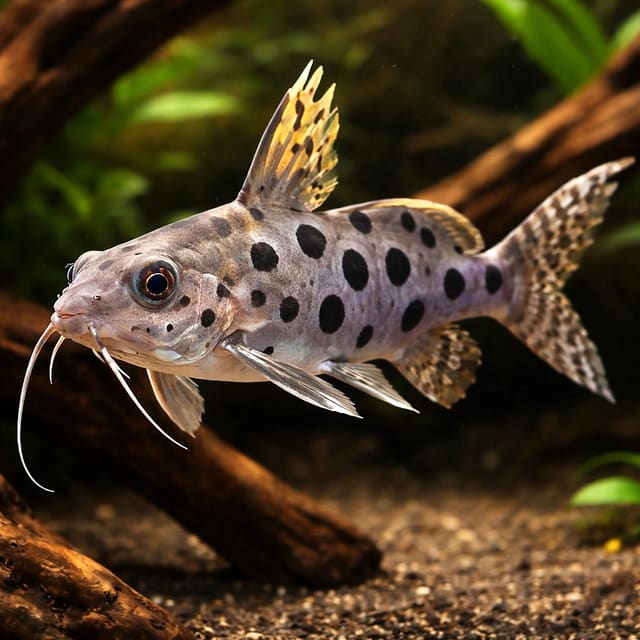
Featherfin Synodontis (Synodontis eupterus)
22–26°C · pH 6.2–7.5
£6.99

A striking Congo River catfish with bold personality, nocturnal habits, and a need for strong current and pristine water. Expert care, semi-aggressive. 24-28C, pH 6.5-7.8.
Adult size is the maximum length this species reaches at full maturity (scientific sources). The livestock you receive will be younger and smaller. Product-photo provenance and any image-specific limitations are stated on the listing.
Synodontis brichardi
Shoaling fish: kept in a group they feel safer, stay calmer and show their best colour.
Confirm your email, then we’ll send an availability message for this exact item if it returns within 180 days.
This request is only for this product—no newsletter or other promotions. A mail-provider retry may very rarely duplicate the same availability message. Unconfirmed addresses are removed after 48 hours. See our privacy policy.
A striking Congo River catfish with bold personality, nocturnal habits, and a need for strong current and pristine water. Expert care, semi-aggressive. 24-28C, pH 6.5-7.8.
Adult size is the maximum length this species reaches at full maturity (scientific sources). The livestock you receive will be younger and smaller. Product-photo provenance and any image-specific limitations are stated on the listing.
Maintain these water conditions for optimal health and vibrant colors
Synodontis brichardi, known as Brichard's Synodontis, is a striking Congo River catfish that brings bold personality and specialized care requirements to expert aquarists. Available for sale UK through Tropical Fish Co, this endemic species from the lower Congo River rapids reaches 4.5cm and demands pristine water quality with strong current to thrive. Its semi-aggressive temperament and expert-level care needs make it unsuitable for beginners, but experienced fishkeepers willing to meet its exacting requirements will be rewarded with a fascinating nocturnal catfish displaying authentic river-dwelling behaviour.
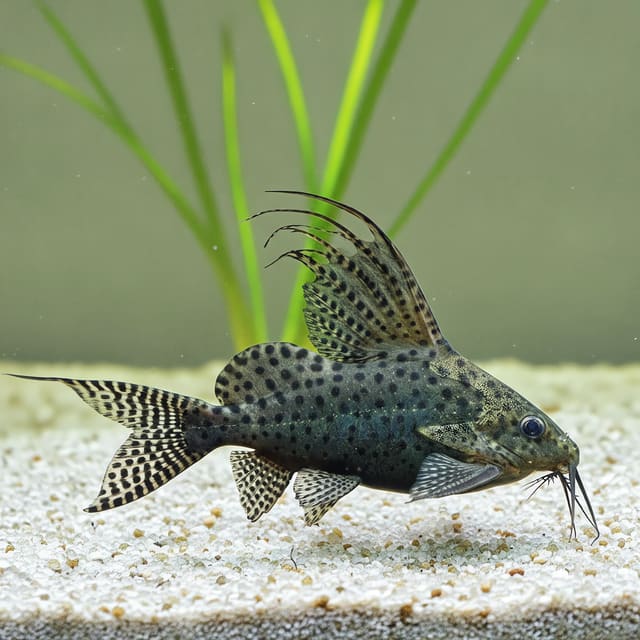
Synodontis brichardi displays compact, robust body structure with prominent humeral process and well-developed musculature adapted for life in fast-flowing rapids. The coloration typically shows dark brown to charcoal base with lighter ventral regions and variable spotting or marbling patterns that provide camouflage against rocky substrates. Three pairs of barbels extend from the mouth, with maxillary barbels being particularly prominent and heavily used for sensory investigation of crevices. The adipose fin is well-developed, whilst dorsal and pectoral fins feature sharp locking spines that produce audible sounds when manipulated. Males may develop more pronounced odontodes (tooth-like projections) on pectoral spines as they mature, though sexual dimorphism is otherwise subtle in this species.
This species is endemic to the lower Congo River rapids in the Democratic Republic of Congo—one of the most extreme freshwater environments on Earth. These rapids feature tremendous water flow, high oxygenation, and rock substrates worn smooth by constant current. Water is soft, slightly acidic to neutral, and exceptionally clean due to the flushing action of continuous flow. The riverbed consists of large boulders, bedrock, and gravel with numerous crevices providing shelter from the relentless current. Aquatic vegetation is virtually absent due to the violent water movement and unstable substrates. Fish in this environment have evolved specialized morphologies and behaviours to withstand forces that would sweep away typical aquarium species.
A minimum 90-litre aquarium is essential, with larger being preferable given this species' territorial nature and need for powerful filtration. Create a river-rapids biotope using smooth river rocks, water-worn stones, and slate arranged to create numerous caves and crevices. Substrate should be smooth gravel or rounded pebbles that won't abrade the ventral surface during high-flow conditions. Install high-capacity filtration—ideally multiple filters providing at least 10x tank volume turnover per hour—to create substantial current and maintain pristine water quality. Powerheads or circulation pumps should generate unidirectional flow mimicking natural river conditions. Excellent oxygenation through surface agitation is critical; consider supplementary aeration. Plants are generally incompatible with the required flow, though hardy Anubias attached to rocks may survive if positioned in lower-flow zones.
Maintain stable temperatures between 24-28°C, with 25-27°C being optimal. This species requires soft to moderately hard water with pH 6.5-7.8 and low to moderate hardness. The absolutely critical parameter is water quality: zero ammonia, zero nitrite, and nitrates kept below 10ppm—preferably below 5ppm. Achieve this through substantial weekly water changes of 40-50% and oversized filtration with mechanical, biological, and chemical media. Dissolved oxygen must be near saturation at all times; test regularly or install continuous monitoring. Any decline in water quality triggers stress and disease susceptibility in this sensitive rapids specialist. Biological filtration must be extremely robust to process the high-protein diet these carnivorous catfish require.
Synodontis brichardi is an opportunistic omnivore that primarily consumes invertebrates, insect larvae, and small crustaceans swept through its rocky territory by current. In captivity, provide a varied sinking diet: high-quality carnivore pellets or omnivore wafers daily, supplemented 4-5 times weekly with frozen or live foods including bloodworms, mysis shrimp, brine shrimp, daphnia, and chopped earthworms. Occasional plant matter such as spirulina-based foods provides dietary balance. Feed during evening hours when nocturnal activity begins—position food in flow so it drifts naturally past hiding areas rather than settling on open substrate. This species may be competitive during feeding, so ensure all fish receive adequate nutrition without excessive aggression.
Brichard's Synodontis is predominantly nocturnal but may emerge during daytime feeding sessions once acclimated. The species can display semi-aggressive territorial behaviour, particularly towards conspecifics or other bottom-dwelling fish in confined spaces. Individuals establish territory around preferred caves and may defend these vigorously during breeding condition. The characteristic upside-down swimming posture is less pronounced than in some Synodontis, though they will adopt inverted positions when navigating cave ceilings. They produce audible squeaking sounds through pectoral spine articulation, particularly when stressed or competing for resources. In appropriate high-flow environments, they demonstrate powerful swimming ability and remarkable stamina against current.
Select tankmates carefully to match both water parameter requirements and temperament. Suitable companions include small to medium peaceful Congo Basin species that tolerate strong current: African tetras such as Congo tetras (Phenacogrammus interruptus), Alestes species, and robust characins. Other peaceful fish of similar size that can handle flow may also work, though avoid delicate species that would struggle in rapids-style conditions. Keep away from large predatory fish that might view the catfish as prey, as well as overly aggressive territorial species that compete for cave spaces. Very peaceful species may be intimidated by this catfish's bold personality, whilst highly boisterous fish may trigger defensive aggression.
Captive breeding of Synodontis brichardi is rarely achieved in home aquaria, with little reliable documentation of successful spawning. The extreme environmental requirements and specialized water flow likely play significant roles in triggering reproductive behaviour. Sexual dimorphism is subtle, making pair identification challenging. If breeding attempts are made, provide large aquarium with pristine water quality, appropriate caves for spawning sites, and condition with varied high-protein foods. Like other Synodontis, they may practice egg scattering, cave spawning, or even mouthbrooding depending on species-specific behaviour. Eggs and fry would be extremely vulnerable to current and predation, requiring careful management in separate rearing systems with immaculate water quality.
Tropical Fish Co supplies healthy, quarantined Synodontis brichardi specimens that have been carefully acclimated and are feeding robustly on prepared foods. Each catfish is hand-selected for excellent body condition and vitality, ensuring you receive fish capable of thriving under demanding aquarium conditions. Our expert staff understand the specialized requirements of Congo River rapids species and can provide detailed guidance on appropriate setup, filtration, and long-term care strategies. With specialist packaging designed for delicate species and tracked UK delivery, your new catfish arrive safely in peak condition. We're committed to sustainable sourcing and work only with ethical suppliers who prioritize conservation of threatened Congo River ecosystems and responsible collection practices.
No reviews for this item yet. Bought one? Honest reviews only, good or bad.
What customers say about ordering from us
I have a small group of long finned mountain minnows. So was delighted to be able to order ten of this variety to increase the genetics in my tank . The ones I recieved are healthy but it’s to early to give a verdict on wether they are of a long finned type since they are small currently.
Gordon Walker · 23 Sept 2026
100% success travel and "installation". Pleased with quality of purchase. The Siamese fighter a bit "shy" so have not yet seen him at his best yet but looking good. Happy customer. GG
George E Garratt · 21 Sept 2026
Reviews of our shop, collected by Judge.me, an independent third-party review collector. Newest first.