Moderate
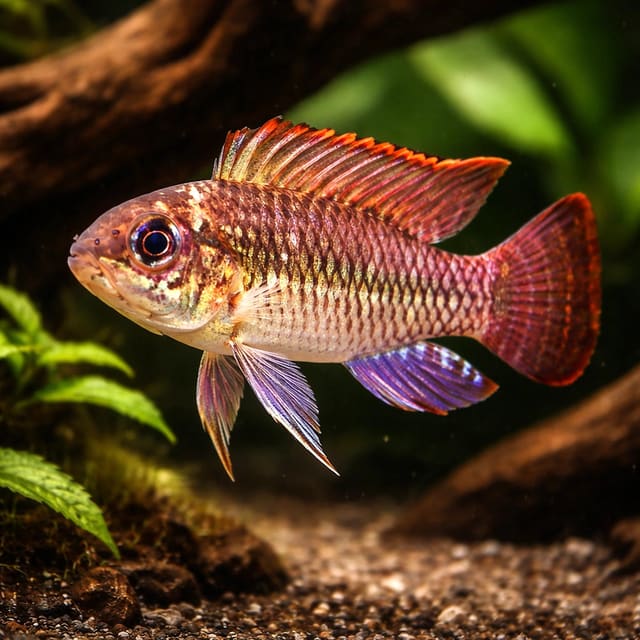
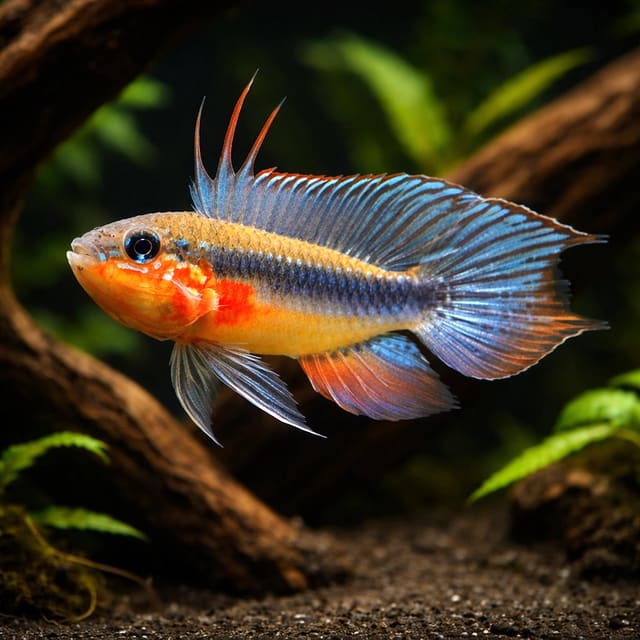
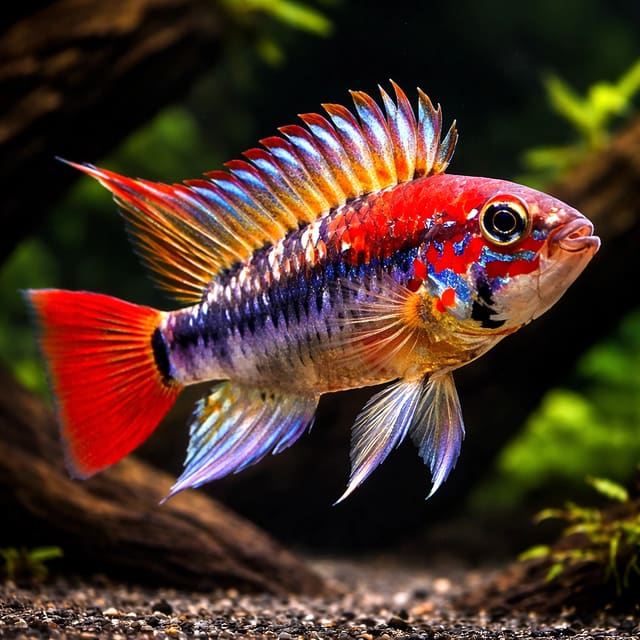
Red-Tailed Dwarf Cichlid — Red Mask (Apistogramma macmasteri)
24–28°C · pH 5.5–7 · 41L
From £22.35Some sizes on sale
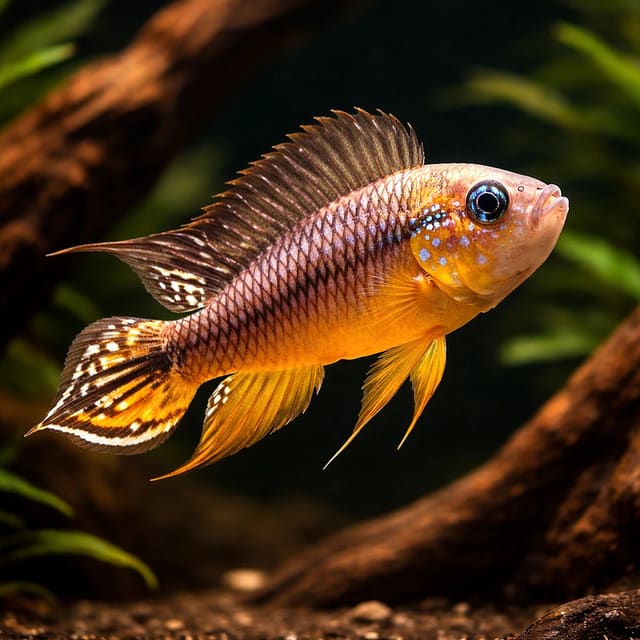
The urubaxi form of Apistogramma uapesi: a 7.5 cm blackwater apisto for soft, acidic 75 L+ tanks with calm companions.
Adult size is the maximum length this species reaches at full maturity (scientific sources). The livestock you receive will be younger and smaller. Product-photo provenance and any image-specific limitations are stated on the listing.
Apistogramma uapesi
Save when buying multiple fish. Each quantity is one fish; sex and pair formation are not guaranteed unless the selected variant explicitly states them.
Confirm your email, then we’ll send an availability message for this exact item if it returns within 180 days.
This request is only for this product—no newsletter or other promotions. A mail-provider retry may very rarely duplicate the same availability message. Unconfirmed addresses are removed after 48 hours. See our privacy policy.
The urubaxi form of Apistogramma uapesi: a 7.5 cm blackwater apisto for soft, acidic 75 L+ tanks with calm companions.
Adult size is the maximum length this species reaches at full maturity (scientific sources). The livestock you receive will be younger and smaller. Product-photo provenance and any image-specific limitations are stated on the listing.
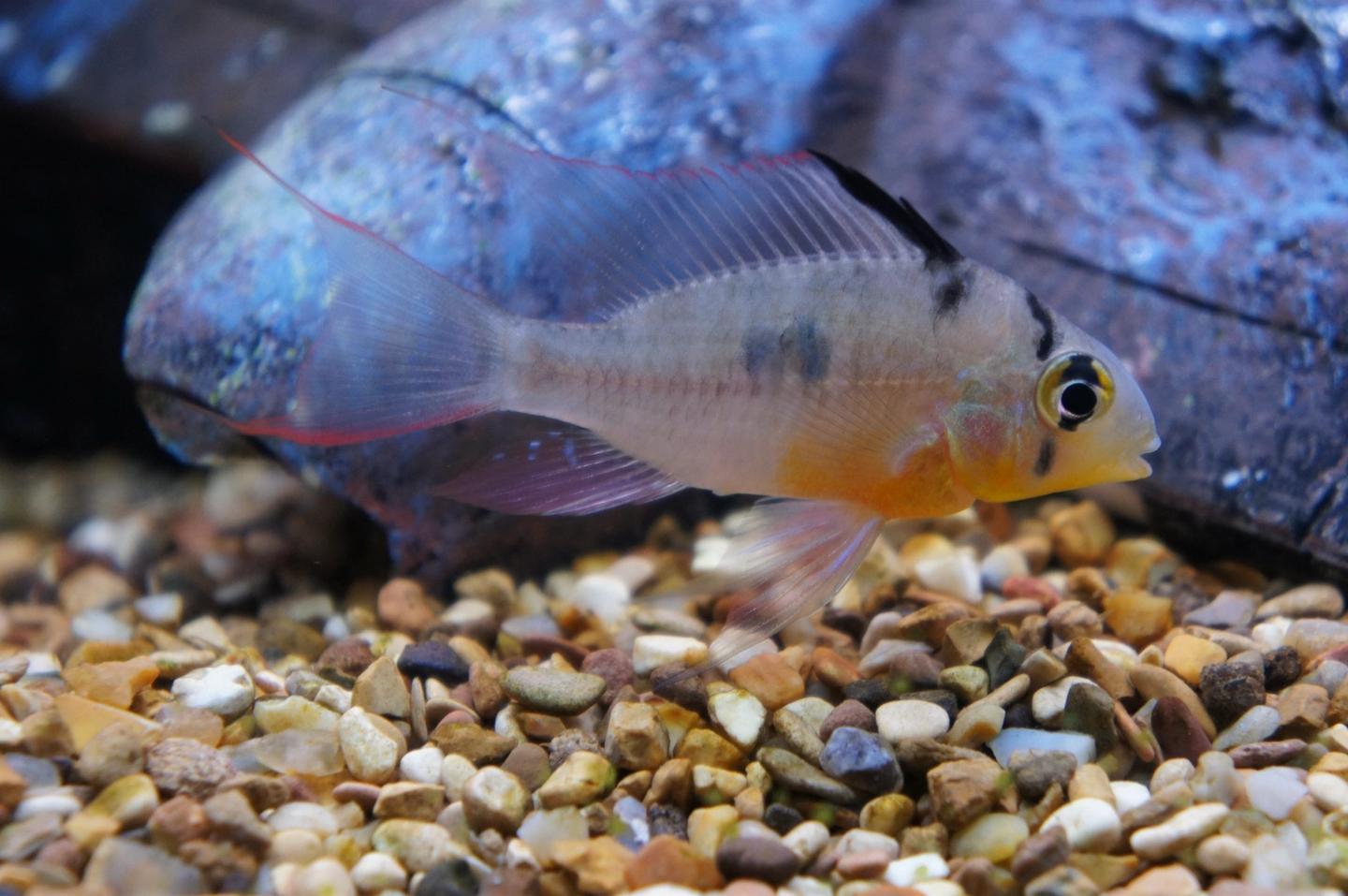
Cichlids are a family of roughly 1,800 accepted species, not one care type. Before buying, identify the exact species and source, then compare adult measurement, usable tank dimensions, social system, territory, tested water, diet and an exit plan. No family-wide minimum tank, water range or tank-mate list is safe.
Maintain these water conditions for optimal health and vibrant colors
How much character can one cave-loving fish hold? Apistogramma uapesi urubaxi makes a persuasive case. The urubaxi form of the Uapesi Dwarf Cichlid grows to around 7.5 cm — the larger end of the apisto scale — and brings genuine presence to the lower third of a soft, acidic aquarium.
Its wishlist reads like a blackwater biotope brief: 23–29 °C, pH 4.0–6.0, hardness no higher than 15 dGH, and at least 75 litres of well-structured space. Structure is the operative word. This is a cave-orientated, semi-aggressive cichlid, and it needs hiding places that are unambiguously its own. Get that right and a surprisingly varied community becomes possible in a larger tank: small peaceful schooling fish, non-aggressive pencilfish, small tetras and rasboras, plus peaceful bottom-dwellers that will not contest its caves. Other peaceful dwarf cichlids can work too, but only where there is ample territory to divide. Strike from the list anything fin-nipping, large and aggressive, very active and boisterous, or overly territorial on the bottom — and any fish needing hard, alkaline water, which this tank simply cannot offer.
It feeds as a carnivore and, like most of its genus, sharpens its territorial instincts once a pair begins to spawn. Give some thought to feeding position too: a bottom-dweller takes its meals from the lowest level, so make sure food actually reaches the substrate instead of being intercepted above. And remember the 75-litre figure is exactly that — a minimum; the compatibility options above broaden considerably as the footprint grows, which is why larger, well-structured tanks are where this fish shows best. Under moderate care, expect something close to five years together.
Treat the urubaxi as the centrepiece of a soft-water tank rather than an add-on to an existing community, and design its caves before it arrives. Order once your parameters are stable — your fish ships under a live arrival guarantee via a licensed live-animal courier.
No reviews for this item yet. Bought one? Honest reviews only, good or bad.
What customers say about ordering from us
Easy website plenty of info on fish your buying great to pick a time slot
TRACEY DURRANT · 7 Oct 2026
Got some lovely fish thank you
Kevin Mackie · 7 Oct 2026
Reviews of our shop, collected by Judge.me, an independent third-party review collector. Newest first.