Moderate
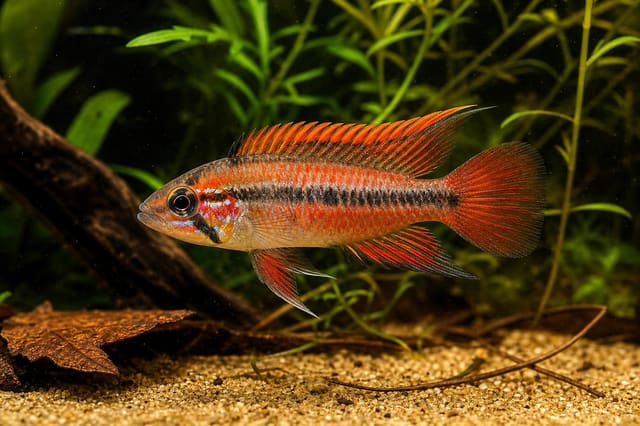
Red-Tailed Dwarf Cichlid — Red Mask (Apistogramma macmasteri)
24–28°C · pH 5.5–7 · 41L
From £22.35Some sizes on sale
A tiny, colorful South American dwarf cichlid with big personality, best enjoyed in a calm, planted aquarium. Moderate care, semi-aggressive. 22-28C, pH 5.5-7.0.
Adult size is the maximum length this species reaches at full maturity (scientific sources). The livestock you receive will be younger and smaller. Product-photo provenance and any image-specific limitations are stated on the listing.
Apistogramma sp. papagalo
Save when buying multiple fish. Each quantity is one fish; sex and pair formation are not guaranteed unless the selected variant explicitly states them.
Confirm your email, then we’ll send an availability message for this exact item if it returns within 180 days.
This request is only for this product—no newsletter or other promotions. A mail-provider retry may very rarely duplicate the same availability message. Unconfirmed addresses are removed after 48 hours. See our privacy policy.
A tiny, colorful South American dwarf cichlid with big personality, best enjoyed in a calm, planted aquarium. Moderate care, semi-aggressive. 22-28C, pH 5.5-7.0.
Adult size is the maximum length this species reaches at full maturity (scientific sources). The livestock you receive will be younger and smaller. Product-photo provenance and any image-specific limitations are stated on the listing.
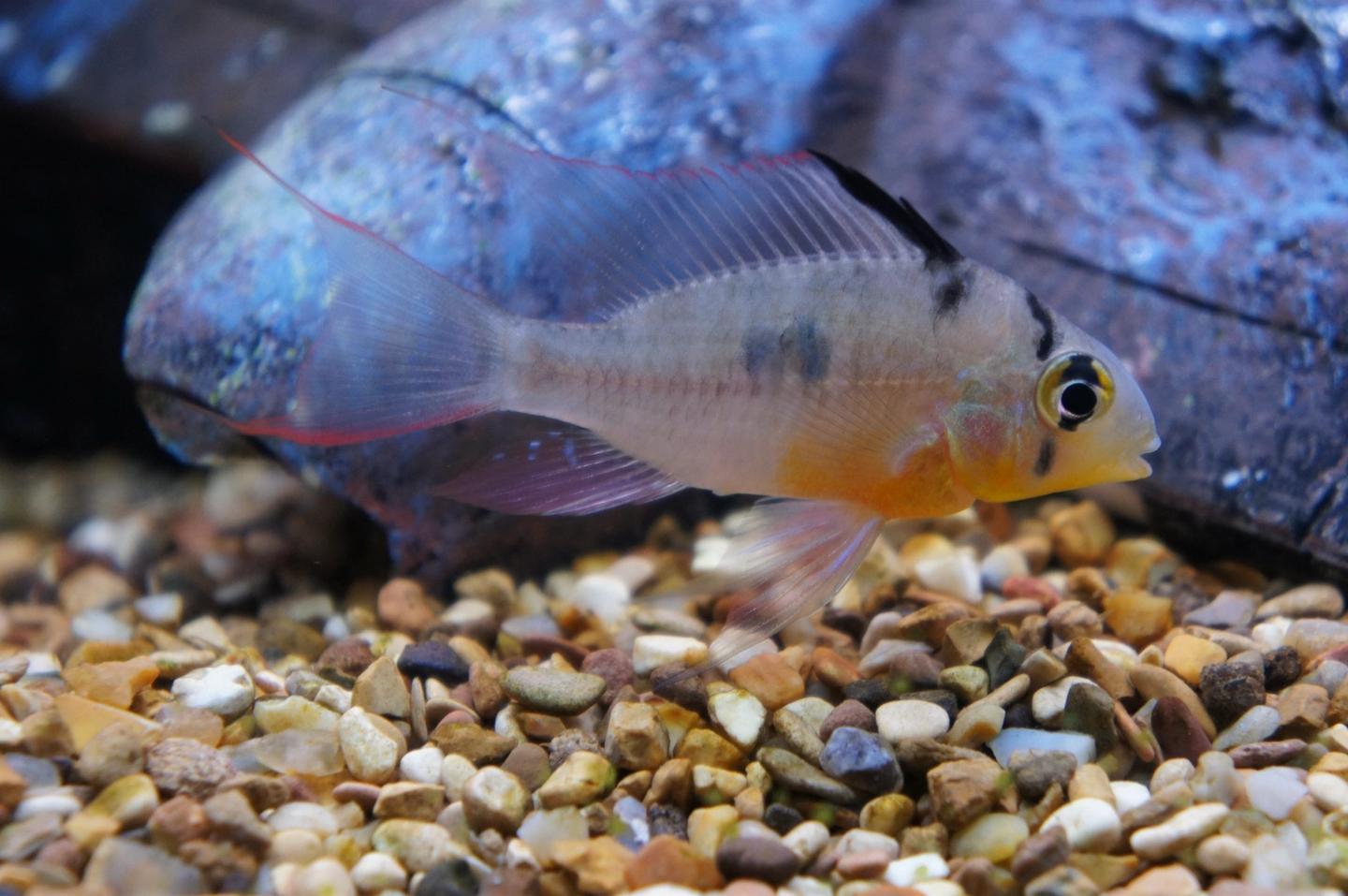
Cichlids are a family of roughly 1,800 accepted species, not one care type. Before buying, identify the exact species and source, then compare adult measurement, usable tank dimensions, social system, territory, tested water, diet and an exit plan. No family-wide minimum tank, water range or tank-mate list is safe.
Maintain these water conditions for optimal health and vibrant colors
Among freshwater fish for sale UK, Apistogramma sp. papagalo stands out as a rare and captivating dwarf cichlid. This undescribed species, sold under the Papagalo collection locality name, reaches approximately 4.5cm at maturity and delivers colourful patterning, engaging personality, and fascinating breeding behaviour. While exact wild locality is not well documented in the trade, the species shares classic Apistogramma characteristics: soft-water requirements, territorial behaviour in males, and a preference for calm, well-planted aquariums. Available for sale UK through specialist retailers, the Papagalo Dwarf Cichlid is an excellent choice for experienced aquarists seeking rare South American dwarf cichlids for peaceful community setups.
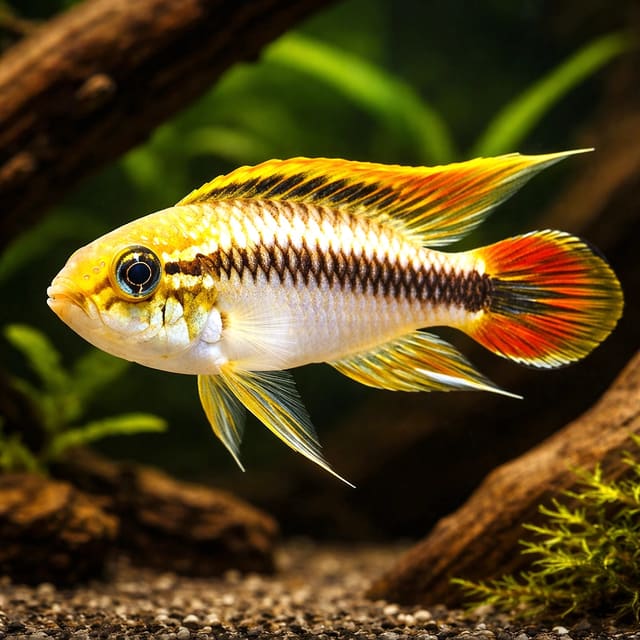
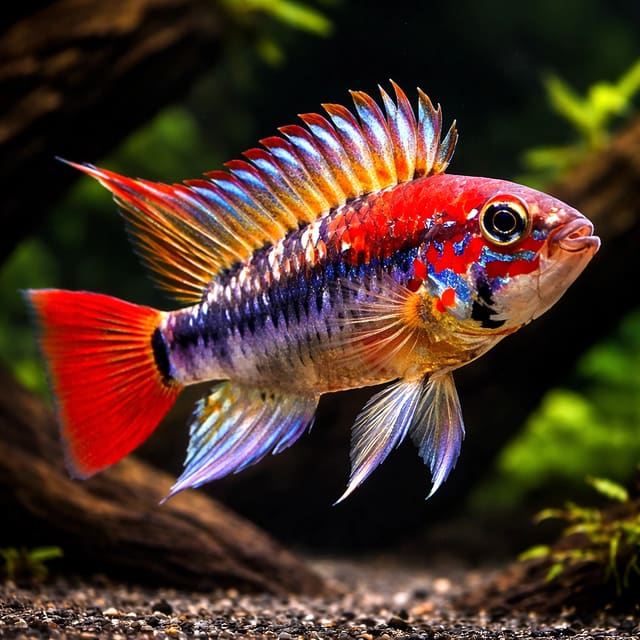
Apistogramma sp. papagalo exhibits the elegant, compact body form typical of the genus. Mature males display intricate body patterning with horizontal stripes, reticulated markings, and iridescent highlights in shades of blue, green, or gold. The fins are well-developed with extended rays in the dorsal and anal fins, often featuring bold dark edging and contrasting bands. The caudal fin may show subtle lyre-shaped extensions. Females are smaller and less flamboyant, displaying more subdued colours but adopting a warm golden-yellow hue when guarding eggs or fry. Coloration intensifies in soft, tannin-stained water with subdued lighting and a dark substrate.
While exact wild locality is not well documented, Apistogramma sp. papagalo is associated with South American blackwater or clearwater streams typical of Apistogramma habitat. These environments feature soft, acidic water, minimal flow, abundant leaf litter, submerged wood, and dense vegetation creating complex microhabitats. The substrate is fine sand or silt covered in organic debris. Understanding and replicating these stable, sheltered conditions is essential for keeping the species thriving in captivity.
A minimum 75-litre aquarium is recommended, with larger tanks offering greater stability and reduced territorial conflict. Use fine sand substrate and incorporate abundant driftwood, Indian almond leaves, and smooth stones to create caves, hiding spots, and visual barriers. Dense planting with soft-water species such as Cryptocoryne, Anubias, and floating plants diffuses lighting and provides shelter. Gentle filtration through a sponge or small canister filter maintains water quality without excessive current. Tannin-stained water enhances coloration and supports immune health. Subdued lighting and a calm environment reduce stress and encourage natural behaviours.
Apistogramma sp. papagalo requires soft, acidic water for optimal health. Maintain temperatures between 22-28°C and pH from 5.5-7.0, with low hardness. Regular partial water changes with dechlorinated, appropriately conditioned water are essential. This species is best kept in a mature aquarium with stable water quality. Efficient biological filtration and low nitrate levels (under 20 ppm) are critical. Avoid strong current and aggressive tankmates.
This carnivore thrives on a varied, protein-rich diet. Offer quality micro pellets or granules formulated for dwarf cichlids, supplemented with frozen or live foods such as brine shrimp, daphnia, cyclops, and bloodworms, with occasional finely chopped meaty foods. Feed small portions twice daily, removing uneaten food promptly to maintain water quality. A diverse diet ensures vibrant coloration, robust health, and optimal breeding condition.
Apistogramma sp. papagalo is a semi-aggressive dwarf cichlid with moderate territorial behaviour. Males establish and defend small territories around caves or other focal points, particularly during breeding. Aggression is usually limited to displays and posturing in well-planted aquariums with adequate hiding places. Females are less territorial outside breeding periods but become fiercely protective when guarding eggs or fry. The species is generally peaceful toward non-competing tankmates and spends much of its time exploring the lower levels of the aquarium.
Ideal companions include small, peaceful schooling fish such as tetras, rasboras, and peaceful pencilfish. Bottom-dwellers like Otocinclus are usually compatible. In heavily planted tanks, peaceful dwarf shrimp may coexist, though juveniles may be eaten. Avoid large or boisterous fish, aggressive cichlids, fin-nippers, fast competitive feeders, and very small fry or shrimp if breeding is desired.
Breeding typically occurs in a quiet, well-planted tank with caves or leaf litter and very soft, slightly acidic water. The female deposits eggs in a sheltered site and then guards them closely, while the male defends a broader territory nearby. Eggs hatch in 2-3 days, with fry becoming free-swimming after about a week. Feed fry on infusoria or liquid fry food initially, transitioning to newly hatched brine shrimp. Stable water conditions and pristine quality are essential for breeding success.
Tropical Fish Co is the UK's premier destination for rare and specialist South American dwarf cichlids, including Apistogramma sp. papagalo. Every fish is ethically sourced, meticulously quarantined, and health-checked by our expert team to ensure you receive livestock in peak condition. We provide detailed care guides, personalised advice, and ongoing support to help you succeed with even the most demanding species. With secure, temperature-controlled delivery across the UK, comprehensive online resources, and a commitment to quality, Tropical Fish Co makes it easy to build beautiful soft-water planted aquariums. Choose us for healthy, vibrant fish and exceptional customer service.
No reviews for this item yet. Bought one? Honest reviews only, good or bad.
What customers say about ordering from us
Easy website plenty of info on fish your buying great to pick a time slot
TRACEY DURRANT · 7 Oct 2026
Got some lovely fish thank you
Kevin Mackie · 7 Oct 2026
Reviews of our shop, collected by Judge.me, an independent third-party review collector. Newest first.