Red Point Dwarf Cichlid (Apistogramma sp.)
22–27°C · pH 6–8
£17.99

A tiny, colorful South American dwarf cichlid that rewards keepers with personality, breeding behavior, and compact size. Moderate care, semi-aggressive. 23-28C, pH 6.5-7.0.
Adult size is the maximum length this species reaches at full maturity (scientific sources). The livestock you receive will be younger and smaller. Product-photo provenance and any image-specific limitations are stated on the listing.
Apistogramma inconspicua
Save when buying multiple fish. Each quantity is one fish; sex and pair formation are not guaranteed unless the selected variant explicitly states them.
Confirm your email, then we’ll send an availability message for this exact item if it returns within 180 days.
This request is only for this product—no newsletter or other promotions. A mail-provider retry may very rarely duplicate the same availability message. Unconfirmed addresses are removed after 48 hours. See our privacy policy.
A tiny, colorful South American dwarf cichlid that rewards keepers with personality, breeding behavior, and compact size. Moderate care, semi-aggressive. 23-28C, pH 6.5-7.0.
Adult size is the maximum length this species reaches at full maturity (scientific sources). The livestock you receive will be younger and smaller. Product-photo provenance and any image-specific limitations are stated on the listing.
Cichlids are a family of roughly 1,800 accepted species, not one care type. Before buying, identify the exact species and source, then compare adult measurement, usable tank dimensions, social system, territory, tested water, diet and an exit plan. No family-wide minimum tank, water range or tank-mate list is safe.
Maintain these water conditions for optimal health and vibrant colors
The Iconspicua dwarf cichlid (Apistogramma inconspicua) is a tiny, colorful South American species that rewards keepers with personality, breeding behavior, and compact size. This charming fish is highly regarded among apistogramma enthusiasts and is one of the more understated yet beautiful species available as freshwater fish for sale UK. With an adult size of approximately 5.5 cm, this species is ideally suited to nano and planted aquarium setups, where its peaceful nature (when kept appropriately) allows it to coexist with carefully chosen companions. A. inconspicua thrives in soft, slightly acidic to neutral water and is best kept in species-specific or carefully planned community aquariums. For aquarists seeking a rare, behavior-rich centerpiece fish that offers breeding potential and captivating natural displays, the Iconspicua dwarf cichlid is an outstanding choice.
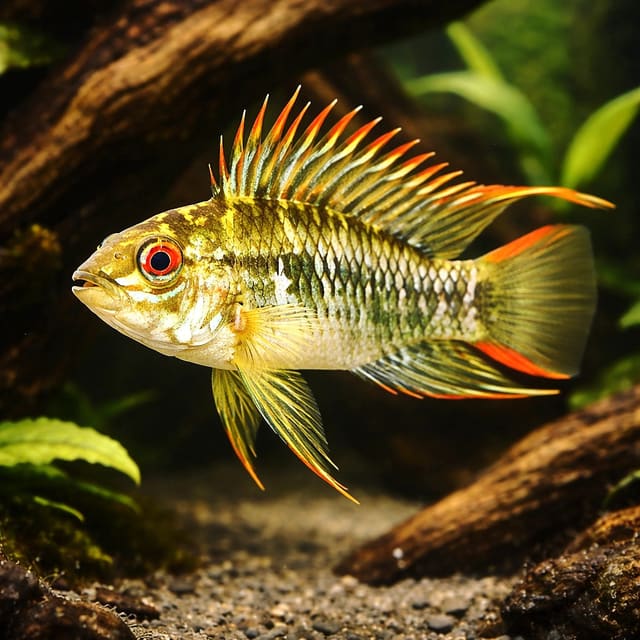
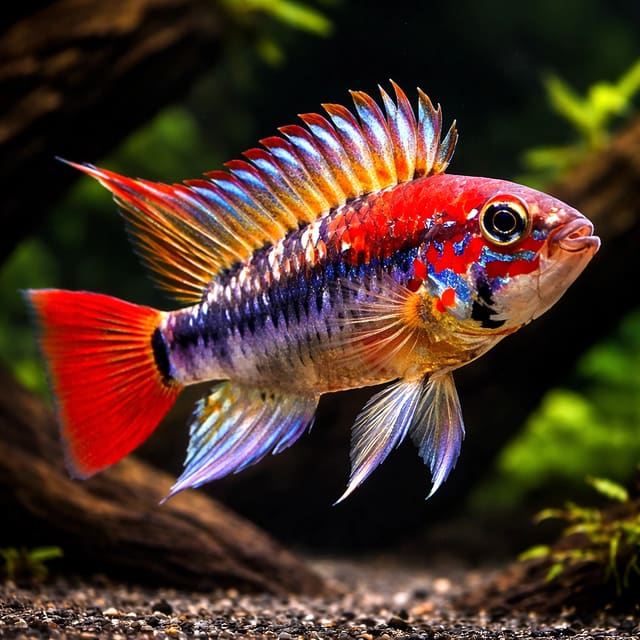
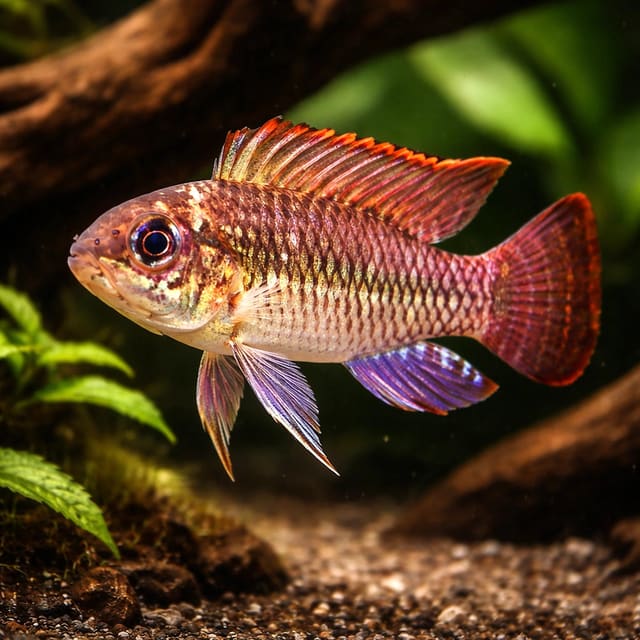
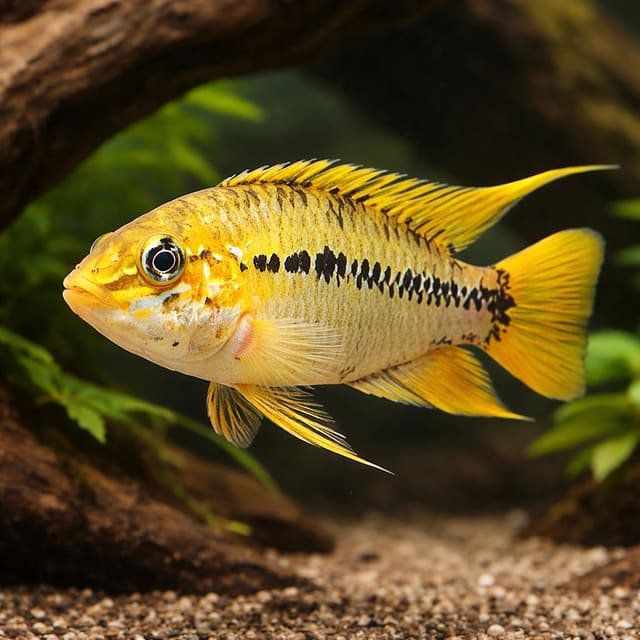
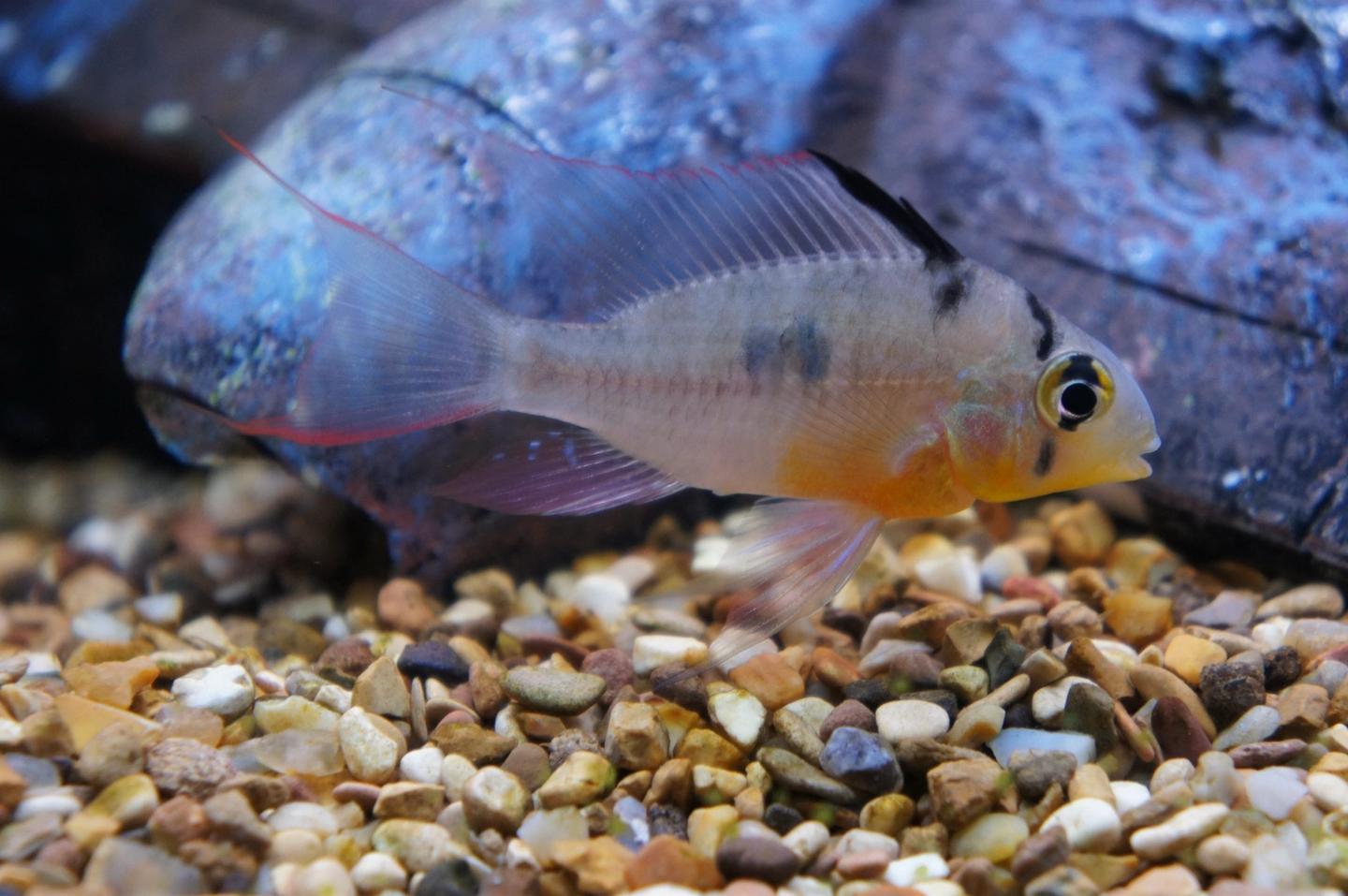
Apistogramma inconspicua males display subtle but attractive coloration, with a base color ranging from silver-grey to olive-green, accented by intricate horizontal striping and vertical barring. The dorsal and anal fins are elongated in mature males, often showing red or orange edging. Iridescent blue or green highlights appear on the face and gill covers, intensifying during courtship. Females are smaller and more subdued, typically showing a yellowish hue when guarding eggs or fry. Both sexes have large, expressive eyes and a streamlined, graceful body shape. The overall appearance is refined and elegant, best appreciated in a naturalistic aquarium with dark substrate and subdued lighting.
While the exact native range is not well documented in the trade, Apistogramma inconspicua is often listed as originating from Amazon basin waters. These habitats are characterized by slow-moving blackwater or clearwater streams with soft, acidic to neutral water, abundant leaf litter, submerged roots, and overhanging vegetation. The substrate is typically fine sand or mud, and water flow is minimal. The environment is shaded and quiet, with stable temperatures. Replicating these conditions in the aquarium is essential for the health and breeding success of this species.
Provide a well-planted aquarium with soft to moderately soft water, subdued lighting, and plenty of cover. Use a sand substrate with driftwood, leaf litter, and live plants such as Anubias, Cryptocoryne, or Microsorum to create a naturalistic environment. Caves (coconut shells, clay pots, or driftwood) are essential for spawning and territorial behavior. Filtration should be efficient but gentle, with regular water changes to maintain excellent water quality. A minimum tank size of 75 litres is suitable for a pair or small group. Avoid bright lighting and strong water currents.
As a carnivore, Apistogramma inconspicua requires a varied, protein-rich diet. Offer quality micro pellets as the staple, supplemented with frozen or live foods such as daphnia, brine shrimp, bloodworms, and small insect larvae daily. Feed small portions multiple times per day to maintain optimal health and conditioning. Live foods are particularly beneficial for breeding pairs. Avoid overfeeding, as uneaten food degrades water quality rapidly.
Apistogramma inconspicua is semi-aggressive, with males defending small territories around caves or preferred spawning sites. Females are generally peaceful until spawning, at which point they become protective of their eggs and fry. Despite their territorial tendencies, this species is relatively peaceful compared to many other cichlids. They spend much of their time near the substrate, exploring cover and investigating hiding places. In the right environment, their natural behavior—courtship displays, substrate sifting, and parental care—is a delight to observe.
Choose tankmates carefully to avoid stressing this delicate species. Small peaceful tetras, Otocinclus, non-aggressive snails, and other peaceful small South American community fish may coexist if the tank is spacious and well-structured. Avoid large or boisterous fish, fin-nippers, aggressive cichlids, very small shrimp fry (which may be eaten), and fast competitive feeders. In many cases, a species-only setup or a carefully planned biotope aquarium offers the best results.
Apistogramma inconspicua is best bred in a quiet species tank or with very peaceful tankmates. Provide caves, leaf litter, and soft spawning sites. Females guard eggs and fry, while males defend territory. Slightly softer water (pH 6.0-6.5) improves breeding success. Eggs hatch in approximately three days, and fry become free-swimming several days later. Fry require very small live foods such as infusoria or newly hatched brine shrimp. Breeding success improves with excellent water quality and minimal disturbance.
Tropical Fish Co is the UK's premier destination for rare and delicate South American dwarf cichlids, including Apistogramma inconspicua. We work exclusively with ethical suppliers who prioritize sustainable collection and expert handling, ensuring every fish arrives in optimal health. Our rigorous quarantine protocols and expert acclimation process guarantee your fish is ready to thrive in your carefully prepared aquarium. With detailed care guidance, ongoing support from our knowledgeable team, and a live arrival guarantee, we make it easy to succeed with even the most demanding species. Order today and experience the unmatched quality and service that sets Tropical Fish Co apart.
No reviews for this item yet. Bought one? Honest reviews only, good or bad.
What customers say about ordering from us
I have a small group of long finned mountain minnows. So was delighted to be able to order ten of this variety to increase the genetics in my tank . The ones I recieved are healthy but it’s to early to give a verdict on wether they are of a long finned type since they are small currently.
Gordon Walker · 23 Sept 2026
100% success travel and "installation". Pleased with quality of purchase. The Siamese fighter a bit "shy" so have not yet seen him at his best yet but looking good. Happy customer. GG
George E Garratt · 21 Sept 2026
Reviews of our shop, collected by Judge.me, an independent third-party review collector. Newest first.