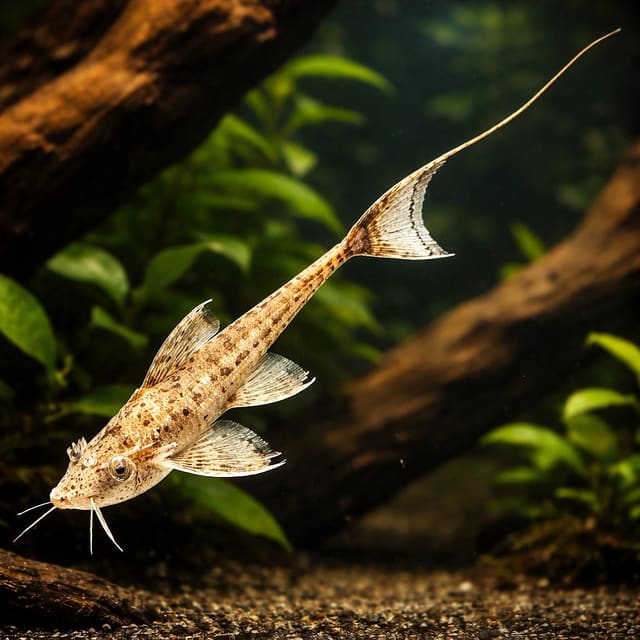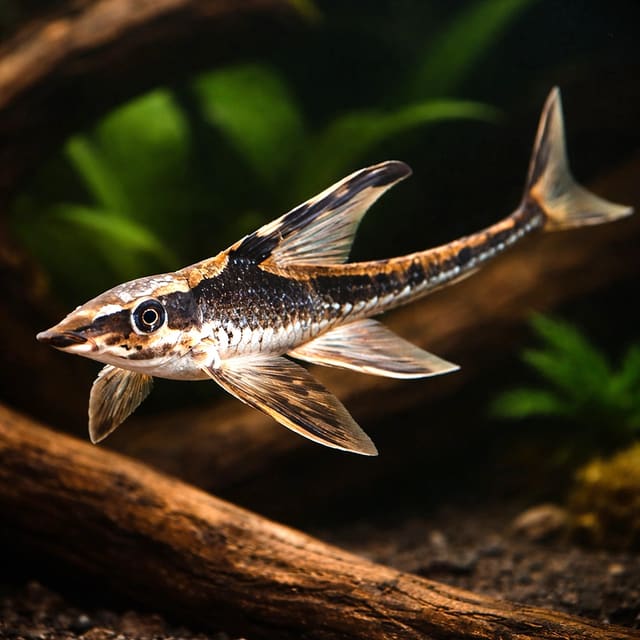
Royal Whiptail Catfish (Sturisomatichthys panamensis)
£19.99
A rare, peaceful sandy-bottom whiptail catfish from the Amazon basin that rewards expert keepers with its unique shape and specialized riverine habits. Difficult care, peaceful. 22-26C, pH 6.0-7.5.
Planiloricaria cryptodon
Confirm your email, then we’ll send an availability message for this exact item if it returns within 180 days.
This request is only for this product—no newsletter or other promotions. A mail-provider retry may very rarely duplicate the same availability message. Unconfirmed addresses are removed after 48 hours. See our privacy policy.
A rare, peaceful sandy-bottom whiptail catfish from the Amazon basin that rewards expert keepers with its unique shape and specialized riverine habits. Difficult care, peaceful. 22-26C, pH 6.0-7.5.
Maintain these water conditions for optimal health and vibrant colors
The whiptail catfish Planiloricaria cryptodon is a rare, peaceful sandy-bottom specialist from the Amazon basin. Available for sale UK through Tropical Fish Co, this unusual loricariid rewards expert keepers with its unique shape, specialized riverine habits, and fascinating behavior. It requires pristine, well-oxygenated water, a soft sandy substrate, and careful attention to diet and water quality.
Planiloricaria cryptodon reaches up to 20 cm in length and has an extremely flattened, elongated body with a long, whip-like tail. The body is covered in bony plates, and the coloration is typically pale tan to brown with subtle mottling that provides camouflage against sandy substrates. The head is broad and flat, with a ventral sucker mouth adapted for feeding on benthic organisms. The overall appearance is lizard-like, earning it the nickname "lizard catfish" in some circles.
This species inhabits the upper Amazon basin of Bolivia, Brazil, and Peru, including the Ucayali, Purus, and Mamoré river drainages. It is found in large rivers with soft sandy or silty substrates, moderate to strong current, and clear to slightly turbid water. In the wild, P. cryptodon feeds on benthic invertebrates, organic detritus, and microorganisms, remaining flattened against the substrate to avoid predators and strong currents.
Provide a spacious aquarium of at least 300 litres with a soft sandy substrate—this is essential for the catfish's well-being. Decorate with smooth driftwood, rounded stones, and caves, avoiding sharp or rough materials. Strong filtration and high oxygenation are critical, along with moderate water flow to replicate the riverine environment. Dim lighting and plenty of cover help reduce stress and encourage natural foraging behavior.
Maintain clean, stable water between 22–26°C with a pH of 6.0–7.5. Excellent filtration and regular large partial water changes (30–50% weekly) are essential to keep oxygen levels high and waste products minimal. This species is highly sensitive to poor water quality, and even short-term lapses can result in stress, disease, or death. Monitor parameters closely and prioritize water quality above all else.
Planiloricaria cryptodon is an omnivorous benthic feeder. Offer sinking carnivore or omnivore pellets, frozen or live bloodworms, blackworms, tubifex, brine shrimp, and other meaty foods. Supplement with blanched vegetables (courgette, spinach) and algae-based foods. Feed after lights dim, as this species is most active during low-light periods. Ensure food reaches the substrate, and observe closely to confirm the catfish is eating adequately.
Top Tip: Use a fine sand substrate at least 5 cm deep to allow natural resting and foraging behavior—this species relies on a soft bottom to thrive.
This catfish is peaceful, shy, and nocturnal, spending much of the day hidden or resting flat against the substrate. At dusk and night, it emerges to forage, probing the sand with its mouth and moving slowly across the bottom. It is a solitary species and does not form social bonds, though multiple individuals can coexist peacefully if space and hiding places are ample. Avoid fast, boisterous tankmates that may stress or outcompete it for food.
Ideal companions include peaceful midwater fish of similar water requirements, such as small to medium characins, peaceful dwarf cichlids, other non-aggressive bottom dwellers of similar size, and non-predatory catfish. Avoid large aggressive cichlids, fin-nippers, highly territorial bottom fish, large predatory fish, and very boisterous species that outcompete it for food. This species does best in calm, well-planned communities.
Breeding information in aquaria is very limited. Like many loricariids, it likely requires excellent water quality, seasonal conditioning with rich foods, and a suitable spawning surface or sheltered site. Little is known about the reproductive habits of this species in captivity, and successful breeding reports are rare. This is not a species for hobbyists seeking to breed catfish.
At Tropical Fish Co UK, we supply healthy, acclimated Planiloricaria cryptodon catfish carefully selected for size, health, and vitality. Every specimen is quarantined, inspected, and conditioned before dispatch, ensuring you receive a robust, fascinating fish ready to thrive in your aquarium. With expert care advice, secure packaging, and a commitment to quality, we make adding this rare and specialized catfish to your collection straightforward and rewarding. Order today.
No reviews for this item yet. Bought one? Honest reviews only, good or bad.
What customers say about ordering from us
Easy website plenty of info on fish your buying great to pick a time slot
TRACEY DURRANT · 7 Oct 2026
Got some lovely fish thank you
Kevin Mackie · 7 Oct 2026
Reviews of our shop, collected by Judge.me, an independent third-party review collector. Newest first.