−22%
Expert
Super Red Melon Discus (Symphysodon spp.)
26–30°C · pH 6–7 · 300L
£72.99£93.99
Selectively bred Neon Blue discus supplied as one unsexed fish in the chosen size. Best kept in a group of at least five in a mature 300 L+ warm, stable aquarium.
Adult size is the maximum length this species reaches at full maturity (scientific sources). The livestock you receive will be younger and smaller — pick a size above for the actual shipping size. Product-photo provenance and any image-specific limitations are stated on the listing.
Symphysodon sp.
Save when buying multiple fish. Each quantity is one fish; sex and pair formation are not guaranteed unless the selected variant explicitly states them.
Confirm your email, then we’ll send an availability message for this exact item if it returns within 180 days.
This request is only for this product—no newsletter or other promotions. A mail-provider retry may very rarely duplicate the same availability message. Unconfirmed addresses are removed after 48 hours. See our privacy policy.
Selectively bred Neon Blue discus supplied as one unsexed fish in the chosen size. Best kept in a group of at least five in a mature 300 L+ warm, stable aquarium.
Adult size is the maximum length this species reaches at full maturity (scientific sources). The livestock you receive will be younger and smaller — pick a size above for the actual shipping size. Product-photo provenance and any image-specific limitations are stated on the listing.
Discus are social Amazonian cichlids with specialised aquarium needs. OATA advises at least five fish, except an established breeding pair, and about 50 litres per adult—roughly 300 litres for six adults. Use that as a planning floor, then check usable dimensions, filtration, source water and the actual fish.
Maintain these water conditions for optimal health and vibrant colors
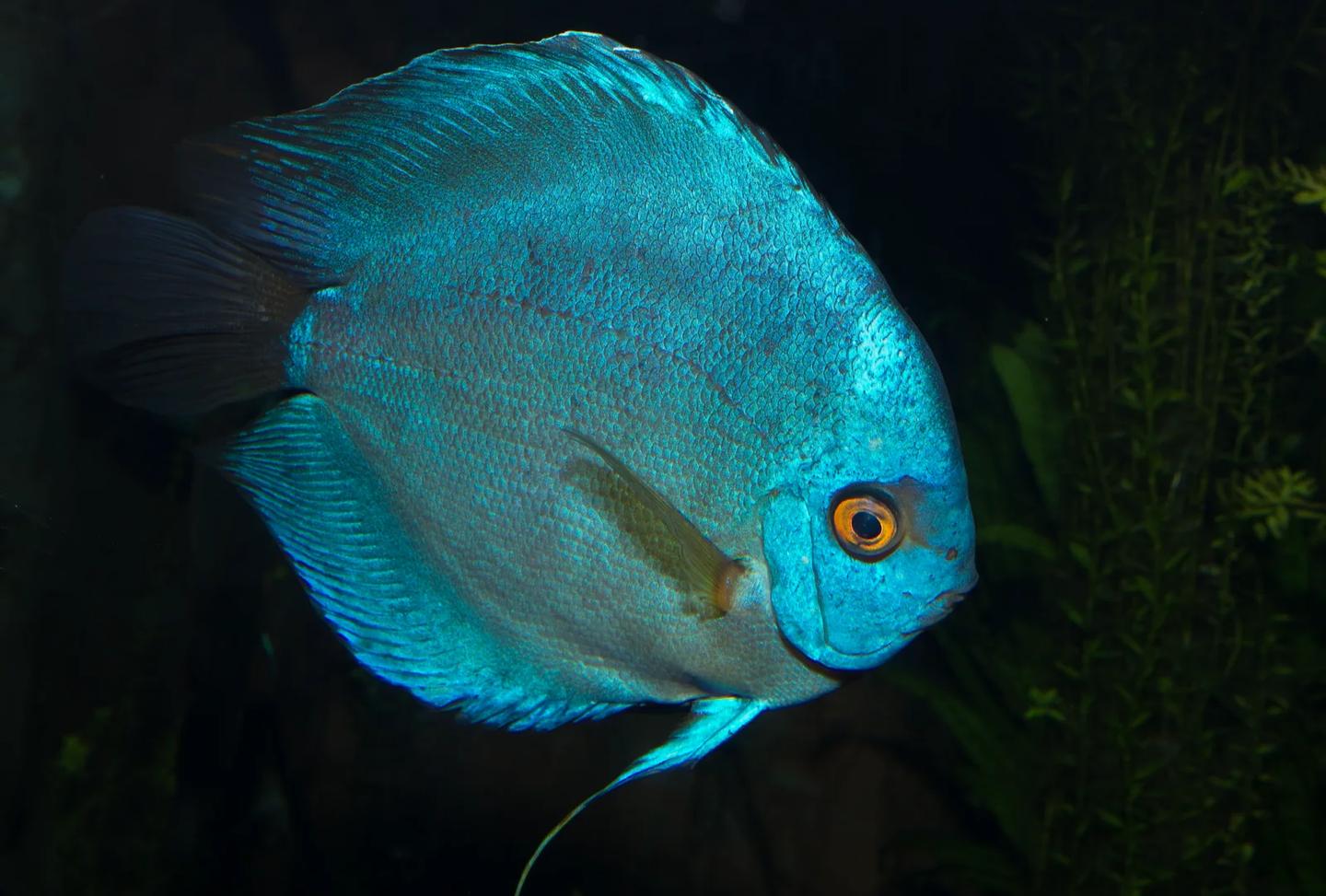
Neon Blue Discus is a selectively bred blue colour strain of discus in the genus Symphysodon. Domestic colour strains are widely crossed and this fish is not supplied with a documented pedigree, so Symphysodon sp. is more accurate than turning “Neon Blue” into a species name.
One standard unit buys one unsexed fish in the size you select. Size options run from 4 cm to 15 cm, with an XL selection when available. A gallery scene shows two discus for scale and social context; it does not mean that a bonded pair or two fish are included. Discus are difficult to sex reliably outside breeding condition, so no sex or pair formation is promised.
This is an advanced warm-water fish for a mature, stable aquarium. Discus are social and should normally be planned as a group of at least five, not added as a single centrepiece to an ordinary community tank. Read the full discus care guide before choosing the aquarium and group size.
| Trade name | Neon Blue Discus |
|---|---|
| Scientific identity | Symphysodon sp.; selectively bred domestic colour strain |
| Sale unit | One unsexed fish in the selected size |
| Available size options | 4–15 cm and XL selection when stocked |
| Adult size | Up to about 20 cm across |
| Lifespan | Many years in a mature, well-maintained aquarium; no exact lifespan is promised |
| Social needs | Group of at least five; more can be better where space and filtration allow |
| Aquarium planning | About 50 litres per adult; approximately 300 litres for six adults |
| Temperature | 26–30°C |
| pH | 6.0–7.5 |
| General hardness | 4–12 dGH |
| Care level | Expert / experienced keeper |
| Feeding | Generally carnivorous; varied, protein-focused discus diet in two or three small feeds |
Adult discus are tall, laterally compressed cichlids that can reach about 20 cm across. OATA recommends allowing roughly 50 litres per adult and gives an aquarium of about 300 litres as a guide for six adults. Floor space and swimming length matter as well as the headline volume: provide open mid-water space, quieter covered areas and enough room for lower-ranking fish to move away from dominant individuals.
Keep at least five discus unless you have an established breeding pair and a purpose-built pair setup. A small, arbitrary group can concentrate bullying on one fish. Juveniles also grow, so plan the mature group and filtration before ordering rather than using the dispatch size as the final stocking calculation. Browse the discus collection to plan compatible sizes and strains without treating every listing as a separate social group.
Use a reliable heater and filter with gentle circulation. Fine sand or smooth fine gravel allows natural feeding behaviour, while wood, plants and shaded areas provide security. Leave clear swimming room between cover. The aquarium should be fully cycled and mature before live fish arrive.
Plan for 26–30°C, pH 6.0–7.5 and soft-to-medium water around 4–12 dGH. Stability matters more than repeatedly chasing a single ideal number. Test the source water and aquarium before purchase, then make changes gradually. Our aquarium water chemistry guide explains pH, hardness and the nitrogen cycle in practical terms.
Ammonia and nitrite should remain at zero, with nitrate kept below 20 mg/L. Warm water carries less dissolved oxygen, while discus feeding can create a substantial waste load, so filtration, surface movement and regular partial water changes all matter. Match replacement water closely for temperature and chemistry, remove uneaten food, and record test results so drift is noticed early.
Neon Blue Discus are generally calm, but “peaceful” does not mean socially simple. A group develops a hierarchy, breeding fish may become territorial, and timid individuals can lose access to food. Watch every fish at feeding time and provide visual breaks as well as open water.
Choose tank mates only after checking their exact temperature range, water chemistry, activity and feeding style. Calm medium tetras, suitable warm-water Corydoras, some plecos and compatible dwarf cichlids can work in a carefully planned discus aquarium. This is not a blanket approval for every species in those groups. Avoid fin nippers, aggressive or predatory fish, fast boisterous feeders, and species that require cooler, hard or alkaline water. When in doubt, build the discus group first and add fewer companions.
Discus are generally carnivorous, so offer a varied, protein-focused diet appropriate for the fish. Quality discus granules or pellets can form a dependable base, supported by suitable frozen or live foods. Feed two or three small portions rather than one heavy meal, and remove leftovers within a few minutes. Juveniles and newly transported fish may need closer observation so that shy individuals eat without the water becoming polluted.
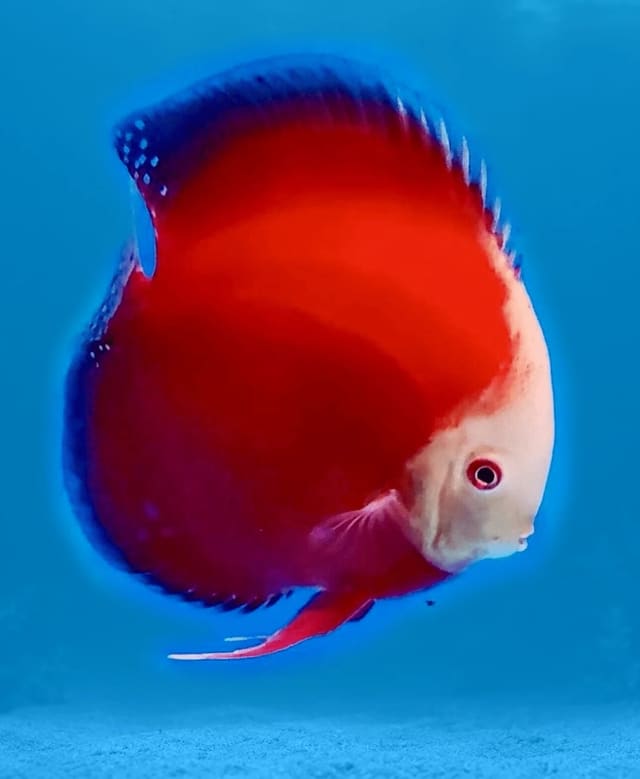
Neon Blue is a trade colour name, not a promise that every fish will show an identical shade or pattern at every size. Colour develops with age and is influenced by genetics, condition, lighting and surroundings. The four gallery images are representative illustrations of a pale blue discus-like fish, not photographs of the exact individual supplied. They support general visualisation but cannot verify the strain pedigree or guarantee exact markings.
Prepare the mature aquarium before ordering and check the selected size against the existing group. Follow the instructions supplied with the shipment and use the current acclimation timer rather than applying one fixed routine to every delivery condition. Our delivery and Live Arrival Guarantee page explains the current service, eligibility and evidence requirements.
No reviews for this item yet. Bought one? Honest reviews only, good or bad.
What customers say about ordering from us
Easy website plenty of info on fish your buying great to pick a time slot
TRACEY DURRANT · 7 Oct 2026
Got some lovely fish thank you
Kevin Mackie · 7 Oct 2026
Reviews of our shop, collected by Judge.me, an independent third-party review collector. Newest first.