−15%
Red Turquoise Discus (Symphysodon spp.)
26–30°C · pH 6–7.5
£37.99£53.99

The Red Cover Discus (Symphysodon spp.) is a red freshwater cichlid colour form within an Amazon-basin genus native to Brazil. It suits a mature, filtered aquarium planned for at least five fish, using OATA’s discus guidance of 26–30°C, pH 6.0–7.5 and 4–12°dH. Sold individually in labelled dispatch sizes from 2 cm (2.5 cm) to 13 cm (16 cm), with an XL selection HQ grade.
Symphysodon spp.
Save when buying multiple fish. Each quantity is one fish; sex and pair formation are not guaranteed unless the selected variant explicitly states them.
The Red Cover Discus (Symphysodon spp.) is a red freshwater cichlid colour form within an Amazon-basin genus native to Brazil. It suits a mature, filtered aquarium planned for at least five fish, using OATA’s discus guidance of 26–30°C, pH 6.0–7.5 and 4–12°dH. Sold individually in labelled dispatch sizes from 2 cm (2.5 cm) to 13 cm (16 cm), with an XL selection HQ grade.
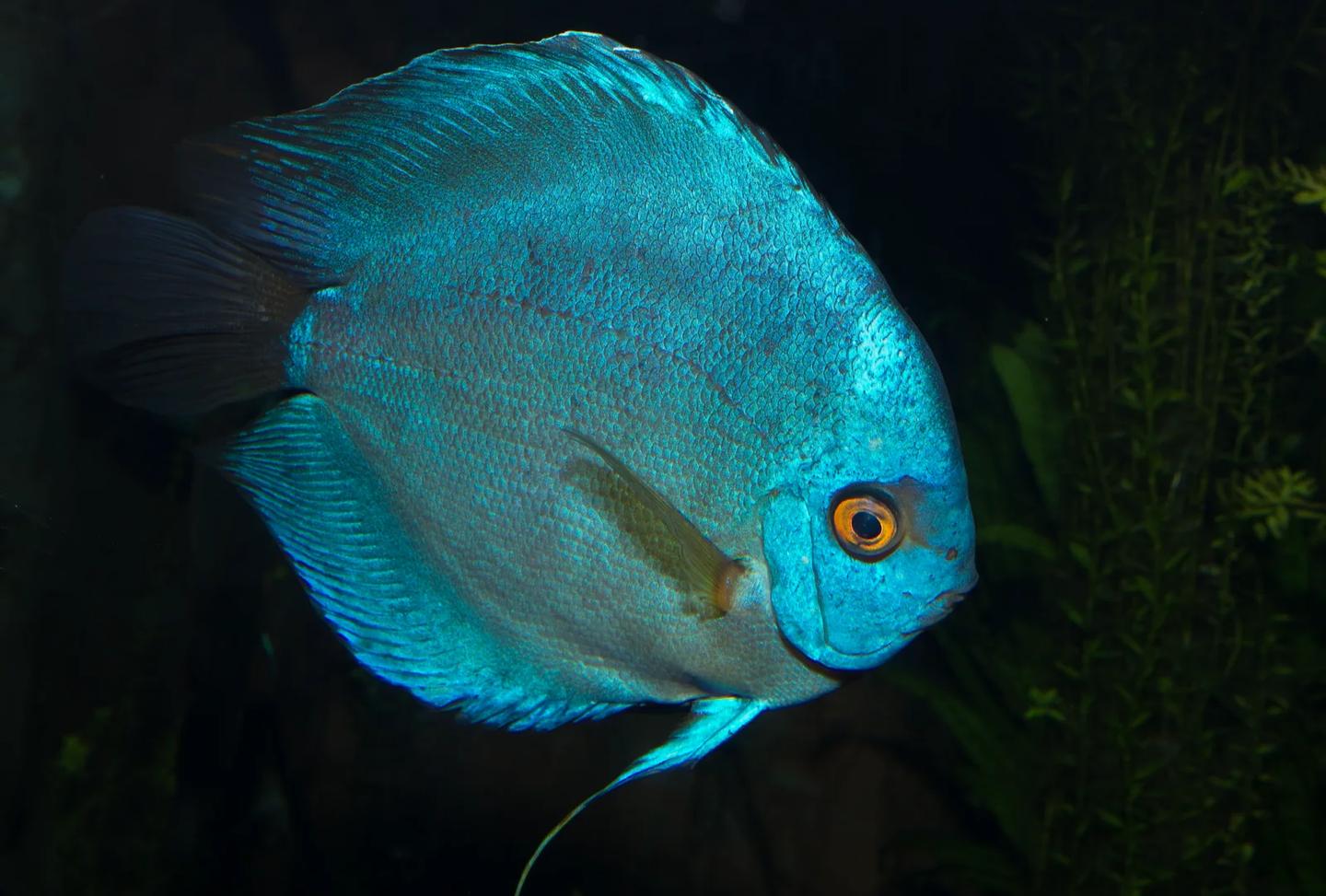
Discus are social Amazonian cichlids with specialised aquarium needs. OATA advises at least five fish, except an established breeding pair, and about 50 litres per adult—roughly 300 litres for six adults. Use that as a planning floor, then check usable dimensions, filtration, source water and the actual fish.
Maintain these water conditions for optimal health and vibrant colors
The Red Cover Discus (Symphysodon spp.) is a red freshwater cichlid colour form for a warm, mature aquarium managed around stable water quality. The name identifies the fish at genus level rather than as one exact species. WoRMS places Symphysodon in the family Cichlidae, while the Red Cover trade identity describes a brown-base red discus. This fish suits a keeper prepared to maintain a shoal, protect a mature biological filter and complete substantial weekly water changes.
At genus level, Wikipedia places Symphysodon in the Amazon river basin in Brazil. Discus are recognised for their distinctive shape, calm behaviour and many bright colours and patterns. Red Cover describes the red aquarium colour form; it should not be used to infer the fish’s sex or precise species.
For practical planning, OATA’s group-level discus guidance gives up to 20 cm across, 26–30°C, pH 6.0–7.5 and 4–12°dH. It recommends keeping at least five, with more being better, and allowing 50 litres of water volume for each adult. An aquarium of approximately 300 litres is its worked example for six adults.
| Suits | Not suited to |
|---|---|
| A mature aquarium maintained at 26–30°C | A system that cannot hold a stable warm temperature |
| A planned shoal of at least five discus | A routine single-fish plan |
| A spacious layout with cover and open swimming room | A cramped layout without group swimming space |
| A keeper able to test water and change 50% weekly | Infrequent testing or irregular maintenance |
Use the 20 cm figure as a space-planning reference for discus rather than treating a small dispatch grade as the fish’s final size. Floor space, group size and water volume must work together: litres alone do not compensate for a narrow footprint or a layout filled with ornaments.
One purchase supplies one Red Cover Discus in the size selected on the live selector. The labels run from 2 cm (2.5 cm), 3 cm (4 cm), 4cm (5cm), 5cm, 6cm, 7cm, 8cm, 9cm, 10cm and 11cm through to 12 cm (15 cm), 13 cm (16 cm) and XL selection HQ. Read the complete wording of the chosen label as its dispatch grade. The size you select is the size supplied, not the adult size.
A smaller grade does not justify a smaller permanent aquarium. Plan the mature system, shoal and filtration before ordering, then use the selector to choose the dispatch label that fits that plan. When adding a fish to an existing shoal, compare its size with the resident fish and leave enough space for every member to feed without being persistently displaced. OATA notes that discus kept singly or in groups that are too small will often become stressed or be bullied by larger, more dominant fish.
The exact species has not been identified, so the care advice here follows the genus Symphysodon and its care group. The scientific label is Symphysodon spp. This also means the 20 cm discus figure is used for planning the aquarium rather than presented as a measured endpoint for every Red Cover individual.
Sex is guaranteed only when the selected option explicitly states male or female. This Red Cover Discus listing has no sex-guaranteed option. Body colour, dispatch size and the fish shown in the gallery must not be used to infer the sex supplied.
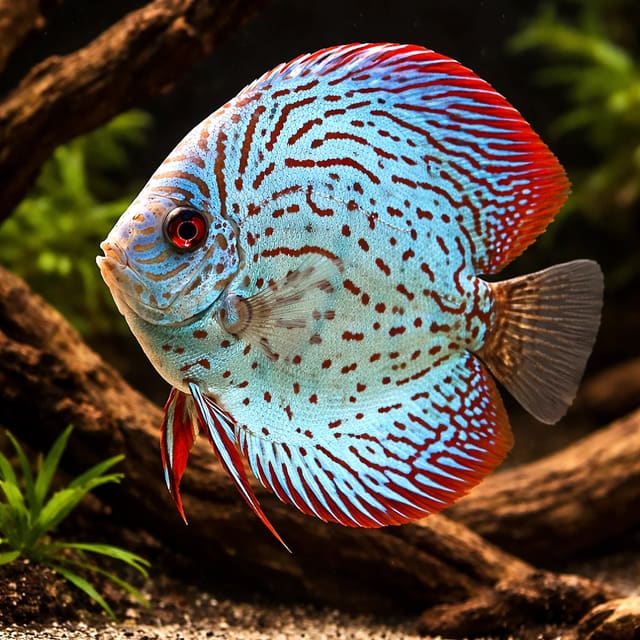
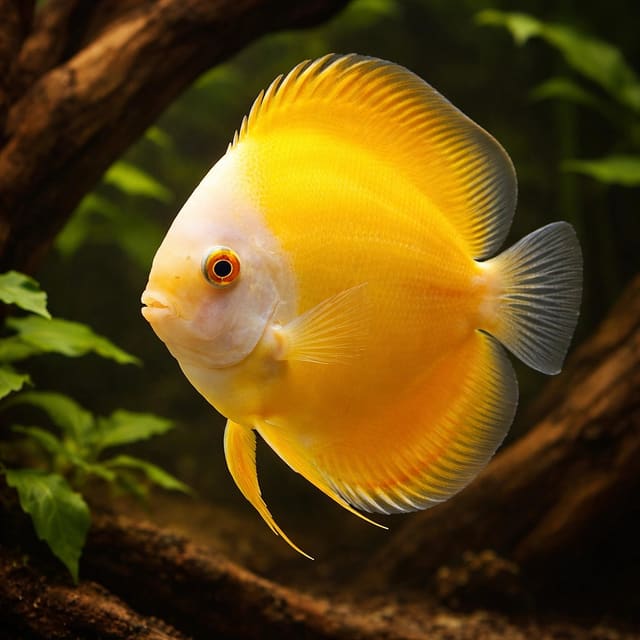
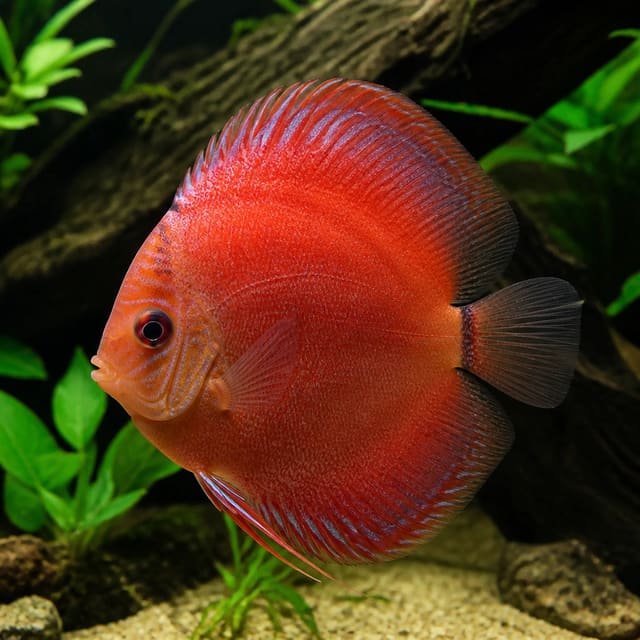
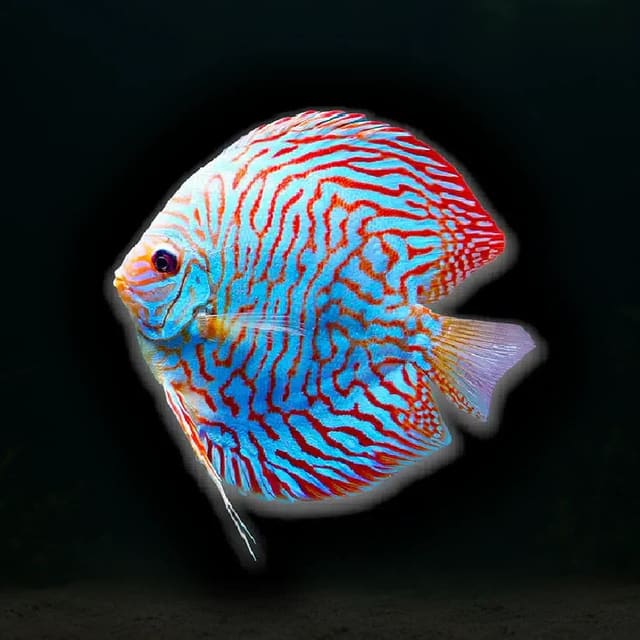
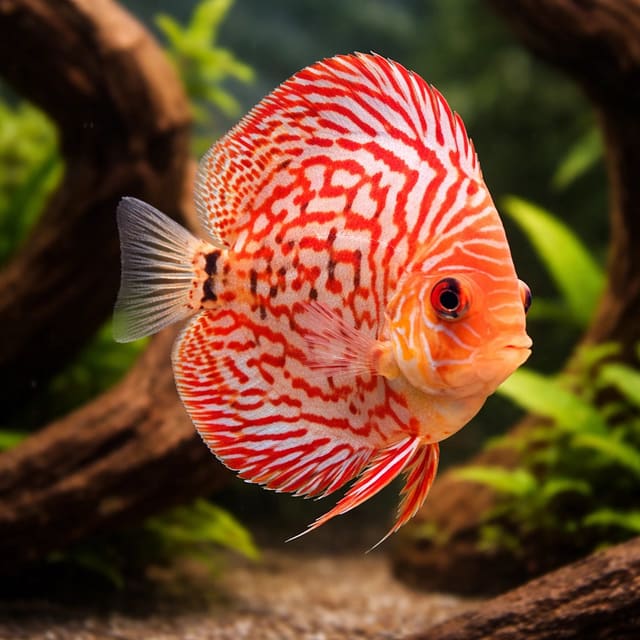
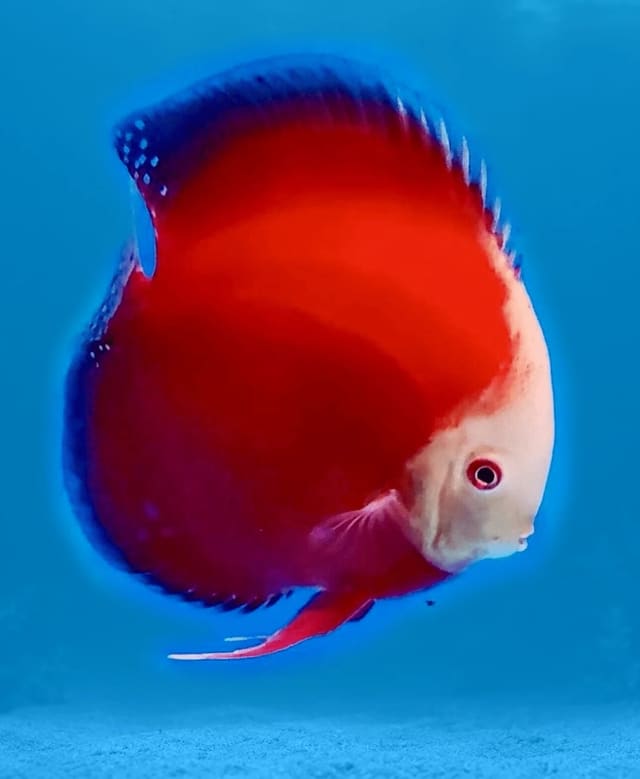
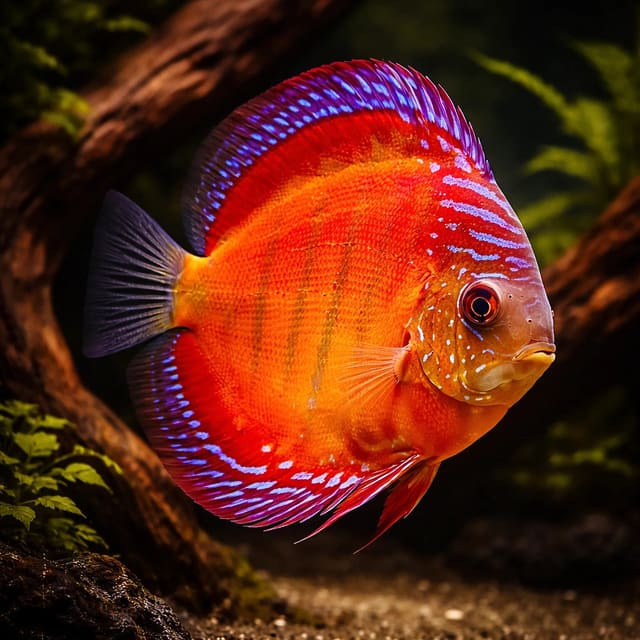
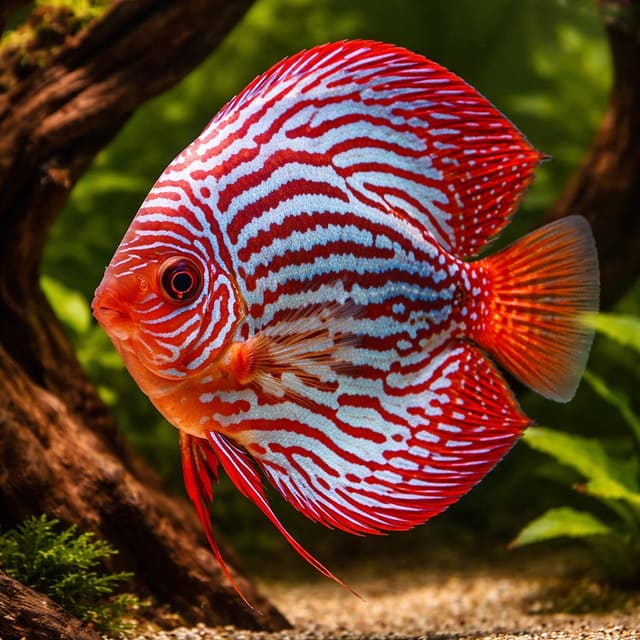
The gallery images are representative, based on reference photographs of this kind of animal, so colours can look slightly different from the live animal. Use the images to understand the rounded discus profile and the broad red colour-form presentation, while allowing for individual variation in colour and pattern.
Before selecting a grade, confirm that the aquarium can support at least five discus at 26–30°C, provide roughly 50 litres per adult and preserve both sheltered areas and open group swimming room. Browse the current discus collection when comparing colour forms, but treat every fish added as another contribution to the aquarium’s biological load.
Plan for at least five discus, with more being better. OATA describes discus as social shoaling fish and warns that individuals kept alone or in a group that is too small will often become stressed or bullied by larger, more dominant fish. A routine plan for one fish therefore conflicts with the social structure expected in a home aquarium.
Use 50 litres of water volume per adult as the starting allowance. Five adults produce an arithmetic allowance of 250 litres, but that figure does not account for displacement by substrate, wood, ornaments and equipment. For six adults, OATA gives approximately 300 litres as its direct example. A larger aquarium is easier to keep stable because changes in temperature and water quality occur less abruptly.
The aquarium’s shape matters as well as its nominal capacity. Given the size and shape of discus, OATA calls for plenty of floor space and open space in which to swim as a group. A tall but narrow vessel can hold a large number of litres while still giving the shoal too little room to turn, spread out at feeding time or move away from a dominant individual.
Do not rely on an eventual upgrade as the core plan. Build the permanent aquarium around the expected shoal and the up-to-20 cm group planning figure before the fish arrive. This avoids moving the group simply because dispatch-size fish have outgrown a temporary layout.
An established breeding pair is the limited exception OATA gives to group keeping. Two discus may sometimes be housed together when they are already an established breeding pair. Do not assume that two fish selected separately will form such a pair, and do not use colour, apparent size or gallery appearance to make that judgement.
Keep Red Cover Discus at 26–30°C, pH 6.0–7.5 and 4–12°dH. Maintain carbonate hardness within 3–10°dKH, ammonia at 0 mg/l, nitrite at 0 mg/l and nitrate at no more than 20 mg/l. These OATA discus values favour warm, soft-to-medium and slightly acidic water, with regular partial water changes used to preserve cleanliness and stability.
Choose a point within each range that the aquarium can hold consistently. A reading inside the range is only useful when ammonia and nitrite remain at zero and the system does not swing sharply between tests. Use our aquarium water chemistry guide to understand the role of each measurement, then compare your readings with the target through the water matcher.
Measure the replacement water as well as the aquarium when changing a large proportion. Treat tap water with a suitable conditioner before it enters the tank so chlorine or chloramine cannot damage the fish or biological filter. Keeping a simple written log makes a slow change easier to notice than isolated test results.
When a reading moves outside its target, check the fish, filter flow, recent feeding, stocking changes and replacement water. Correct the cause without making an abrupt chemistry change. If ammonia or nitrite appears after new fish are added, reduce further additions and monitor closely while protecting the mature filter and removing waste through the established maintenance routine.
Use a well-established biological filter and keep it running effectively. The RSPCA explains that aquarium filters are vital because fish release toxic ammonia, which beneficial bacteria convert first into nitrite and then into the safer nitrate. Discus should not be placed into an unfiltered or newly assembled system that has not developed this biological capacity.
Prepare and mature the aquarium before livestock arrives. Our first tropical aquarium guide explains the setup process, while the practical test for readiness is water quality: ammonia and nitrite must both read 0 mg/l. A heater bringing fresh water to 26–30°C does not make a new biological filter mature.
OATA advises increasing fish numbers slowly because the beneficial bacterial population must grow whenever more fish and food are added. Adding a full population faster than the filter can adapt may lead to new tank syndrome, with ammonia or nitrite rising to levels that can cause illness or death.
Check the filter for blockages during routine maintenance. If the media needs cleaning, rinse it lightly in aquarium water removed during a water change. Do not wash mature media under the tap, because chlorine or chloramine may kill the beneficial bacterial population established on it.
Filtration capacity must match the completed shoal and feeding routine, not merely the smallest dispatch grade. As each fish grows and eats more, its contribution to waste increases. Stable test results, clear filter flow and controlled nitrate show whether the whole system is keeping pace.
Give the shoal both sheltered areas and clear group swimming space. OATA recommends live plant cover because discus can be shy, together with branches, wood or other ornaments that create places of refuge. It also calls for open space where the group can explore and swim without continually navigating obstacles.
Use fine gravel or sand as the substrate. OATA recommends fine gravel or sand so discus can feed naturally by blowing at the substrate. If you use sand, keep accessible open patches where waste can be removed and the surface can be stirred during maintenance.
| Area | Purpose |
|---|---|
| Plant cover | Gives shy fish a place to retreat |
| Wood and branches | Adds shelter |
| Open floor | Allows substrate feeding and waste removal |
| Open water | Lets the shoal swim and explore together |
A useful layout does not fill every corner. Place cover around parts of the perimeter while preserving a broad central or front swimming area. Check the arrangement from the fish’s perspective: each discus should be able to leave cover, join the shoal and reach food without squeezing through a narrow gap.
OATA also recommends overhead aquarium lighting. Combine lighting with plant and structural cover so shy fish can choose between exposed and sheltered areas. The purpose of the cover is to provide security, not to conceal the fish so completely that changes in condition, breathing or feeding become difficult to observe.
Keep maintenance access in the design. You must be able to siphon solid waste, stir open sand and inspect the filter intake without dismantling the aquarium each week. A visually dense layout that prevents cleaning works against the clean, stable water these fish require.
Use specialised dried discus granules or pellets as the daily nutritional base, then add suitable frozen or live foods for variety. OATA describes discus as generally carnivorous and records aquatic invertebrates as their wild food. It recommends giving a specialised dried discus feed at least once each day so the diet supplies adequate vitamins.
Offer two or three smaller feeds across the day because discus have relatively small stomachs. At each feed, give only what the fish can finish within a few minutes. Remove or reduce any portion that remains uneaten, as decomposing food releases waste and can push ammonia, nitrite or nitrate away from their targets.
Spread food so every member of the shoal has a realistic chance to eat. Watch whether a dominant fish repeatedly holds the feeding area while another remains back, darkens, hides or loses condition. Multiple small feeds can create more than one opportunity, but they should not become extra unmeasured food.
Use appetite as both a feeding guide and a health observation. Reduced intake or lack of interest in food is one of OATA’s warning signs. Check temperature, ammonia, nitrite, nitrate and recent social changes before assuming the fish simply dislikes the food.
Adjust the measured amount as the fish and shoal grow, while retaining the same finish-within-minutes rule. Dispatch size alone does not determine a permanent ration: the correct amount depends on how quickly the group eats and whether water remains free of accumulating waste.
Complete a partial water change of 50% at least once every week. OATA strongly recommends this schedule for discus because clean water is central to maintaining their warm, stable conditions. Use a siphon to remove solid waste from the substrate rather than replacing clear-looking water while leaving debris behind.
Test the water at least weekly for ammonia and nitrite, and keep both at 0 mg/l. Check nitrate against its maximum of 20 mg/l and record temperature, pH and hardness often enough to identify movement. Testing before the water change shows what has accumulated; checking replacement water helps prevent an abrupt shift during the change.
Do not rinse biological media under the tap. Chlorine or chloramine can damage the bacteria that convert ammonia and nitrite.
Use the weekly results to refine feeding and stocking decisions. Rising nitrate, persistent debris or declining filter flow indicates that waste is accumulating faster than the routine removes it. Increase attention to portion control, substrate cleaning and filter checks rather than waiting for visible cloudiness.
A larger aquarium improves stability but does not remove the need for maintenance. Six adults in approximately 300 litres still require weekly testing and a 50% water change. The volume gives more buffer against rapid change; it does not consume waste or replace the biological filter.
Arrange for someone to receive the parcel so live fish are not left unattended. The fish is hand-bagged in pure oxygen and placed in an insulated poly box, with a heat pack used when the weather calls for it. Read the current delivery and Live Arrival Guarantee policy before ordering so the recipient understands the packing, receipt and claim requirements.
If anything has gone wrong, contact us the same day your fish arrive with your order number and the unboxing video.
Before the parcel arrives, follow OATA’s discus guidance by preparing the aquarium. Temperature should be within 26–30°C, ammonia and nitrite should both be 0 mg/l, and the biological filter should already be mature. The planned shoal, available floor space and tank-mate screening should be resolved before the new fish contributes additional waste.
OATA advises watching swimming behaviour, colour, temperament, breathing, appearance, body condition and feeding. During settling, note whether the fish joins the group, reaches food and uses both cover and open water. A fish hanging at the surface, sitting on the bottom, swimming erratically, breathing at an unusual rate or hiding more than normal needs prompt attention to water quality and social conditions.
Check for clear, bright eyes, intact scales and undamaged fins. Watch for white spots, fluffy growths, ulcerations, bumps, loss of scales or declining body condition. These signs do not identify a treatment by themselves; if you are concerned, test temperature, ammonia, nitrite, nitrate and pH, then contact Tropical Fish Co for guidance.
Keep the normal feeding limits during settlement. Offer a small portion and observe appetite rather than adding extra food to tempt a reluctant fish. Uneaten food can worsen the water precisely when the filter is adapting to a higher biological load. Delay further livestock additions until feeding, behaviour and test results are steady.
Treat medium-sized tetras, Corydoras, plecos and dwarf cichlids as possible companion kinds, not automatic matches. OATA names these groups among the limited tank mates that may suit a discus aquarium. Every candidate must still fit 26–30°C, pH 6.0–7.5, 4–12°dH, the available space and the feeding pattern used for the discus shoal.
Begin with the discus aquarium’s requirements rather than building an ordinary community and trying to fit discus into it later. A candidate that cannot thrive at the established temperature or water chemistry should not be added. The same applies when its adult space requirement would push the aquarium beyond the planned 50-litre allowance per adult discus or remove essential open swimming room.
| Check | Decision |
|---|---|
| Water | Needs must fit 26–30°C, pH 6.0–7.5 and 4–12°dH |
| Space | The completed stocking plan must preserve discus floor space |
| Behaviour | The companion must not prevent the shoal feeding or using cover |
| Waste | The mature filter must handle the added biological load |
OATA explains that these companion kinds may help discus feel more confident, because discus use smaller dither fish to check that no predators are near. That benefit is conditional on each companion sharing the aquarium’s warm water and having enough room for its own social needs.
Corydoras, plecos and dwarf cichlids also remain conditional candidates. Check each proposed animal individually rather than assuming every member of a broad group shares identical temperature, chemistry, space and behaviour requirements. Their feeding access must be planned without increasing portions so far that uneaten food accumulates.
Introduce livestock slowly and retest ammonia and nitrite after the biological load changes. Compatibility includes the aquarium’s ability to process waste: two behaviourally calm animals are still a poor combination if their combined stocking and feeding overwhelm the filter.
Keep at least five discus and provide more where the aquarium can support them. OATA describes discus as less aggressive than some close cichlid relatives, but it also warns that fish kept alone or in groups that are too small will often become stressed or bullied by larger, more dominant individuals. Calm behaviour does not remove the need to manage hierarchy.
Use the layout to give a pressured fish choices. Plant cover, branches and wood create refuge, while an open feeding and swimming area allows the group to remain together. A fish should be able to leave a dominant individual without becoming trapped behind an ornament or excluded from food.
Do not diagnose sex or pair status from dominance, colour or body size. OATA notes that discus are difficult to sex unless they are in breeding condition. The exception allowing two fish applies to an already established breeding pair, not to two fish that merely occupy the same area.
Recheck compatibility after every addition because the social and biological balance has changed. Monitor whether all fish continue to feed, use open water and retain normal breathing and condition. If aggression, hiding or appetite changes persist, test the water and seek guidance before adding livestock or attempting a treatment.
The safest compatibility rule is straightforward: start with the four companion kinds OATA names, then accept a candidate only when its water, space, behaviour and feeding needs fit the established discus aquarium.
Use OATA’s discus planning figure of up to 20 cm across. The fish is identified as Symphysodon spp., so plan around that care-group figure rather than treating its dispatch grade as a final size.
OATA's discus guidance recommends 50 litres of water volume per adult and gives approximately 300 litres for six adults, with plenty of floor space, cover and open group swimming room.
Keep Red Cover Discus in a group of at least five, with more being better where the aquarium can support them. OATA warns that single fish or undersized groups will often become stressed or bullied.
Discus have specialised care requirements: OATA's discus guidance calls for a mature filtered aquarium at 26–30°C, a 50% water change at least once every week and ammonia and nitrite at 0 mg/l, so plan that routine before buying.
Feed Red Cover Discus specialised dried discus granules or pellets at least daily, with suitable frozen or live foods for variety. OATA says discus appreciate two or three smaller feeds through the day, each no more than they can eat within a few minutes.
OATA’s discus guidance gives 26–30°C, pH 6.0–7.5 and 4–12°dH, with ammonia and nitrite at 0 mg/l and nitrate no higher than 20 mg/l.
OATA describes discus as less aggressive than some close cichlid relatives but warns that discus kept singly or in groups that are too small will often become stressed or bullied by larger, more dominant fish, so keep at least five and provide cover and open space while monitoring fins, feeding and hiding behaviour.
OATA names medium-sized tetras, Corydoras, plecos and dwarf cichlids as possible discus companions. Use them only when their temperature, chemistry, space, feeding and behaviour needs fit the aquarium.
It is hand-bagged in pure oxygen and packed in an insulated poly box, with a heat pack when the weather calls for it. Someone must receive it. Start a short continuous unboxing video before opening the parcel, showing it sealed, then being opened and the fish still in the bag; float the bag for 20–30 minutes and never pour bag water into the aquarium.
No reviews for this item yet. Bought one? Honest reviews only, good or bad.
What customers say about ordering from us
I have a small group of long finned mountain minnows. So was delighted to be able to order ten of this variety to increase the genetics in my tank . The ones I recieved are healthy but it’s to early to give a verdict on wether they are of a long finned type since they are small currently.
Gordon Walker · 23 Sept 2026
100% success travel and "installation". Pleased with quality of purchase. The Siamese fighter a bit "shy" so have not yet seen him at his best yet but looking good. Happy customer. GG
George E Garratt · 21 Sept 2026
Reviews of our shop, collected by Judge.me, an independent third-party review collector. Newest first.