Moderate
Cockatoo Dwarf Cichlid (Apistogramma cacatuoides)
22–29°C · pH 5–6 · 54L
£10.99

A colorful, compact Amazonian dwarf cichlid that rewards keepers with personality, breeding behavior, and striking display colors. Moderate care, semi-aggressive. 24-27C, pH 5.5-7.0.
Adult size is the maximum length this species reaches at full maturity (scientific sources). The livestock you receive will be younger and smaller — pick a size above for the actual shipping size. Product-photo provenance and any image-specific limitations are stated on the listing.
Apistogramma pucallpaensis
Save when buying multiple fish. Each quantity is one fish; sex and pair formation are not guaranteed unless the selected variant explicitly states them.
Confirm your email, then we’ll send an availability message for this exact item if it returns within 180 days.
This request is only for this product—no newsletter or other promotions. A mail-provider retry may very rarely duplicate the same availability message. Unconfirmed addresses are removed after 48 hours. See our privacy policy.
A colorful, compact Amazonian dwarf cichlid that rewards keepers with personality, breeding behavior, and striking display colors. Moderate care, semi-aggressive. 24-27C, pH 5.5-7.0.
Adult size is the maximum length this species reaches at full maturity (scientific sources). The livestock you receive will be younger and smaller — pick a size above for the actual shipping size. Product-photo provenance and any image-specific limitations are stated on the listing.
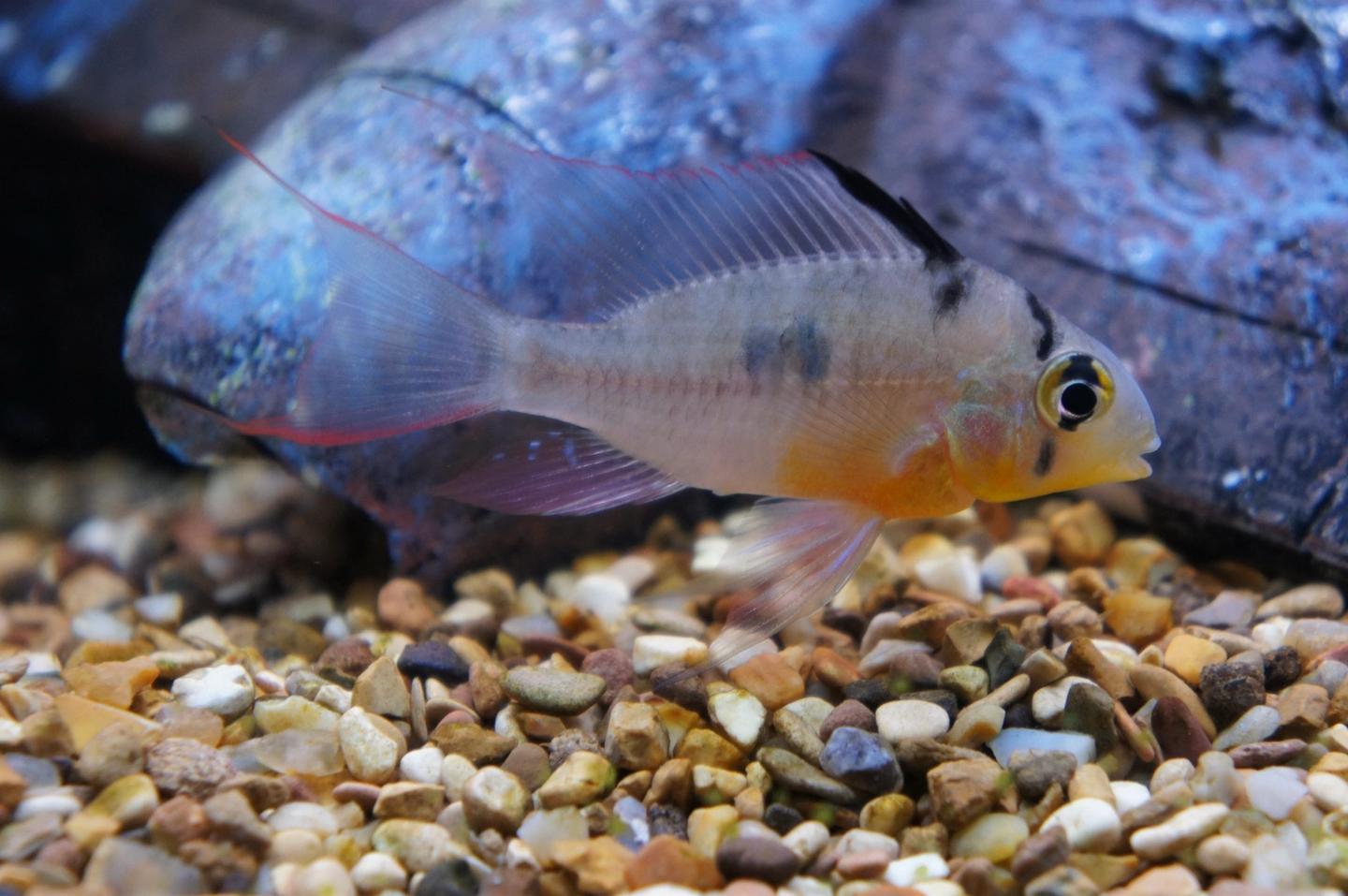
Cichlids are a family of roughly 1,800 accepted species, not one care type. Before buying, identify the exact species and source, then compare adult measurement, usable tank dimensions, social system, territory, tested water, diet and an exit plan. No family-wide minimum tank, water range or tank-mate list is safe.
Maintain these water conditions for optimal health and vibrant colors
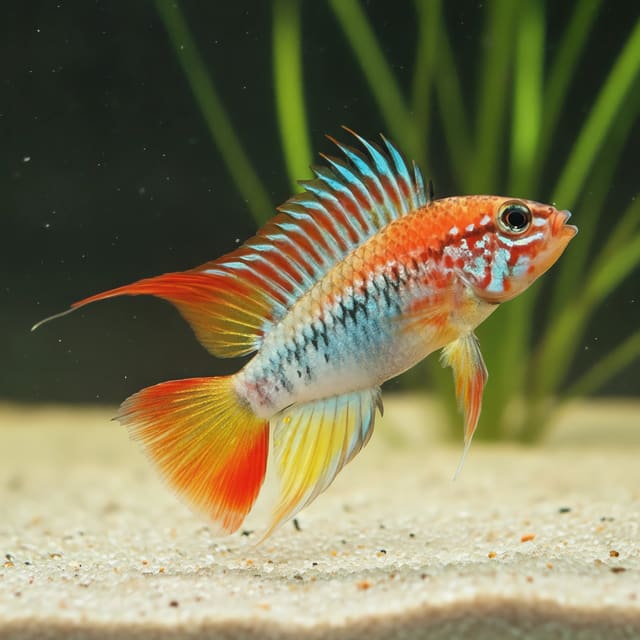
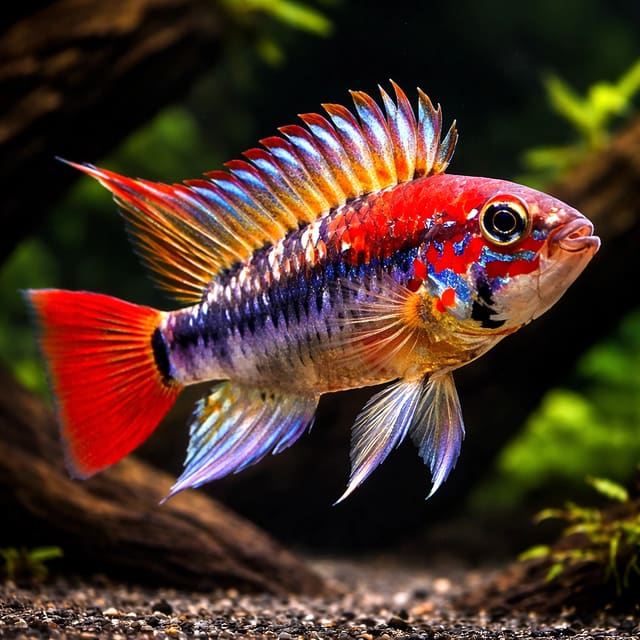
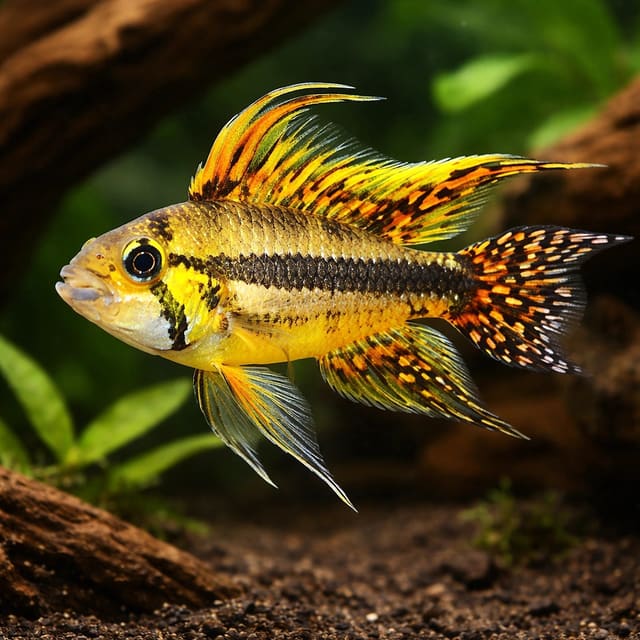
The Pucallpa dwarf cichlid (Apistogramma pucallpaensis) is a colorful, compact Amazonian species from the Pucallpa region of Peru. This captivating fish is highly prized among dwarf cichlid enthusiasts and is one of the more visually striking species available as tropical fish delivery UK. With an adult size of just 3.5 cm, this species is among the smallest apistogrammas, making it ideal for nano tank setups and planted aquariums. A. pucallpaensis thrives in soft, acidic water and is best kept in species-specific or carefully planned community aquariums where its territorial behavior can be managed. For aquarists seeking a rare, behavior-rich centerpiece fish that offers breeding potential and striking display colors, the Pucallpa dwarf cichlid delivers exceptional beauty and fascinating natural behavior.
Apistogramma pucallpaensis males display vivid coloration with intricate horizontal striping, vertical barring, and iridescent blue or green highlights on the face and gill covers. The dorsal fin is elongated and often shows red or orange accents, while the caudal fin may be lyre-shaped or rounded. Breeding males become especially vivid, with the body showing warm golden, orange, and red tones. Females are smaller and more subdued, typically showing a yellowish or olive base with darker markings that intensify when guarding eggs or fry. Both sexes have large, expressive eyes and a delicate body shape. The overall appearance is striking and elegant.
Apistogramma pucallpaensis is endemic to the Amazon basin in Peru, particularly the Pucallpa region. The natural habitat consists of slow-moving blackwater or clearwater tributaries with soft, acidic water, abundant leaf litter, submerged roots, and overhanging vegetation. The substrate is typically fine sand or mud, and water flow is minimal. The environment is shaded and quiet, with stable temperatures and very low mineral content. Replicating these specific conditions in the aquarium is essential for the health and breeding success of this species.
Provide a well-planted aquarium with soft, acidic water, subdued lighting, and plenty of cover. Use a sand substrate with driftwood, leaf litter, and live plants such as Anubias, Cryptocoryne, or Microsorum to create a naturalistic environment. Caves (coconut shells, clay pots, or driftwood) are essential for spawning and territorial behavior. Filtration should be efficient but gentle, with regular water changes to maintain excellent water quality. A minimum tank size of 80 litres is suitable for a pair or small group. Avoid bright lighting, strong water currents, and sharp swings in water chemistry.
As a carnivore, Apistogramma pucallpaensis requires a varied meaty diet. Offer quality micro pellets or granules as the staple, supplemented with frozen and live foods such as bloodworms, daphnia, brine shrimp, and other small invertebrates daily. Feed small portions multiple times per day to maintain optimal health and conditioning. Live foods are particularly beneficial for breeding pairs, as they help trigger spawning behavior and improve fry survival rates. Avoid overfeeding.
Apistogramma pucallpaensis is semi-aggressive, with males defending small territories around caves or preferred spawning sites. Males may become territorial during spawning, and territorial displays are common. Females are generally peaceful until spawning, at which point they become protective of their eggs and fry. Despite their territorial tendencies, this species is relatively peaceful compared to many other cichlids. They spend much of their time near the substrate, exploring cover and investigating hiding places.
Choose peaceful tankmates that share similar water requirements. Small peaceful tetras, Otocinclus, and peaceful small South American fish are suitable. Avoid large aggressive cichlids, fin-nipping fish, very boisterous community fish, much larger predatory fish, and other territorial bottom-dwelling cichlids in small tanks. In many cases, a species-only setup or a carefully planned biotope aquarium offers the best results.
Apistogramma pucallpaensis is typically cave-spawning with female-led brood care. Provide soft, acidic water (pH 5.5-6.5), hiding places, and a quiet tank. Males may become territorial during spawning, and fry are best raised on infusoria or newly hatched brine shrimp as first foods. Eggs hatch in approximately three days, and fry become free-swimming several days later. Breeding success improves with excellent water quality, live foods for conditioning adults, and minimal disturbance.
At Tropical Fish Co, we specialize in sourcing rare and beautiful South American dwarf cichlids, including Apistogramma pucallpaensis. Every fish is carefully selected, quarantined, and health-checked before being made available. We work with ethical suppliers who prioritize sustainable collection practices. Our expert team provides detailed care guidance and ongoing support. With nationwide UK delivery, a live arrival guarantee, and a commitment to customer satisfaction, Tropical Fish Co is your trusted partner for premium aquarium fish. Order today and discover the beauty of rare Apistogramma species.
No reviews for this item yet. Bought one? Honest reviews only, good or bad.
What customers say about ordering from us
I have a small group of long finned mountain minnows. So was delighted to be able to order ten of this variety to increase the genetics in my tank . The ones I recieved are healthy but it’s to early to give a verdict on wether they are of a long finned type since they are small currently.
Gordon Walker · 23 Sept 2026
100% success travel and "installation". Pleased with quality of purchase. The Siamese fighter a bit "shy" so have not yet seen him at his best yet but looking good. Happy customer. GG
George E Garratt · 21 Sept 2026
Reviews of our shop, collected by Judge.me, an independent third-party review collector. Newest first.