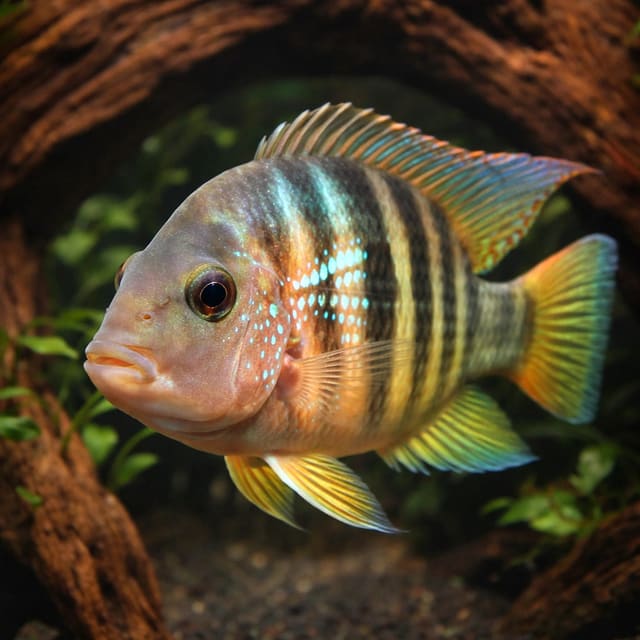
Demon Eartheater (Satanoperca jurupari)
24–26°C · pH 6.3–7 · 756L
£49.99

A specialist large South American eartheater for mature soft-water aquariums, best kept in a group over fine sand.
Satanoperca daemon
Confirm your email, then we’ll send an availability message for this exact item if it returns within 180 days.
This request is only for this product—no newsletter or other promotions. A mail-provider retry may very rarely duplicate the same availability message. Unconfirmed addresses are removed after 48 hours. See our privacy policy.
A specialist large South American eartheater for mature soft-water aquariums, best kept in a group over fine sand.
Maintain these water conditions for optimal health and vibrant colors
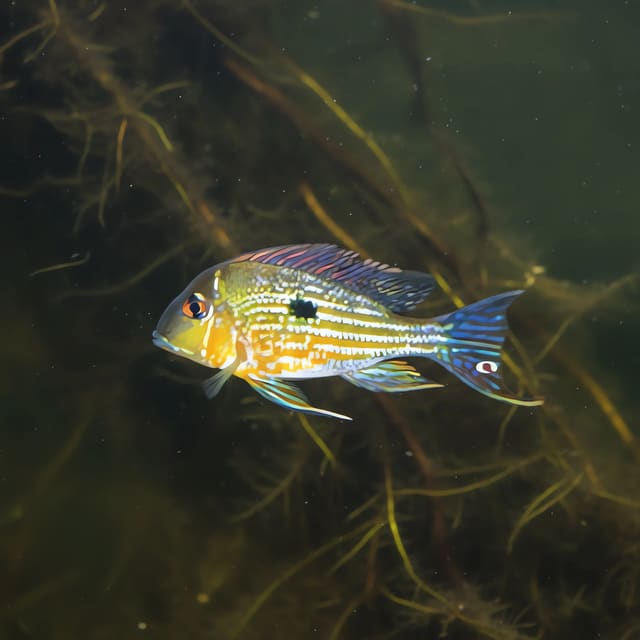
Threespot Eartheater (Satanoperca daemon) is a large, peaceful South American cichlid for experienced keepers who can provide a mature soft-water aquarium. It is sometimes confused with the Jurupari or Demon Eartheater, but this is the distinct three-spotted species historically described as Geophagus daemon. When it is available, it is best chosen for a spacious blackwater-style display rather than a small mixed community tank.
Satanoperca daemon is associated with the Rio Negro, upper Orinoco and connected blackwater systems, where the water is warm, acidic, mineral-poor and stained by tannins. In the aquarium this matters because the fish is sensitive to poor water quality and sudden changes. It should not be added to a new tank, and it should not be treated as a general beginner cichlid.
The appeal is its behaviour. Like other eartheaters, it takes mouthfuls of sand, filters tiny food items, then expels the sand through the mouth and gill openings. Fine soft sand is therefore not decoration; it is part of the fish's daily welfare. Sharp gravel, dirty substrate or unstable water can quickly lead to stress and health problems.
Plan this species around footprint, filtration and stability. A group needs a broad base with open sand, driftwood, root tangles and calmer shaded areas. Use strong biological filtration and regular large water changes, but avoid blasting the fish with harsh current. Mechanical filtration should also catch fine particles because eartheaters naturally stir the substrate while feeding.
For long-term care, aim for soft acidic water and excellent cleanliness. Seriously Fish lists 24-28°C, pH 3.5-6.0 and low hardness for aquarium care, while FishBase records tropical warm water and soft conditions. Aquarium Glaser also notes that this species is beautiful and peaceful but sensitive, with success depending heavily on clean water, group keeping and high-quality food.
This is a benthic sifter, so feed small foods that reach the lower levels. Use fine sinking granules, quality cichlid foods with some vegetable matter, and small frozen or live foods such as Artemia, mosquito larvae and bloodworm in sensible portions. Several small meals are better than one heavy feed, because large items are not a natural match for the way this species eats.
The Threespot Eartheater is usually peaceful with fish that enjoy similar soft-water conditions. Larger peaceful tetras, calm South American cichlids and compatible warm-water catfish can work in a properly sized aquarium. Avoid aggressive cichlids, hard-water species, tiny fish that may be swallowed, and any tank mate that competes aggressively on the substrate.
This product is Satanoperca daemon. It should not be mixed up with our separate Demon Eartheater (Satanoperca jurupari) listing. The two names are close in the trade, but the care notes and identity should stay separate.
This fish is currently out of stock. When available, eligible livestock orders are covered by our Live Arrival Guarantee. Because Satanoperca daemon is a specialist species, prepare the aquarium before ordering rather than buying first and adjusting the setup later.
No reviews for this item yet. Bought one? Honest reviews only, good or bad.
What customers say about ordering from us
I have a small group of long finned mountain minnows. So was delighted to be able to order ten of this variety to increase the genetics in my tank . The ones I recieved are healthy but it’s to early to give a verdict on wether they are of a long finned type since they are small currently.
Gordon Walker · 23 Sept 2026
100% success travel and "installation". Pleased with quality of purchase. The Siamese fighter a bit "shy" so have not yet seen him at his best yet but looking good. Happy customer. GG
George E Garratt · 21 Sept 2026
Reviews of our shop, collected by Judge.me, an independent third-party review collector. Newest first.