Advanced
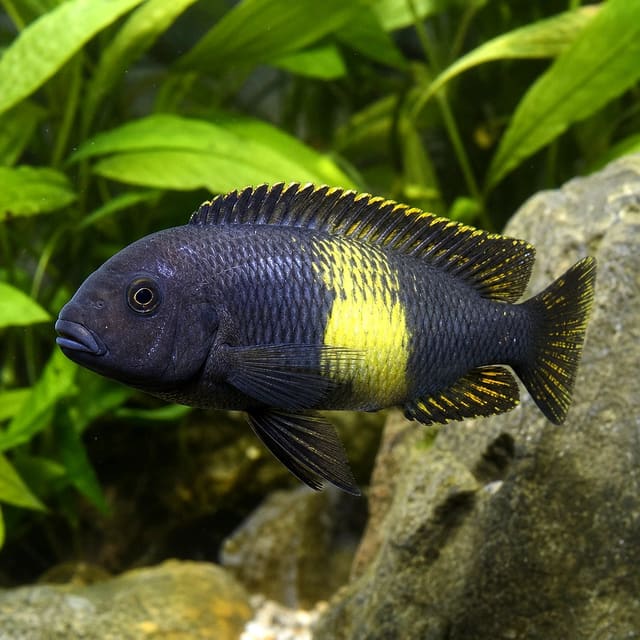
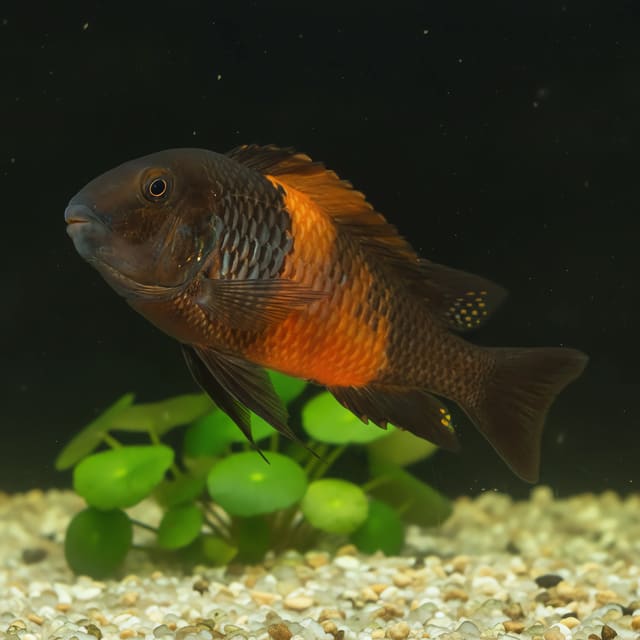
Duboisi, White-Spotted Cichlid (Tropheus duboisi)
23–27°C · pH 8–8.6 · 110L
From £17.39Some sizes on sale

Ulwille locality form of Tropheus brichardi — an expert-level, herbivorous Tanganyika cichlid (~15 cm) best kept as a structured group in 300 L+.
Adult size is the maximum length this species reaches at full maturity (scientific sources). The livestock you receive will be younger and smaller — pick a size above for the actual shipping size. Product-photo provenance and any image-specific limitations are stated on the listing.
Tropheus brichardi
Shoaling fish: kept in a group they feel safer, stay calmer and show their best colour.
Confirm your email, then we’ll send an availability message for this exact item if it returns within 180 days.
This request is only for this product—no newsletter or other promotions. A mail-provider retry may very rarely duplicate the same availability message. Unconfirmed addresses are removed after 48 hours. See our privacy policy.
Ulwille locality form of Tropheus brichardi — an expert-level, herbivorous Tanganyika cichlid (~15 cm) best kept as a structured group in 300 L+.
Adult size is the maximum length this species reaches at full maturity (scientific sources). The livestock you receive will be younger and smaller — pick a size above for the actual shipping size. Product-photo provenance and any image-specific limitations are stated on the listing.
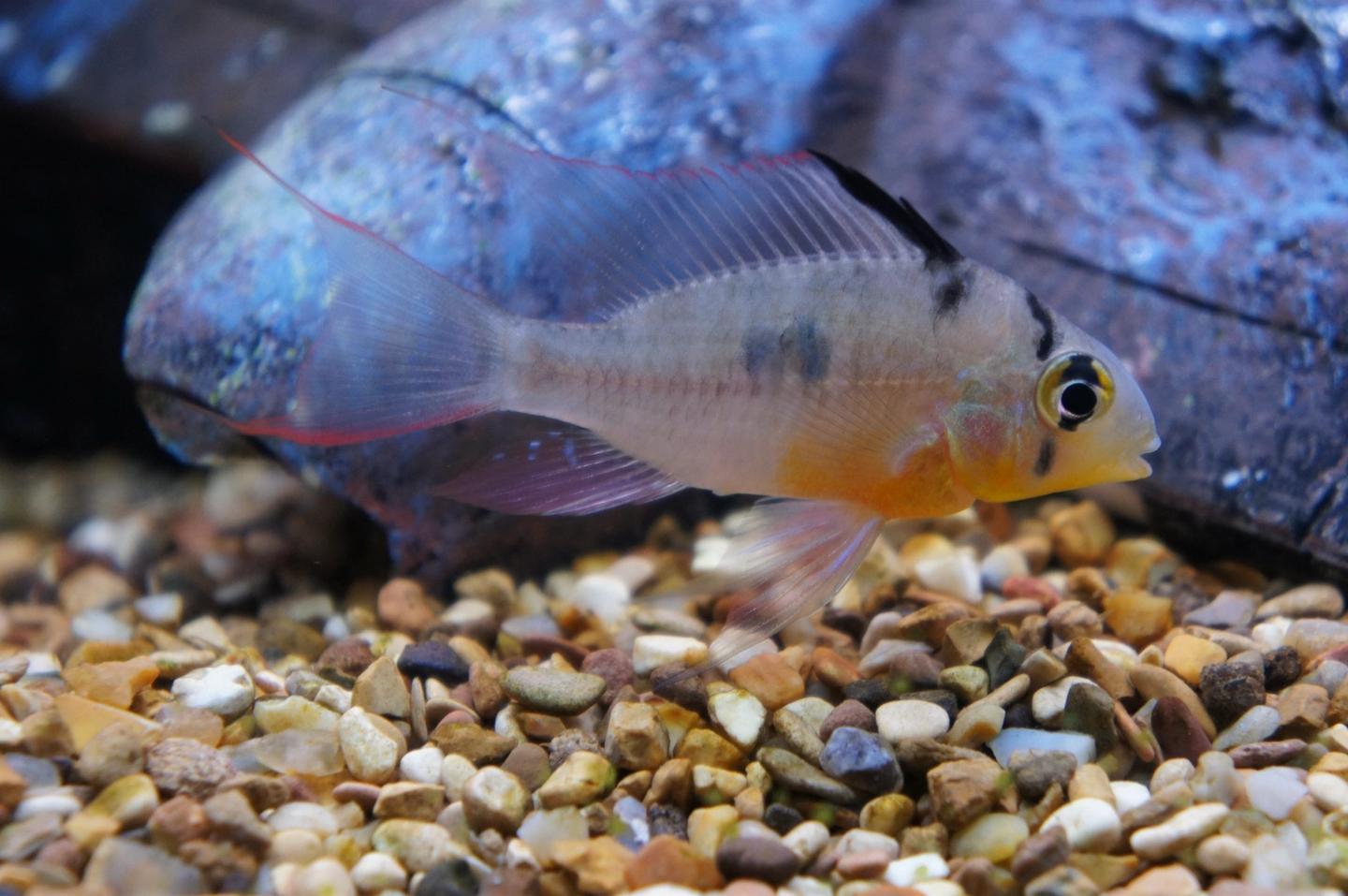
Cichlids are a family of roughly 1,800 accepted species, not one care type. Before buying, identify the exact species and source, then compare adult measurement, usable tank dimensions, social system, territory, tested water, diet and an exit plan. No family-wide minimum tank, water range or tank-mate list is safe.
Maintain these water conditions for optimal health and vibrant colors
Get the group dynamics right and everything else about Tropheus brichardi Ulwille follows. This Lake Tanganyika locality form is recorded as semi-aggressive with a territorial streak, and the established answer is structure: conspecifics kept together in a proper group, in a tank large enough that no individual can police all of it. It is a project fish — and for expert keepers, that is exactly the appeal.
Ulwille adults reach around 15 cm and live in the region of ten years, so the aquarium has to be planned rather than improvised. The record sets the floor at 300 litres of hard, alkaline Tanganyika water: 24 to 27 °C, pH 7.5 to 8.5, hardness from 12 up to 30 dGH. Feeding is non-negotiable — this is a herbivore, and a vegetable-led diet is a large part of what separates thriving Tropheus from struggling ones. The expert care rating is there for good reason, yet none of the individual requirements is mysterious; the discipline lies in keeping all of them steady at once, every week, for years. Budget for good filtration and a fixed maintenance routine from day one — with water this hard and a group this demanding, consistency is bought with equipment and habit rather than luck.
Visually it rewards the effort: a settled Ulwille group working the middle of a rock-built Tanganyika tank is the kind of display that stops people mid-sentence.
Alongside its own group, the only companions the record supports are other large, similarly assertive Lake Tanganyika cichlids in appropriately sized setups — and it explicitly warns off shell dwellers and very passive species. Avoid small fish that would be bullied or outcompeted, fin-nippers, large aggressive cichlids, soft-water fish, and mixed cichlid communities with incompatible diets. Fish are sent with a licensed live-animal courier and arrive backed by our live arrival guarantee.
No reviews for this item yet. Bought one? Honest reviews only, good or bad.
What customers say about ordering from us
I have a small group of long finned mountain minnows. So was delighted to be able to order ten of this variety to increase the genetics in my tank . The ones I recieved are healthy but it’s to early to give a verdict on wether they are of a long finned type since they are small currently.
Gordon Walker · 23 Sept 2026
100% success travel and "installation". Pleased with quality of purchase. The Siamese fighter a bit "shy" so have not yet seen him at his best yet but looking good. Happy customer. GG
George E Garratt · 21 Sept 2026
Reviews of our shop, collected by Judge.me, an independent third-party review collector. Newest first.