

Easy
Microrasbora kubotai - Tropical Fish for Sale UK
22–26°C · pH 6–7.5 · 30L
£4.99

A tiny, peaceful shoaling catfish with a charming spotted pattern that thrives in soft, clean water and a well-planted community aquarium. Moderate care, peaceful. 22-26C, pH 6.0-7.5.
Adult size is the maximum length this species reaches at full maturity (scientific sources). The fish you receive will be younger and smaller — pick a size variant above for the actual shipping size. Photos are AI-enhanced, so the live fish may show subtle colour or marking differences.
Corydoras habrosus
Not home? Message us and we'll delay delivery.
A tiny, peaceful shoaling catfish with a charming spotted pattern that thrives in soft, clean water and a well-planted community aquarium. Moderate care, peaceful. 22-26C, pH 6.0-7.5.
Adult size is the maximum length this species reaches at full maturity (scientific sources). The fish you receive will be younger and smaller — pick a size variant above for the actual shipping size. Photos are AI-enhanced, so the live fish may show subtle colour or marking differences.
Maintain these water conditions for optimal health and vibrant colors
The Salt and Pepper Catfish (Corydoras habrosus) is one of the most endearing dwarf catfish available for the aquarium hobby, bringing charm and utility to even the smallest community tanks. Native to the Upper Orinoco River basin in Venezuela and Colombia, this tiny shoaling catfish rarely exceeds 2.5cm in length, making it ideal for nano aquariums and carefully planned community setups. Its delicate spotted pattern — a mix of dark speckles over a pale body — gives it the "salt and pepper" appearance that has captivated aquarists worldwide. Unlike many bottom dwellers, this species is active during the day, constantly foraging and interacting with its group in a delightful display of natural behaviour. For hobbyists seeking small aquarium fish that combine peaceful temperament with fascinating social dynamics, the Salt and Pepper Catfish is an excellent choice for sale UK-wide.
Quick Care Summary: Peaceful dwarf catfish; keep in groups of 6+; needs soft, clean water and fine sand substrate; adult size 2.5cm; minimum 60L aquarium.
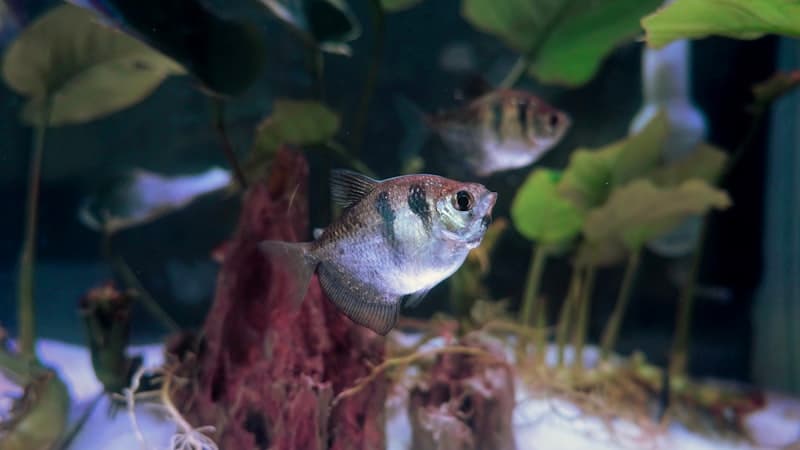
The Salt and Pepper Catfish displays a distinctive peppered pattern of dark spots and blotches distributed across a pale cream or silvish body, creating the characteristic "salt and pepper" look. The body is compact and stocky with a slightly arched back, typical of the Corydoras genus, and features the characteristic barbels around the mouth used for foraging in substrate. The fins are generally translucent with faint markings, and the species lacks the dramatic colouration of some larger Corydoras but compensates with understated elegance. Adults typically reach just 2.5cm, making them one of the smallest members of the Corydoras family. Sexual dimorphism is subtle but present: females are noticeably rounder and slightly larger when viewed from above, while males remain more streamlined. The armoured plating along the flanks gives the fish a segmented appearance and provides natural protection. Healthy specimens display active behaviour and bright, clear eyes; faded colouration or clamped fins can indicate stress or poor water quality.
In the wild, Corydoras habrosus inhabits the Upper Orinoco River basin spanning Venezuela and Colombia, where it is typically found in slow-moving tributaries, shallow streams, and flooded forest areas. These habitats are characterised by soft, acidic water, dense leaf litter, and fine sand or mud substrates. The water is often tea-coloured from tannins leached by decaying organic matter, creating a gentle, sheltered environment with minimal current. Aquatic and marginal vegetation provides cover and breeding sites, while the abundant biofilm and microorganisms support a diverse invertebrate community on which the catfish feed. Seasonal flooding and water level fluctuations are common, and the species has adapted to exploit temporary pools and shallow margins where food is plentiful. Understanding this natural environment is key to replicating suitable conditions in the aquarium and ensuring the long-term health of your Salt and Pepper Catfish.
A minimum aquarium size of 60 litres is recommended, though larger is always better for maintaining stable water parameters and accommodating a proper shoal. The substrate must be fine sand or very smooth rounded gravel to protect the delicate barbels, which are essential sensory organs for foraging. Avoid sharp-edged substrates at all costs, as damage to the barbels can lead to infection and feeding difficulties. Provide plenty of cover in the form of driftwood, smooth rocks, and live plants such as Cryptocoryne, Anubias, or Java Fern. Floating plants help diffuse lighting and create the dappled effect found in natural habitats. Water flow should be gentle to moderate; a sponge filter or canister filter with adjustable output works well. Lighting should be subdued to encourage natural behaviour, and leaf litter (Indian almond leaves or oak leaves) can be added to replicate the tannin-rich conditions of their native streams. Regular partial water changes of 20-30% weekly are essential to maintain the soft, clean water this species requires.
Maintaining optimal water parameters is critical for the health of Corydoras habrosus. The temperature range should be kept between 22-26°C, with 24°C being ideal. pH should be slightly acidic to neutral, ranging from 6.0-7.5, though the species adapts best to softer, more acidic conditions closer to 6.5. Water hardness should be low to moderate; aim for soft water where possible. Ammonia and nitrite must always be at zero, and nitrates should be kept below 20ppm through regular water changes and efficient biological filtration. This species is sensitive to poor water quality, so investing in a reliable test kit and maintaining a consistent maintenance schedule is essential. Avoid using copper-based medications, as they can be toxic to catfish. Stable parameters are more important than chasing precise numbers; sudden fluctuations in temperature or chemistry can cause stress and illness. Ensure good oxygenation, especially in warmer water, as dissolved oxygen levels decrease with rising temperature.
Top Tip: Use Indian almond leaves to naturally soften water and provide beneficial tannins — they also encourage natural foraging behaviour as they break down.
The Salt and Pepper Catfish is an omnivore with a preference for small, sinking foods. In the wild, they feed on insect larvae, small crustaceans, biofilm, and organic detritus. In the aquarium, offer a varied diet of high-quality micro pellets or wafers designed for bottom feeders, supplemented with frozen or live foods such as bloodworms, daphnia, brine shrimp, and microworms. Finely crushed flake foods can also be offered occasionally. Feed small amounts once or twice daily, ensuring food reaches the substrate where the catfish feed. Avoid overfeeding, as uneaten food can quickly degrade water quality in a small tank. Because of their small size and relatively shy nature, ensure they are not outcompeted by more aggressive or faster-moving tank mates at feeding time. A varied diet promotes vibrant health, strong immune function, and encourages breeding behaviour. Supplement with spirulina-based wafers or blanched vegetables (such as finely chopped courgette or spinach) to provide essential plant matter.
Corydoras habrosus is a highly social shoaling species that must be kept in groups of at least six individuals, though eight or more is preferable. In the wild, they form large aggregations for safety and coordinated foraging. In the aquarium, a well-sized group will display confident, active behaviour, constantly exploring the substrate and interacting with one another. Solitary specimens or those kept in inadequate numbers become stressed, withdrawn, and more susceptible to disease. The species is peaceful and entirely non-aggressive, making it an ideal addition to community aquariums. They spend most of their time foraging on the bottom, using their barbels to sift through sand in search of food, but will occasionally dart to the surface to gulp air (a natural behaviour for Corydoras species). Observing a group of Salt and Pepper Catfish is endlessly entertaining; their coordinated movements and gentle interactions make them a joy to keep.
Choosing the right tank mates is essential to the wellbeing of Corydoras habrosus. Ideal companions include small peaceful tetras (such as Ember Tetras, Neon Tetras, or Cardinal Tetras), rasboras (particularly Boraras or Trigonostigma species), small livebearers like Endler's Guppies, and other peaceful Corydoras species. Shrimp and snails also make excellent companions and will not compete aggressively for food. Avoid any large, aggressive, or predatory fish, as well as fin-nippers such as some barb species. Boisterous bottom dwellers or very large cichlids should also be excluded. Because of their small size and gentle nature, tank mates must be chosen with care to avoid intimidation or predation. A well-planned community tank featuring similarly sized, peaceful species will allow the Salt and Pepper Catfish to thrive and display their full range of natural behaviours.
Breeding Corydoras habrosus is achievable for patient aquarists willing to provide the right conditions. A well-conditioned group kept in soft, clean water and fed a varied diet of high-quality foods will eventually spawn. Breeding can be triggered by performing a series of large, cool water changes to simulate the onset of the rainy season in their native habitat. Females will become noticeably rounder with eggs, and males will begin to pursue them actively. Spawning typically occurs in the early morning, with the female laying small clusters of sticky eggs on aquarium glass, plant leaves, or smooth surfaces. A single spawning event may produce 20-40 eggs. The adults do not guard the eggs and may consume them if left in the breeding tank, so many breeders transfer eggs to a separate rearing tank with gentle aeration and methylene blue to prevent fungus. Eggs hatch in 3-5 days, and the tiny fry require infusoria or liquid fry food initially, graduating to newly hatched brine shrimp and microworms as they grow.
At Tropical Fish Co, we are proud to offer healthy, quarantined Salt and Pepper Catfish sourced from trusted suppliers and carefully acclimated to ensure they arrive in peak condition. Every fish is inspected for health, vitality, and colour before dispatch, and we provide expert advice and ongoing support to help you create the ideal environment for your new arrivals. With fast, reliable delivery across the UK and a commitment to customer satisfaction, Tropical Fish Co is your trusted partner for freshwater fish for sale UK-wide. Whether you're setting up your first nano tank or expanding an established community aquarium, our team is here to help you succeed. Shop with confidence and bring the charm of these delightful dwarf catfish into your home.
Dispatched Tue or Wed, delivered Wed or Thu — every order tracked and insured.
22–26°C · pH 6–7.5 · 30L

24–28°C · pH 7.5–8.5 · 150L


24–28°C · pH 7.5–8.5 · 200L

18–25°C · pH 6–8 · 100L


24–27°C · pH 7.5–8.8 · 150L

22–26°C · pH 6–7.5 · 60L

24–28°C · pH 5.5–7 · 60L

18–28°C · pH 6.5–8 · 20L

24–28°C · pH 7.5–8.5 · 40L

24–28°C · pH 7.5–8.5 · 400L

22–26°C · pH 6–7.5 · 150L

22–28°C · pH 7–8.5 · 10L

23–27°C · pH 5.5–7.5 · 80L

24–27°C · pH 7.5–9 · 250L