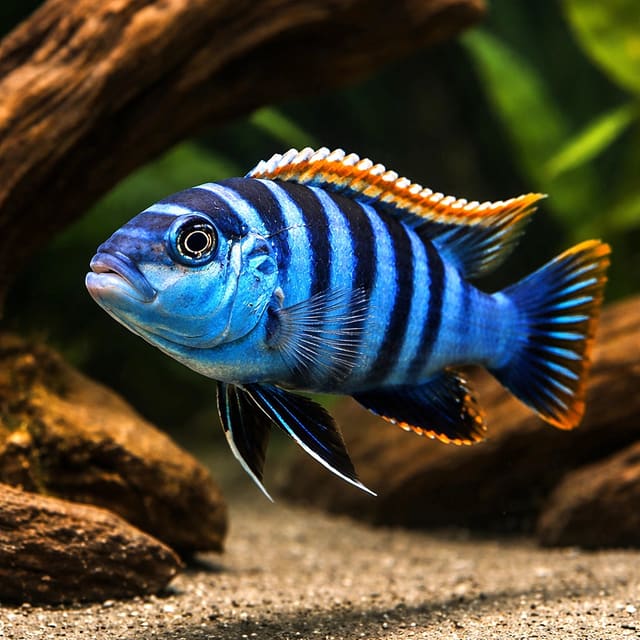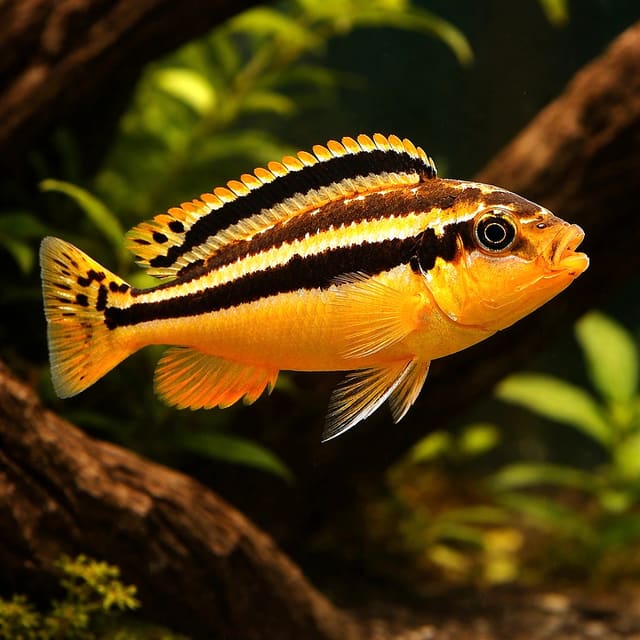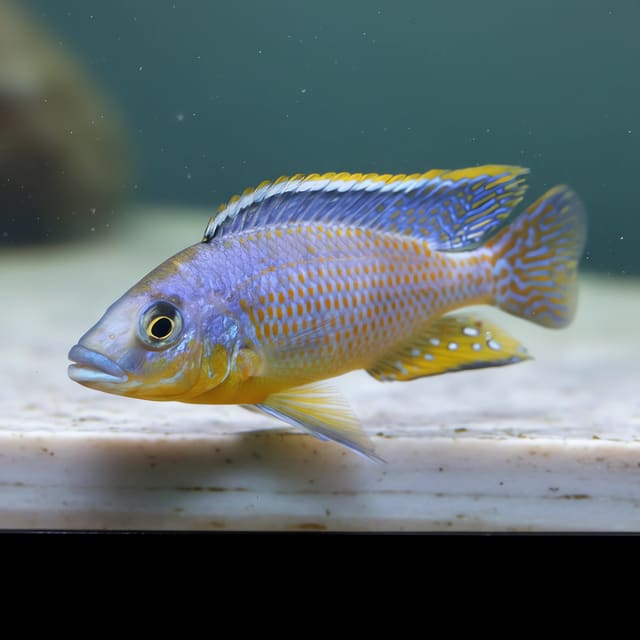
Expert
Hertae Hap Cichlid (Protomelas sp. 'Hertae')
23–27°C · pH 7.5–8.5 · 600L
£18.99
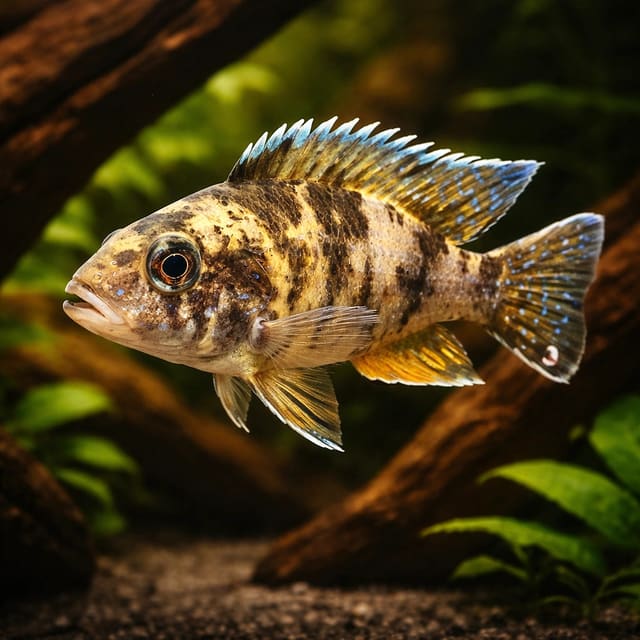
Eye-catching Malawi cichlid with bold black-and-orange patterning. Best kept in a spacious hard, alkaline aquarium with rockwork and open swimming space.
Adult size is the maximum length this species reaches at full maturity (scientific sources). The livestock you receive will be younger and smaller — pick a size above for the actual shipping size. Product-photo provenance and any image-specific limitations are stated on the listing.
Otopharynx sp.
Save when buying multiple fish. Each quantity is one fish; sex and pair formation are not guaranteed unless the selected variant explicitly states them.
Confirm your email, then we’ll send an availability message for this exact item if it returns within 180 days.
This request is only for this product—no newsletter or other promotions. A mail-provider retry may very rarely duplicate the same availability message. Unconfirmed addresses are removed after 48 hours. See our privacy policy.
Eye-catching Malawi cichlid with bold black-and-orange patterning. Best kept in a spacious hard, alkaline aquarium with rockwork and open swimming space.
Adult size is the maximum length this species reaches at full maturity (scientific sources). The livestock you receive will be younger and smaller — pick a size above for the actual shipping size. Product-photo provenance and any image-specific limitations are stated on the listing.
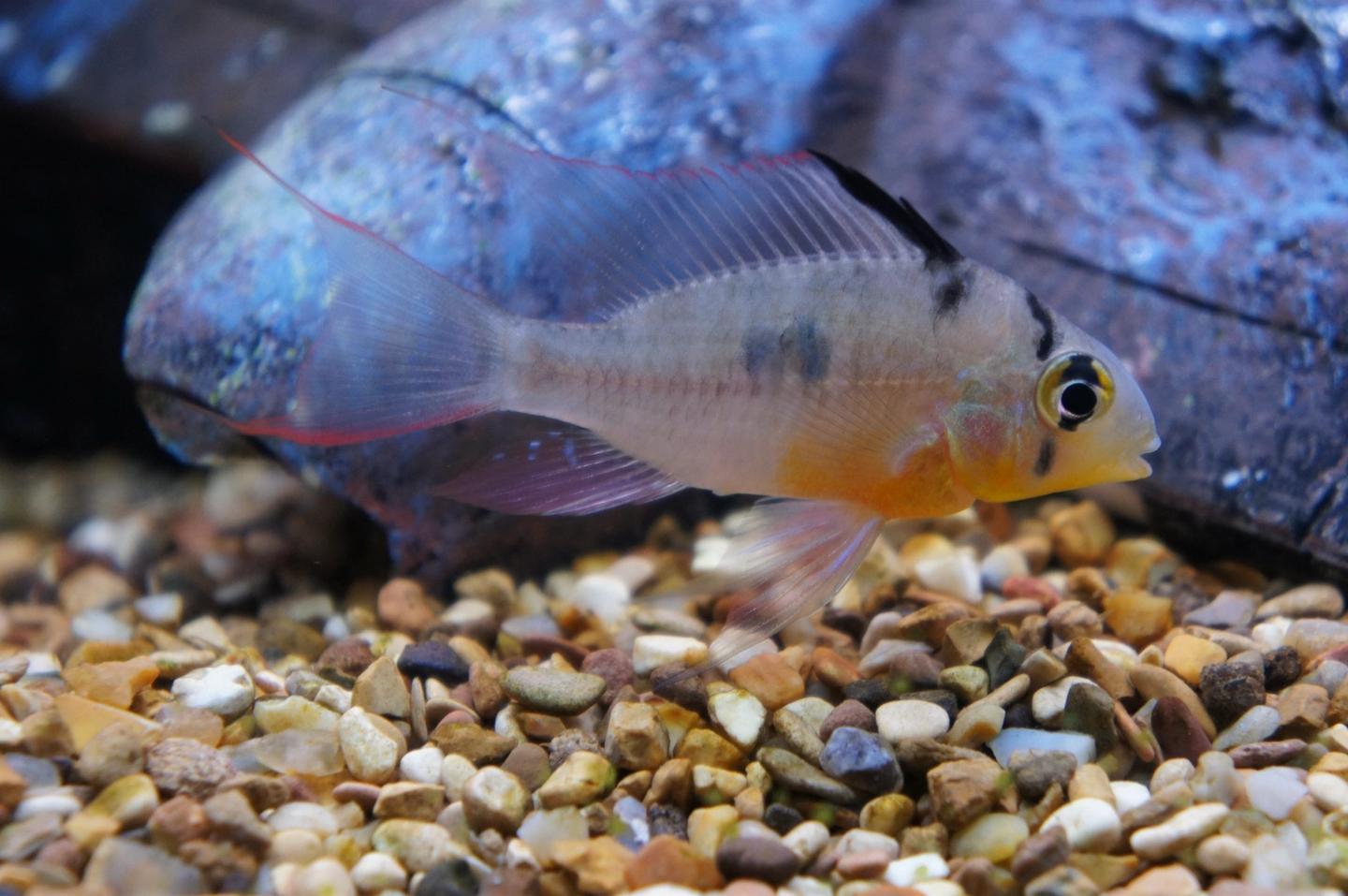
Cichlids are a family of roughly 1,800 accepted species, not one care type. Before buying, identify the exact species and source, then compare adult measurement, usable tank dimensions, social system, territory, tested water, diet and an exit plan. No family-wide minimum tank, water range or tank-mate list is safe.
Maintain these water conditions for optimal health and vibrant colors
The Otopharynx Black Orange Dorsal is a striking Malawi cichlid prized for its dramatic contrast, active behaviour and unmistakable dorsal fin colouration. Offered at around 5–6 cm, these juveniles are ideal for aquarists looking to grow out a show-quality African cichlid in the right environment. As with many Otopharynx species, this fish does best in a carefully planned Malawi setup with stable water chemistry, plenty of rockwork and open swimming space.
This is a fish for hobbyists who enjoy the personality and colour of African cichlids. It is not a community fish in the traditional sense, but in a suitable cichlid aquarium it can become a confident, engaging display species. With the correct care, diet and tankmates, it will develop into a robust and rewarding fish. We offer fast UK delivery and a live arrival guarantee for peace of mind when ordering your new fish online.
Because this fish is sold as a live animal, some variation in pattern and intensity of colour is normal, especially at this juvenile size. Males typically become more vivid as they mature, while females and younger fish may show subtler tones. If you are building a Malawi biotope or mixed cichlid display, this species can be a fantastic centrepiece.
| Care factor | Recommendation |
|---|---|
| Scientific name | Otopharynx sp. / Otopharynx black orange dorsal |
| Common name | Black Orange Dorsal Malawi cichlid |
| Adult size | Approx. 12–15 cm |
| Temperament | Semi-aggressive |
| Care level | Moderate |
| Minimum tank size | 250 litres+ |
| Temperature | 24–27°C |
| pH | 7.8–8.6 |
| Water hardness | Hard, alkaline water |
| Diet | Omnivore with a strong preference for quality cichlid foods |
| Tank region | Middle |
Otopharynx species are native to Lake Malawi in East Africa, one of the world’s most famous rift lakes and home to an extraordinary diversity of cichlids. In the wild, these fish inhabit rocky shorelines, transitional zones and areas with mixed sand and stone, where they forage among crevices and open water. Lake Malawi is characterised by warm, mineral-rich, alkaline water with excellent clarity and strong oxygenation.
The natural habitat of Malawi cichlids explains much of their care in captivity. They are adapted to stable conditions, hard water and a diet that includes small invertebrates, algae growth and other natural foods. Replicating these conditions in the aquarium helps reduce stress and encourages natural behaviour, colour and feeding response. A rocky aquascape with caves and open areas is ideal for this species.
For best results, keep the Otopharynx Black Orange Dorsal in a dedicated Malawi cichlid aquarium. A tank of 250 litres or more is recommended for a small group, with larger aquariums preferred if keeping mixed African cichlids. These fish appreciate plenty of swimming room, but also need rock structures that create territories and visual barriers. Use stable rockwork placed directly on the tank base, not on loose sand, to prevent collapses if fish dig.
Fine sand or smooth gravel works well as a substrate. Add caves, crevices and stacked rocks to mimic the rocky margins of Lake Malawi. Filtration should be strong, as cichlids produce a fair amount of waste and thrive in clean, well-oxygenated water. Regular water changes are essential to maintain health and colour. Aim for a temperature of 24–27°C, pH between 7.8 and 8.6, and hard, mineral-rich water.
Good water movement and surface agitation are beneficial. Avoid soft, acidic water, which can lead to poor health over time. As with all cichlids, stability matters more than chasing exact numbers; once the aquarium is cycled and the water is suitable, keep conditions consistent. Lighting can be moderate to bright, which will help showcase the fish’s colouration and support any algae growth that some Malawi species graze on.
When introducing new fish, acclimatise them carefully and avoid sudden changes in water chemistry. Juveniles at 5–6 cm should be monitored closely as they grow, especially if housed with more dominant species. Provide a varied environment so subordinate fish can retreat if needed.
The Otopharynx Black Orange Dorsal is best fed a varied diet based on high-quality cichlid pellets or granules, supplemented with frozen and live foods in moderation. In the wild, many Malawi cichlids are opportunistic feeders, taking small crustaceans, insect larvae and other available foods. In the aquarium, a balanced diet supports growth, colour and immune health.
Offer staple feeds such as spirulina-based cichlid pellets, quality omnivore pellets and foods formulated for African cichlids. Supplement with frozen mysis, krill, daphnia and brine shrimp occasionally. Feed small amounts once or twice daily, only what the fish will consume quickly. Overfeeding can lead to water quality issues and digestive problems.
Although some Malawi cichlids will accept richer foods, avoid heavy reliance on mammal proteins or oily foods. A sensible, varied diet is the best route to long-term health. Juveniles may benefit from slightly more frequent feeding to support growth, but water quality should always remain the priority.
This species is best kept with other Malawi cichlids of similar size and temperament. Suitable companions include peaceful to semi-aggressive Mbuna and other non-overly aggressive haps and peacocks, provided the aquarium is large enough and stocking is planned carefully. As with most African cichlids, compatibility depends on tank size, aquascape and individual temperament.
Good tank mates are fish that can handle hard, alkaline water and are not easily bullied. Keep only one male unless the aquarium is large and well-structured, as males may become territorial. A ratio of one male to several females can help reduce aggression if breeding is intended. Avoid slow, delicate, long-finned or soft-water species, as they are not suitable for a Malawi setup.
It is also wise to avoid mixing with very aggressive Mbuna in smaller aquariums, as the Otopharynx may be outcompeted or stressed. Provide plenty of line-of-sight breaks and caves to reduce conflict. When stocked appropriately, this fish can be an excellent addition to a lively African cichlid display.
At Tropical Fish Co, we focus on supplying healthy, well-conditioned livestock with careful packing and reliable service. Our fish are selected with the hobbyist in mind, so you can buy with confidence whether you are building your first Malawi tank or adding to an established cichlid collection. We understand how important it is to receive fish in excellent condition, which is why we offer a live arrival guarantee and fast UK delivery.
We also aim to provide accurate care information so you can give your fish the best possible start. From water parameters to compatibility advice, our listings are designed to help you make informed choices before you buy. If you are looking for a bold, distinctive Malawi cichlid with real display potential, the Otopharynx Black Orange Dorsal is a superb choice.
Order today and enjoy a carefully packed live fish delivered to your door, ready to settle into a properly prepared aquarium.
No reviews for this item yet. Bought one? Honest reviews only, good or bad.
What customers say about ordering from us
Easy website plenty of info on fish your buying great to pick a time slot
TRACEY DURRANT · 7 Oct 2026
Got some lovely fish thank you
Kevin Mackie · 7 Oct 2026
Reviews of our shop, collected by Judge.me, an independent third-party review collector. Newest first.