
Poecilia latipinna
X Gold Leopard Sailfin Molly (Poecilia latipinna) - UK
Buy X Gold Leopard Sailfin Molly, a hardy Poecilia latipinna with bold colour and flowing fins. Ideal for community tanks. UK delivery available.
Care at a Glance
Premium Quality
Healthy, vibrant fish from trusted suppliers
Expert Care
Detailed care guides and support
Live Arrival Guarantee
Your fish arrives healthy or we'll replace it
Acclimated
Properly quarantined and ready for your tank
Quick Care Guide
Water Parameters
Maintain these water conditions for optimal health and vibrant colors
Why Choose This Fish?
Buy X Gold Leopard Sailfin Molly, a hardy Poecilia latipinna with bold colour and flowing fins. Ideal for community tanks. UK delivery available.
The Gold Leopard Sailfin Molly is one of those fish that makes a tank look brighter the moment it settles in. This striking form of Poecilia latipinna combines the broad, elegant sail-like dorsal fin of the classic Sailfin Molly with a warm gold body covered in leopard-style spotting. For aquarists searching for colourful aquarium fish UK hobbyists can keep in a hard, alkaline setup, this variety stands out for both pattern and personality. Native ancestors come from North America, while today’s aquarium strain has been selectively bred for stronger colour and cleaner finnage. Adult Poecilia latipinna size usually reaches 10-12 cm, with males showing the biggest sailfin display, and the typical gold leopard sailfin mollies lifespan is around 3-5 years when water quality and diet are kept stable.
These are peaceful livebearers, but they are not tiny beginner nano fish. Understanding molly fish requirements, molly fish tank requirements, and the right molly fish tank size matters because sailfin types are more active and bulkier than many people expect. See our detailed photos showing the golden base colour, dark leopard patterning, and the difference between male and sailfin molly female body shape. If you want a hardy, active fish for a spacious community aquarium with alkaline water, Gold Leopard Sailfins offer movement, colour, and fascinating livebearer behaviour in one package.
🔹 Quick Facts
- Scientific Name: Poecilia latipinna
- Care Level: Intermediate to moderate care
- Min Tank Size: 76 litres (around 20 gallons)
- Recommended Tank Size: 150 litres for a proper group
- Temperature: 21-26°C (70-79°F)
- pH Range: 7.0-8.5
- Lifespan: Up to 5 years
- Temperament: Peaceful, active, social
- Diet: Primarily herbivorous livebearer
Classification
- Order: Cyprinodontiformes
- Family: Poeciliidae
- Genus: Poecilia
Poecilia latipinna is one of the classic livebearers in the aquarium hobby and is closely related to guppies, endlers, and mollies such as poecilia sphenops. It is also often compared with poecilia velifera and p. velifera, which are larger and carry an even taller dorsal fin. The Gold Leopard Sailfin Molly is a selectively bred colour form of the true Sailfin Molly rather than a separate species, valued for its strong dorsal display, active mid-water swimming, and suitability for hard-water community aquariums.
Where Do Gold Leopard Sailfin Mollies Come From? Natural Habitat Explained
If you have ever wondered where do molly fish come from, the answer starts in coastal and inland waters of the southern United States through to Mexico. The wild form of Poecilia latipinna occurs across a broad molly fish native range that includes slow rivers, marshes, ditches, estuaries, and brackish margins. In other words, the natural molly fish habitat is usually warm, mineral-rich, and often full of plant growth and algae films. That is why this species does best in hard, alkaline aquariums rather than soft acidic community tanks.
Looking at poecilia latipinna wild populations helps explain their behaviour in captivity. In the wild, molly fish in the wild spend much of their day grazing on algae, biofilm, and soft plant matter, with small invertebrates taken opportunistically. Their natural waters can vary from fresh to lightly brackish, but in the home aquarium they still respond best to stable hardness and good oxygenation. For aquarists asking where do molly fish live, think shallow, sunlit water with dense edge cover rather than deep forest streams.
The modern Gold Leopard Sailfin is a selectively bred aquarium strain, so its exact pattern is man-made, but its body shape and social habits still reflect the original molly fish origin. These fish are active in open water, often rest among plants at night, and if you have asked where do molly fish sleep, they do not sleep like mammals but become less active and hover in sheltered spots once lights are off. Questions such as where do molly fish give birth or where do molly fish lay eggs also come up often: mollies are livebearers, so they do not lay eggs at all.
Because they are adaptable, some keepers ask about molly fish for lotus pond setups. In the UK, outdoor keeping is seasonal only and not suitable year-round. These fish need tropical stability, so indoor aquariums remain the safest option. Ignore unrelated search terms like fish molly (2025) sigma original; what matters is recreating a warm, mineral-rich environment that suits the species’ real biology.
💡 Expert Tip
Mimicking the natural habitat of Poecilia latipinna improves colour, digestion, and social confidence. Hard water, steady warmth, open swimming space, and algae-friendly surfaces usually produce stronger fins and more natural grazing behaviour than overly sterile tanks.
How to Set Up the Perfect Tank for Gold Leopard Sailfin Mollies
Getting the setup right is the difference between merely keeping mollies alive and seeing them thrive. A proper molly fish tank setup for sailfin types should focus on swimming room, stable mineral-rich water, and a mature tank with plenty of surfaces for grazing. While the official gold leopard sailfin mollies tank size minimum is 76 litres, that is really the floor for a very small group. A far better gold leopard sailfin mollies tank size is 150 litres or more, especially if you want males to display full sailfin posture without constant crowding.
Tank Size Requirements
Many people search for gold leopard sailfin mollies in 60 litre tank. In practice, that is too cramped for long-term care of adult sailfins. Their adult molly fish full size and active swimming style mean they need more horizontal room than smaller livebearers. For 2 molly fish, a tank may seem spacious at first, but mollies are social and do better in a proper group. If you are asking how many molly fish should be kept together, aim for at least 4-6, with 2-3 females per male to reduce chasing.
Water Parameters
The best molly fish ideal temperature sits around 24°C. The safe molly fish temperature range is 21-26°C, which also matches the recommended poecilia latipinna temperature. If you have wondered what temperature do molly fish need or what temperature should molly fish be in, the answer is warm but not excessively hot. A steady molly fish water temperature matters more than daily fluctuation. The ideal gold leopard sailfin mollies ideal water temperature is 24°C, and a typical gold leopard sailfin mollies tropical tank temperature should remain within the stated range.
For pH, these fish prefer alkaline water. The correct gold leopard sailfin mollies pH level requirements are 7.0-8.5, with 7.8 being a very comfortable target. Hardness should be 15-35 dGH. This is why they often struggle in soft-water setups designed for blackwater tetras or delicate dwarf cichlids.
Do Mollies Need a Heater?
A common question is do molly fish need a heater or does molly fish need heater. In most UK homes, yes. Even if room temperature seems warm during the day, night swings can stress livebearers. Use a reliable adjustable heater to maintain the correct molly fish tank temperature and avoid sudden drops.
Filtration and Oxygen
Mollies appreciate clean, well-oxygenated water. A quality hang-on-back or external filter with moderate turnover works well. They are not weak swimmers, so moderate flow is fine, but avoid blasting them with river-style current. People sometimes ask can molly fish live without oxygen or can molly fish live without oxygen pump. Like all fish, they need dissolved oxygen. A filter outlet that agitates the surface is usually enough in a well-maintained aquarium, though extra aeration helps in warmer weather.
Substrate, Plants, and Decor
Fine gravel or smooth sand works well, especially in lighter shades that contrast with their gold-and-black pattern. For aquarists wanting gold leopard sailfin mollies for planted aquarium displays, choose hardy plants that tolerate alkaline water. Good options include Java fern, Anubias, Vallisneria, and floating cover. These fish are generally gold leopard sailfin mollies aquarium plants compatible, though they may nibble softer leaves if underfed on greens. Add open swimming lanes, edge planting, and a few pieces of bogwood or rock for structure.
Related livebearer keepers often mix varieties such as X Calico Sailfin Balloon Mollies, X Balloon Sailfin Mollies - Poecilia, X Black Sailfin Balloon Mollies, and X Lyretail Balloon Sailfin Mollies in larger hard-water communities, though body shape and swimming ability should always be considered.
Quick Setup Checklist
- Tank size: 76 litres minimum, 150 litres recommended
- Temperature: 21-26°C, ideal 24°C
- pH: 7.0-8.5
- Hardness: 15-35 dGH
- Filter: mature biological filtration with good surface movement
- Layout: planted edges, open centre swimming space
- Group ratio: 2-3 females per male
💡 Pro Tip
Always cycle the aquarium for 4-6 weeks before adding mollies. Sailfins are hardy once established, but they dislike immature tanks with unstable ammonia or nitrite. A mature filter and mineral-rich water make a huge difference to long-term success.
What Do Gold Leopard Sailfin Mollies Eat? Complete Feeding Guide
The correct molly fish diet is more plant-based than many new keepers expect. If you are asking what do molly fish eat, what does molly fish eat, or what molly fish eat, the short answer is algae, biofilm, vegetable matter, and quality prepared foods with a strong spirulina or plant content. Gold Leopard Sailfins are best described as herbivore-leaning omnivores, but in practice they should be fed as primarily herbivorous livebearers.
Staple Foods
The best staple is a high-quality spirulina flake or livebearer pellet. This supports digestion, finnage, and colour. Many aquarists ask are molly fish algae eaters, do molly fish eat algae, or does molly fish eat algae. Yes, they do graze algae and biofilm, but they should not be bought as a clean-up crew alone. Natural grazing is a bonus, not a full feeding plan.
Supplemental Foods
A varied gold leopard sailfin mollies diet can include blanched spinach, shelled peas, algae wafers, spirulina granules, and occasional protein treats such as daphnia or baby brine shrimp. If you are wondering can molly fish eat zucchini, yes, thin blanched slices are excellent and usually well accepted.
Treats and Foods to Avoid
Because they are not true bottom specialists, are molly fish bottom feeders is another common question. No, they feed at the surface, mid-water, and on surfaces throughout the tank. They will pick leftover foods, but that does not mean they should live on scraps. Searches like can molly fish eat betta food or can molly fish eat goldfish food come up often. In an emergency they may eat them, but neither is ideal long term. Betta foods are usually too protein-heavy, while goldfish foods are designed for cooler-water fish with different needs.
Some keepers also ask do molly fish eat shrimp. Adult mollies may peck at very small shrimplets, especially if underfed, so feed greens consistently if keeping them with invertebrates. The unrelated query least killifish diet appears in livebearer searches, but least killifish are a different species with different scale and feeding habits.
Feeding Frequency
If you want to know when to feed molly fish, feed small portions 2 times daily. Offer only what the group clears in 1-2 minutes. A practical gold leopard sailfin mollies feeding guide is one plant-rich meal in the morning and one mixed meal in the evening.
| Time | Food | Amount |
|---|---|---|
| Morning | Spirulina flake or livebearer pellet | Small pinch, eaten in 1 minute |
| Evening | Blanched greens or algae wafer with occasional daphnia | Very small portion, no leftovers |
⚠️ Feeding Warning
Overfeeding causes ammonia spikes, obesity, stringy waste, and poor water quality. Mollies are enthusiastic feeders and will beg even when full, so judge portions by body condition and leftover food, not by how hungry they look.
Choose spirulina-rich flakes, algae wafers, and balanced community foods to support digestion and colour in sailfin mollies.
What Does Poecilia latipinna Look Like? Colors, Patterns & Varieties
The Gold Leopard Sailfin Molly has a deeper body than many standard mollies and a tall dorsal fin that becomes especially impressive in mature males. Typical molly fish length is 10-12 cm, with females often looking fuller-bodied while males are slimmer and more display-oriented. The most eye-catching feature is the mix of warm gold, honey, and cream tones overlaid with dark leopard spotting. When people search sailfin molly colors, this is one of the most attractive answers: bright metallic warmth with bold pattern contrast.
There are many molly fish colors in the hobby, from orange and dalmatian to silver, marble, and molly fish black forms. Some keepers compare them using a molly fish colors chart, but sailfin strains are best judged by body depth, dorsal finnage, and pattern clarity rather than colour alone. This variety should not be confused with a plain red sailfin molly, though both share the same broad-fin silhouette.
Sexing them is straightforward once grown. If you are asking molly fish how to tell male from female, males have a gonopodium instead of a fan-shaped anal fin and usually show a larger sailfin. If you are wondering what does a female molly fish look like, females are rounder, especially when carrying fry, and their dorsal fin is smaller. In some gravid females, a darkened area near the rear abdomen may resemble a molly fish gravid spot, though it is often less obvious in patterned strains.
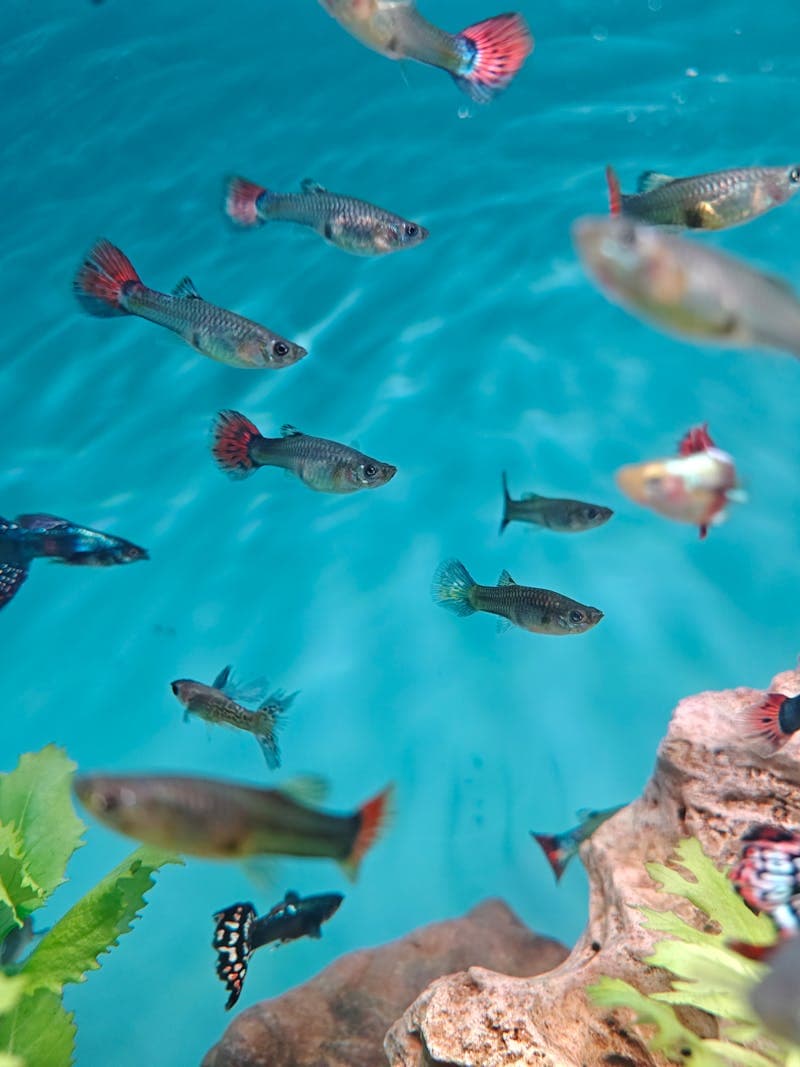
Our photos show the rich golden base and dark leopard mottling that make this one of the more colourful gold leopard sailfin mollies for aquarium displays. If a keeper reports molly fish losing color, the usual causes are stress, poor diet, low hardness, or bullying. And if a molly fish disappeared from tank, check behind filters, dense plants, and possible aggression from tank mates before assuming the worst.
What Fish Can Live With Gold Leopard Sailfin Mollies? Compatibility Guide
One of the most common questions is what fish are compatible with molly fish. Gold Leopard Sailfins are generally excellent community fish UK aquarists can keep in hard, alkaline water, but compatibility depends on water chemistry as much as temperament. They are widely considered gold leopard sailfin mollies peaceful community fish, and if you are asking are mollies community fish, the answer is yes. They are also social, so are mollies social fish is another yes, provided the group is structured properly.
That said, people also search are molly fish aggressive, is molly fish aggressive, molly fish aggressive, and are molly fish aggressive to other fish. Most aggression is not true hostility; it is usually male chasing, crowding, or stress from poor sex ratios. If you are wondering why molly fish is aggressive, the usual reasons are too many males, too little space, or incompatible tank mates. Their natural gold leopard sailfin mollies behaviour includes active social interaction, display, and pecking-order movement, but not sustained predatory aggression.
Ideal Tank Mates
Good companions include other hard-water livebearers and peaceful bottom dwellers. Aquarists often ask can molly fish live with guppies or compare them with poecilia reticulata. Yes, they can, as long as the tank is large enough and water is kept on the harder side. They can also work with some robust tetras, though can molly fish live with tetras depends on species and water chemistry. Corydoras can work if the setup is not too hard for the chosen species. For similar livebearer options, see Balloon Molly Mix Male and Female, X Ballon Molly Mix Male and, and Black Ballon Molly Mix Male and.
Species to Avoid
Goldfish are a poor match. If you are asking can molly fish and goldfish live together or can molly fish live with goldfish, the answer is no for long-term care because temperature, diet, and activity levels differ too much. Bettas are also risky. The question can molly fish live with betta comes up often, but sailfin mollies may nip or be nipped, and flashy males can trigger territorial behaviour. Very soft-water fish and fin-nippers should also be avoided.
Invertebrates
Another frequent query is can mollies live with cherry shrimp. Adult shrimp may be fine in a heavily planted tank, but shrimplets can be eaten. Mollies are opportunists, not dedicated hunters. Snails are usually safe. If medication is ever needed, people ask can i use bettafix in a community tank; always check the active ingredients and whether invertebrates are present before dosing anything.
| Species | Compatible? | Notes |
|---|---|---|
| X Calico Sailfin Balloon Mollies | ✅ Yes | Similar water needs; best in larger tanks with balanced sex ratios |
| X Poecilia Latipinna / Ballon Molly | ✅ Yes | Compatible livebearer type for hard-water community setups |
| Betta splendens | ⚠️ Caution | Possible fin nipping and territorial conflict |
| Goldfish | ❌ Avoid | Different temperature and husbandry needs |
For many keepers, these are among the best freshwater tropical fish UK choices for a bright, active hard-water aquarium. They are often listed among the best gold leopard sailfin mollies for community tank stocking ideas because they combine colour with movement and are less delicate than many soft-water species. They also do well as gold leopard sailfin mollies with other livebearers when space is generous.
💡 Compatibility Tip
Always quarantine new arrivals for 2-4 weeks before adding them to a community tank. This protects established fish from parasites and gives you time to observe temperament, appetite, and any signs of stress or disease.
How to Breed Gold Leopard Sailfin Mollies: Complete Breeding Guide
Gold leopard sailfin mollies breeding is considered easy once adults are mature and well fed. Like other livebearers, they do not scatter eggs. If you are asking do molly fish have live babies, yes, they give birth to free-swimming fry. This also answers the common confusion around when molly fish lay eggs and what do molly fish eggs look like: they do not lay eggs in the aquarium at all.
Breeding Setup
A separate breeding tank of 40-60 litres works for a female close to term, but many breeders simply use a mature planted community tank and move fry afterward. For best results, maintain 24-26°C, hard alkaline water, and feed a rich plant-based diet with occasional live or frozen treats. Because males can pester females constantly, keep 2-3 females per male.
Breeding Behaviour
The typical molly fish breeding behavior includes male display, chasing, and repeated mating attempts. If you are wondering when do molly fish breed or when do molly fish start breeding, healthy adults can breed regularly once mature. Gestation is usually close to 2 months. A heavily rounded sailfin molly pregnant female may hide more and rest near plants before dropping fry.
Sexing and Fry Care
Questions like molly fish how to tell male from female and sailfin molly female matter here. Males have a gonopodium; females have a fan-shaped anal fin. If you are asking what do molly fish babies look like, fry are tiny, fully formed miniature fish that swim immediately and seek cover. Good molly fish baby care means dense plants, clean water, and small frequent feeds of crushed flake, powdered fry food, or baby brine shrimp.
People often ask do molly fish eat their babies or even did molly fish eat their babies. Unfortunately, yes, adults may eat fry if they find them. Heavy plant cover reduces losses. If you ever wonder why molly fish fry died, the usual causes are poor water quality, starvation, filter intake accidents, or sudden parameter changes.
Another advanced question is can molly fish breed with guppies. True hybridisation discussions exist within livebearers, but in practical home aquariums you should not rely on mixed-species breeding outcomes. Also avoid repeated close-line pairings over many generations, as molly fish inbreeding can weaken finnage and body shape over time.
Advanced Breeding Tip
To raise more fry without stressing the female, use a heavily planted nursery section with floating plants and fine-leaved cover instead of a small breeder trap. Females remain calmer, fry have immediate shelter, and losses from stress are much lower.
Gold Leopard Sailfin Molly vs Similar Species: Which Should You Choose?
Not all mollies are the same, and choosing the right one depends on tank size, water chemistry, and the look you want. The Gold Leopard Sailfin is often compared with standard mollies such as poecilia sphenops and with larger sailfin relatives like poecilia velifera. If your goal is a broad-finned show fish with warm patterning, Poecilia latipinna is a brilliant middle ground between the smaller common molly and the more demanding giant sailfin types.
| Feature | Gold Leopard Sailfin Molly | Poecilia sphenops |
|---|---|---|
| Max Size | 10-12 cm | 8-10 cm |
| Care Level | Moderate | Easy to moderate |
| Temperature | 21-26°C | 24-28°C typical |
| Price | £35.80 | Varies by strain |
| Best For | Hard-water display community tanks | Smaller livebearer communities |
| Feature | Gold Leopard Sailfin Molly | Poecilia velifera |
|---|---|---|
| Max Size | 10-12 cm | 12-15+ cm |
| Care Level | Moderate | Moderate to advanced |
| Temperature | 21-26°C | 24-28°C typical |
| Price | £35.80 | Usually higher |
| Best For | Most home hard-water aquariums | Larger specialist livebearer setups |
If you want something more manageable than poecilia velifera but more dramatic than many standard mollies, this is a smart choice. It offers excellent dorsal finnage, strong patterning, and easier accommodation in the average large community tank. Compared with balloon forms such as X Black Sailfin Balloon Mollies or X Lyretail Balloon Sailfin Mollies, the standard-bodied Gold Leopard Sailfin usually swims more efficiently and shows a more natural profile.
For buyers comparing which molly fish is best or even which is the rarest molly fish, the answer depends on your goals. This variety is not the rarest, but it is one of the most balanced choices for colour, activity, and classic sailfin shape.
Common Health Problems in Gold Leopard Sailfin Mollies & How to Prevent Them
Healthy Gold Leopard Sailfins are active, alert, and constantly grazing or interacting. Their fins should be open, the body should look full but not bloated, and colours should remain strong. If a fish becomes withdrawn, clamps fins, loses appetite, or starts molly fish losing color, check water quality first. Most molly fish diseases begin with stress from unstable temperature, low hardness, poor diet, or immature filtration.
Common Diseases
One of the most common issues is molly fish ich, also seen as molly fish white spots. This usually appears after stress, transport, or rapid temperature shifts. Fin damage, shimmying, wasting, and bacterial infections can also occur if water chemistry is wrong. Because sailfins are active and social, they often show stress early through clamped fins and reduced movement.
Treatment and Prevention
Use a separate treatment tank where possible. Raise aeration, maintain stable warmth, and follow medication directions carefully. If invertebrates are present, avoid unsafe treatments. People sometimes search odd phrases like fish molly which fish, which fish can stay with molly, or which fish is good for fish molly; the health answer is that suitable tank mates reduce stress because they share similar water needs. Incompatible species create chronic pressure that weakens immunity.
Ignore irrelevant search terms such as molly yeh fish sandwich or molly yeh fish sandwich recipe; they have nothing to do with aquarium care. What matters is quarantine, stable parameters, and proper feeding. A mature hard-water setup prevents more problems than any bottle of medication.
⚠️ Medication Warning
Never use copper-based medications in tanks containing shrimp or other sensitive invertebrates. Copper can be lethal even at low doses. Always read the label and, when possible, treat fish in a separate hospital tank.
Quarantine Protocol
- Use a separate bare-bottom tank for 2-4 weeks
- Match temperature and pH to the main aquarium
- Observe appetite, waste, fin condition, and swimming behaviour daily
- Perform regular small water changes
- Only move fish to the display tank once they are feeding strongly and symptom-free
What Is Gold Leopard Sailfin Molly Behaviour Like in the Aquarium?
Gold leopard sailfin mollies behaviour is one reason they remain so popular. They are active mid-water swimmers that spend much of the day browsing surfaces, interacting with one another, and moving in and out of plant cover. They are not true schooling fish, but they are strongly social. A sensible molly fish group size helps them settle, display better colour, and spread social pressure more evenly.
These fish are often recommended as gold leopard sailfin mollies for beginners once the keeper understands their need for hard alkaline water. They can also be appealing as gold leopard sailfin mollies tropical fish for kids because they are lively and easy to observe, though adults should manage water quality and breeding. Some sellers describe them as gold leopard sailfin mollies low maintenance fish, but that is only true in the right setup. In soft, unstable water they quickly become difficult.
As peaceful aquarium fish UK hobbyists often choose for larger community tanks, they reward good care with constant movement and display. Males may flare their dorsal fins to impress females or rival males, while females tend to be calmer and more food-focused. In a mature planted aquarium, they often show their most natural rhythm of grazing, displaying, and resting among cover after lights-out.
Why Buy from Tropical Fish Co?
Our Gold Leopard Sailfin Mollies are selected for body shape, pattern clarity, and active feeding response rather than being treated as just another mixed livebearer. For a fish like Poecilia latipinna, this matters. Strong sailfin posture, straight backs, and confident grazing behaviour tell you far more about long-term quality than colour alone. Each batch is assessed for general health, swimming strength, and suitability for hard-water tropical aquariums before being offered as molly fish for sale uk.
Before dispatch, fish are held, observed, and acclimated to stable tropical conditions suited to UK aquariums. This is especially important for sailfin mollies because transport stress can trigger colour washout or white spot if fish are moved too quickly into poor water. Customers looking for live tropical fish delivery UK service want more than a box at the door; they want fish packed properly. Orders are sent in insulated packaging, with heat packs in cold weather, secure fish bags, and professional packing methods designed to reduce stress in transit.
Whether you searched molly fish online, molly fish online shopping, molly fish for sale, molly fish for sale online, molly fish for sale near me, or molly fish for sale nearby, buying from a specialist source gives you access to fish that have been checked for condition and compatibility. We also help answer practical questions about molly fish 1 pair price, stocking ratios, and molly fish delivery time so you can plan your setup before the fish arrive. While international searches like molly fish for sale australia or molly fish for sale canada appear online, this listing is focused on UK customers and UK aquarium conditions.
If you are specifically looking for poecilia latipinna for sale, order your Gold Leopard Sailfin Mollies today with confidence and prepare a mature, hard-water aquarium before arrival.
Why Choose Tropical Fish Co for Gold Leopard Sailfin Mollies
- Selected for clean leopard patterning, balanced body shape, and strong sailfin development
- Observed before dispatch for feeding response, swimming quality, and transport readiness
- Packed for UK conditions with insulated materials and seasonal heat protection where needed
You Might Also Like
Building a hard-water livebearer aquarium? Pair your Gold Leopard Sailfins with related varieties such as X Calico Sailfin Balloon Mollies for mixed colour contrast, or Balloon Molly Mix Male and Female if you want a broader livebearer display. For darker contrast, X Black Sailfin Balloon Mollies make a striking companion in larger tanks. You can also explore the wider tropical fish food collection for spirulina-rich staples suited to herbivorous livebearers. If you enjoy the sailfin look, compare body styles with X Poecilia Latipinna / Ballon Molly and X Balloon Sailfin Mollies - Poecilia before finalising your stocking plan.
You Might Also Like


Aulonocara sp. 'Firefish' - Tropical Fish for Sale UK

Best Food for Tropical Fish - White Worms (90 ML) | UK

Orange Venezuelan Cory (Corydoras venezuelanus var. 'Orange') - UK

Yellow Lepturus Cichlid - UK

Apistogramma agassizii “Super Red” - UK

X Neon Green Rasbora - UK

Rasbora Heteromorpha (Trigonostigma heteromorpha) - UK
Popular Right Now

Endler Gold Guppy Breeding (Poecilia wingei) - UK

Chindongo saulosi 'Coral Red' - UK
10x Assorted Swordtails – Xiphophorus Hellerii

Glass Catfish (Kryptopterus vitreolus) - UK

Blood Red Dwarf Gourami - UK

Striped Kribensis Dehane - Tropical Fish for Sale UK
