Moderate
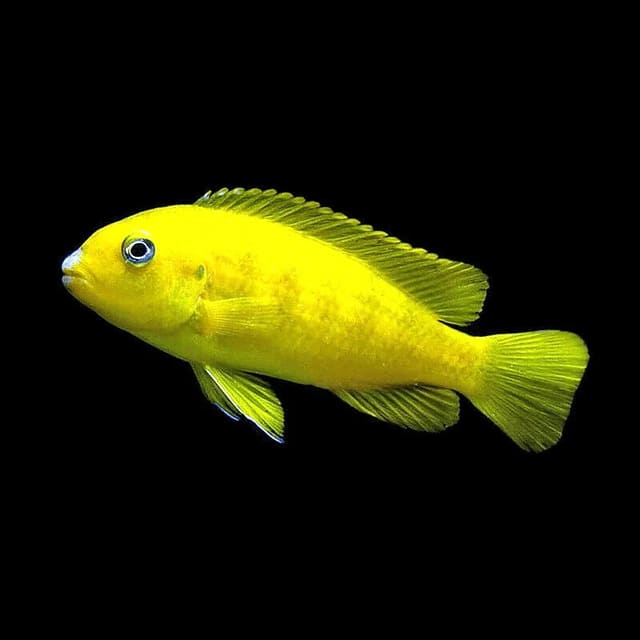
Yellow Elongatus Cichlid (Chindongo cf. elongatus)
23–26°C · pH 7.5–8.5 · 200L
£13.99

A striking, compact Lake Malawi mbuna cichlid with bold coloration and lively personality, ideal for a well-planned African cichlid aquarium. Moderate care, aggressive. 24-28C, pH 7.5-8.6.
Adult size is the maximum length this species reaches at full maturity (scientific sources). The livestock you receive will be younger and smaller — pick a size above for the actual shipping size. Product-photo provenance and any image-specific limitations are stated on the listing.
Chindongo heteropictus
Shoaling fish: kept in a group they feel safer, stay calmer and show their best colour.
Confirm your email, then we’ll send an availability message for this exact item if it returns within 180 days.
This request is only for this product—no newsletter or other promotions. A mail-provider retry may very rarely duplicate the same availability message. Unconfirmed addresses are removed after 48 hours. See our privacy policy.
A striking, compact Lake Malawi mbuna cichlid with bold coloration and lively personality, ideal for a well-planned African cichlid aquarium. Moderate care, aggressive. 24-28C, pH 7.5-8.6.
Adult size is the maximum length this species reaches at full maturity (scientific sources). The livestock you receive will be younger and smaller — pick a size above for the actual shipping size. Product-photo provenance and any image-specific limitations are stated on the listing.
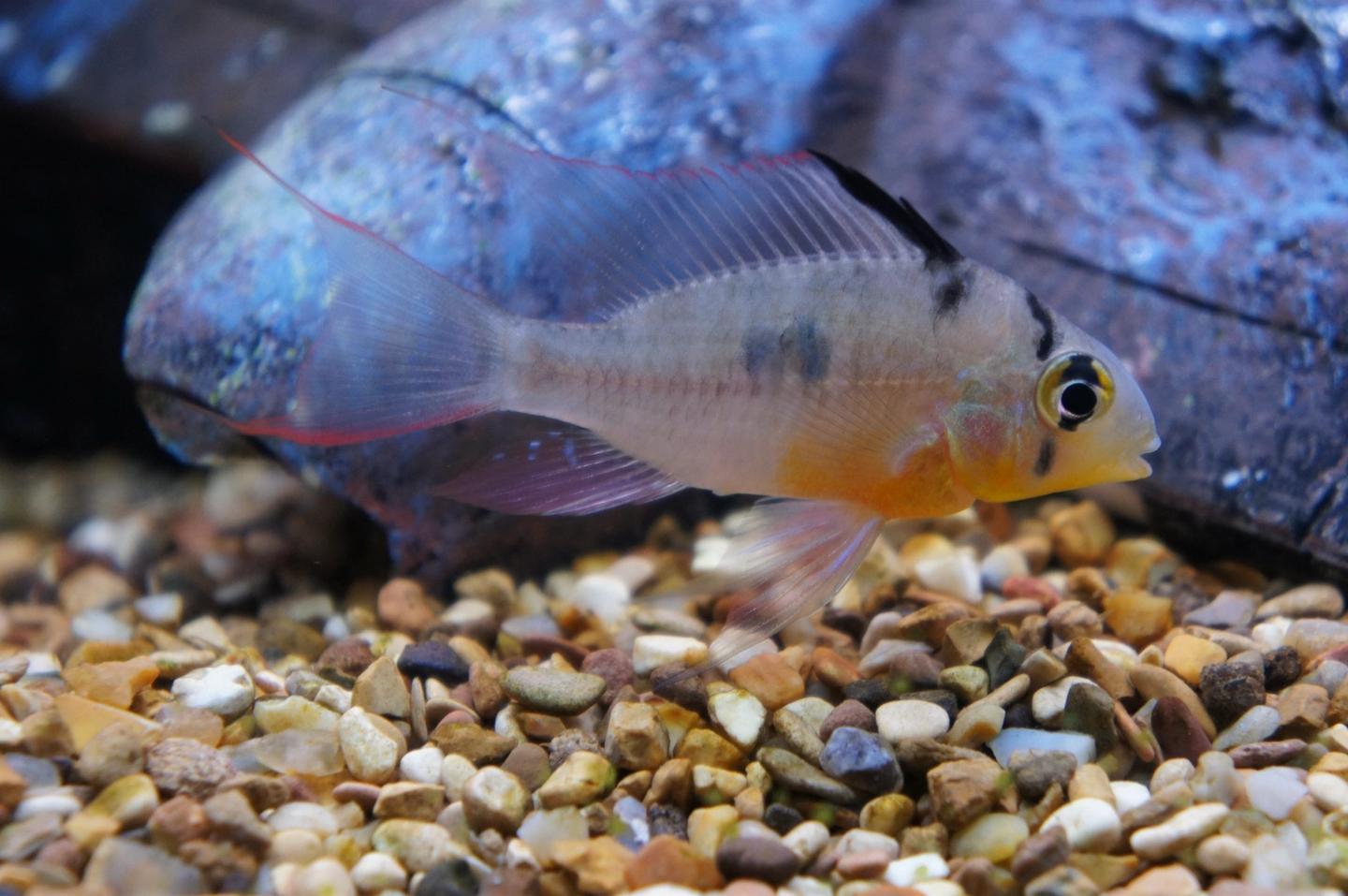
Cichlids are a family of roughly 1,800 accepted species, not one care type. Before buying, identify the exact species and source, then compare adult measurement, usable tank dimensions, social system, territory, tested water, diet and an exit plan. No family-wide minimum tank, water range or tank-mate list is safe.
Maintain these water conditions for optimal health and vibrant colors
The Chindongo heteropictus, commonly known in the trade as Pseudotropheus 'Newsi', is a striking compact Lake Malawi mbuna reaching just 4.5 cm while exhibiting aggressive territorial behavior disproportionate to its diminutive size. Endemic to Thumbi West Island in Lake Malawi, this specialized herbivore requires a minimum 150-litre aquarium despite its small stature, along with hard alkaline water and careful tankmate selection. With bold coloration, lively personality, and fascinating breeding behavior, this species rewards experienced Malawi cichlid keepers ready to manage aggressive mbuna in well-planned African cichlid aquariums. Available for sale UK from Tropical Fish Co, this malawi cichlid delivers authentic East African character in a compact package suited to aquarists seeking vibrant color and active behavior.
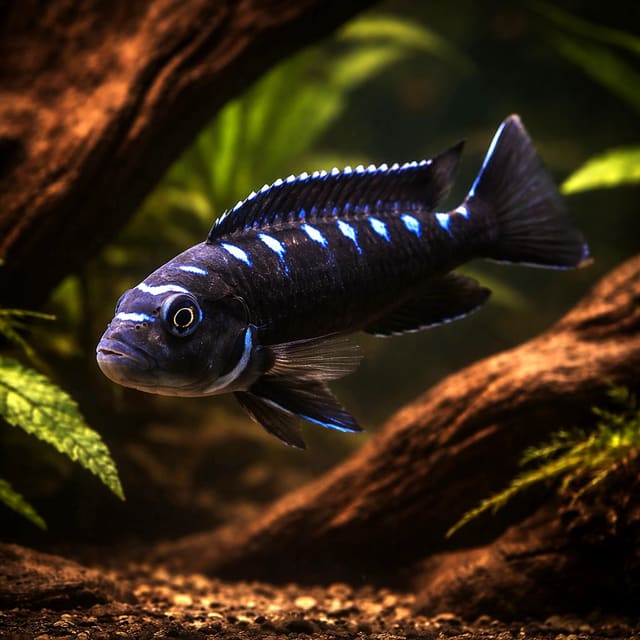
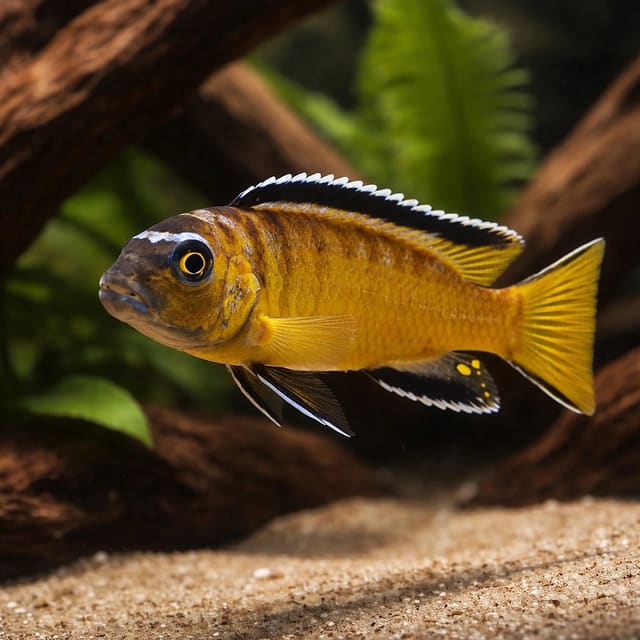
Chindongo heteropictus displays remarkable color variation and intensity despite its compact 4.5 cm adult size, with dominant males showing spectacular coloration including bright blues, yellows, oranges, or barred patterns depending on specific population and individual variation. The scientific name "heteropictus" (meaning "different painted") references this color variability. Females display more subdued brown-grey tones with less contrast. The streamlined, robust body proportions are typical of rock-dwelling mbuna, with well-developed finnage creating elegant appearance. Breeding males intensify coloration dramatically during territorial displays and courtship, creating remarkable visual impact that seems disproportionate to their modest size. The species' bold colors and active behavior make it a visually striking addition to Malawi aquariums despite being among the smallest mbuna commonly available.
Endemic to Lake Malawi and known specifically from Thumbi West Island, Chindongo heteropictus inhabits rocky shoreline zones where it grazes biofilm (aufwuchs) comprising algae and associated micro-invertebrates from rock surfaces. The lake's famous stability—pH 7.5-8.6, very hard water, exceptional clarity, and consistent warmth at 24-28°C—has driven the evolution of extraordinary cichlid diversity with over 800 endemic species, many restricted to tiny geographic ranges around specific islands or shoreline segments. This species' restricted distribution makes wild populations vulnerable to habitat degradation, underscoring the importance of responsible aquarium populations. The rocky habitats provide countless grazing surfaces, territories, and spawning caves that must be replicated in aquarium setups for successful long-term keeping.
Despite the species' compact 4.5 cm adult size, a minimum 150-litre aquarium is essential to support stable mbuna communities with appropriate territory structure—small size does not equate to reduced aggression or simplified requirements. Create an extensive Lake Malawi rocky biotope using rocks stacked to form countless caves, overhangs, and territorial boundaries scaled appropriately for the species' small dimensions. Provide significantly more territories than the number of males to distribute aggression—essential given this species' aggressive rating. A fine sand substrate mimics the natural lake bed. Avoid plants entirely as they're inconsistent with authentic Malawi biotopes. Install powerful filtration providing 10x tank volume turnover per hour to maintain pristine water quality with moderate water movement but avoiding excessive current that stresses fish.
Maintaining hard, alkaline water replicating Lake Malawi's chemistry is absolutely essential for long-term success. Target pH between 7.5-8.6 using calcium-rich buffering substrates such as coral sand or aragonite, preventing pH drops that stress Malawi cichlids. Water hardness should be high (10-20 dGH), easily achieved in many UK regions with naturally hard tap water. Temperature should remain stable within 24-28°C. Conduct weekly 25-30% water changes to control nitrate accumulation below 40 mg/L while maintaining stable alkalinity and hardness. Ammonia and nitrite must always measure 0 ppm, requiring mature biological filtration capable of handling the bioload. Despite small individual size, aggressive behavior and active metabolism mean excellent water quality is as critical as for much larger mbuna species.
Chindongo heteropictus is a strict herbivore requiring frequent feedings of plant-based foods formulated for herbivorous mbuna, with absolutely no high-protein or meaty foods. Feed spirulina-based flakes or pellets sized appropriately for the species' small mouth as the absolute staple, offered 4-6 times daily in small portions. Supplement with algae wafers and blanched vegetable matter including spinach and zucchini. Strictly avoid protein-rich foods as much as possible to reduce bloat risk—bloodworms, brine shrimp, and similar meaty foods are completely inappropriate and dramatically increase digestive issue risks. The species naturally grazes almost continuously in the wild, so frequent small feedings of strictly herbivorous nutrition are essential. Conservative feeding with purely vegetable-based foods is critical for maintaining this aggressive species in optimal health.
Despite remarkably small adult size, Chindongo heteropictus displays bold, aggressive territorial behavior characteristic of much larger dominant mbuna species. Males establish and vigorously defend grazing territories centered on preferred rock formations, showing intense aggression toward conspecifics and competing species. Aggression levels are high—requiring sophisticated management through proper stocking strategies, extensive territory structure, and careful tankmate selection. Dominant males display their most spectacular coloration while aggressively defending territories and courting females. The species' bold personality and fearless behavior seem almost comical given its tiny size, as individuals readily confront fish several times their dimensions when defending territories. This creates both fascinating observation opportunities and management challenges for keepers who must balance the species' aggressive nature with its compact size.
Compatible tankmates are severely restricted given the species' aggressive nature despite compact size. Other robust Lake Malawi mbuna of similar size and temperament work best, avoiding species so much larger that size disparities create predation risk. Fast-moving, similarly aggressive African cichlids capable of defending themselves can coexist in appropriately large aquariums with extensive territories. Species from the same hard-alkaline water chemistry that can hold their own against this aggressive species are essential. Completely avoid peaceful community fish that will be constantly harassed, small fish despite this species' own small size, shrimp and other small invertebrates, slow-moving or long-finned fish, and submissive cichlids that cannot handle the aggression. Many keepers maintain this species with other aggressive small mbuna or in species-only setups.
Chindongo heteropictus is a maternal mouthbrooder following typical mbuna reproductive patterns. Males defend territories and display intense coloration while performing elaborate courtship displays to attract receptive females into spawning sites within rock caves. The female deposits eggs and immediately collects them in her mouth, with fertilization occurring via the egg-spot method. Given the species' aggressive nature and small size, overcrowding can be particularly problematic, so provide extensive rockwork and multiple hiding places. The female carries a small clutch of 15-25 eggs and developing fry in her buccal cavity for approximately 3 weeks, during which she does not feed. Separate fry if breeding in community setups, as juveniles risk predation from all adult mbuna. Released fry are quite small, requiring infusoria or finely powdered spirulina initially before progressing to crushed foods.
Tropical Fish Co specializes in malawi cichlid species, offering exceptional quality Chindongo heteropictus with comprehensive support for successfully managing aggressive mbuna. Our fish arrive fully acclimatized and health-guaranteed, backed by honest expert guidance about this species' surprisingly aggressive temperament despite compact size. We provide detailed advice on creating appropriately structured aquariums, maintaining proper hard-water chemistry, and stocking strategies that minimize conflict while allowing this beautiful species to thrive. With decades of combined experience keeping challenging Lake Malawi cichlids, we help you avoid compatibility disasters and create thriving communities. Order your Chindongo heteropictus from the UK's premier source for quality african cichlid species and experience authentic Lake Malawi character in a striking compact package.
No reviews for this item yet. Bought one? Honest reviews only, good or bad.
What customers say about ordering from us
I have a small group of long finned mountain minnows. So was delighted to be able to order ten of this variety to increase the genetics in my tank . The ones I recieved are healthy but it’s to early to give a verdict on wether they are of a long finned type since they are small currently.
Gordon Walker · 23 Sept 2026
100% success travel and "installation". Pleased with quality of purchase. The Siamese fighter a bit "shy" so have not yet seen him at his best yet but looking good. Happy customer. GG
George E Garratt · 21 Sept 2026
Reviews of our shop, collected by Judge.me, an independent third-party review collector. Newest first.