−10%
Advanced
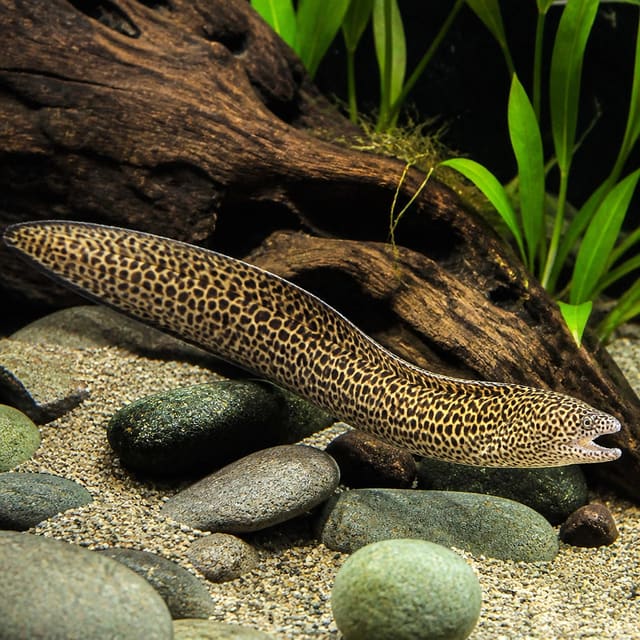
Freshwater Moray (Gymnothorax polyuranodon)
£107.99£119.99
A rare, electric African predator with a sleek eel-like body and fascinating behaviour. Best for large specialist aquariums.
Gymnarchus niloticus
Confirm your email, then we’ll send an availability message for this exact item if it returns within 180 days.
This request is only for this product—no newsletter or other promotions. A mail-provider retry may very rarely duplicate the same availability message. Unconfirmed addresses are removed after 48 hours. See our privacy policy.
A rare, electric African predator with a sleek eel-like body and fascinating behaviour. Best for large specialist aquariums.
Maintain these water conditions for optimal health and vibrant colors
Gymnarchus niloticus, commonly known as the African knifefish or aba, is one of the most unusual freshwater fish available to advanced aquarists. This species has a long, laterally compressed body, a continuous undulating fin for propulsion, and a distinctive hunting style that makes it a true showpiece in a large specialist aquarium. Offered here at 10–15 cm, it is still a juvenile and will grow into a substantial predator with the right care.
This is not a community fish in the usual sense. It is best suited to experienced keepers who can provide a spacious, secure aquarium with stable water conditions, subdued lighting, and carefully chosen tank mates. Like many African river fish, it appreciates clean, well-oxygenated water and plenty of room to cruise. When properly housed, it becomes an intelligent, captivating fish with unique nocturnal habits and a powerful presence.
At Tropical Fish Co, we aim to supply healthy, well-conditioned livestock with a live arrival guarantee and fast UK delivery, so your new fish arrives in the best possible condition for acclimation.
| Attribute | Details |
|---|---|
| Scientific name | Gymnarchus niloticus |
| Common name | African knifefish, Aba |
| Care level | Expert |
| Temperament | Semi-aggressive |
| Adult size | Up to around 150 cm in the wild; commonly 80–120 cm in captivity with excellent care |
| Minimum tank size | 2,000 litres+ for long-term housing |
| Temperature | 24–28°C |
| pH | 6.5–7.8 |
| Diet | Carnivorous; live, frozen and prepared meaty foods |
| Lifespan | 10–15 years or more |
| Tank region | Middle to bottom |
Gymnarchus niloticus is native to Africa, where it inhabits slow-moving rivers, floodplains, swamps, marshes and vegetated backwaters across a broad range of freshwater systems, including the Nile basin and other West and Central African waters. In the wild it is often found in areas with dense plant cover, submerged roots and soft substrates, where it can hunt at dusk and through the night.
This species is famous for its specialised electric sense. It generates weak electric fields to navigate and locate prey in murky water, making it exceptionally adapted to low-visibility habitats. That same biology means it does best in an aquarium that offers calm surroundings, dimmer lighting and plenty of open swimming space without excessive clutter.
Because it is a large, active predator, it should be kept in a mature aquarium with excellent filtration and a lid that fits securely. It is capable of powerful movements and can be startled by sudden changes, so a stable environment is essential.
A young fish may seem manageable at 10–15 cm, but planning for adult size is vital. This species needs a very large aquarium or indoor pond-style setup as it grows. For long-term care, think in terms of length, turning space and filtration capacity rather than just volume. A long tank with open swimming lanes is ideal, alongside robust biological filtration and regular water changes.
Use a soft sand or fine gravel substrate to reduce the risk of abrasion. Add driftwood, sturdy root structures and hardy plants if desired, but leave plenty of open water. Floating plants can help diffuse light and create a more natural feel. Avoid sharp décor, tight gaps and anything that could trap the fish as it grows.
Recommended water conditions are:
Although it can tolerate a range of conditions, stability is more important than chasing exact numbers. Regular partial water changes and careful feeding are essential, as this is a messy carnivore when fed heavily. A tight-fitting lid is non-negotiable, as large knifefish can be surprisingly strong and may push at gaps.
Gymnarchus niloticus is a carnivore that feeds on fish, insects and other animal matter in nature. In captivity it should be offered a varied meaty diet. Suitable foods include quality frozen foods such as prawns, mussel, white fish, lancefish and earthworms, as well as carnivore pellets or sticks if accepted. Younger fish may take smaller frozen foods more readily, while larger individuals can be trained onto bigger items.
Feed once daily or every other day depending on size and growth stage, offering only what is consumed promptly. Overfeeding can quickly degrade water quality. Live feeder fish are not recommended due to disease risk and poor nutritional value. A varied diet helps support healthy growth, good body condition and natural behaviour.
Because this species is nocturnal and may feed more confidently after lights dim, many keepers find evening feeding works best. Observe carefully during feeding, as this fish can be shy at first and may take time to settle.
This is a predator and should be treated accordingly. Suitable tank mates must be large, robust and too big to be swallowed. Peaceful community fish, small cichlids, tetras, barbs and catfish are generally unsuitable. It is best kept either singly or with carefully selected large companions in a very spacious aquarium.
Potential tank mates may include large, sturdy fish such as sizeable cichlids, large catfish, bichirs or other substantial species that can hold their own and are not easily intimidated. Even then, compatibility is never guaranteed, and individual temperament can vary. Plenty of space, visual breaks and multiple feeding points are important if housing with other large fish.
Do not mix with small fish, shrimp, crabs or other invertebrates, as they will almost certainly be viewed as food. Also avoid aggressive fin-nippers or hyperactive species that may stress this fish.
When you buy live fish from Tropical Fish Co, you are choosing a specialist retailer that understands the needs of unusual and high-value species. We prioritise healthy stock, careful packing and reliable dispatch to help your fish arrive safely and settle in well. Our live arrival guarantee gives added peace of mind, and our fast UK delivery helps reduce transit stress.
We also provide clear, practical care information so you can plan the right aquarium from the start. For a species as distinctive as Gymnarchus niloticus, preparation is everything. If you have the space, experience and enthusiasm for a truly remarkable African predator, this fish offers a rewarding and unforgettable keeping experience.
Please note that this species is for advanced aquarists only and should be purchased with a suitable long-term housing plan already in place.
No reviews for this item yet. Bought one? Honest reviews only, good or bad.
What customers say about ordering from us
Easy website plenty of info on fish your buying great to pick a time slot
TRACEY DURRANT · 7 Oct 2026
Got some lovely fish thank you
Kevin Mackie · 7 Oct 2026
Reviews of our shop, collected by Judge.me, an independent third-party review collector. Newest first.