Red Claw Blue Lobster (Cherax quadricarinatus)
22–27°C · pH 7–8
£12.49

A hardy, striking blue Australian crayfish that is active, hardy, and best kept as a solitary display animal. Easy care, aggressive. 18-26C, pH 6.5-8.0.
Adult size is the maximum length this species reaches at full maturity (scientific sources). The livestock you receive will be younger and smaller. Product-photo provenance and any image-specific limitations are stated on the listing.
Cherax destructor
Confirm your email, then we’ll send an availability message for this exact item if it returns within 180 days.
This request is only for this product—no newsletter or other promotions. A mail-provider retry may very rarely duplicate the same availability message. Unconfirmed addresses are removed after 48 hours. See our privacy policy.
A hardy, striking blue Australian crayfish that is active, hardy, and best kept as a solitary display animal. Easy care, aggressive. 18-26C, pH 6.5-8.0.
Adult size is the maximum length this species reaches at full maturity (scientific sources). The livestock you receive will be younger and smaller. Product-photo provenance and any image-specific limitations are stated on the listing.
Maintain these water conditions for optimal health and vibrant colors
Cherax destructor, commonly known as the Common Yabby or Australian Blue Pearl Lobster, is a striking hardy Australian crayfish that makes an impressive solitary display animal in secure large aquariums. Available for sale UK through Tropical Fish Co, this substantial crustacean reaches 14cm and displays beautiful blue coloration. The easy care level is offset by aggressive territorial temperament making it suitable for experienced aquarists prepared to provide species-only accommodation. The species' bold personality, impressive size, and striking appearance create captivating display, though destructive tendencies toward plants and tankmates require expert management.
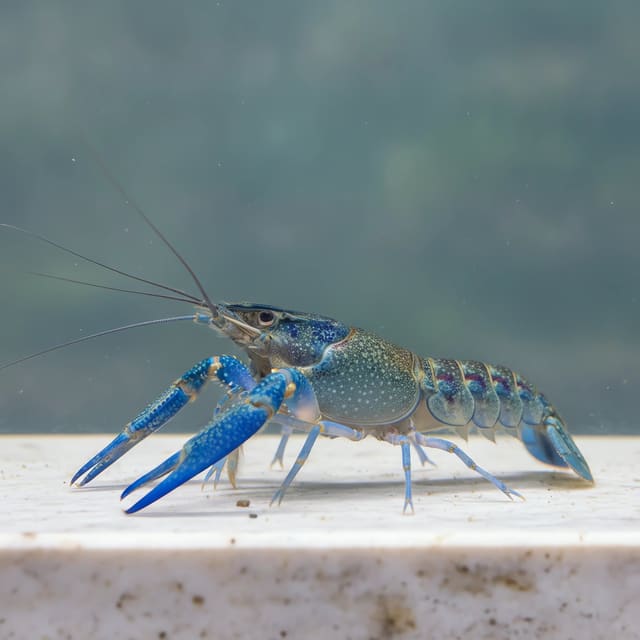
The Australian Blue Pearl Lobster displays impressive crayfish morphology reaching 14cm body length (excluding claws). The species is renowned for striking blue coloration—ranging from pale powder blue through to deep cobalt depending on individual genetics, diet, and water parameters. The robust carapace protects cephalothorax, whilst the segmented abdomen (tail) is muscular and fan-shaped. Two substantial chelipeds (claws) are the most prominent features—powerful crushing tools used for defense, territory disputes, food manipulation, and capturing prey. Four pairs of walking legs provide locomotion. Long antennae and shorter antennules provide sensory information. The exoskeleton must be periodically moulted for growth, with newly moulted individuals showing particularly vivid coloration before hardening occurs.
Cherax destructor is widespread across southeastern Australia, inhabiting permanent and temporary freshwater bodies including rivers, streams, farm dams, irrigation channels, and billabongs. Natural habitats range from clear flowing streams to turbid still water with variable substrate types. The species shows remarkable adaptability to varying conditions including seasonal extremes—during drought, yabbies burrow deeply into mud entering dormancy until water returns. They occupy areas with hiding places under rocks, logs, and within bank burrows. Water chemistry varies across the range but typically features neutral to slightly alkaline pH. The omnivorous diet includes aquatic vegetation, detritus, invertebrates, and carrion scavenged from substrate.
Provide minimum 80-litre aquarium for single specimen—larger strongly recommended given destructive potential and territorial nature. Use sand or fine gravel substrate allowing some burrowing behaviour. Furnish extensively with caves, PVC pipes (10-15cm diameter), rock piles with secure stable construction, and driftwood creating numerous hiding places—critical during vulnerable moulting periods. Avoid live plants as these will be destroyed through digging and consumption; artificial plants or no plants work best. Powerful filtration is essential given messy feeding habits and substantial waste production. Absolutely critical is escape-proof secure lid with no gaps—yabbies are notorious escape artists capable of climbing vertical surfaces, and surprisingly strong. Ensure all equipment is secured as they may dislodge heaters, filters, and decorations.
Maintain temperatures between 18-26°C—room temperature often suffices given temperate origins, avoiding need for heating in many climates. Water should be neutral to slightly alkaline with pH 6.5-8.0 and moderate hardness (8-15 dGH) supporting exoskeleton calcification. Ammonia and nitrite must remain at zero, with nitrates below 30ppm through substantial weekly water changes of 30-40% given high waste production. These hardy crayfish tolerate broad parameter ranges but consistency prevents stress. Good oxygenation through surface agitation is important. Provide mineral supplementation through cuttlebone or specialized crayfish minerals supporting successful moulting—deficiencies cause moulting difficulties potentially fatal to the animal.
Cherax destructor is an opportunistic omnivorous scavenger requiring varied diet. Provide sinking crustacean pellets as staple (3-4 times weekly), supplemented with blanched vegetables (courgette, spinach, peas, carrot), algae wafers, and occasional protein foods such as earthworms, frozen bloodworms, small pieces of fish, or shrimp. Feed in moderate portions—yabbies are messy eaters that scatter food whilst manipulating it with claws. Remove uneaten food after 24 hours to prevent water quality degradation. Reduce feeding frequency immediately before and during moulting periods when appetite decreases. Calcium supplementation through cuttlebone, mineral blocks, or calcium-rich foods supports exoskeleton development particularly important during growth phases and moulting. Varied diet ensures nutritional completeness and vibrant blue coloration.
Australian Blue Pearl Lobsters are highly territorial and aggressive toward conspecifics and potential tankmates. They establish territories around preferred hiding places and defend vigorously using threat displays (raised claws, forward posture) and physical combat if necessary. The species is primarily nocturnal though bolder individuals may emerge during feeding time regardless of lighting. Activity includes patrolling territory, foraging for food, excavating substrate, rearranging decorations, and attempting escape—persistent exploration of aquarium perimeter testing for weaknesses. Aggressive interactions with tankmates include opportunistic predation on sleeping or slow fish, active hunting of smaller species, and defensive attacks on larger fish venturing too close. Moulting occurs periodically (every few weeks in juveniles, less frequently in adults) during which the crayfish is extremely vulnerable and requires secure hiding place for days whilst new exoskeleton hardens.
Due to highly aggressive predatory nature, Cherax destructor is best kept alone in species-specific setup. If tankmates are attempted (strongly discouraged), they must occupy exclusively surface zones (fast-swimming surface fish only), be very large and robust, and aquarium must be extremely large (200+ litres) with extensive territories. Even with precautions, risk of predation or injury remains very high. Absolutely exclude all small fish (eaten), shrimp (consumed immediately), snails (crushed and eaten), slow or long-finned fish, bottom-dwelling fish that overlap territory, and other crayfish (lethal combat virtually guaranteed). The aggressive destructive nature means dedicated species-only aquarium offers best welfare and prevents tankmate casualties. Multiple yabbies only in very large ponds with extensive space and hiding places—aquarium housing multiple specimens typically results in casualties.
Cherax destructor breeds readily in captivity when kept in suitable conditions. Sexual dimorphism becomes apparent in mature specimens: males possess larger claws and narrower abdomen, whilst females show broader abdomen for egg carrying. Breeding follows mating where male fertilizes female, who then carries developing eggs attached to swimmerets under the abdomen (tail flap). Egg carrying period lasts several weeks depending on temperature, with female remaining hidden during this vulnerable time. Juveniles hatch as miniature versions of adults and cling to mother initially before becoming independent. Juveniles require their own hiding places and are vulnerable to cannibalism by adults—separate to dedicated rearing system if survival of offspring is desired. Juveniles grow rapidly with adequate food and calcium, moulting frequently during early life stages.
Tropical Fish Co supplies healthy, vibrant Cherax destructor Blue Pearl specimens that have been carefully maintained in appropriate conditions. Each yabby is hand-selected for striking blue coloration, good body condition, and intact appendages, ensuring you receive impressive crayfish ready to thrive in properly designed species-only setups. Our experienced staff understand the aggressive nature and destructive tendencies of these crayfish and can provide realistic assessment of compatibility (answer: keep alone), guidance on escape-proof construction, and dietary advice. With specialist packaging ensuring safe transit and tracked UK delivery, your new crayfish arrives in excellent condition. We're committed to sustainable sourcing, noting that wild populations are listed as vulnerable, and work only with responsible suppliers providing captive-bred specimens.
No reviews for this item yet. Bought one? Honest reviews only, good or bad.
What customers say about ordering from us
I have a small group of long finned mountain minnows. So was delighted to be able to order ten of this variety to increase the genetics in my tank . The ones I recieved are healthy but it’s to early to give a verdict on wether they are of a long finned type since they are small currently.
Gordon Walker · 23 Sept 2026
100% success travel and "installation". Pleased with quality of purchase. The Siamese fighter a bit "shy" so have not yet seen him at his best yet but looking good. Happy customer. GG
George E Garratt · 21 Sept 2026
Reviews of our shop, collected by Judge.me, an independent third-party review collector. Newest first.