Advanced
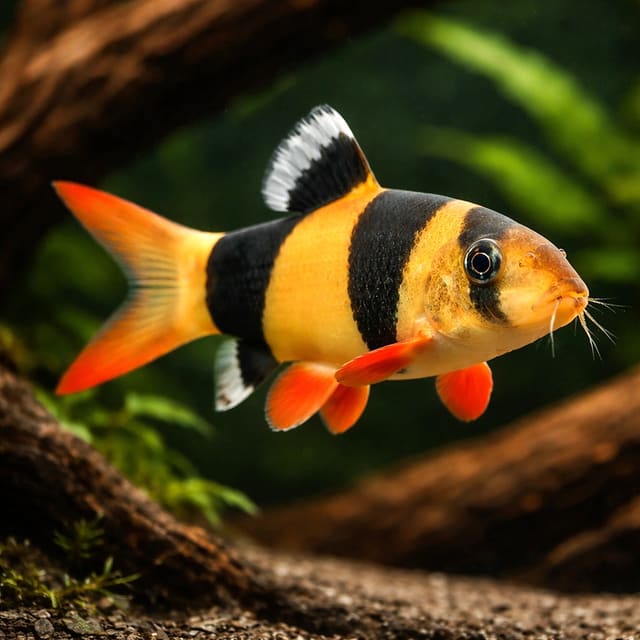
Clown Loach (Chromobotia macracanthus)
24–30°C · pH 5–7 · 648L
From £10.99Some sizes on sale

A hardy, active bottom-dwelling loach with bold personality and a taste for snails and meaty foods. Moderate care, semi-aggressive. 24-28C, pH 6-8.
Adult size is the maximum length this species reaches at full maturity (scientific sources). The livestock you receive will be younger and smaller. Product-photo provenance and any image-specific limitations are stated on the listing.
Botia morleti
Shoaling fish: kept in a group they feel safer, stay calmer and show their best colour.
Confirm your email, then we’ll send an availability message for this exact item if it returns within 180 days.
This request is only for this product—no newsletter or other promotions. A mail-provider retry may very rarely duplicate the same availability message. Unconfirmed addresses are removed after 48 hours. See our privacy policy.
A hardy, active bottom-dwelling loach with bold personality and a taste for snails and meaty foods. Moderate care, semi-aggressive. 24-28C, pH 6-8.
Adult size is the maximum length this species reaches at full maturity (scientific sources). The livestock you receive will be younger and smaller. Product-photo provenance and any image-specific limitations are stated on the listing.
Maintain these water conditions for optimal health and vibrant colors
Skunk Botia (Botia morleti), also known as the Skunk Loach or Hora's Loach, is a hardy, active bottom-dwelling loach with bold personality and a taste for snails and meaty foods. Native to the Mekong River basin in Indochina, as well as the Chao Phraya and Mae Klong basins in Thailand, this species is prized for its attractive markings, robust nature, and useful algae and pest snail control. Now available for sale UK from Tropical Fish Co, the Skunk Botia is ideal for the community aquarium keeper seeking an active, characterful bottom-dweller.
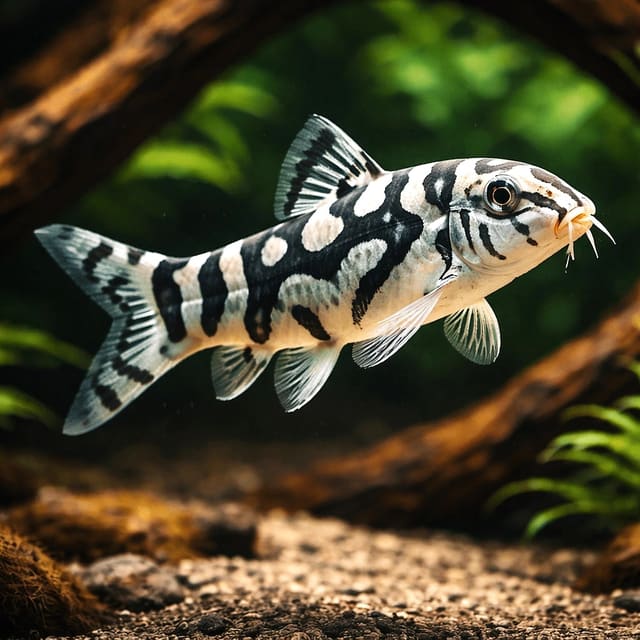
The Skunk Botia typically reaches around 8 cm in total length, though it can grow larger in optimal conditions (up to approximately 10 cm). The body is elongated and robust, with a pale gold or tan base color marked with bold black longitudinal stripes running from snout to tail, giving the species its "skunk" common name. The fins are semi-transparent with dark markings. Healthy specimens have bright, clear eyes and smooth, unblemished skin.
In the wild, Botia morleti inhabits the Mekong River basin in Indochina, as well as the Chao Phraya and Mae Klong basins in Thailand. These waters are typically warm, well-oxygenated, and moderately flowing, with sandy or gravelly substrates and plenty of submerged wood, rocks, and aquatic vegetation providing cover. The fish spend much of their time foraging on the substrate for invertebrates, snails, and organic detritus.
A well-filtered aquarium of at least 75 litres is recommended for a small group of Skunk Botias. Use a soft sand or smooth fine substrate and incorporate plenty of hiding places in the form of caves, driftwood, smooth rocks, and live plants. Ensure good filtration and moderate water movement to maintain high oxygen levels. A secure lid is advisable, though loaches are generally less inclined to jump than cyprinids. Maintain stable, clean water and avoid sharp decorations that could damage the fish's delicate skin.
The Skunk Botia is a carnivore and thrives on a varied diet of sinking carnivore pellets, frozen or live foods. Offer bloodworms, brine shrimp, daphnia, insect larvae, and small snails daily, supplemented with quality prepared foods. This species is particularly useful for controlling pest snail populations in the aquarium. Feed once or twice daily in small amounts to maintain excellent water quality.
This loach is hardy, active, and can be territorial, especially as it matures. It is best kept in a small group in a suitably sized aquarium, where individuals will establish a hierarchy and display natural behavior. They spend much of their time foraging on the substrate and exploring caves and crevices. Males may engage in territorial displays, and the species can be somewhat aggressive toward smaller, slower tankmates. They are most active during the day.
The Skunk Botia is suitable for a community aquarium with other robust, active fish. Good tankmates include fast-moving medium-sized community fish, robust barbs, danios, rainbowfish, and other similarly sized active community fish. Avoid small shrimp, tiny fish, slow long-finned fish, very passive bottom dwellers, and aggressive territorial cichlids.
Breeding the Skunk Botia is uncommon in home aquariums and not well documented. Like many botiid loaches, spawning likely requires large, mature fish and carefully managed water conditions.
Tropical Fish Co is a leading UK aquatics specialist offering healthy, carefully selected loaches direct to your door. Every fish is quarantined, inspected, and dispatched with expert care to ensure it arrives in peak condition. With decades of experience, transparent pricing, and exceptional customer support, we make it easy to add active, characterful species like the Skunk Botia to your collection. Order online today and enjoy fast, reliable delivery across the UK.
No reviews for this item yet. Bought one? Honest reviews only, good or bad.
What customers say about ordering from us
I have a small group of long finned mountain minnows. So was delighted to be able to order ten of this variety to increase the genetics in my tank . The ones I recieved are healthy but it’s to early to give a verdict on wether they are of a long finned type since they are small currently.
Gordon Walker · 23 Sept 2026
100% success travel and "installation". Pleased with quality of purchase. The Siamese fighter a bit "shy" so have not yet seen him at his best yet but looking good. Happy customer. GG
George E Garratt · 21 Sept 2026
Reviews of our shop, collected by Judge.me, an independent third-party review collector. Newest first.