Easy
White-Fin Ornate Tetra (Hyphessobrycon bentosi)
23–28°C · pH 5.5–7.5
£5.99

A small, peaceful Amazonian tetra with subtle beauty and lively schooling behavior, ideal for planted community aquariums. Moderate care, peaceful. 23-28C, pH 5.5-7.5.
Adult size is the maximum length this species reaches at full maturity (scientific sources). The livestock you receive will be younger and smaller. Product-photo provenance and any image-specific limitations are stated on the listing.
Megalamphodus bentosi
Shoaling fish: kept in a group they feel safer, stay calmer and show their best colour.
Confirm your email, then we’ll send an availability message for this exact item if it returns within 180 days.
This request is only for this product—no newsletter or other promotions. A mail-provider retry may very rarely duplicate the same availability message. Unconfirmed addresses are removed after 48 hours. See our privacy policy.
A small, peaceful Amazonian tetra with subtle beauty and lively schooling behavior, ideal for planted community aquariums. Moderate care, peaceful. 23-28C, pH 5.5-7.5.
Adult size is the maximum length this species reaches at full maturity (scientific sources). The livestock you receive will be younger and smaller. Product-photo provenance and any image-specific limitations are stated on the listing.
Maintain these water conditions for optimal health and vibrant colors
Megalamphodus bentosi, commonly known as the Ornate Tetra or Bentos Tetra, is a peaceful schooling fish from Amazonian tributaries that brings subtle beauty and lively behaviour to planted community aquariums. Available for sale UK through Tropical Fish Co, this small South American characin reaches 4.8cm and displays delicate finnage and refined coloration. The moderate care requirements and peaceful temperament make it suitable for aquarists with established soft-water aquariums seeking elegant schooling species. The preference for soft acidic water and planted setups means this species thrives in blackwater biotope aquariums replicating natural Amazonian conditions.
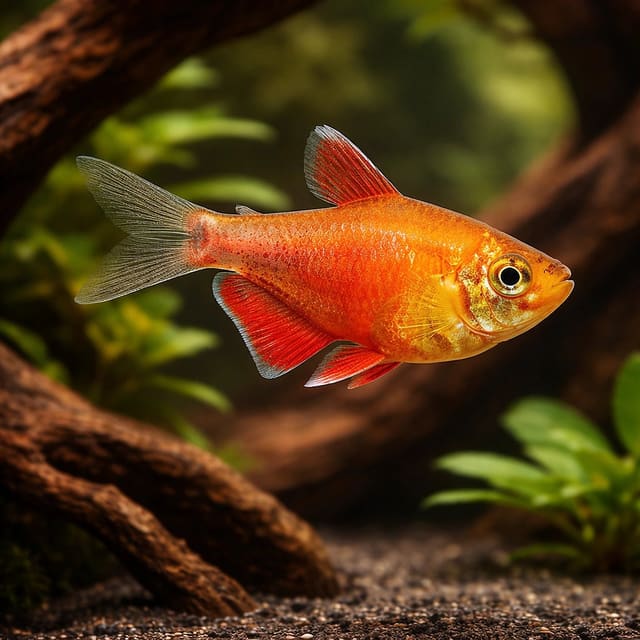
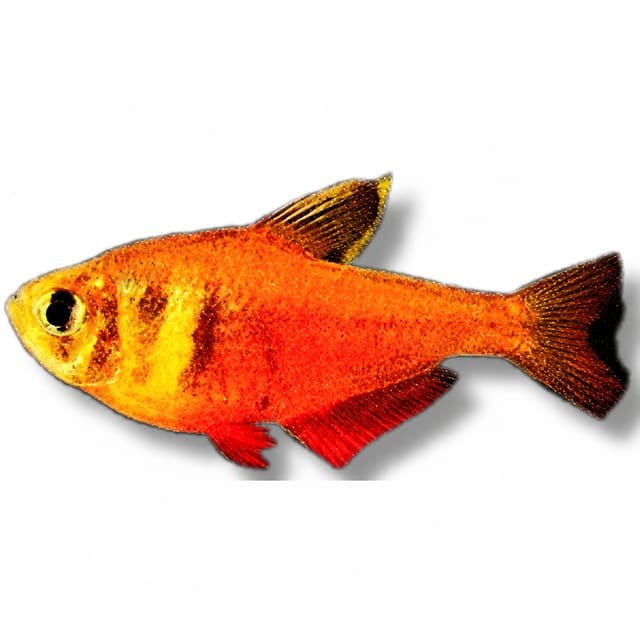
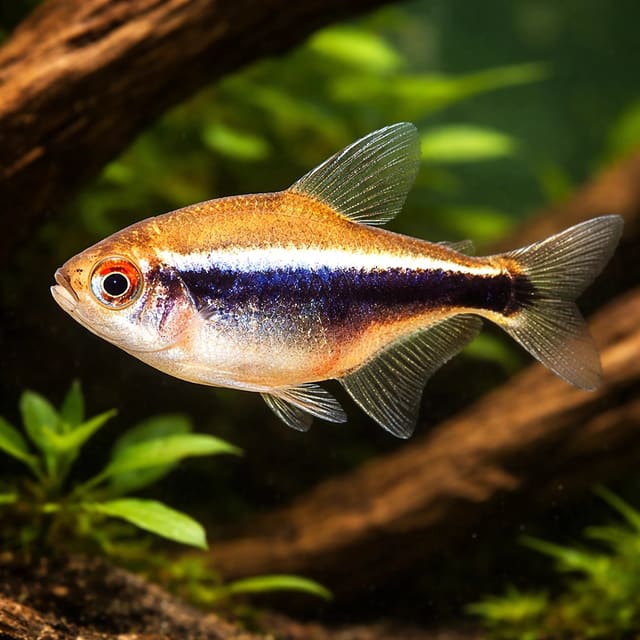
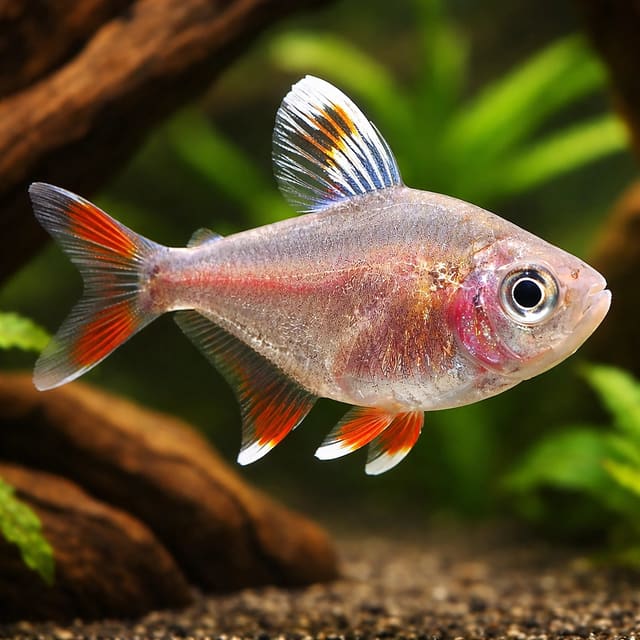
The Ornate Tetra displays classic elongated tetra body plan with slightly compressed flanks and forked caudal fin. Coloration shows subtle elegance: body base ranges from silver to pale gold with delicate reddish or pinkish flush, particularly pronounced in well-conditioned specimens. A dark shoulder spot or blotch is typically present. Finnage features delicate extensions and subtle colour accents—dorsal and anal fins may show red or orange tints with white or cream edging. Males tend to be slightly more colorful with more extended finnage compared to fuller-bodied females. The adipose fin characteristic of characins is present. Overall effect is refined rather than bold—beauty revealed through close observation in appropriate lighting. Optimal conditions with soft acidic water, planted surroundings, and quality diet bring out maximum coloration.
Megalamphodus bentosi inhabits sluggish tributaries, backwaters, and flooded forest areas of the Amazon basin in Brazil and Peru. These environments feature still to slow-flowing water heavily stained with tannins from abundant organic matter. Substrates consist of leaf litter, fine sand, and accumulated botanical debris. Overhanging rainforest vegetation creates dappled dim lighting conditions. Water is characteristically soft and acidic—blackwater or clearwater systems with minimal dissolved minerals. Dense aquatic and marginal vegetation provides cover and foraging opportunities. The species forms loose schools in mid-water zones amongst vegetation, feeding on small invertebrates, zooplankton, and organic matter. Seasonal variations bring dramatic water level changes, with rainy season providing access to inundated forest whilst dry season concentrates fish in permanent channels.
Provide minimum 75-litre aquarium with soft-water planted biotope setup. Dark sand or fine gravel substrate with generous driftwood, dried botanicals (Indian almond leaves, oak leaves), and leaf litter creates natural blackwater environment. Plant heavily with Amazonian species tolerating soft acidic conditions: Amazon swords, various Cryptocoryne species, Echinodorus varieties, and floating plants to diffuse lighting. Subdued lighting suits their preference for dim conditions and enhances coloration—floating plants create dappled effect replicating forest canopy. Gentle filtration maintaining excellent water quality without excessive current suits their preference for calmer waters. The tannin-stained water from botanical additions is beneficial and replicates natural chemistry. Ensure adequate swimming space in mid-water zones whilst providing planted areas for security. Dark substrate and surroundings enhance colour display and reduce stress.
Maintain stable temperatures between 23-28°C, with 25-27°C being optimal. This species requires soft water with pH 5.5-7.5 (ideally 6.0-6.8) and low hardness (1-8 dGH), replicating Amazonian blackwater conditions. Avoid hard alkaline water which stresses fish and inhibits best coloration. Ammonia and nitrite must remain at zero, with nitrates kept below 20ppm through regular 25-30% weekly water changes using soft low-mineral water. Heavy tannin staining through botanical additions is beneficial—blackwater conditions support immune function and bring out optimal colours. Good oxygenation through gentle surface agitation supports active metabolism. Consistency in parameters prevents stress—avoid fluctuations particularly in pH which can trigger disease susceptibility in sensitive soft-water species.
Megalamphodus bentosi is an omnivorous micro-predator feeding on small invertebrates and organic matter in nature. In captivity, provide varied diet: quality micro pellets or fine flakes as staple, supplemented 3-4 times weekly with frozen or live foods such as daphnia, baby brine shrimp, bloodworms (chopped if too large), and other small meaty offerings. Occasional plant-based matter through spirulina flakes or finely prepared vegetables provides dietary balance. Feed small portions 2-3 times daily—these small fish have correspondingly small stomachs and benefit from multiple small feedings. Ensure food particle size is appropriate for their modest mouths. Varied high-quality diet maintains health, enhances coloration, and supports breeding condition. Their peaceful nature means they typically feed calmly without aggressive competition.
Ornate Tetras are highly social schooling fish that must be maintained in groups of minimum 10-12 individuals for psychological wellbeing. In proper schools, they display confident behaviour with synchronized swimming movements creating mesmerizing displays. Inadequate group sizes result in timid stressed fish that hide constantly and show poor coloration. They occupy mid-water zones, moving through planted areas with gentle coordinated movements. Activity levels are moderate—they're not hyperactive dashers but maintain constant gentle motion. Generally peaceful toward heterospecifics, they integrate well into soft-water community aquariums. Males may display toward each other with fin spreading and brief chases, but serious aggression is absent. The species is diurnal with peak activity during daylight hours when feeding occurs.
This peaceful tetra thrives alongside other small peaceful soft-water species. Ideal companions include other peaceful tetras from similar biotopes (rummy-nose, cardinal, ember tetras), small peaceful rasboras, Corydoras catfish from Amazonian systems, dwarf cichlids with calm temperament (Apistogramma species), and Otocinclus algae eaters. Avoid large predatory fish that might view the tetras as prey, aggressive cichlids, notorious fin-nippers, and very boisterous tankmates that would stress these calm fish. Species requiring hard alkaline water are incompatible with the soft acidic conditions Ornate Tetras demand. Select tankmates sharing similar environmental preferences for harmonious soft-water planted community.
Captive breeding of Megalamphodus bentosi is achievable with appropriate conditions. These egg-scatterers spawn amongst fine-leaved plants or spawning mops in soft very acidic water. Condition groups with abundant frozen and live foods until females visibly swell with eggs. Breeding tank should be separate with very soft acidic water (pH 5.5-6.5, hardness 1-4 dGH), dim lighting, and fine-leaved plants or spawning media. Introduce conditioned pair in evening—spawning typically occurs following morning with male pursuing female amongst vegetation whilst eggs are released and fertilized. Remove adults immediately after spawning as they will consume eggs. Eggs are light-sensitive and hatch within 24-36 hours; fry become free-swimming after several days. Initial foods must be microscopic (infusoria, paramecium) before graduating to newly hatched brine shrimp. Water quality during rearing must be impeccable with very soft acidic conditions maintained.
Tropical Fish Co supplies healthy, quarantined Megalamphodus bentosi that have been carefully acclimated to soft-water conditions and are feeding actively on varied diet. Each Ornate Tetra is hand-selected for good body condition and normal schooling behaviour, ensuring you receive beautiful characins ready to thrive in appropriate Amazonian biotope aquariums. Our experienced staff understand soft-water fish requirements and can provide guidance on achieving appropriate water chemistry, planted setup design, and compatible community selection. With specialist packaging and tracked UK delivery, your new tetras arrive safely in peak condition. We're committed to sustainable sourcing and work only with responsible suppliers who prioritize fish welfare and support conservation of threatened Amazon basin ecosystems.
No reviews for this item yet. Bought one? Honest reviews only, good or bad.
What customers say about ordering from us
I have a small group of long finned mountain minnows. So was delighted to be able to order ten of this variety to increase the genetics in my tank . The ones I recieved are healthy but it’s to early to give a verdict on wether they are of a long finned type since they are small currently.
Gordon Walker · 23 Sept 2026
100% success travel and "installation". Pleased with quality of purchase. The Siamese fighter a bit "shy" so have not yet seen him at his best yet but looking good. Happy customer. GG
George E Garratt · 21 Sept 2026
Reviews of our shop, collected by Judge.me, an independent third-party review collector. Newest first.