Moderate
Banana Vampire Crab (Geosesarma sp.)
22–28°C · pH 7.5–8 · 40L
£9.39

A hardy-looking but territorial mangrove crab that thrives in a secure brackish paludarium with plenty of land, cover, and natural grazing material.
Adult size is the maximum length this species reaches at full maturity (scientific sources). The livestock you receive will be younger and smaller. Product-photo provenance and any image-specific limitations are stated on the listing.
Sesarmops intermedius
Confirm your email, then we’ll send an availability message for this exact item if it returns within 180 days.
This request is only for this product—no newsletter or other promotions. A mail-provider retry may very rarely duplicate the same availability message. Unconfirmed addresses are removed after 48 hours. See our privacy policy.
A hardy-looking but territorial mangrove crab that thrives in a secure brackish paludarium with plenty of land, cover, and natural grazing material.
Adult size is the maximum length this species reaches at full maturity (scientific sources). The livestock you receive will be younger and smaller. Product-photo provenance and any image-specific limitations are stated on the listing.
Maintain these water conditions for optimal health and vibrant colors
The freshwater crab Sesarmops intermedius, commonly known as the wetland crab, is a hardy-looking but territorial mangrove species that thrives in secure brackish paludariums with plenty of land, cover, and natural grazing material. Native to East Asia, especially mangrove swamps and mudflats of Japan and surrounding coastal wetlands, this distinctive sesarmid crab displays robust build and specialized habitat requirements that make it both fascinating and challenging to keep. Available for sale UK aquarists seeking unusual invertebrates should note that this species requires difficult-level care with semi-aggressive temperament and brackish conditions. At medium size, these specimens are well-developed and ready for appropriately designed paludarium setups.
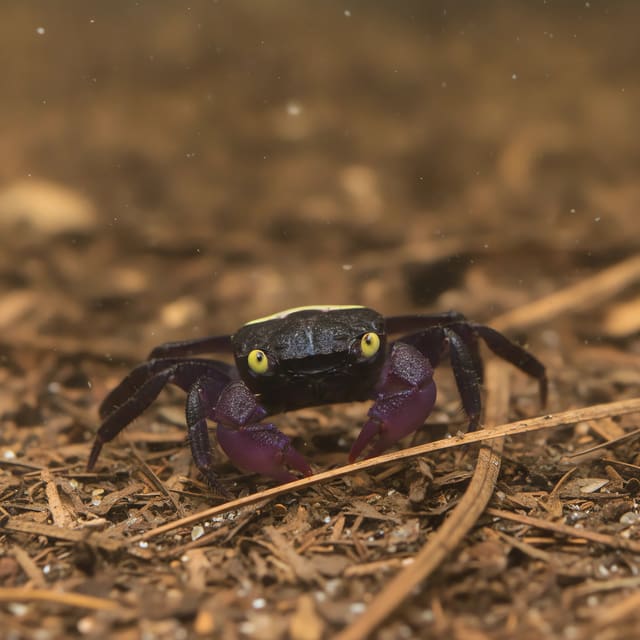
Sesarmops intermedius displays a robust, compact carapace with a slightly uneven surface divided into distinct frontal lobes. Colouration ranges from dark brown to olive-green or grey, often with subtle mottling or patterning that provides camouflage in natural mudflat habitats. The claws are proportionally large and powerful, used for both feeding and defence. The legs are muscular and adapted for climbing and burrowing. At medium size, specimens display well-developed body proportions and reach full adult size of approximately 5.5cm. The overall appearance is stocky, resilient, and adapted for life in harsh mangrove environments with fluctuating salinity and exposure to air.
Native to mangrove swamps and coastal mudflats throughout East Asia, especially Japan, Sesarmops intermedius inhabits intertidal zones with fluctuating salinity, exposed muddy substrates, and abundant mangrove roots, leaf litter, and hiding places. These environments feature brackish to marine water with tidal influences, warm temperatures, and complex structure. In the wild, wetland crabs are semi-terrestrial and spend significant time above the waterline, burrowing in mud, climbing roots, and foraging for algae, detritus, and organic matter. Recreating these challenging conditions with both land and water access, brackish salinity, and secure housing is essential for long-term success.
Provide a minimum of 60 litres paludarium with substantial land area, water area, and secure, escape-proof lid. Use aquarium-safe sand or mud substrate to allow natural burrowing behaviour. Create elevated dry areas using rocks, driftwood, and cork bark, ensuring easy access between land and water sections. Maintain brackish water conditions (specific gravity 1.005-1.015) to replicate natural tidal habitats. Install gentle filtration and maintain excellent water quality with regular partial water changes. Provide numerous hiding places such as caves, PVC tubes, and coconut shells. Keep substrate moist on land sections and ensure humid conditions. Monitor temperature and salinity closely to maintain stable conditions.
Sesarmops intermedius is an omnivorous scavenger that accepts a varied diet. Offer algae, decaying plant matter, blanched vegetables such as spinach and kale, leaf litter, sinking carnivore or omnivore pellets, and occasional protein such as frozen foods, worms, or small crustacean-based foods. Provide calcium-rich foods such as cuttlebone or specialised invertebrate supplements to support healthy moulting and shell development. Feed once daily in the evening, removing uneaten food after a few hours to maintain water quality. A balanced, varied diet promotes vibrant health, successful moulting, and active behaviour.
Wetland crabs are semi-aggressive, territorial, and primarily nocturnal. During daylight hours, they often remain hidden in burrows or caves, emerging at dusk to forage and patrol their territory. They are excellent climbers and will investigate all areas of the enclosure, including land sections. Males may display territorial behaviour towards other crabs, especially if space and hiding places are insufficient. During moulting, the crab will seek shelter and remain hidden until the new exoskeleton hardens, a vulnerable period lasting several days. Despite territorial tendencies, they are generally manageable in well-structured paludariums with adequate space and hiding places.
Best kept species-only due to semi-aggressive nature and tendency to predate on smaller tankmates. If housed with others, choose only robust brackish fish in a large, heavily structured paludarium, such as larger gobies or archerfish. Avoid small shrimp, snails, slow or long-finned fish, tiny fish, and most other crabs. Even supposedly compatible tankmates may be harassed or injured. Careful observation is essential if housing with fish, and be prepared to separate if aggression or predation occurs. A species-only paludarium is strongly recommended for best welfare and least stress.
Breeding is not commonly achieved in home aquaria. Like many sesarmid crabs, reproduction likely involves larval stages that require specialized conditions, often including brackish to marine water for larval development. Larvae are planktonic and require microscopic live foods and precise salinity management. Most aquarists keep Sesarmops intermedius for display rather than breeding, as successful larval rearing is extremely challenging and requires dedicated equipment and expertise. If breeding is attempted, provide excellent water quality, stable brackish conditions, and abundant hiding places for egg-bearing females.
Provide a secure escape-proof enclosure with land access, hiding places, and moist substrate. This species is not a true fully aquatic crab and requires substantial land area to thrive. Maintain stable brackish conditions with appropriate salinity, as pure freshwater is not suitable long-term. Avoid all copper-based medications, which are fatal to crustaceans. After moulting, leave the shed exoskeleton in the enclosure for the crab to consume as a calcium source. Monitor water quality closely and perform regular partial water changes. This species is best suited to experienced aquarists comfortable managing semi-terrestrial invertebrates with specialized brackish paludarium requirements.
Tropical Fish Co is a trusted UK supplier of unique, healthy freshwater and brackish invertebrates including Sesarmops intermedius wetland crabs. Each specimen is carefully selected for robust health, active behaviour, and excellent condition. Our livestock is quarantined and health-checked before dispatch, ensuring you receive only the finest quality. We provide expert care advice, detailed species information, and ongoing support to help you succeed with specialist invertebrates. With fast, secure delivery across the UK and a commitment to sustainable, responsible fishkeeping practices, Tropical Fish Co is your reliable partner for premium aquatic livestock and unusual species.
No reviews for this item yet. Bought one? Honest reviews only, good or bad.
What customers say about ordering from us
I have a small group of long finned mountain minnows. So was delighted to be able to order ten of this variety to increase the genetics in my tank . The ones I recieved are healthy but it’s to early to give a verdict on wether they are of a long finned type since they are small currently.
Gordon Walker · 23 Sept 2026
100% success travel and "installation". Pleased with quality of purchase. The Siamese fighter a bit "shy" so have not yet seen him at his best yet but looking good. Happy customer. GG
George E Garratt · 21 Sept 2026
Reviews of our shop, collected by Judge.me, an independent third-party review collector. Newest first.