−22%
Expert
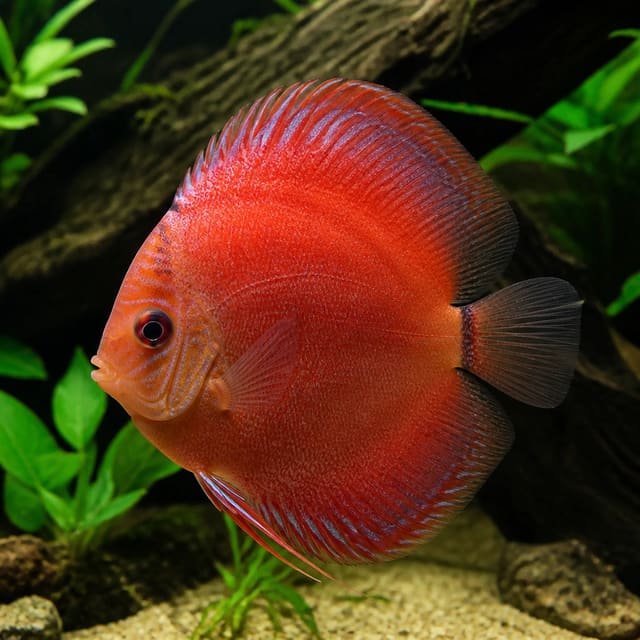
Super Red Melon Discus (Symphysodon spp.)
26–30°C · pH 6–7 · 300L
£72.99£93.99

Stunning Turquoise Checkerboard discus fish for sale, ideal for peaceful community tanks. Moderate care and perfect for experienced keepers. Order now!
Adult size is the maximum length this species reaches at full maturity (scientific sources). The livestock you receive will be younger and smaller. Product-photo provenance and any image-specific limitations are stated on the listing.
Symphysodon aequifasciatus
Save when buying multiple fish. Each quantity is one fish; sex and pair formation are not guaranteed unless the selected variant explicitly states them.
Confirm your email, then we’ll send an availability message for this exact item if it returns within 180 days.
This request is only for this product—no newsletter or other promotions. A mail-provider retry may very rarely duplicate the same availability message. Unconfirmed addresses are removed after 48 hours. See our privacy policy.
Stunning Turquoise Checkerboard discus fish for sale, ideal for peaceful community tanks. Moderate care and perfect for experienced keepers. Order now!
Adult size is the maximum length this species reaches at full maturity (scientific sources). The livestock you receive will be younger and smaller. Product-photo provenance and any image-specific limitations are stated on the listing.
Discus are social Amazonian cichlids with specialised aquarium needs. OATA advises at least five fish, except an established breeding pair, and about 50 litres per adult—roughly 300 litres for six adults. Use that as a planning floor, then check usable dimensions, filtration, source water and the actual fish.
Maintain these water conditions for optimal health and vibrant colors
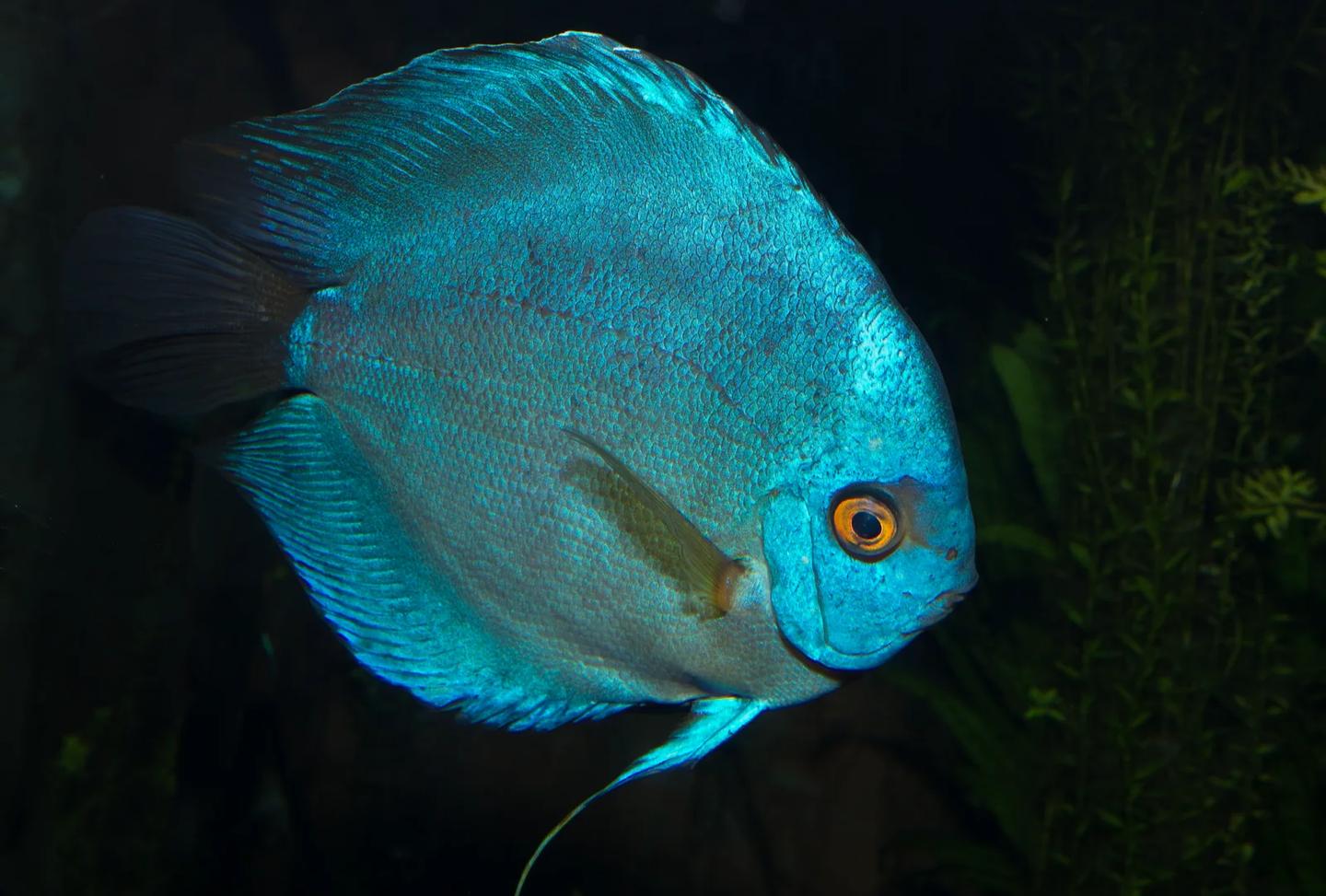
The Turquoise Checkerboard Discus, Symphysodon aequifasciatus, is one of the most eye-catching patterned discus fish available to serious tropical keepers. Its maze-like turquoise lines, warm base colour, and calm, gliding movement make it a standout choice for aquarists researching the best discus tank mates for a peaceful show aquarium. Native to the Amazon Basin, this symphysodon discus grows to around 20 cm, can live for up to 10 years, and thrives in very warm, soft, clean water. That means the right discus fish tank setup, stable discus water parameters, and carefully chosen companions matter just as much as the fish itself. Many keepers ask whether discus and angelfish tank mates work, what the ideal discus tank size is, and whether a checkerboard discus for planted aquarium layouts is realistic. The answer is yes—with planning. See our detailed photos showing the fine checkerboard pattern, body depth, and rich blue-green sheen that make this one of the best patterned discus variety options for a display tank. For aquarists wanting a calm centrepiece fish with elegance, intelligence, and real presence, this is a gorgeous checkerboard discus fish that rewards good care with stunning colour and confident behaviour.
Discus are South American cichlids, so if you have ever wondered are discus fish cichlids, the answer is yes—but they behave very differently from rougher cichlids. In the aquarium hobby, selectively bred forms such as Turquoise Checkerboard, Discus Brilliant Turquoise - Symphysodon Aequifasciatus, Blue Diamond Discus, and Golden Melon Discus are prized for body shape, pattern precision, and colour depth.
The discus fish origin lies in the Amazon Basin, where wild discus inhabit slow-moving tributaries, flooded forest margins, and calm blackwater or soft clearwater zones. In the discus fish natural habitat, water is typically warm, low in dissolved minerals, and stained by tannins from leaf litter and wood. This discus fish native habitat helps explain why captive discus prefer soft, acidic to near-neutral conditions and react badly to sudden changes.
When people picture discus fish in the wild, they often imagine open river channels, but the real discus fish habitat is more sheltered. Roots, fallen branches, submerged leaves, and shaded banks create security. In these areas, discus fish in natural habitat conditions feed on small invertebrates, insect larvae, and organic matter drifting through the water column. Understanding this is useful when planning a realistic discus biotope tank mates list and deciding whether can discus fish live in planted aquarium systems successfully.
The turquoise discus habitat we recreate in aquaria should not be cluttered or turbulent. Discus dislike harsh current and constant disturbance. A calm, stable environment is one reason experienced keepers often say that excellent discus fish care is less about gadgets and more about consistency. If you are asking are discus fish hard to care for, the honest answer is that they are demanding rather than impossible. Their needs are specific, but once met, they are graceful and rewarding fish to keep.
Modern Turquoise Checkerboard strains are line-bred aquarium forms rather than wild-caught fish, yet they still reflect the needs of discus fish wild ancestors. They appreciate dimmer zones, warm water, and a peaceful social group. This is why many keepers choose a dedicated discus aquarium rather than forcing them into a mixed setup with fast, nippy fish.
Mimicking the Amazon style with warm water, subdued flow, dark backgrounds, and sheltered open swimming space improves confidence, feeding response, and colour intensity. In our experience, patterned discus show cleaner bars and less stress darkening when they feel secure.
A successful discus tank setup starts with volume, stability, and filtration. The absolute discus fish minimum tank size for a proper group is 300 litres, but many keepers get better long-term results in 350-450 litres. Because discus are social, the best discus fish aquarium size is one that allows at least six fish to spread hierarchy pressure. A cramped tank often leads to shy feeders, bullying, and poor growth. If you are researching tank size for discus pair, a pair may be housed short term in a breeding setup, but for general keeping, groups are far better. In practical terms, the ideal discus tank size is bigger than many first-time buyers expect.
The right discus fish tank size depends on the goal of the aquarium. For a display group, start at 300 litres. For a mixed but carefully planned discus fish aquarium with tetras and catfish, 400 litres gives better swimming room and easier maintenance. If you are comparing setups with angelfish tank size searches, remember that discus need warmer water and more stable conditions than many angel tanks provide. That is why a discus-led system should be designed around the discus first, not around the angel fish.
The ideal discus fish water parameters are: temperature 28-31°C, pH 5.0-7.0, and hardness 1-8 dGH. The best discus fish ideal temperature for most captive-bred checkerboards is 29-30°C. Keepers often ask about discus temperature, discus temperature range, and discus fish water temperature; the key point is stability. Rapid swings are more dangerous than sitting at 29°C every day. Your target discus fish tank temperature should be controlled with a reliable heater and checked with a digital thermometer. Good discus fish requirements include low nitrate, high oxygen, and frequent maintenance.
Discus need excellent biological filtration without blasting current. External canister filters are usually best for larger aquariums because they provide media capacity and stable flow. Aim for gentle circulation and polished water, not a river effect. Fine mechanical filtration helps remove uneaten food, which matters because rich discus fish food can foul the tank quickly. A spray bar or lily pipe can soften output and reduce stress.
There are two proven routes: bare-bottom grow-out systems or natural display tanks. For home aquariums, fine sand or smooth dark substrate works well. It highlights the fish and reduces glare. If you want a checkerboard discus for planted aquarium layout, choose heat-tolerant species such as Amazon swords, Anubias, Java fern, and floating cover. Many customers ask can discus fish live in planted aquarium systems; yes, they can, provided the plants tolerate the heat and the tank remains easy to clean. A thoughtful layout of wood, broad leaves, and open front swimming space is ideal for discus tank mates and plants. This also answers the common question can discus fish live in a community tank: yes, but only if the aquascape supports calm behaviour.
For keepers comparing varieties, a planted display can look superb with Super Red Melon Discus, Blue Diamond Discus, and Discus Yellow Pigeon Symphysodon Aequifasciatus Discus alongside a patterned turquoise centrepiece.
Moderate lighting is best. Very bright light can make discus skittish unless balanced with shade and background cover. Run lights for 7-9 hours daily in planted tanks. Warm-spectrum lighting often enhances the turquoise lattice pattern and helps discus fish colors appear richer against dark décor.
Always cycle the tank for 4-6 weeks before adding discus. In warm water, waste breaks down quickly, so immature filtration causes trouble fast. Stable bacteria, not bottled promises, are what make a discus tank work.
The ideal discus fish diet is rich, varied, and easy to digest. In simple terms, what do discus fish eat? They do best on high-quality specialised granules, soft pellets, frozen bloodworm, brine shrimp, mysis, and carefully selected discus blends. In the wild, what discus fish eat includes insect larvae and tiny invertebrates, so captive feeding should focus on protein quality rather than random community flakes.
A balanced discus diet uses a staple food plus frozen supplements. Good staple feeds should sink slowly, hold shape, and not cloud the water. If you are learning how to feed discus fish, offer small portions 2-3 times daily for adults and more often for juveniles. Remove leftovers quickly. Rich foods support growth, but overfeeding is one of the fastest ways to ruin water quality in a warm discus tank.
Use a specialist discus fish food as the base of the menu. Soft granules or pellets made for discus are easier to digest than generic cichlid sticks. This gives you control over nutrition and keeps the fish in feeding condition without excessive waste.
Frozen bloodworm, brine shrimp, daphnia, and mysis add variety. Some keepers ask whether discus fish eat shrimp; yes, they will take small shrimp-based foods and frozen crustaceans. They are not algae grazers, so searches like what tropical fish eat algae do not apply to discus themselves. Nor are they practical snail hunters, so queries such as what tropical fish eat snails or what small tropical fish will eat snails are better answered by choosing a separate cleanup species rather than expecting discus to do the job.
If you are wondering how to get discus fish to eat, start by checking stress, temperature, and competition. New discus often settle better in dim light with minimal disturbance. Warm stable water and a calm group usually restore appetite. The common question why discus fish not eating is often linked to transport stress, bullying, or poor water quality rather than the food itself.
| Time | Food | Amount |
|---|---|---|
| Morning | Specialist discus granules | Only what is eaten in 2-3 minutes |
| Evening | Frozen bloodworm or brine shrimp | Small portion, no leftovers |
Overfeeding causes ammonia spikes, bacterial blooms, and cloudy water. In a 29-30°C tank, uneaten food breaks down quickly. Feed little and often, and siphon debris after rich frozen foods.
This fish is prized for a rounded, laterally compressed body and intricate turquoise striping that forms a checkerboard or netted pattern across the flanks. Adult size reaches about 20 cm, so if you are checking discus fish max size, expect a deep-bodied fish that needs visual space as much as swimming space. The body often shows a warm brown to reddish base overlaid with electric blue-green lines, making it a classic discus fish blue patterned form.
Among modern discus fish types, the Turquoise Checkerboard stands out because the pattern is as important as the base colour. This is why hobbyists searching for most popular discus fish often shortlist checkerboards, blue diamonds, pigeon bloods, and melon strains. The image file discus-tank-mates.webp is especially useful for showing how the pattern tightens across the shoulder and body when the fish is relaxed and well conditioned.
Like many discus, colour can shift with mood and environment. If you have ever asked why discus fish turns black, stress is the usual reason: transport, bullying, poor water quality, or sudden lighting changes can darken the body and bars. This is not unusual, and it often improves once the fish settles. Strong nutrition, dark backgrounds, and stable heat help explain why tropical fish are colorful in good aquariums—they are healthy, secure, and not wasting energy on stress responses.
Sexing is difficult outside breeding condition. Males may develop slightly thicker lips or a more pronounced forehead, but body shape alone is unreliable. For hobbyists seeking a turquoise checkerboard discus for show tank, choose individuals with round bodies, clear eyes, even finnage, and a balanced pattern from shoulder to tail. This is one reason premium checkerboard discus UK lines are judged on symmetry as much as colour.
The best discus fish tank mates are peaceful, warm-water tolerant, and not prone to fin nipping. Discus are calm social cichlids, so if you are asking are discus fish peaceful, generally yes. They are not ideal with boisterous fish, and while they can establish hierarchy within the group, they are not usually violent. Questions like are discus fish aggressive or are discus fish aggressive to other fish are usually answered by context: stress, crowding, and feeding competition cause most problems.
Because discus are group fish, another common question is are discus fish schooling. Not in the tight tetra sense, but they are social and do best in groups of six or more. A lone discus in a busy community tank often becomes shy and stops feeding well. That is why a proper discus fish tank mate compatibility plan is essential.
Popular companions include cardinal tetra discus combinations, rummy nose tetra discus setups, and cory catfish discus communities. Cardinal tetras and rummy nose tetras suit the heat and add movement without intimidation. Corydoras can work if you choose warm-tolerant species and keep the substrate clean. Glowlight tetra discus and rosy tetra discus pairings are sometimes used, but always confirm the chosen tetra species handles 28-30°C long term.
Another frequent question is ram cichlid discus compatibility. A well-managed ram cichlid discus fish setup can work because rams also enjoy warm, soft water, but they need excellent water quality and enough floor space. Agassizs dwarf cichlid discus combinations are more advanced and depend on tank size and territory structure.
For discus-only displays, mixing colour forms is a great option. Consider a patterned group with Super Red Melon Discus, Golden Melon Discus, Blue Diamond Discus, Leopard Spotted Discus Fish - Aquarium, and Discus Brilliant Turquoise - Symphysodon Aequifasciatus. These make excellent tank mates for discus because their care needs match exactly.
The question can discus fish live with angelfish comes up constantly. Yes, discus and angelfish tank mates can work in a large, calm, very warm aquarium, but it is not always the easiest route. Can discus fish and angelfish live together? They can, but angels may be more assertive at feeding time and can introduce parasites if sourced poorly. If you try discus and angelfish, choose healthy stock, quarantine carefully, and ensure the angelfish tank mates plan still revolves around discus needs. Also compare true angelfish tank size recommendations with the larger, warmer needs of discus before combining them.
Avoid fin nippers, hyperactive barbs, large aggressive cichlids, and coldwater fish. Searches like what tropical fish can live with goldfish are irrelevant here—goldfish need much cooler water. The answer to can discus fish live with african cichlids, can discus fish live with cichlids, or can discus fish live with arowana is generally no for most home aquariums. These pairings create stress, incompatible water needs, or outright predation risk.
If you are researching what tropical fish can go together, what tropical fish can live together, or what small tropical fish can live together, think in terms of temperature, temperament, and feeding style. That is the secret behind a successful discus in planted community tank.
| Species | Compatible? | Notes |
|---|---|---|
| Blue Diamond Discus | ✅ Yes | Same water needs; ideal for mixed discus groups |
| Cardinal Tetra | ✅ Yes | Classic warm-water shoaling companion for large discus aquariums |
| Angelfish | ⚠️ Caution | Possible in large tanks, but quarantine and feeding competition matter |
| African Cichlids | ❌ Avoid | Wrong temperament and water chemistry |
For keepers asking about discus tank mates 75 gallon, a 75-gallon aquarium is usually the lower end for a small group with minimal companions. It can work, but larger is safer. If you want a broad discus tank mates list, think cardinal tetras, rummy nose tetras, selected corys, rams, and other discus forms. Truly unusual discus tank mates should only be attempted by experienced keepers who can monitor behaviour closely. Online threads like discus tank mates monsterfishkeepers often show bold combinations, but many are not ideal for long-term welfare.
Always quarantine new arrivals for 2-4 weeks before adding them to a discus aquarium. This is especially important for angelfish, catfish, and tetras from mixed systems, as discus are sensitive to parasites and bacterial stress.
Discus fish breeding is advanced but fascinating. A settled discus fish breeding pair will usually form naturally from a group rather than from random forced pairing. If you are asking how to discus fish breed, the process begins with pair bonding, territory cleaning, and repeated passes over a vertical spawning site.
A dedicated breeding aquarium of around 100-150 litres is commonly used for one pair. Bare-bottom tanks are easiest to keep clean. Use a discus fish breeding cone, vertical slate, or smooth pipe as the spawning surface. Keep water very clean, soft, and warm at about 29-30°C. This is where turquoise checkerboard for breeding projects succeed or fail: cleanliness and pair stability matter more than expensive equipment.
Before spawning, the pair cleans the site and becomes more protective. The female lays rows of discus fish eggs, and the male follows to fertilise them. Good pairs fan the eggs constantly. Checkerboard discus breeding often follows large water changes, excellent feeding, and low disturbance.
Discus fish eggs hatching time is usually around 48-60 hours depending on temperature. During the discus fish eggs stages, infertile eggs turn opaque while fertile eggs darken and develop. Once hatched, wrigglers remain attached briefly before becoming free-swimming. This stage is one reason not every pair becomes successful parents immediately.
One of the most unusual aspects of discus fish and babies is that fry feed from the parents' skin mucus during early development. Healthy parenting behaviour is critical. After that stage, newly free-swimming discus fish babies can be weaned onto baby brine shrimp and finely powdered foods. Water quality must be immaculate because fry are extremely sensitive.
Customers looking for a breeding pair of discus fish for sale or discus fish for sale breeding pair should understand that proven pairs are valuable because compatibility is not guaranteed. Serious hobbyists often seek advice from specialist discus fish breeders rather than random sellers. If you have searched discus fish breeders near me, focus on stock health, body shape, and feeding response before colour alone.
Condition a potential pair with frequent small feeds of specialist granules plus frozen foods for 2-3 weeks before moving them to a breeding tank. Avoid over-cleaning the spawning site with chemicals; simply use spotless water and a stable routine. Discus breed best when they feel the environment is predictable.
Choosing among discus fish types can be difficult because many share the same body shape and care needs. The real difference is visual impact, pattern style, and how they fit your aquascape. The Turquoise Checkerboard is ideal if you want a fish with movement in the pattern rather than a solid colour block.
| Feature | Turquoise Checkerboard Discus | Blue Diamond Discus |
|---|---|---|
| Max Size | 20 cm | 20 cm |
| Care Level | Moderate to advanced | Moderate to advanced |
| Temperature | 28-31°C | 28-31°C |
| Price | £55.00 | Varies by size and grade |
| Best For | Pattern-focused show tanks | Clean, solid-colour contrast displays |
| Feature | Turquoise Checkerboard Discus | Golden Melon Discus |
|---|---|---|
| Visual Style | Netted turquoise pattern | Warm solid yellow-orange body |
| Planted Tank Effect | Excellent against dark greens | Excellent for bright contrast |
| Show Tank Use | Highly detailed focal fish | Bold colour-block centrepiece |
| Best For | Keepers wanting a stunning patterned discus UK look | Keepers wanting strong warm colour |
Choose this fish over a solid-colour strain if you want the pattern to change subtly with angle and light. It is especially effective in darker aquascapes and among broad-leaved plants. If you prefer a cleaner, more minimalist look, Blue Diamond Discus may suit you better. If you want warmer tones, consider Golden Melon Discus or Super Red Melon Discus. For hobbyists exploring discus fish alternatives, angelfish are often mentioned, but they do not match the same rounded body shape, social behaviour, or display presence of mature discus.
Healthy discus are alert, symmetrical, feeding eagerly, and holding fins open. They should glide calmly through the middle water and show clear eyes, smooth breathing, and full body condition. Because they are sensitive fish, many keepers search for discus fish diseases, discus fish diseases and treatment, and even discus fish disease pictures before buying. Prevention is far easier than cure.
Typical issues include intestinal flagellates, bacterial infections, gill flukes, stress darkening, and nutritional problems. Discus fish gill flukes treatment usually involves a targeted anti-parasite medication in a hospital tank. Discus fish hole in the head disease is often linked to chronic stress, poor diet, and bad water quality. If a fish is hanging oddly, keepers may ask about discus fish head down treatment; this symptom can be linked to weakness, internal issues, or severe stress and should be treated as urgent.
If you need to know how to treat sick discus fish, start with isolation, extra aeration, and testing water immediately. Correct temperature and ammonia problems before adding medication. Not every fish needs salt, and salt treatment for discus fish should be used carefully and only when appropriate. Discus react badly to guesswork. Warm clean water, reduced stress, and accurate diagnosis save more fish than random treatments.
Because discus are warm-water cichlids, some keepers also ask if mixed tanks with ram cichlid discus fish increase disease risk. They can if new fish are introduced without quarantine. This is why every new addition should be observed separately first.
Never medicate a display tank casually. Remove carbon, confirm the diagnosis, and remember that some treatments affect biological filtration. If shrimp or sensitive catfish are present, always check medication safety first.
The discus fish temperament is one of the main reasons they are so admired. They are calm, observant fish that recognise routine and often learn where food comes from. In a settled group they move together loosely, inspect their surroundings, and establish a gentle hierarchy. This is why discus cichlid tank mates must be chosen for manners rather than just matching water chemistry.
Discus are middle-water fish and prefer a predictable environment. Sudden movement outside the glass, bright lighting, or rough tank mates can make them darken or hide. In a proper discus in planted community tank, they often become bolder over time. Broad leaves and vertical wood give them visual security without blocking swimming space.
They are social rather than solitary, so a single discus in community tank setups rarely show the species at its best. Group keeping spreads confidence and encourages feeding. If the fish are settled, they display better colour, stronger appetite, and more natural interaction.
When customers search for discus fish for sale, they are usually not just comparing colour—they are trying to avoid weak, stressed stock. Turquoise Checkerboard Discus need careful handling from the moment they arrive. Our focus with this variety is body shape, pattern clarity, feeding response, and stable acclimation to aquarium life before sale. That matters whether you are looking for 2 inch discus fish for sale, 6 inch discus fish for sale, or simply trying to understand the average price of discus fish in relation to quality.
Each fish is observed for condition, appetite, and swimming behaviour before being listed as discus fish for sale uk great britain stock. We use insulated packaging, tracked delivery, and seasonal heat packs in winter to protect these warm-water fish during transit. Discus are packed professionally to reduce stress and temperature loss. This is especially important for buyers comparing could discus fish for sale uk online options and wondering why one seller's fish settle faster than another's.
We also know buyers often compare searches like 6 inch discus fish for sale near me, big tropical fish for sale, and could discus fish for sale uk price. The key difference is not just location or headline cost. Healthy discus should arrive upright, responsive, and ready to settle with careful acclimation. We include practical care guidance so your new fish enters the correct discus fish tank setup rather than a generic community tank.
Build a striking discus display with complementary colour forms and compatible companions. For contrast, add a Blue Diamond Discus with its clean solid tone, or warm up the palette with a Golden Melon Discus. If you prefer stronger reds, the Super Red Melon Discus creates a bold mixed group. For more patterned options, browse Leopard Spotted Discus Fish - Aquarium or the elegant Discus Fish Red Valentine. You can also explore the wider Discus Fish collection to compare colours, sizes, and group combinations for your ideal warm-water show tank.
No reviews for this item yet. Bought one? Honest reviews only, good or bad.
What customers say about ordering from us
I have a small group of long finned mountain minnows. So was delighted to be able to order ten of this variety to increase the genetics in my tank . The ones I recieved are healthy but it’s to early to give a verdict on wether they are of a long finned type since they are small currently.
Gordon Walker · 23 Sept 2026
100% success travel and "installation". Pleased with quality of purchase. The Siamese fighter a bit "shy" so have not yet seen him at his best yet but looking good. Happy customer. GG
George E Garratt · 21 Sept 2026
Reviews of our shop, collected by Judge.me, an independent third-party review collector. Newest first.