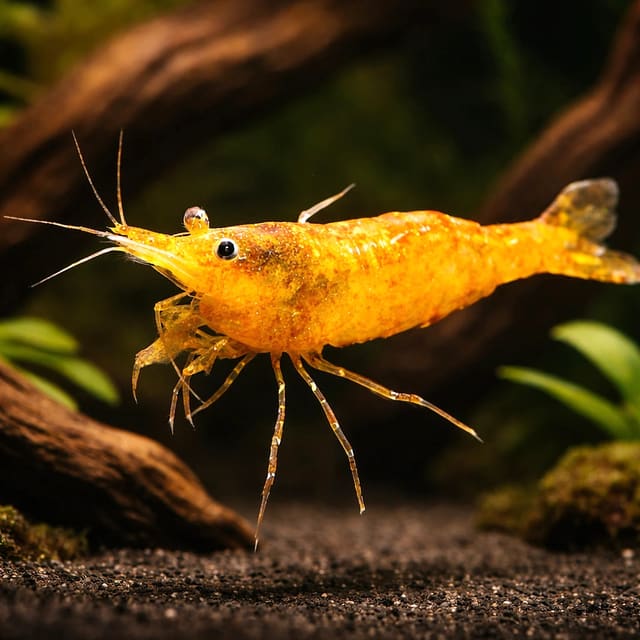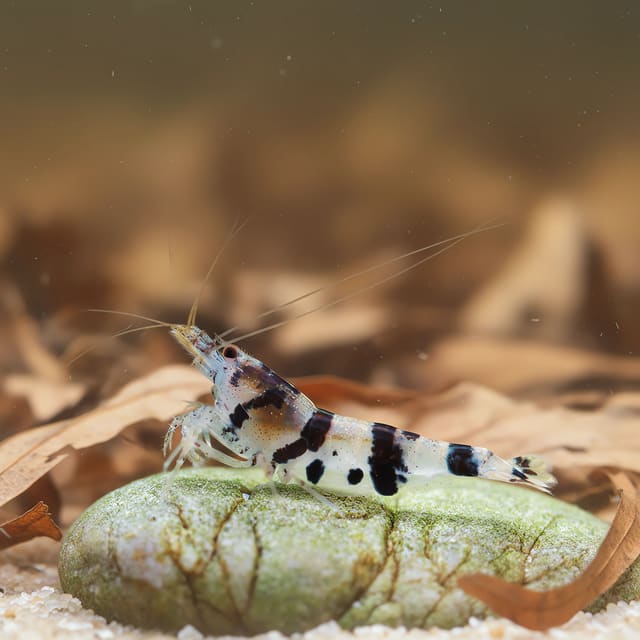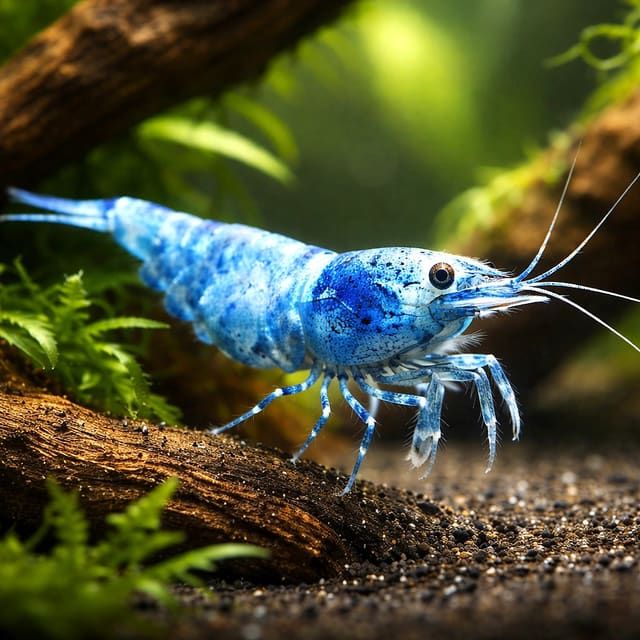
Blue Bolt Shrimp (Caridina sp. "Taiwan Bee")
17–27°C · pH 6.5–8
£42.99

A tiny, striking Sulawesi dwarf shrimp that thrives in warm, stable, biofilm-rich aquariums and is best suited to experienced keepers. Expert care, peaceful. 26-30C, pH 7.5-8.5.
Adult size is the maximum length this species reaches at full maturity (scientific sources). The livestock you receive will be younger and smaller. Product-photo provenance and any image-specific limitations are stated on the listing.
Caridina spongicola
Lives in groups: kept together they stay settled, active and show their best colour.
Confirm your email, then we’ll send an availability message for this exact item if it returns within 180 days.
This request is only for this product—no newsletter or other promotions. A mail-provider retry may very rarely duplicate the same availability message. Unconfirmed addresses are removed after 48 hours. See our privacy policy.
A tiny, striking Sulawesi dwarf shrimp that thrives in warm, stable, biofilm-rich aquariums and is best suited to experienced keepers. Expert care, peaceful. 26-30C, pH 7.5-8.5.
Adult size is the maximum length this species reaches at full maturity (scientific sources). The livestock you receive will be younger and smaller. Product-photo provenance and any image-specific limitations are stated on the listing.
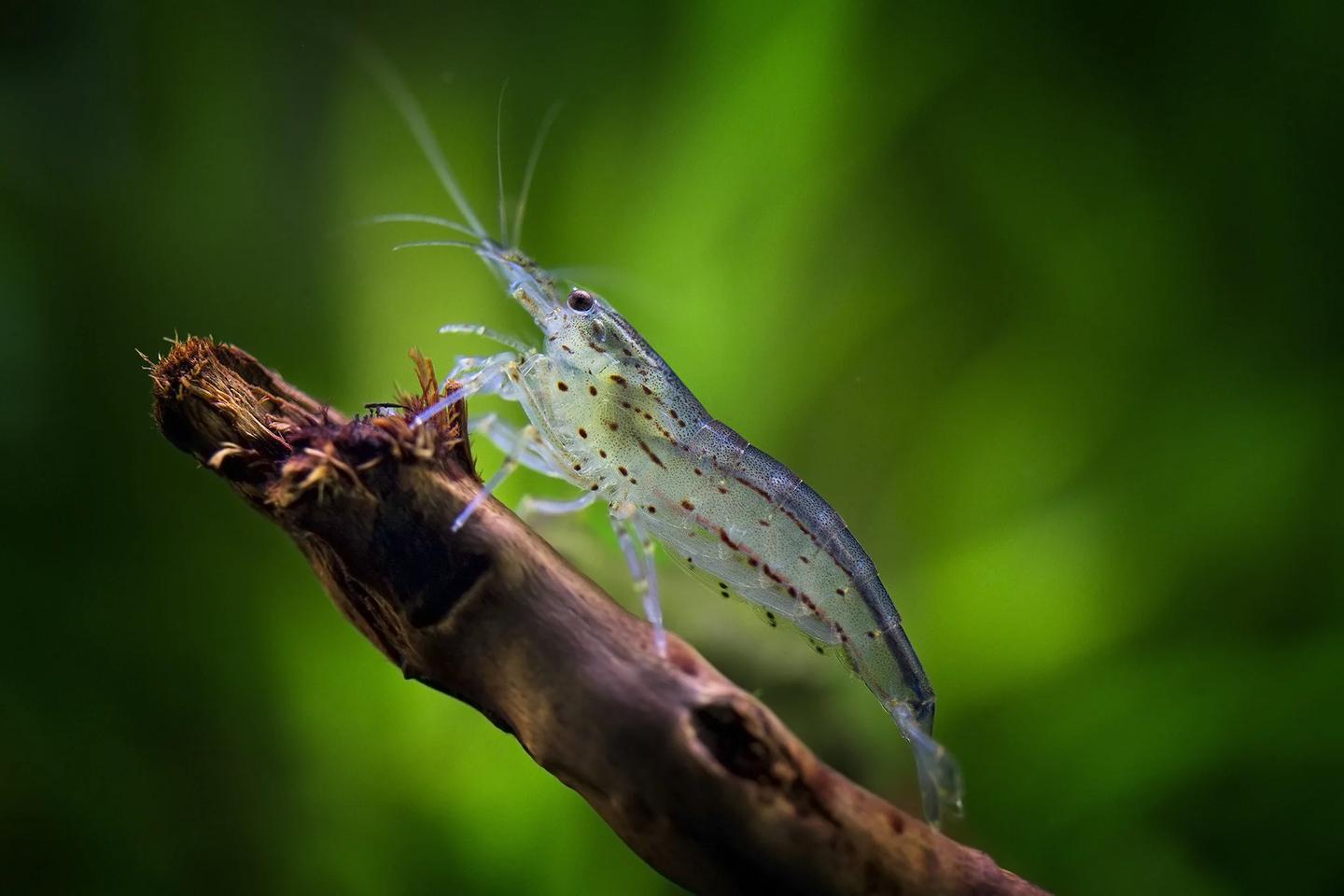
Start with a mature, filtered aquarium. OATA's broad UK guidance suggests approximately 20 litres for Amano Shrimp and at least five for social shrimp, with a larger aquarium when fish are present. Treat those as cautious planning screens—not biological minima or a per-litre formula. Match the complete adult community, test your water, protect the filter inlet and never buy them as a guaranteed algae cure.
Maintain these water conditions for optimal health and vibrant colors
Read the name like a field note: yellow cheek markings on a Caridina from Celebes — the old name for Sulawesi — and you have the essence of this shrimp. It is a wild-flavoured specialist species of around 1.3 cm that, per its care record, does best in warm, stable, biofilm-rich aquariums where it can graze continuously across the bottom. The appeal is authenticity: an unusual locale animal rather than another colour morph of a familiar staple, with cheek markings that give you an identification point you can actually use when watching a colony at work.
Provision is everything with Sulawesi shrimp, and the yellow cheek's numbers are typical of the group: 26–30 °C, alkaline pH of 7.5–8.5 and hardness of 4–12 dGH, in no less than 40 litres. That is the most generous minimum tank among our Sulawesi shrimp — useful headroom when the job is holding warm parameters steady through every season of a UK year. Care is rated expert, the temperament is wholly peaceful, the diet is omnivorous, and the lifespan runs to about two years in well-managed conditions. Hold the warmth and the alkalinity inside their recorded bands and the rest of the husbandry is unremarkable.
Hold tankmates to the recorded shortlist: other peaceful dwarf shrimp, snails, and non-predatory invertebrates. Most fish are simply a liability for an animal of barely 1.3 cm — loaches, cichlids, predatory species and anything big enough to swallow a small shrimp are explicitly excluded, and crayfish are out of the question entirely. Non-predatory invertebrates round out the recorded options for anyone wanting more than shrimp and snails in the system.
Set the warm, alkaline system up first and let it stabilise; the shrimp should be the last addition to the tank, not the first. Order once the parameters have held steady for a stretch, not before. Available to UK keepers with delivery by licensed live-animal courier and our live arrival guarantee.
No reviews for this item yet. Bought one? Honest reviews only, good or bad.
What customers say about ordering from us
I have a small group of long finned mountain minnows. So was delighted to be able to order ten of this variety to increase the genetics in my tank . The ones I recieved are healthy but it’s to early to give a verdict on wether they are of a long finned type since they are small currently.
Gordon Walker · 23 Sept 2026
100% success travel and "installation". Pleased with quality of purchase. The Siamese fighter a bit "shy" so have not yet seen him at his best yet but looking good. Happy customer. GG
George E Garratt · 21 Sept 2026
Reviews of our shop, collected by Judge.me, an independent third-party review collector. Newest first.