Moderate
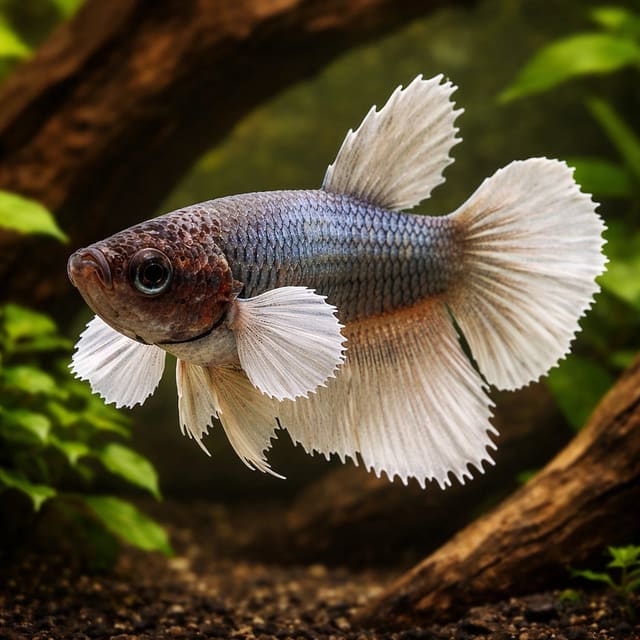
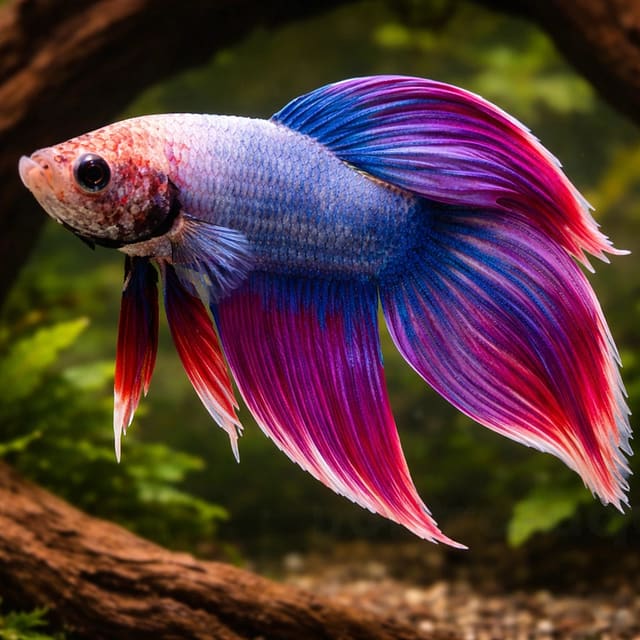
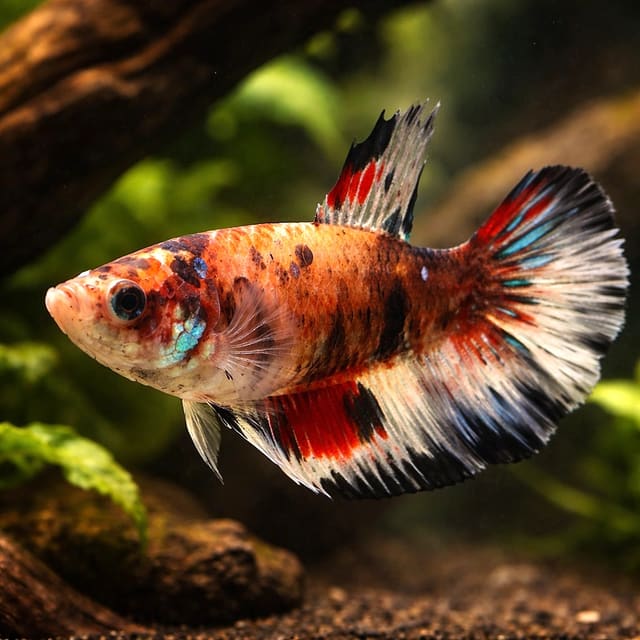
Avatar Plakat Male Betta (Betta splendens)
26–28°C · pH 6–8
£44.99

A striking, large Betta from Borneo with elegant fins and a calm but territorial nature, ideal for a peaceful species setup. Moderate care, semi-aggressive. 24-28C, pH 6.0-7.5.
Adult size is the maximum length this species reaches at full maturity (scientific sources). The livestock you receive will be younger and smaller — pick a size above for the actual shipping size. Product-photo provenance and any image-specific limitations are stated on the listing.
Betta unimaculata
Confirm your email, then we’ll send an availability message for this exact item if it returns within 180 days.
This request is only for this product—no newsletter or other promotions. A mail-provider retry may very rarely duplicate the same availability message. Unconfirmed addresses are removed after 48 hours. See our privacy policy.
A striking, large Betta from Borneo with elegant fins and a calm but territorial nature, ideal for a peaceful species setup. Moderate care, semi-aggressive. 24-28C, pH 6.0-7.5.
Adult size is the maximum length this species reaches at full maturity (scientific sources). The livestock you receive will be younger and smaller — pick a size above for the actual shipping size. Product-photo provenance and any image-specific limitations are stated on the listing.
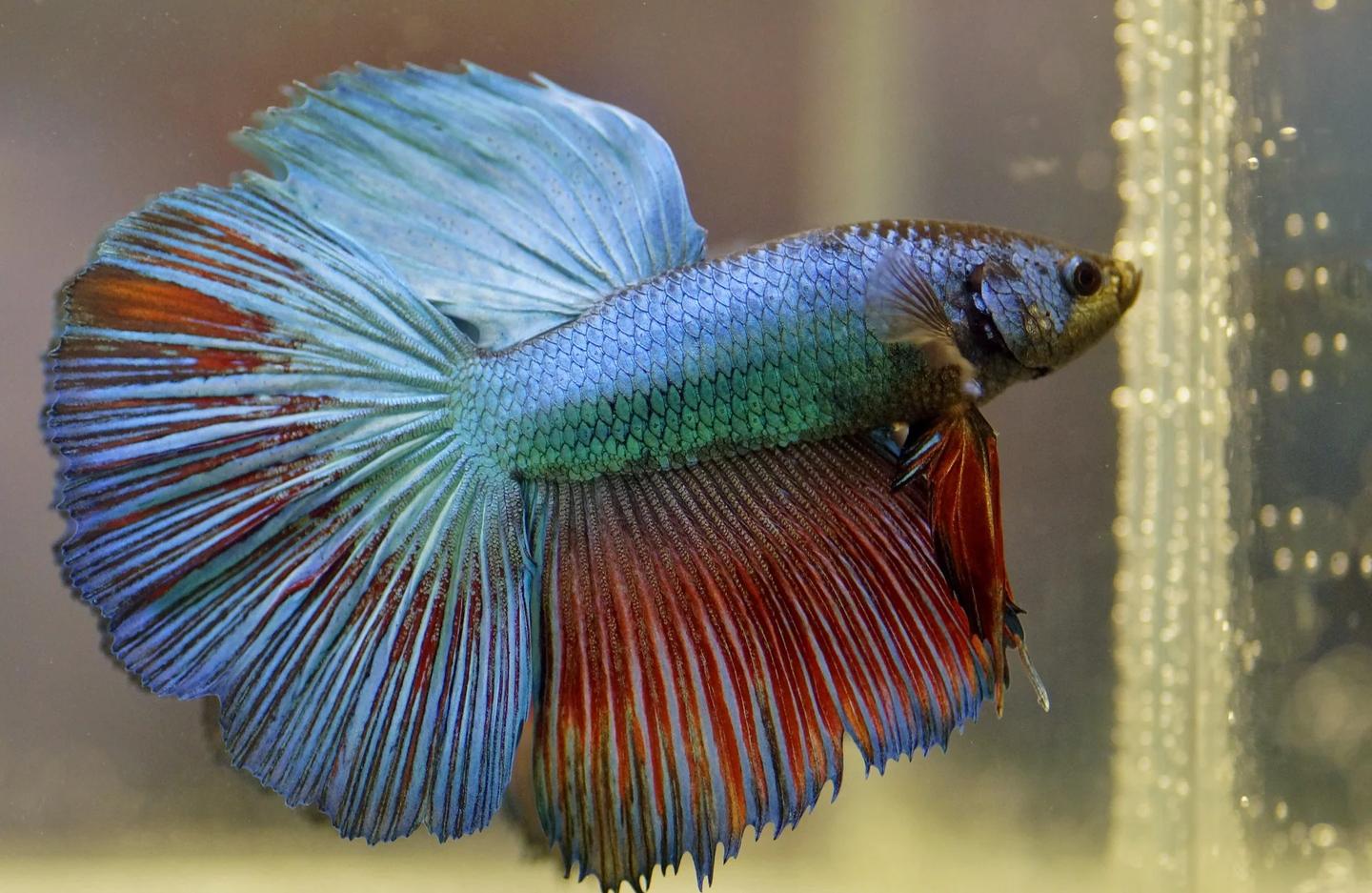
For one typical domestic Betta splendens, start with at least 20 litres, a mature filter, thermostatic heater, separate thermometer, gentle flow, a secure lid with surface access, and plants or refuges. Keep one male per aquarium.
Maintain these water conditions for optimal health and vibrant colors
The Howong Betta (Betta unimaculata) is a striking, large Betta from Borneo with elegant fins and a calm but territorial nature, ideal for a peaceful species setup. Endemic to the eastern portion of Borneo (Indonesia/Malaysia), this species grows to an impressive 12 cm in length, making it one of the largest known species of Betta. Unlike the familiar Siamese fighting fish (B. splendens), the Howong Betta is a paternal mouthbrooder—males incubate eggs and fry in their mouths—and displays a more peaceful temperament suitable for carefully chosen community setups. Males exhibit beautiful green, brown, and blue coloration with elegant, flowing finnage. Available for sale UK from specialist suppliers, this species is ideal for experienced Betta enthusiasts seeking a unique, large, and fascinating wild Betta species.
Betta unimaculata exhibits a robust, elongated body shape with a slightly compressed profile and a broad, rounded head. Males display a base coloration of greenish-brown to olive-brown overlaid with iridescent blue-green scales that shimmer under subdued lighting. The unpaired fins—dorsal, anal, and caudal—are large, rounded, and elegantly flowing, with iridescent blue, green, and red highlights and darker edging. A distinctive dark spot or "eye spot" may be present on the operculum or body, giving the species its name ("unimaculata" meaning "one spot"). Females are plainer, with shorter, less ornate fins and more subdued coloration. Males are typically larger and more deep-bodied than females. Both sexes have large, expressive eyes and a slightly upturned mouth. Coloration intensity varies with mood, breeding condition, and water quality—males in breeding condition or during displays intensify dramatically.
Betta unimaculata is endemic to eastern Borneo, where it inhabits slow-moving forest streams, swamps, and blackwater habitats within densely vegetated, shaded areas. These habitats are characterized by soft, acidic, tannin-stained water with minimal flow and a substrate of leaf litter, peat, and decaying organic matter. Water chemistry is typically very soft (0-5 dGH) and acidic (pH 4.5-6.5), with warm temperatures (24-28°C) and low dissolved oxygen levels due to decomposition. Dense overhead canopy creates dim, dappled lighting, while submerged roots, fallen branches, and fine-leaved vegetation provide cover. As a labyrinth fish, B. unimaculata possesses a specialized organ allowing it to breathe atmospheric air, enabling survival in oxygen-poor waters. Understanding these natural conditions is essential for successful captive husbandry.
A minimum aquarium capacity of 75 liters is recommended for a pair of Howong Bettas, with larger tanks (100+ liters) preferred for group or community setups. The tank should be densely planted with species such as Cryptocoryne, Java fern, Anubias, and Java moss, supplemented with floating plants such as Salvinia, Pistia, or Ceratopteris to diffuse lighting and provide cover. A dark substrate (sand or fine dark gravel) enhances coloration and reduces stress. Include driftwood, dried leaves (Indian almond, oak, or beech), and caves or shelters to replicate the natural blackwater environment and provide additional cover. Filtration should be very gentle—sponge filters or air-driven box filters are ideal to avoid strong currents. Lighting should be subdued; these fish are most comfortable in dimly lit environments. A tight-fitting lid is absolutely essential, as all Bettas are excellent jumpers.
Howong Bettas require soft, acidic water to thrive and display their best colors. Maintain temperatures between 24-28°C, with 26°C being ideal. The pH should be acidic, ranging from 6.0-7.5, with a preference for the lower end (6.0-6.5). Water hardness must be soft, ideally 0-8 dGH; use rainwater, RO water, or deionized water remineralized with minimal buffers if tap water is too hard. Stability is critical—avoid sudden fluctuations in temperature, pH, or hardness. Maintain zero ammonia and nitrite at all times, and keep nitrates below 20 ppm through regular small water changes (20-30% weekly). Peat filtration, alder cones, or blackwater extracts can help replicate natural conditions and support health. Excellent water quality is essential for this sensitive species.
Betta unimaculata is a carnivore, feeding in nature on insects, insect larvae, and small invertebrates at or near the water surface. In captivity, offer a varied meaty diet of quality frozen or live foods such as bloodworms, brine shrimp, daphnia, mosquito larvae, and small insect larvae. High-quality carnivore pellets or freeze-dried foods may be accepted but live and frozen foods are strongly preferred and essential for maintaining condition and encouraging breeding. Feed once daily in portions that can be consumed within 2-3 minutes, and fast one day per week to support digestive health. Variety is important to ensure complete nutrition and vibrant coloration.
Betta unimaculata is classified as semi-aggressive but is generally calmer and less aggressive than the familiar Siamese fighting fish. Males are territorial toward one another, especially in smaller tanks, but can coexist with females and carefully chosen tankmates in larger, well-planted setups. These fish are most active during dawn and dusk periods, becoming bolder in dimly lit aquariums with plenty of cover. They are calm, deliberate swimmers and spend much of their time hovering among plants or resting on broad leaves. Males display to females and rivals with spread fins and intensified coloration, but serious aggression is rare if space and cover are adequate. Like all Bettas, they can breathe atmospheric air and should not be kept in very cold water or sealed containers without access to the surface.
Suitable tank mates for Howong Bettas include peaceful, non-fin-nipping community fish of similar size such as small peaceful rasboras, danios, or small peaceful catfish such as Corydoras (avoid very small species that may be eaten). Snails are generally safe. Larger shrimp (Amano shrimp) may coexist in larger setups, though small shrimp and fry will be eaten. Avoid all other Betta males, fin-nipping fish, large aggressive cichlids, very small fish that may be eaten, and overly boisterous or territorial species. The safest and most rewarding approach is a species-only pair or trio setup where breeding behavior can be observed.
Betta unimaculata is a paternal mouthbrooder that can be bred successfully in captivity with proper preparation. Condition a pair with high-quality live foods for 2-3 weeks, then house them in a dedicated breeding tank (60-80 liters) with soft, warm water (pH 6.0-6.5, temperature 26-27°C), gentle sponge filtration, and dim lighting. Provide dense planting and hiding spots for the female. The male will court the female with displays, leading her to a quiet spawning site. Spawning involves an embrace, with eggs released and fertilized, then collected by the male into his mouth. After spawning, remove the female to prevent stress or aggression. The male will incubate the eggs and fry in his mouth for 10-18 days, during which time he does not feed and should not be disturbed. After release, fry are relatively large and can accept newly hatched brine shrimp and microworms immediately. Provide frequent small feedings (4-5 times daily) and regular small water changes to support healthy growth.
Tropical Fish Co is the UK's specialist source for rare and wild Betta species, including healthy, acclimatized Howong Bettas. Every fish is quarantined, conditioned on live and frozen foods, and health-checked before dispatch. Our expert team provides detailed care guides, breeding advice, and ongoing support. We offer a live arrival guarantee, secure packaging, and tracked UK delivery. Order today and experience the beauty and fascination of one of Borneo's most impressive wild Bettas.
No reviews for this item yet. Bought one? Honest reviews only, good or bad.
What customers say about ordering from us
I have a small group of long finned mountain minnows. So was delighted to be able to order ten of this variety to increase the genetics in my tank . The ones I recieved are healthy but it’s to early to give a verdict on wether they are of a long finned type since they are small currently.
Gordon Walker · 23 Sept 2026
100% success travel and "installation". Pleased with quality of purchase. The Siamese fighter a bit "shy" so have not yet seen him at his best yet but looking good. Happy customer. GG
George E Garratt · 21 Sept 2026
Reviews of our shop, collected by Judge.me, an independent third-party review collector. Newest first.