Moderate
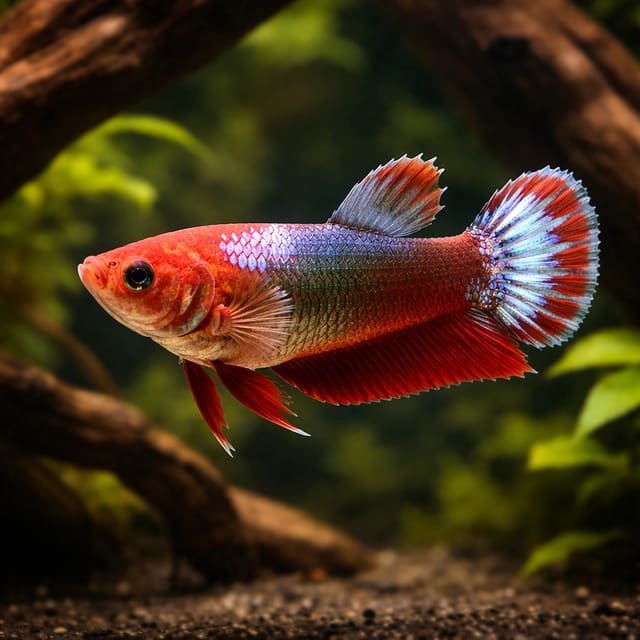
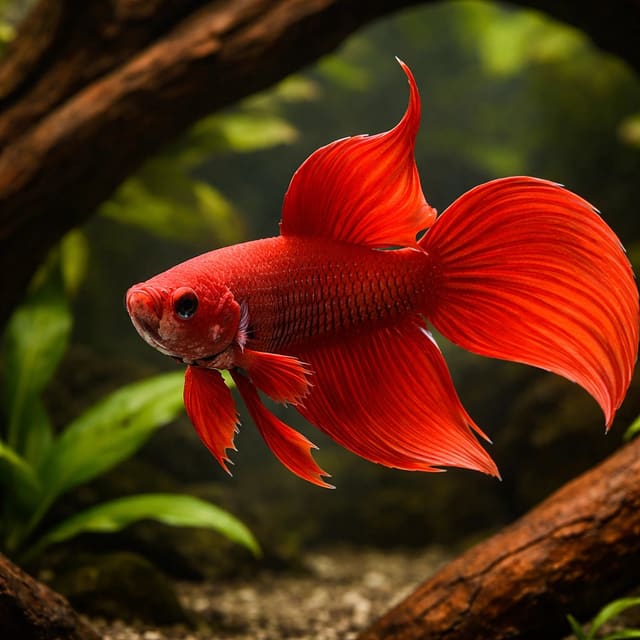
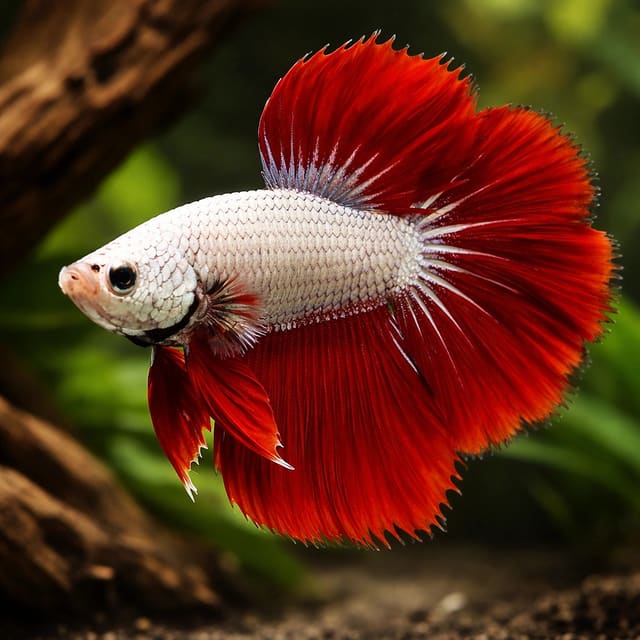
Dragon Scale Halfmoon Male Betta Mix (Betta splendens)
26–28°C · pH 6–8 · 41L
£34.99
A colorful, hardy betta with striking mixed coloration that brings personality and vivid display to a warm, well-planted aquarium. Easy care, semi-aggressive. 24-30C, pH 6.0-7.5.
Confirm your email, then we’ll send an availability message for this exact item if it returns within 180 days.
This request is only for this product—no newsletter or other promotions. A mail-provider retry may very rarely duplicate the same availability message. Unconfirmed addresses are removed after 48 hours. See our privacy policy.
A colorful, hardy betta with striking mixed coloration that brings personality and vivid display to a warm, well-planted aquarium. Easy care, semi-aggressive. 24-30C, pH 6.0-7.5.
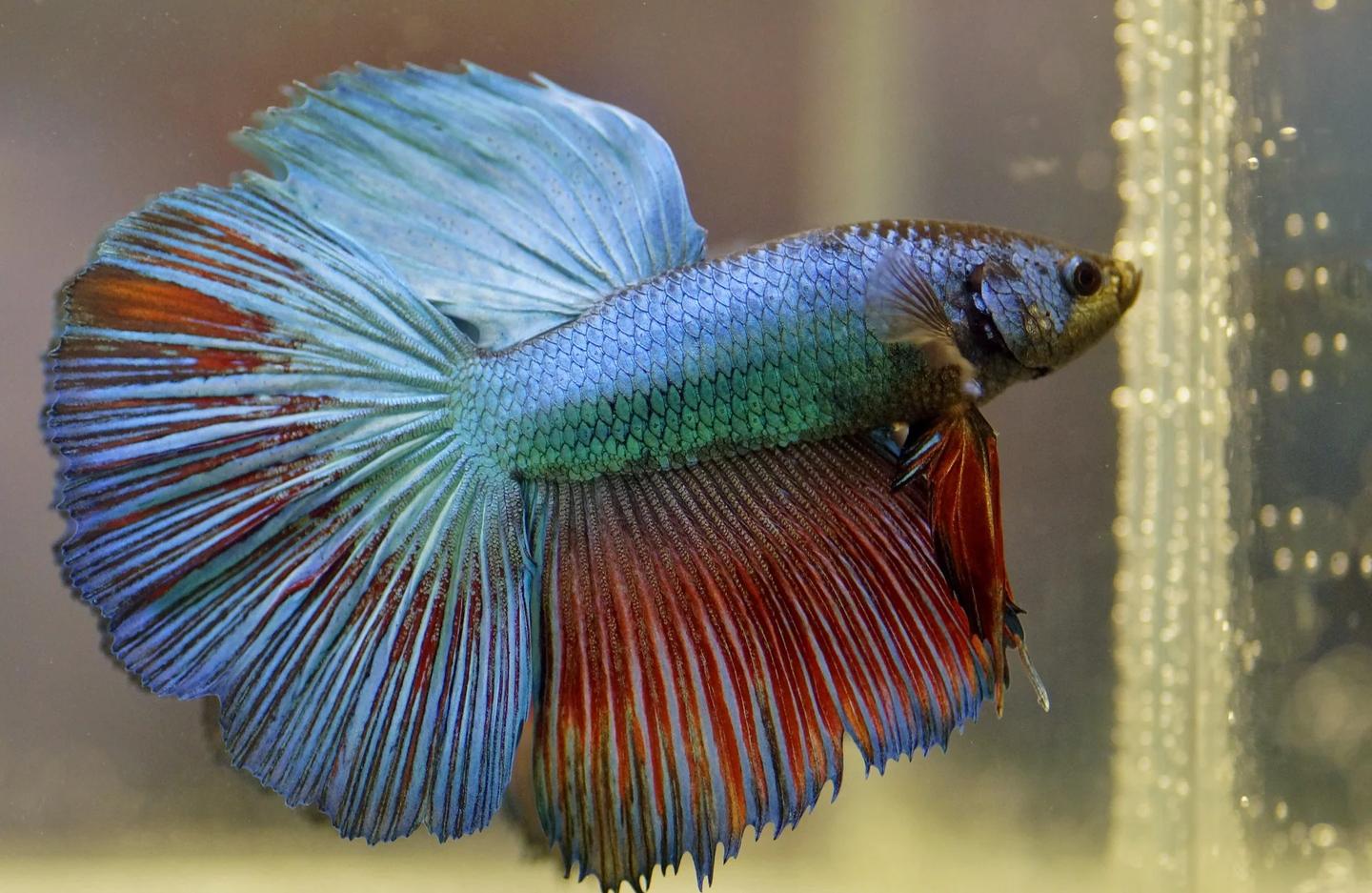
For one typical domestic Betta splendens, start with at least 20 litres, a mature filter, thermostatic heater, separate thermometer, gentle flow, a secure lid with surface access, and plants or refuges. Keep one male per aquarium.
At a recorded 11 cm, the Betta paradise outgrows every Betta splendens strain we stock — this is the heavyweight of our labyrinth fish section, supplied in mixed colours with each fish wearing its own combination. Size changes everything about the keeping experience: more presence, more appetite, and a fish that reads clearly from across the room rather than up against the glass.
Despite the bulk he carries an easy care rating and a semi-aggressive temperament, though his record frames company carefully: best kept alone, or with robust, similarly sized peaceful fish in a larger tank — and snails. The exclusions acknowledge what he is: no other male bettas, no fin-nipping fish, no large aggressive species, no fast boisterous tank mates, and notably no other labyrinth fish of similar shape or temperament, which his instincts treat as rivals. The recorded minimum of 40 litres should be considered a true floor for an 11 cm fish. Water sits at 24–30 °C, pH 6.0–7.5, hardness 1–15 dGH; he is a carnivore — portion for his size — and occupies the top region of the aquarium. Territoriality rises around breeding condition.
An 11 cm labyrinth fish rewrites a few betta habits. Feed substantial carnivore portions — his intake is a different order from a splendens — and expect him to dominate the surface at mealtimes with real confidence. His easy rating holds because the requirements are ordinary even if the scale is not: heater anywhere in 24–30 °C, pH 6.0–7.5, hardness 1–15 dGH, weekly changes sized to his volume. If you attempt the robust, similarly sized peaceful company his record allows, the tank must grow well past the 40-litre floor, and his ban on similar labyrinth fish stays absolute regardless of size. Most owners keep him as the single spectacular resident of a tank built around his bulk.
If standard bettas have started feeling small, this is the natural next step without changing water chemistry or habits. Mixed-colour stock, shipped UK-wide by licensed live-animal courier with live arrival guaranteed.
No reviews for this item yet. Bought one? Honest reviews only, good or bad.
What customers say about ordering from us
Easy website plenty of info on fish your buying great to pick a time slot
TRACEY DURRANT · 7 Oct 2026
Got some lovely fish thank you
Kevin Mackie · 7 Oct 2026
Reviews of our shop, collected by Judge.me, an independent third-party review collector. Newest first.