Moderate
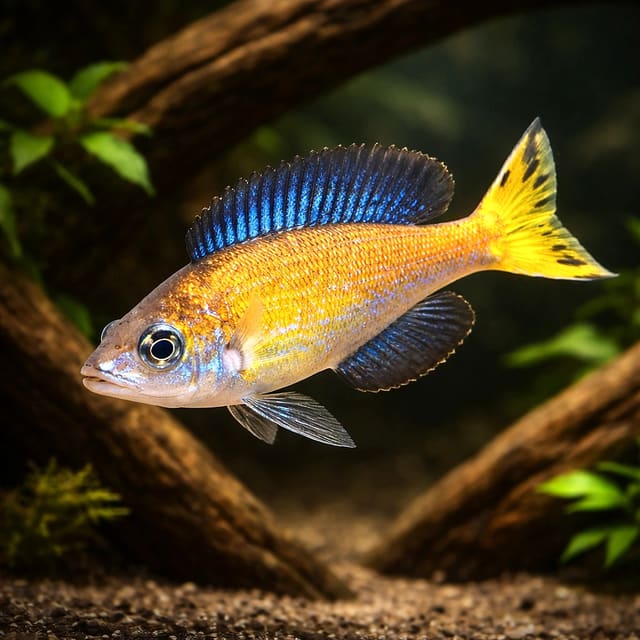
Kasai Smallscale Cyprichromis (Cyprichromis microlepidotus)
23–27°C · pH 7.5–8.5 · 350L
£42.99

A striking, hard-water Tanganyikan cichlid for expert aquarists, prized for its bold personality and active grazing behavior. Expert care, aggressive. 23-27C, pH 7.5-8.5.
Adult size is the maximum length this species reaches at full maturity (scientific sources). The livestock you receive will be younger and smaller — pick a size above for the actual shipping size. Product-photo provenance and any image-specific limitations are stated on the listing.
Petrochromis famula
Save when buying multiple fish. Each quantity is one fish; sex and pair formation are not guaranteed unless the selected variant explicitly states them.
Confirm your email, then we’ll send an availability message for this exact item if it returns within 180 days.
This request is only for this product—no newsletter or other promotions. A mail-provider retry may very rarely duplicate the same availability message. Unconfirmed addresses are removed after 48 hours. See our privacy policy.
A striking, hard-water Tanganyikan cichlid for expert aquarists, prized for its bold personality and active grazing behavior. Expert care, aggressive. 23-27C, pH 7.5-8.5.
Adult size is the maximum length this species reaches at full maturity (scientific sources). The livestock you receive will be younger and smaller — pick a size above for the actual shipping size. Product-photo provenance and any image-specific limitations are stated on the listing.
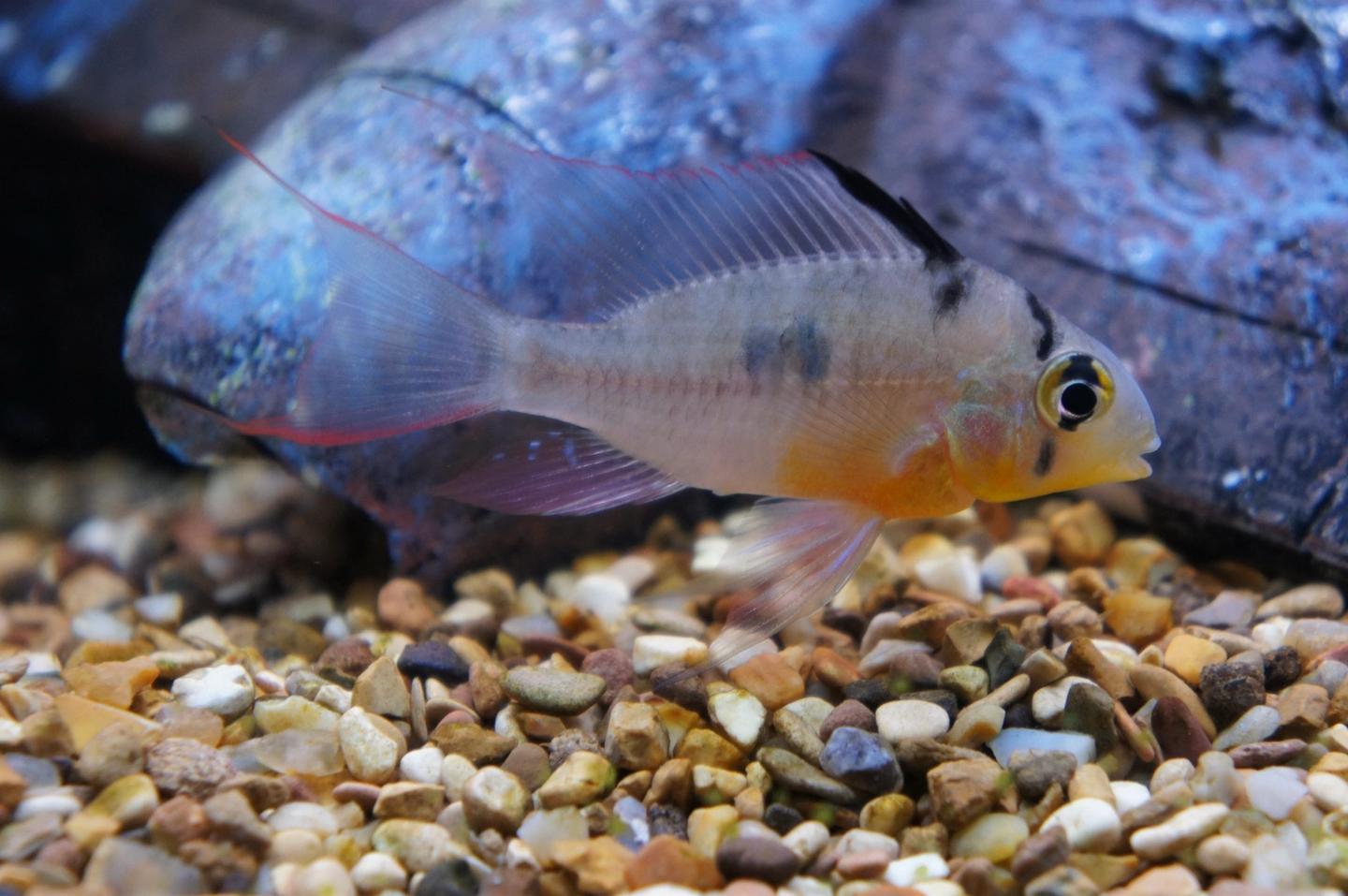
Cichlids are a family of roughly 1,800 accepted species, not one care type. Before buying, identify the exact species and source, then compare adult measurement, usable tank dimensions, social system, territory, tested water, diet and an exit plan. No family-wide minimum tank, water range or tank-mate list is safe.
Maintain these water conditions for optimal health and vibrant colors
The Petrochromis famula represents one of Lake Tanganyika's most specialized and challenging cichlids, combining impressive adult size of 20 cm with demanding care requirements that suit only expert aquarists. Requiring a massive minimum aquarium of 500 litres and exhibiting aggressive territorial behavior, this herbivorous grazer demands exceptional water quality, robust filtration, and careful tankmate selection. Endemic to Lake Tanganyika's rocky shorelines, the Petrochromis behaves much like Lake Malawi's mbuna—continuously grazing biofilm from rocks with specialized dentition adapted for this lifestyle. Available for sale UK from Tropical Fish Co, this rare cichlids for sale uk specimen rewards dedicated keepers who can provide the specialized hard-water Tanganyikan conditions with one of the lake's most distinctive and behaviorally fascinating species.
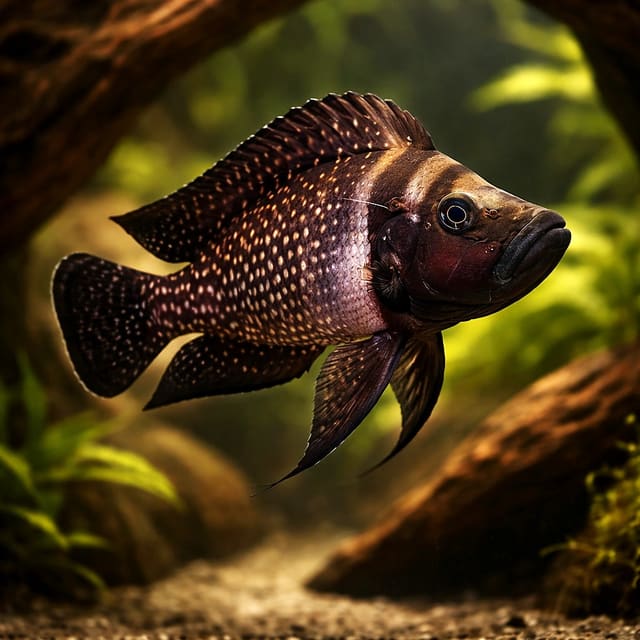
Petrochromis famula displays the robust, deep-bodied proportions characteristic of rock-grazing Tanganyikan cichlids, with a blunt head and specialized jaw structure adapted for scraping biofilm from rock surfaces. Coloration varies by population and individual, typically showing base colors of grey, brown, or greenish tones with irregular darker barring or mottling creating effective camouflage against rocky substrates. Males often develop more intense coloration during breeding periods, including enhanced body colors and finnage. The species' substantial size—reaching 20 cm—and powerful build create impressive presence in appropriately large aquariums. While not displaying the electric blues and yellows of some Tanganyikan cichlids, the species' refined patterning and substantial proportions create visual impact, particularly when observed grazing continuously across extensive rockwork.
Endemic to Lake Tanganyika, Petrochromis famula inhabits rocky shoreline zones where it grazes biofilm (aufwuchs) comprising algae, cyanobacteria, and associated micro-invertebrates from rock surfaces. The lake's unique chemistry—pH 7.5-8.5, very hard water, exceptional clarity, and stable temperatures of 23-27°C—has driven the evolution of highly specialized cichlids occupying countless ecological niches. This species' lifestyle mirrors Lake Malawi's mbuna despite evolving independently, representing convergent evolution in similar rocky lake habitats. Petrochromis species typically occupy intermediate to deeper rocky zones where they establish territories, defend grazing areas against competitors, and spawn in caves. The species' specialized grazing behavior and territorial nature reflect intense competition for prime feeding surfaces in the lake's complex rocky ecosystems.
A massive minimum aquarium of 500 litres is mandatory for Petrochromis famula, with even larger volumes strongly preferred for community setups with compatible tankmates. Create an extensive Tanganyikan rocky biotope using substantial limestone rocks or other calcium-rich materials stacked to form multiple territories, caves, and countless grazing surfaces. Ensure rock structures are extremely stable and cannot collapse under the species' substantial weight—these powerful fish regularly rearrange territories and may dislodge poorly secured rockwork. A fine sand substrate mimics the natural lake bed. Avoid plants entirely as they're inconsistent with authentic Tanganyika biotopes and will be uprooted or consumed. Install extremely powerful filtration providing 10-12x tank volume turnover per hour to handle the substantial bioload from large herbivorous fish, with strong water movement replicating the species' natural wave-swept rocky habitat.
Maintaining hard, alkaline water replicating Lake Tanganyika's chemistry is absolutely non-negotiable. Target pH between 7.5-8.5 using substantial amounts of calcium-rich buffering substrate such as coral sand or aragonite, preventing any pH drops that severely stress Tanganyikan cichlids. Water hardness must be very high (15-25 dGH), easily achieved if your tap water is naturally hard, or through aggressive remineralization of RO water. Temperature should remain stable within 23-27°C. Given the species' substantial size and herbivorous diet producing significant waste, conduct twice-weekly water changes of 30-40% to control nitrate accumulation below 40 mg/L, with ammonia and nitrite always at 0 ppm. Exceptional filtration and religious maintenance schedules are essential—Petrochromis species are notably intolerant of declining water quality and organic accumulation.
Petrochromis famula is a specialized herbivore/algivore requiring frequent feedings of vegetable-based foods to maintain digestive health and prevent bloat. Feed high-quality spirulina-based pellets or flakes multiple times daily in small portions, supplemented with algae wafers, blanched vegetables including spinach and zucchini, and other plant matter. Provide only very limited protein-rich foods—excessive animal protein causes severe digestive issues in herbivorous Tanganyikan grazers. The species naturally grazes almost continuously in the wild, so 4-6 small feedings daily better replicate natural feeding patterns than 1-2 large meals. Encourage natural algae growth on rocks through moderate lighting, providing grazing surfaces that occupy the fish naturally while supplementing their diet. Never overfeed—declining water quality from overfeeding is one of the primary causes of health problems in large herbivorous cichlids.
Petrochromis famula exhibits intense territorial behavior, establishing and defending substantial grazing territories against conspecifics and other rock-grazing species. Aggression levels are high—comparable to aggressive Lake Malawi mbuna—with territorial disputes occurring regularly as individuals test boundaries and assert dominance. The species spends the vast majority of time grazing biofilm from rock surfaces, creating constant activity across the entire aquascape. Males display particularly aggressive territorial defense, especially during breeding periods when pairs establish spawning territories. The species' substantial size and powerful build mean territorial disputes can result in serious injury if inadequate space or territories are provided. Despite aggressive tendencies, the continuous grazing behavior and complex social dynamics create fascinating observation opportunities for experienced keepers who can provide appropriate housing.
Tankmate selection is severely restricted given the species' aggressive nature and specialized requirements. Only other robust Lake Tanganyika cichlids of similar size and temperament should be considered, and only in extremely large aquariums significantly exceeding minimum requirements. Other Petrochromis or similarly shaped rock-grazing Tanganyikans in undersized tanks will result in constant warfare. Completely avoid small fish that will be bullied or injured, peaceful community fish inappropriate for aggressive setups, slow-moving species, fin-nippers that could provoke retaliation, and other highly territorial or similarly shaped Petrochromis unless in truly massive aquariums with countless territories. Many experienced keepers maintain this species in species-only setups or with minimal robust tankmates, recognizing that showcasing these impressive grazers' behavior in spacious aquariums yields the most satisfying results.
Petrochromis famula is a maternal mouthbrooder, following the reproductive pattern common among many Tanganyikan rock-dwelling cichlids. Males establish territories and display to attract females, with spawning occurring in defended areas within the rockwork. The female collects fertilized eggs in her buccal cavity where they develop for several weeks, during which she does not feed and loses substantial body condition. Best spawned in species tanks or with very carefully chosen compatible tankmates, as the female requires peace during the vulnerable brooding period. Provide extensive rockwork creating countless territories and visual barriers. Released fry measure approximately 1 cm and can immediately accept finely crushed spirulina-based foods and newly hatched brine shrimp. Raising fry requires exceptional water quality and frequent small feedings, with juveniles growing rapidly when properly maintained.
Tropical Fish Co specializes in african cichlids for sale uk, offering exceptional quality Petrochromis famula for expert aquarists seeking Lake Tanganyika's most challenging species. Our specimens arrive meticulously acclimatized and health-guaranteed, backed by comprehensive support from staff who understand the demands of large, aggressive Tanganyikan cichlids. We provide honest, detailed guidance about this species' substantial space requirements, aggressive temperament, and specialized herbivorous diet—helping you determine if you can provide appropriate conditions before committing. With decades of combined experience keeping demanding African lake cichlids, we ensure you have the knowledge to succeed. Order your Petrochromis famula from the UK's trusted source for rare cichlids for sale uk and experience one of Lake Tanganyika's most impressive herbivorous grazers.
No reviews for this item yet. Bought one? Honest reviews only, good or bad.
What customers say about ordering from us
I have a small group of long finned mountain minnows. So was delighted to be able to order ten of this variety to increase the genetics in my tank . The ones I recieved are healthy but it’s to early to give a verdict on wether they are of a long finned type since they are small currently.
Gordon Walker · 23 Sept 2026
100% success travel and "installation". Pleased with quality of purchase. The Siamese fighter a bit "shy" so have not yet seen him at his best yet but looking good. Happy customer. GG
George E Garratt · 21 Sept 2026
Reviews of our shop, collected by Judge.me, an independent third-party review collector. Newest first.