Altolamprologus compressiceps — Kigoma
23–27°C · pH 8–8.6
£20.99

A striking Tanganyikan cichlid with a yellow head and bold personality, ideal for a hard-water rocky aquarium. Moderate care, semi-aggressive. 24-27C, pH 7.5-8.5.
Adult size is the maximum length this species reaches at full maturity (scientific sources). The livestock you receive will be younger and smaller — pick a size above for the actual shipping size. Product-photo provenance and any image-specific limitations are stated on the listing.
Lamprologus cylindricus
Save when buying multiple fish. Each quantity is one fish; sex and pair formation are not guaranteed unless the selected variant explicitly states them.
Confirm your email, then we’ll send an availability message for this exact item if it returns within 180 days.
This request is only for this product—no newsletter or other promotions. A mail-provider retry may very rarely duplicate the same availability message. Unconfirmed addresses are removed after 48 hours. See our privacy policy.
A striking Tanganyikan cichlid with a yellow head and bold personality, ideal for a hard-water rocky aquarium. Moderate care, semi-aggressive. 24-27C, pH 7.5-8.5.
Adult size is the maximum length this species reaches at full maturity (scientific sources). The livestock you receive will be younger and smaller — pick a size above for the actual shipping size. Product-photo provenance and any image-specific limitations are stated on the listing.
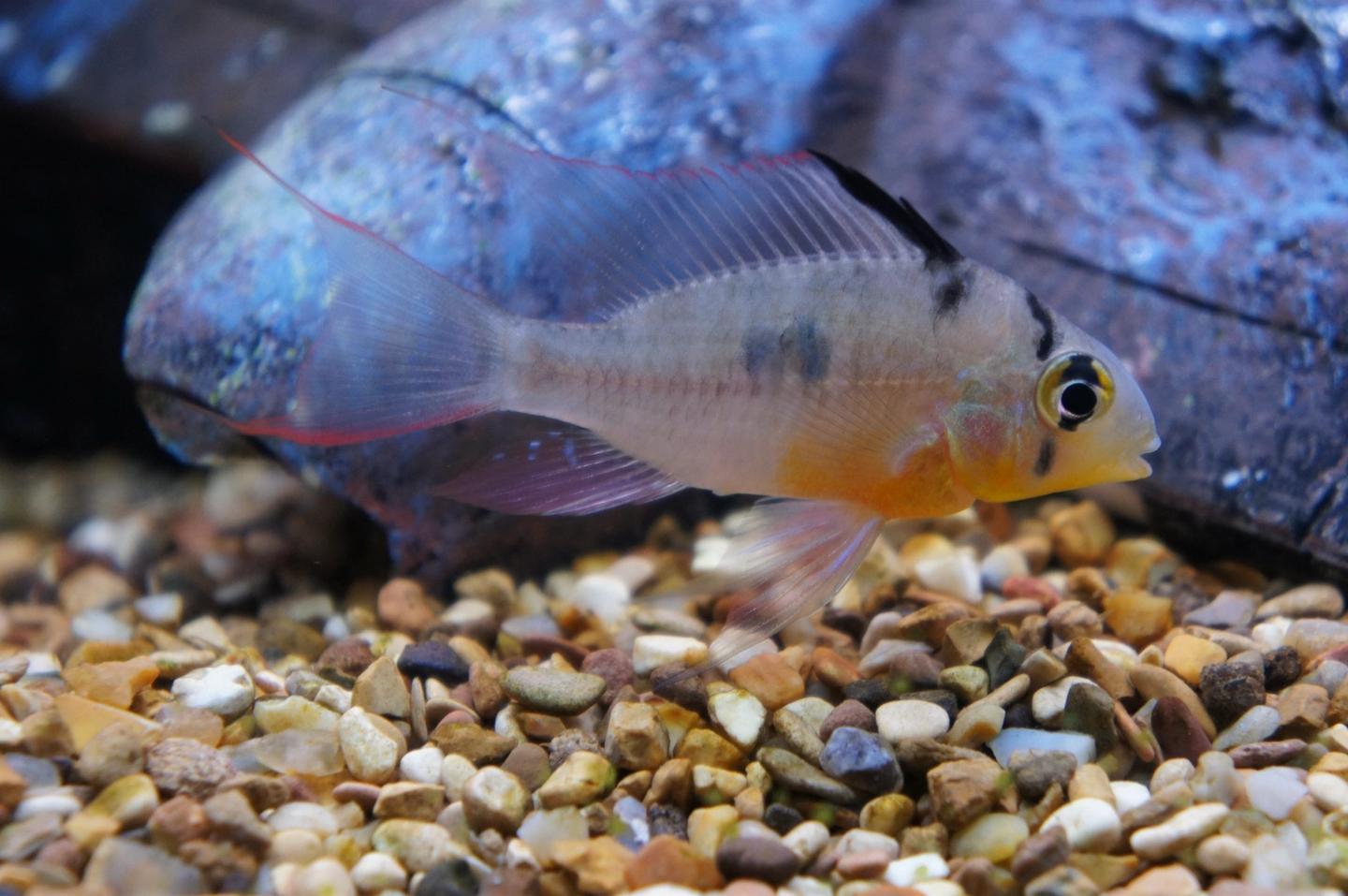
Cichlids are a family of roughly 1,800 accepted species, not one care type. Before buying, identify the exact species and source, then compare adult measurement, usable tank dimensions, social system, territory, tested water, diet and an exit plan. No family-wide minimum tank, water range or tank-mate list is safe.
Maintain these water conditions for optimal health and vibrant colors
The Lamprologus cylindricus, particularly the striking yellowhead variety, is a compact Lake Tanganyika cichlid reaching just 4 cm while delivering bold personality and distinctive yellow head coloration. Requiring a minimum 60-litre aquarium and hard, alkaline Tanganyikan water, this semi-aggressive carnivore suits dedicated keepers seeking authentic East African species in minimal space. Endemic to Lake Tanganyika's rocky shorelines, this cave-spawning species establishes territories and displays fascinating breeding behavior in properly structured aquariums. Available for sale UK from Tropical Fish Co, this freshwater aquarium fish represents one of the smallest yet most visually distinctive Tanganyikan species, perfect for aquarists seeking genuine Lake Tanganyika character in compact dimensions with the bonus of striking yellow head coloration distinguishing it from other small Lamprologus species.
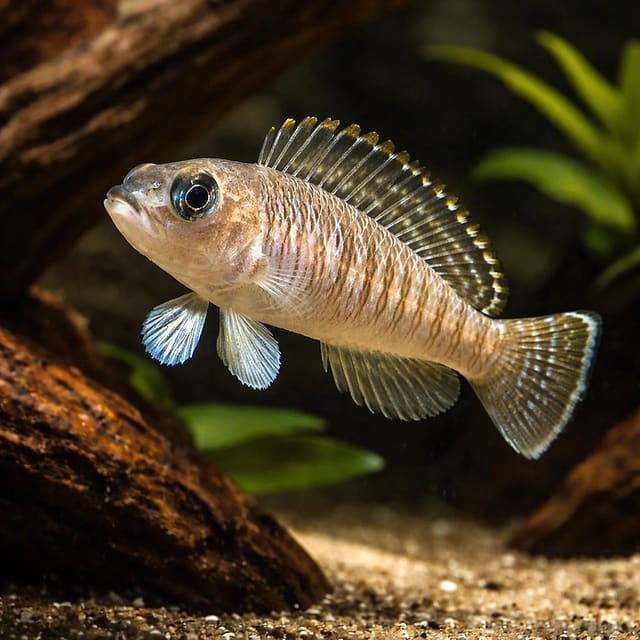
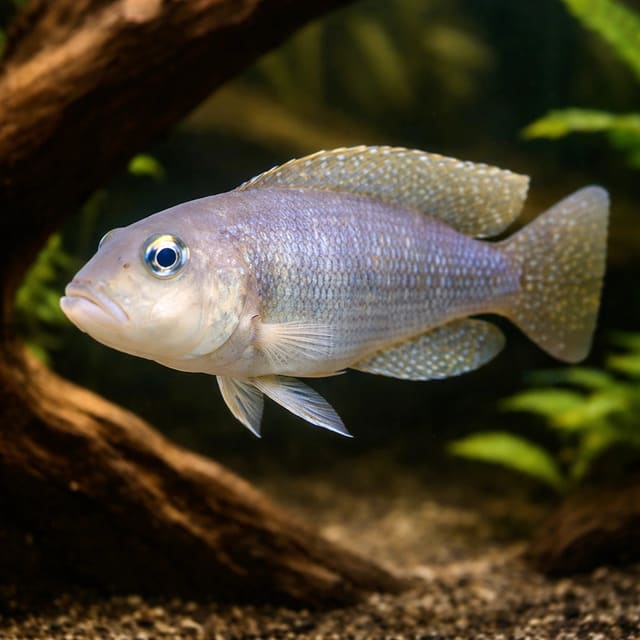
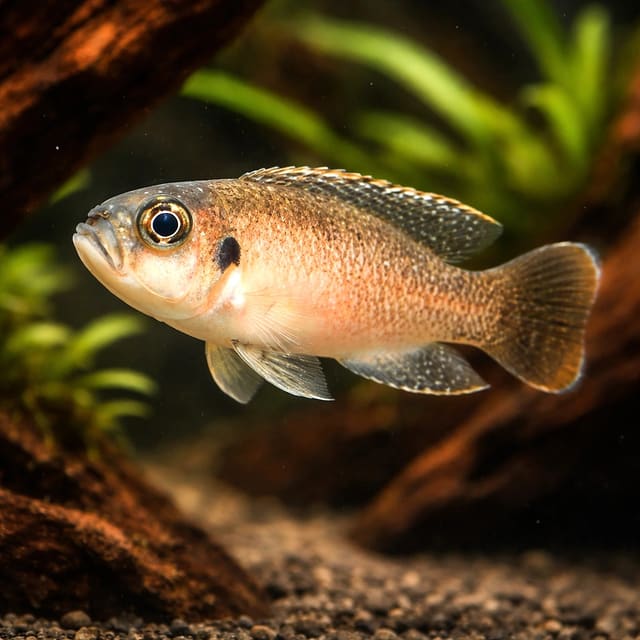
Lamprologus cylindricus displays the characteristic yellowhead coloration that makes this variety particularly sought-after, with vibrant yellow coloring on the head region contrasting beautifully against the body's tan to grey base tones. The cylindrical, elongate body plan—referenced in the scientific name—reflects adaptations for maneuvering through tight spaces between rocks. Males may show slightly more intense yellow coloration and marginally larger size than females, though sexual dimorphism remains subtle. The remarkably small 4 cm adult size combined with striking yellow head creates charming yet distinctive presence—among the most visually recognizable small Tanganyikan cichlids. While the body shows relatively subdued coloration, the bright yellow head creates immediate visual impact and aids species identification, making this variety particularly popular among Tanganyikan enthusiasts seeking colorful compact species.
Endemic to Lake Tanganyika in East Africa, Lamprologus cylindricus inhabits rocky shoreline zones where complex boulder formations create countless caves and crevices scaled perfectly for this tiny species. The lake's unique chemistry—pH 7.5-8.5, very hard water, exceptional clarity, and stable temperatures of 24-27°C—has driven extraordinary cichlid diversity. This species' exceptionally small adult size allows exploitation of the tightest spaces between rocks inaccessible to larger cichlids, reducing competition while providing secure breeding sites. The species establishes territories centered on preferred caves where it shelters, spawns, and feeds on small invertebrates and zooplankton. The yellowhead variety likely represents a specific geographic population or color morph, though all L. cylindricus share the same specialized cave-dwelling lifestyle requiring replication in aquarium settings.
A 60-litre aquarium provides adequate space for a pair or small group of Lamprologus cylindricus—remarkably modest requirements making this species ideal for aquarists with space limitations. Create authentic Tanganyikan rocky biotope using rocks stacked to form multiple tiny caves and crevices scaled for 4 cm fish. Provide more territories than fish to reduce competition. Fine sand substrate mimics natural environment. Avoid plants as they're inconsistent with Tanganyika biotopes. Install efficient filtration providing 6-8x tank volume turnover per hour to maintain exceptionally high water quality Tanganyikan cichlids require. Despite tiny size, provide stable secure rockwork—this species' bold behavior means it regularly patrols and defends substantial areas relative to body size.
Replicating Lake Tanganyika's specialized chemistry is essential. Maintain pH between 7.5-8.5 using alkaline buffering substrates preventing pH drops. Water hardness must be very high (12-20 dGH). Temperature stable within 24-27°C. Weekly 25-30% water changes control nitrates below 40 mg/L while maintaining stable alkalinity. Ammonia and nitrite always 0 ppm. Tiny individual size means minimal bioload, but water quality standards remain exacting—Tanganyikan cichlids evolved in pristine conditions tolerating organic accumulation poorly.
As dedicated carnivore, requires protein-rich nutrition. Exceptionally small size necessitates very small foods—micro-pellets or crushed pellets, supplemented with baby brine shrimp, daphnia, cyclops, and tiny invertebrates. Avoid overfeeding. Feed 3-4 small portions daily ensuring complete consumption. Use plant matter only as occasional dietary fiber—not primary requirement for carnivorous species. Tiny mouth and high metabolism mean frequent small feedings better than large infrequent meals.
Despite 4 cm size, displays bold territorial behavior defending caves against conspecifics and cave-dwellers. Semi-aggressive—surprisingly assertive, readily confronting larger fish near defended caves. Demonstrates intelligence, learns feeding schedules. Spends time monitoring from cave entrances, investigating food, watching threats. Combination of tiny size, striking yellow head, and bold confidence creates endlessly amusing observation.
Compatible: other small Tanganyikan cichlids in well-structured tanks. Shell-dwelling Lamprologus, small Julidochromis. Small Synodontis if space allows. Avoid: small peaceful fish (harassed), aggressive cichlids (injury risk), fin-nippers, soft-water species (complete incompatibility).
Cave spawner with pairs defending territories and spawning in tightest shelters. Provide numerous tiny caves. Parents guard eggs, fry becoming free-swimming week post-hatch. Extremely small fry require infusoria initially, progressing to baby brine shrimp. Demands exceptional water quality and specialized foods.
Tropical Fish Co specializes in Tanganyikan cichlids, offering exceptional yellowhead Lamprologus cylindricus for aquarists seeking Lake Tanganyika's most colorful compact species. Meticulously acclimatized, health-guaranteed, comprehensive support. Expert guidance on nano Tanganyikan biotopes, specialized chemistry, nano community stocking. Order from UK's premier source for rare Tanganyikan species and experience striking yellow-headed beauty in remarkably compact package.
No reviews for this item yet. Bought one? Honest reviews only, good or bad.
What customers say about ordering from us
I have a small group of long finned mountain minnows. So was delighted to be able to order ten of this variety to increase the genetics in my tank . The ones I recieved are healthy but it’s to early to give a verdict on wether they are of a long finned type since they are small currently.
Gordon Walker · 23 Sept 2026
100% success travel and "installation". Pleased with quality of purchase. The Siamese fighter a bit "shy" so have not yet seen him at his best yet but looking good. Happy customer. GG
George E Garratt · 21 Sept 2026
Reviews of our shop, collected by Judge.me, an independent third-party review collector. Newest first.