Easy
White-Fin Ornate Tetra (Hyphessobrycon bentosi)
23–28°C · pH 5.5–7.5
£5.99

A peaceful, shimmering South American tetra that thrives in planted community aquariums and looks best in a lively shoal. Easy care, peaceful. 23-27C, pH 6.0-7.5.
Adult size is the maximum length this species reaches at full maturity (scientific sources). The livestock you receive will be younger and smaller — pick a size above for the actual shipping size. Product-photo provenance and any image-specific limitations are stated on the listing.
Ctenobrycon spilurus
Shoaling fish: kept in a group they feel safer, stay calmer and show their best colour.
Confirm your email, then we’ll send an availability message for this exact item if it returns within 180 days.
This request is only for this product—no newsletter or other promotions. A mail-provider retry may very rarely duplicate the same availability message. Unconfirmed addresses are removed after 48 hours. See our privacy policy.
A peaceful, shimmering South American tetra that thrives in planted community aquariums and looks best in a lively shoal. Easy care, peaceful. 23-27C, pH 6.0-7.5.
Adult size is the maximum length this species reaches at full maturity (scientific sources). The livestock you receive will be younger and smaller — pick a size above for the actual shipping size. Product-photo provenance and any image-specific limitations are stated on the listing.
Maintain these water conditions for optimal health and vibrant colors
The Silver Tetra (Ctenobrycon spilurus), also known as the Silver-Brass Tetra or silver dollar tetra, is a peaceful and shimmering South American schooling fish for sale UK that thrives in planted community aquariums. Native to the Orinoco River basin and coastal rivers of Guyana, Suriname, and French Guiana, this attractive tetra displays beautiful metallic silver coloration that catches and reflects light as schools move through planted aquascapes. With its peaceful temperament, modest size, and easy care requirements, the Silver Tetra makes an excellent choice for community aquariums with similarly sized peaceful species. Proper schooling enhances their natural beauty and confident behaviour, creating elegant movement and shimmer in well-maintained freshwater setups.
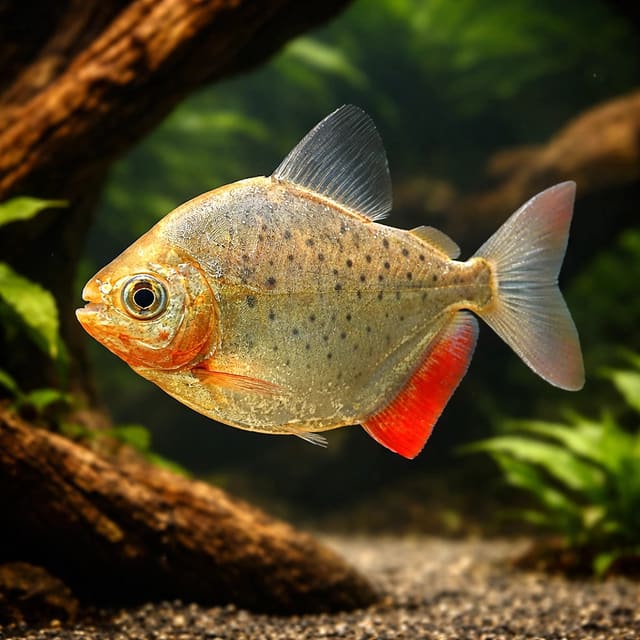
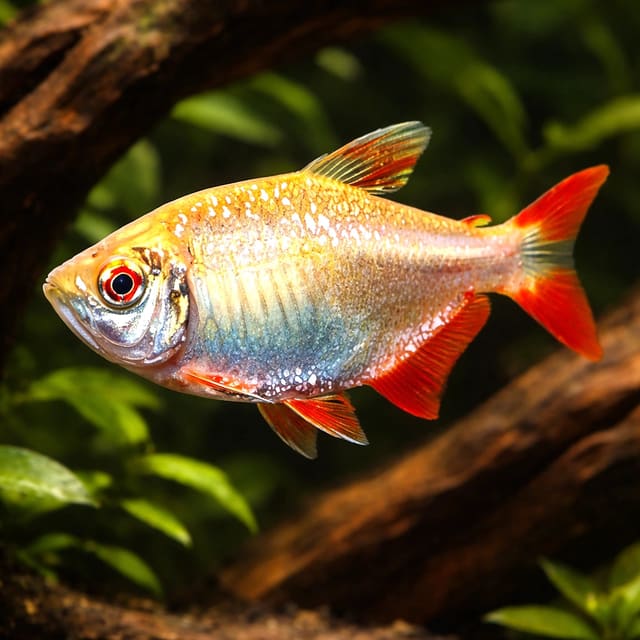
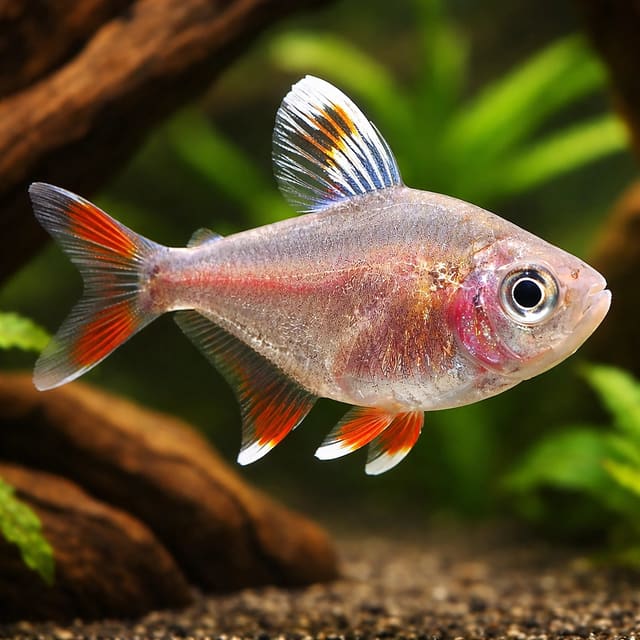
Ctenobrycon spilurus presents a compressed, disc-shaped body adorned with brilliant metallic silver scales that create a mirror-like shimmer under aquarium lighting. The species name "spilurus" refers to a dark spot or marking on the caudal peduncle, though this feature may be subtle or absent in some individuals. Body depth is moderate, giving a robust yet graceful appearance. Fins are generally clear to slightly translucent with subtle hints of color. Under optimal conditions and diet, specimens may show golden or brassy undertones—hence the alternate common name Silver-Brass Tetra. Eyes are proportionally large and dark. Sexual dimorphism is subtle; females are typically slightly fuller-bodied, particularly when carrying eggs. The overall effect is one of elegant simplicity—pure silver shimmer that creates spectacular visual impact when schools catch the light.
This species inhabits the Orinoco River basin and coastal river systems of Guyana, Suriname, and French Guiana, with reports also from Brazil and Venezuela. In nature, Silver Tetras form schools in slow to moderate-flowing rivers and streams with abundant aquatic vegetation, submerged roots, and overhanging riparian plants. The water ranges from soft blackwater to clearwater conditions, typically slightly acidic to neutral with moderate temperatures. These tetras occupy the mid to upper water column, feeding primarily on small invertebrates, insect larvae, zooplankton, and occasionally algae and plant matter. The complex habitat structure provides both feeding opportunities and refuge from predatory fish and birds. Schools move together through vegetated areas, their silver bodies flashing in synchronized patterns.
A minimum 60-litre aquarium provides adequate space for a proper school of 8-10 individuals. Create a South American biotope using fine sand or small gravel substrate, driftwood for structure and tannin release, and generous planting with a variety of aquatic plants including background species and some floating plants to diffuse lighting. Maintain areas of dense vegetation balanced by substantial open swimming space through the center where schools can display natural behavior. Lighting should be moderate, though this species adapts to various light levels. Filtration should provide gentle to moderate water movement without creating excessive current. A secure lid is essential, as tetras are capable jumpers, particularly when startled or during evening hours. Include natural tannin sources like Indian almond leaves or driftwood to create the slightly acidic water that enhances health and replicates natural conditions.
Maintain soft to neutral water conditions typical of South American habitats. Target pH of 6.0-7.5, with soft water below 12 dGH preferred, though this adaptable species tolerates moderate hardness. Temperature should remain stable at 23-27°C using a reliable heater. Water quality must be excellent: ammonia and nitrite always zero, nitrates below 20 ppm through regular 25-30% weekly water changes. Use dechlorinated water, ideally softened if tap water is very hard. While adaptable, this species shows best health and color in softer, slightly acidic conditions. Maintain stability—avoid sudden parameter shifts that stress schooling fish. Consider using natural tannin sources to create the slightly tinted water found in natural habitats, which can enhance fish comfort and reduce stress. Regular water testing ensures consistent conditions.
Offer a varied omnivorous diet including quality flake or small pellet foods as a staple, supplemented regularly with frozen and live foods such as daphnia, brine shrimp, and bloodworms. While primarily carnivorous/omnivorous in feeding habits, include only limited vegetable matter or spirulina-based foods—this species shows stronger preference for animal protein than some tetras. Feed two to three times daily in portions that can be consumed within 2-3 minutes. Variety is essential for maintaining optimal health, coloration, and breeding condition. This species is an enthusiastic feeder that readily accepts prepared foods, making it easy to maintain. Include vitamin-enriched foods periodically to support immune health. Observe feeding to ensure all fish receive adequate nutrition—though peaceful, more aggressive tankmates may outcompete these gentle feeders. Newly hatched brine shrimp and small live foods help condition breeding groups.
Silver Tetras display peaceful schooling behaviour characteristic of South American schooling species. In proper schools, they form cohesive groups that move in synchronized patterns through planted aquascapes, creating beautiful visual displays as silver scales catch and reflect light. The species is active throughout the day, constantly exploring the mid-water column and foraging for food. Schooling behavior is tightest when fish feel secure—well-planted tanks with appropriate water conditions encourage confident, natural behavior. Individual fish kept in too-small groups become stressed and may hide. In appropriately sized schools with peaceful tankmates of similar temperament, this species creates elegant, flowing movement patterns. Particularly active around feeding times. No aggression toward tankmates; compatible with diverse community species. Provide ample swimming space to accommodate their active, schooling nature.
Ideal tank mates include small peaceful tetras, rasboras, small Corydoras catfish, small peaceful livebearers, and small peaceful loaches of similar size and temperament. Other South American species make natural companions in biotope setups. Avoid housing with large predatory fish, fin-nipping species that will harass the school, highly aggressive cichlids, very small fry or shrimp that may be accidentally consumed, and overly boisterous tankmates that will stress these peaceful fish. The key is selecting peaceful, active community species of similar size. In well-balanced communities with proper group sizes for all schooling species, Silver Tetras coexist peacefully and contribute shimmering movement and elegant presence to the aquarium. Particularly effective in moderately planted community aquariums with diverse small peaceful species from South American origins.
Likely an egg-scattering characin that may spawn among fine-leaved plants or spawning mops in soft, slightly acidic water, though detailed breeding accounts for this species are limited. To attempt breeding, set up a dedicated breeding tank (60+ litres) with soft water (pH 6.0-6.5), subdued lighting, fine-leaved plants like Java moss or spawning mops, and gentle sponge filtration. Condition a group of adults with high-quality live and frozen foods until females become noticeably rounded. Introduce pairs or a small group in the evening. Spawning typically occurs at dawn in characins, with eggs scattered among plants. Adults should be removed after spawning to prevent egg predation, as they display no parental care. Fry require very small initial foods like infusoria or commercial liquid fry food, graduating to newly hatched brine shrimp as they grow. Maintain pristine water quality during fry-rearing with gentle filtration and frequent small water changes. Patience and attention to detail are essential for successful breeding.
Tropical Fish Co is your premier UK source for quality South American tetras, including the elegant Silver Tetra. Every fish undergoes comprehensive quarantine and health screening in conditions matching natural habitat parameters. Our knowledgeable team provides expert guidance on schooling fish care, community aquarium design, and South American biotope setup to ensure long-term success. We offer secure tracked UK delivery throughout the UK with professional insulated packaging and seasonal temperature control. Our commitment includes healthy, active fish with excellent silver coloration, backed by our live arrival guarantee and ongoing support. Whether establishing your first community aquarium or adding to an existing South American collection, trust Tropical Fish Co for exceptional fish quality, expert advice, and customer service that stands behind every fish. Bring the shimmering beauty of South American waters into your home with confidence.
No reviews for this item yet. Bought one? Honest reviews only, good or bad.
What customers say about ordering from us
I have a small group of long finned mountain minnows. So was delighted to be able to order ten of this variety to increase the genetics in my tank . The ones I recieved are healthy but it’s to early to give a verdict on wether they are of a long finned type since they are small currently.
Gordon Walker · 23 Sept 2026
100% success travel and "installation". Pleased with quality of purchase. The Siamese fighter a bit "shy" so have not yet seen him at his best yet but looking good. Happy customer. GG
George E Garratt · 21 Sept 2026
Reviews of our shop, collected by Judge.me, an independent third-party review collector. Newest first.