

−13%
Polypterus senegalus - Tropical Fish for Sale UK
£18.26£20.99

Add brilliant colour to your tank with Neon Tetra, a peaceful schooling fish ideal for planted aquariums. Buy online with fast UK delivery today.
Adult size is the maximum length this species reaches at full maturity (scientific sources). The fish you receive will be younger and smaller — pick a size variant above for the actual shipping size. Photos are AI-enhanced, so the live fish may show subtle colour or marking differences.
Paracheirodon innesi diamant
Not home? Message us and we'll delay delivery.
Add brilliant colour to your tank with Neon Tetra, a peaceful schooling fish ideal for planted aquariums. Buy online with fast UK delivery today.
Adult size is the maximum length this species reaches at full maturity (scientific sources). The fish you receive will be younger and smaller — pick a size variant above for the actual shipping size. Photos are AI-enhanced, so the live fish may show subtle colour or marking differences.
Maintain these water conditions for optimal health and vibrant colors
The Neon Tetra remains one of the most recognisable tetra fish in the hobby, but this sparkling Diamond form adds an extra flash that stands out beautifully in planted aquariums. Paracheirodon innesi is a peaceful South American tetra UK keepers love for its electric blue stripe, compact adult size, and calm schooling nature. This 6 fish group is ideal for aquarists building a soft-water community, especially anyone looking for a diamond neon tetra for community tank displays or a sparkly neon tetra for planted tank layouts. At around 4 cm adult neon tetra size, with a typical neon tetra lifespan of up to 5 years, these fish fit neatly into smaller tropical setups while still creating a striking visual effect when kept in larger schools.
Because the species is hardy once settled, many aquarists consider it one of the best options for a beginner tropical fish UK aquarium, though success depends on stable water and proper group size. The Diamond form, sometimes searched as Diamond Neon Tetra, Neon Tetra Diamond, Diamant Neon Tetra, or Diamond Head Neon Tetra, is especially attractive under dark substrate and gentle lighting. See our detailed photos showing the reflective head sheen and clean lateral stripe in this shimmering tetra for freshwater tank setups. If you want a peaceful, active, colourful school that works brilliantly in a planted community, this is a superb choice.
Paracheirodon innesi is one of the classic tetra representative species in freshwater fishkeeping. In the hobby, it sits alongside favourites such as the Cardinal Tetra, Glowlight Tetras - Hemigrammus Erythrozonus, and Bleeding Heart Tetra. The Diamond form is a selectively appreciated variation valued for its brighter reflective head and extra sparkle in aquascapes.
The natural neon tetra habitat is the upper Amazon Basin, especially blackwater and clearwater tributaries in Peru and Brazil. In the wild, Paracheirodon innesi lives among leaf litter, submerged roots, fallen branches, and dense marginal vegetation. These waters are often shaded by forest canopy, which means fish experience dim light, tannin staining, and soft, slightly acidic conditions. That is one reason a diamond neon tetra for planted aquarium layout with wood, fine plants, and subdued lighting works so well in captivity.
Wild neon tetra fish feed on tiny crustaceans, insect larvae, micro worms, and suspended organic matter. Their small mouths are adapted for fine foods, so understanding what do neon tetra fish eat in nature helps explain why they do best on small flakes, crushed granules, and frozen micro foods in the aquarium. In the wild they move in loose schools for safety, and that same instinct drives the need for a proper neon tetra minimum group size in home tanks.
Many customers ask about “paracheirodon” as a group. This genus includes Paracheirodon innesi, the cardinal tetra, and paracheirodon simulans, often called the green neon. If you have searched green neon tetra, black neon tetra wiki, or neon tetra vs cardinal tetra, you are really comparing similar-looking schooling characins that occupy slightly different niches in the hobby. The Diamond fish offered here is still a true Neon Tetra, just with a brighter, more reflective look.
Some hobby searches such as neon tetra terraria, neon tank fish, petsmart neon tetra, liveaquaria cardinal tetra, or neon tetra price at walmart reflect general interest, but the key husbandry point is this: these fish are not for bowls or tiny novelty tanks. They are active schooling fish that need stable, filtered, heated freshwater conditions. Recreate calm Amazon-style surroundings and they reward you with better colour, tighter schooling, and lower stress.
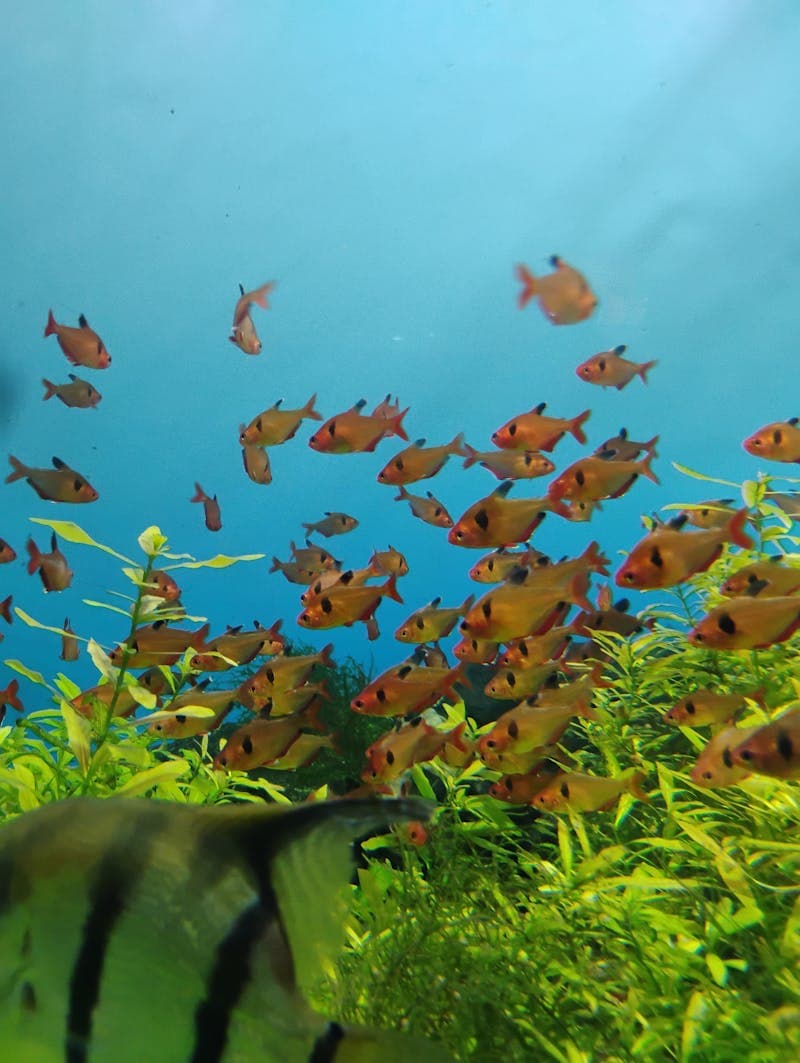
Mimicking the natural habitat of Paracheirodon innesi with dark substrate, wood, floating plant cover, and gentle flow usually improves colour, reduces skittish behaviour, and helps a Diamond school display more naturally in the open.
Good neon tetra care starts with stability rather than expensive equipment. The minimum neon tetra tank size is 40 litres, which also works as a practical diamond neon tetra tank size for a starter group. That said, a larger aquarium of 60-90 litres gives a much better result because the fish school more confidently, water quality is easier to maintain, and you have room for more natural aquascaping. If customers ask “neon tetra how many can I keep?”, the answer depends on volume, filtration, and tank mates, but this species looks best in groups of 10 or more once the aquarium is mature.
For a 6 fish starter group, 40 litres is acceptable, but for a full display school, 60 litres or more is strongly recommended. A longer tank is better than a tall one because these fish use the middle water column and appreciate horizontal swimming space. If you are planning a diamond head neon tetra school of 6, think of it as the beginning of a larger school rather than the final stocking level.
The ideal neon tetra temperature is 22-25°C, though the full Paracheirodon innesi temperature range is 20-26°C. If you are checking the best temperature for neon tetra, aim for the middle of that range for long-term consistency. Preferred neon tetra pH range is 5.5-7.0, though they can adapt to 7.5 if changes are gradual. Keep neon tetra water hardness low, ideally 1-10 dGH, because softer water supports better colour and easier acclimation. These are the core neon tetra water parameters to monitor every week.
Use a gentle but efficient filter that provides biological stability without blasting the school around the tank. A sponge filter or a small internal filter with spray bar works well. The goal of a good neon tetra tank setup is clean, oxygenated water with mild circulation. Strong current can make this peaceful schooling fish UK species hide more often.
Dark sand or fine gravel is ideal. It reflects less light, helps the fish feel secure, and makes the blue stripe and red lower body appear more intense. In a display aquascape, dark substrate also enhances the reflective Diamond sheen better than bright white gravel.
This is an excellent diamond neon tetra for planted aquarium species. Use clumps of fine-leaved plants, open swimming lanes, and driftwood for contrast. If you like a classic Amazon look, combine these fish with a planted midground and a dark background. They pair especially well visually with other peaceful species such as Glowlight Tetras - Hemigrammus Erythrozonus, Cardinal Tetras - Paracheirodon Axelrodi, and Enhance Your Aquarium with 6 x in larger communities.
Moderate lighting is best. Very bright light with no cover can make them nervous, while moderate light with floating plants or shaded corners encourages natural midwater activity. This is why an aquascape neon tetra display often looks best with layered planting and controlled light spread.
Always cycle the aquarium for 4-6 weeks before adding Neon Tetras. Even hardy fish struggle in immature tanks, and this species is especially sensitive to ammonia and nitrite spikes during the first few weeks of a new setup.
The neon tetra diet is omnivorous, which means these fish need a mix of plant-based and protein-rich foods. If you are asking what do neon tetra fish eat, think small, soft, and varied. In captivity, the best neon tetra food includes quality micro pellets, crushed flakes, frozen cyclops, daphnia, baby brine shrimp, and occasional finely chopped bloodworm. A varied neon tetra feeding guide helps maintain colour, body condition, and spawning readiness.
Use a fine tropical flake or micro pellet as the daily base. Because Paracheirodon innesi has a small mouth, oversized granules are often ignored. Feed only what the school can finish in 30-60 seconds.
Frozen daphnia, cyclops, and baby brine shrimp are excellent additions. These foods support stronger colour and more active schooling. They are also useful when conditioning fish for neon tetra breeding.
Live baby brine shrimp and microworms can be offered occasionally. These are especially useful for mature adults you want to bring into breeding condition. If your goal is a brighter best neon tetra variety for community tank display, varied feeding matters just as much as lighting.
Feed small amounts 1-2 times daily. Overfeeding is one of the most common mistakes in Paracheirodon innesi care. Their stomachs are tiny, and excess food quickly degrades water quality in smaller aquariums.
| Time | Food | Amount |
|---|---|---|
| Morning | Crushed flake or micro pellet | Small pinch, eaten within 1 minute |
| Evening | Frozen daphnia, cyclops, or baby brine shrimp | Very small portion |
Many keepers building a calm community tetra UK setup combine these fish with similarly sized tetras and feed the whole tank on a mixed micro-food routine. If you already keep Neon Blue Tetra Tropical Fish or are comparing with Cardinal Tetras, the feeding approach is very similar.
A useful reference species if you are planning a mixed small-tetra setup and want to match food size and feeding style.
Another small peaceful tetra with similar feeding needs, ideal when planning a varied but compatible community.
Overfeeding causes ammonia spikes, cloudy water, and stress-related illness. Small daily portions are far safer than one heavy feed, especially in a newly established Neon Tetra tank.
The standard Neon Tetra is famous for its glowing blue stripe and red lower body, but the Diamond form adds a more reflective head and upper body sheen that catches light from different angles. Adult diamond neon tetra size is usually around 3.5-4 cm, making it a compact but highly visible schooling fish. This extra shimmer is why some aquarists describe it as a rare neon tetra variant UK option, especially in planted display tanks.
Body shape is slim and laterally compressed, with clear fins and a neat streamlined profile. The blue stripe appears almost metallic under aquarium lighting, while the red section runs from the mid-body to the tail. In darker aquariums, the contrast becomes even stronger. Searches such as tetra neon fish, tetra fish neon, fish neon tetra, and peces neon colores all point to the same appeal: vivid colour in a small, peaceful fish.
Males are usually slimmer, while females are slightly deeper-bodied, especially when carrying eggs. Hobbyists searching neon tetra jantan dan betina or pez neon macho y hembra are usually trying to sex fish; the curved blue line on fuller females can be a useful clue. Related forms and hobby searches include neon tetra albino, paracheirodon innesi yellow, paracheirodon innesi var brilliant white, and paracheirodon innesi gold, though these are different variants from the Diamond fish sold here.
If you are comparing neon cardinal tetra or cardinal neon tetra appearances, the main visual difference is that cardinals have a longer red stripe running the full body length. The Diamond Neon keeps the classic innesi pattern but adds extra sparkle around the head and upper flank.
Neon tetra tank mates should be peaceful, similarly sized, and comfortable in soft to moderately soft water. The species has gentle neon tetra behaviour and spends most of its time schooling in the middle of the tank. Good Paracheirodon innesi tank mates include other small tetras, rasboras, peaceful dwarf corys, and calm community fish that will not see them as food.
Excellent companions include Cardinal Tetras, Glowlight Tetras - Hemigrammus Erythrozonus, Bleeding Heart Tetra in larger aquariums, and Enhance Your Aquarium with 6 x if the tank is spacious and well planted. For shoppers comparing neons cardinals and glowlights, all three can work together if temperature and stocking are balanced.
Avoid large cichlids, fin-nipping barbs, and predatory fish. Very boisterous tank mates can stress a small freshwater tetra UK species like this. The common question neon tetra with betta has a cautious answer: sometimes, but only in a roomy, warm, heavily planted tank with a calm betta. Long-finned territorial bettas may chase them, while active Neon schools may also stress the betta.
In a 60 litre aquarium, a school of 10-12 Diamond Neons with a small bottom group can work well. In a 90 litre planted tank, you can combine a larger diamond neon tetra for community tank school with Glowlights or Cardinals for a layered midwater display. This species is a classic schooling fish UK choice because it behaves best in numbers.
Adult shrimp and snails are often fine, but tiny shrimplets may be eaten. If you keep shrimp, provide dense moss and cover. The search phrase fish with neon tetra often includes peaceful inverts too, but remember these are opportunistic micro-predators when fry-sized food is available.
| Species | Compatible? | Notes |
|---|---|---|
| Cardinal Tetras | ✅ Yes | Very similar temperament; best in planted community tanks. |
| Glowlight Tetras - Hemigrammus Erythrozonus | ✅ Yes | Peaceful and similarly sized, ideal for mixed tetra displays. |
| Large angelfish | ❌ Avoid | May prey on small Neon Tetras once fully grown. |
Shoppers also compare diamond neon tetra vs regular neon tetra, diamond neon tetra vs black neon tetra, diamond neon tetra vs green neon tetra, and diamond neon tetra vs cardinal tetra when planning mixed schools. In practice, choose tank mates by temperament and water needs first, then by colour contrast second. If you want a softer, classic Amazon community, this fish is one of the best best neon tetra variety UK options.
Always quarantine new arrivals for 2-4 weeks before adding them to an established tetra school. Neon Tetras are small and stress-sensitive, so introducing disease from new fish can spread quickly in a community aquarium.
Neon tetra breeding is possible, but it is not usually considered beginner level. While day-to-day neon tetra care is straightforward, successful spawning requires soft acidic water, dim lighting, and careful egg protection. If you are interested in tetra fish breeding, this species is a rewarding challenge rather than an easy first project.
Use a separate 15-25 litre breeding tank with very soft water, pH around 5.0-6.5, and temperature around 23-25°C. Add fine plants or spawning mops, keep lighting very low, and condition adults on live and frozen foods. Mature females become rounder, while males stay slimmer. Searches like indukan ikan neon tetra and cara memelihara ikan neon tetra often focus on this conditioning stage because healthy broodstock is essential.
Spawning usually happens at first light. The pair or small group scatter adhesive neon tetra eggs among plants. Adults should be removed immediately after spawning because they may eat the eggs.
The eggs are light-sensitive, so keep the tank dark. Neon tetra eggs generally hatch in about 24 hours, and fry become free-swimming a few days later. Infusoria or liquid fry food is needed first, followed by newly hatched brine shrimp.
Frequent small feeds and pristine water are critical. Sponge filtration is safest. Growth is slow at first, and losses are common if food is too large or water quality slips.
The biggest problems are infertile eggs, fungus, and poor hatch rates from water that is too hard or too bright. This is why many aquarists enjoy keeping Neon Tetras but choose easier species for their first breeding attempts. Even so, dedicated breeders often find this one of the most satisfying jenis neon tetra projects in the hobby.
For better hatch rates, use aged, very soft water and shield the breeding tank from direct room light. Many experienced breeders also spawn fish in the evening and allow dawn light to trigger activity naturally the next morning.
Comparison matters because many aquarists looking for a small blue-and-red tetra are really choosing between several species. The most common decision is neon tetra vs cardinal tetra, but hobbyists also compare cardinal vs neon tetra, neon vs cardinal tetra, and cardinal tetra vs neon before buying.
| Feature | Diamond Neon Tetra | Cardinal Tetra |
|---|---|---|
| Max Size | 4 cm | 5 cm |
| Care Level | Easy to moderate | Moderate |
| Temperature | 20-26°C | 24-28°C |
| Price | £17.42 | Varies by batch |
| Best For | Cooler planted community tanks | Warmer Amazon-style displays |
Compared with a Cardinal Tetras - Paracheirodon Axelrodi group, Diamond Neons are usually a better fit for slightly cooler mixed community aquariums. Cardinals have more red across the body and often prefer warmer water. If you want the classic innesi look with extra shimmer, the Diamond form is the stronger choice.
| Feature | Diamond Neon Tetra | Black Neon Tetra / Green Neon |
|---|---|---|
| Visual Style | Blue-red with reflective head | Higher contrast black-silver or slimmer green-blue glow |
| Schooling Effect | Bright classic neon flash | More subtle or more streamlined effect |
| Best Use | Traditional planted community | Contrast schools or specialist biotope choices |
If you are comparing black neon tetra or green neon tetra, think about the final look of the tank. A Diamond school gives the familiar classic neon effect, while black neons create stronger contrast and green neons stay a bit more understated. For many keepers, this makes the Diamond fish the best neon tetra variety for community tank displays where colour pop matters most.
Searches such as paracheirodon axelrodi cardinalis, neon tetra species, and jenis neon tetra often come from hobbyists sorting through these options. If your tank runs on the cooler side and you want a sparkling, peaceful school, the Diamond Neon is usually the easiest recommendation.
Healthy neon tetra fish should show clear eyes, full fins, strong schooling response, and bright colour. A settled group will cruise the middle of the tank together and come forward readily at feeding time. If fish isolate themselves, clamp fins, lose colour, or gasp near the surface, review water quality first.
Common concerns include ich, fin damage from poor water quality, bacterial infections, and stress-related wasting. Hobby searches for neon tetra disease and neon tetra diseases often also bring up so-called Neon Tetra Disease, a serious wasting condition associated with loss of colour, spinal deformity, and abnormal swimming. Not every thin neon has this disease, but any suspicious fish should be isolated promptly.
Start with testing ammonia, nitrite, nitrate, pH, and temperature. Many issues improve with clean water, reduced stress, and quarantine. Use species-appropriate medication only after diagnosis. Sudden changes in neon tetra water parameters often do more harm than the original problem.
Strong neon tetra disease prevention relies on stable temperature, low waste, varied food, and avoiding overcrowding. Keep the school large enough to reduce stress, and never add them to an uncycled tank. This species can be hardy, but small fish are less forgiving of poor maintenance than many beginners expect.
Quarantine all new fish for 2-4 weeks in a separate heated, filtered tank. Observe feeding response, body condition, and any white spots or flashing. This is especially important if you are mixing fish from different sources in a display community.
Never use medication casually in a mixed aquarium. Misdiagnosis, overdosing, and treating the display tank unnecessarily can stress small tetras badly. If shrimp or snails are present, always check whether the treatment is invertebrate safe.
Neon tetra behaviour is peaceful, social, and strongly influenced by group size. A small group may hide more, while a proper school moves confidently through the middle of the aquarium. This is why the recommended neon tetra minimum group size is at least 6, with 10 or more giving a much better display.
These fish are active during the day and respond strongly to light, cover, and nearby movement. In a sparse tank they can look nervous, but in a planted layout they often settle quickly and school in tighter formation. A mature diamond neon tetra for beginners setup should include open swimming space plus shaded cover so the fish can choose where they feel safest.
When comfortable, they show subtle social interactions, synchronized turns, and stronger colour at feeding time. During courtship, males may chase females briefly among plants. If your goal is to see the best natural behaviour, keep them in a larger school, maintain stable water, and avoid aggressive tank mates.
This listing is for a starter group of 6 sparkling Diamond Neons, selected for the reflective head sheen and clean body pattern that make this form so attractive in planted aquariums. For keepers searching neon tetra for sale, diamond neon tetra for sale UK, diamant neon tetra for sale UK, buy diamond neon tetra UK, diamond neon tetra buy UK, or diamond neon tetra buy online UK, the real difference is not just availability but condition on arrival and how well the fish have been prepared for life in a home aquarium.
Our approach is specific to small schooling characins. Fish are observed before dispatch for body shape, swimming strength, feeding response, and visible signs of stress. Because Paracheirodon innesi can react badly to sudden environmental swings, we focus on stable holding conditions and careful packing. Orders are sent in insulated packaging, with heat packs in cold weather, and with oxygenated fish bags suited to small tropical species. Tracked delivery reduces unnecessary transit time, and acclimation guidance is included to help new owners settle their fish safely.
If you are comparing diamond neon tetra price UK, neon tetra price, or neon tetra fish price, remember that a healthy, properly conditioned school is worth more than a cheaper stressed batch. This product is ideal if you want a diamond head neon tetra school of 6 to begin a planted community, or if you are looking for a rare neon tetra variant UK style without moving into difficult specialist species. It also suits anyone searching for diamond neon tetra for beginners who still wants something more distinctive than a standard shop strain.
Order your neon tetra UK school today with confidence if you want a peaceful, colourful midwater group that works beautifully in a soft-water community aquarium.
To build a fuller South American-style display, consider adding a school of Cardinal Tetras for a warmer red-blue contrast, or Glowlight Tetras - Hemigrammus Erythrozonus for a softer orange glow. In larger aquariums, Bleeding Heart Tetra adds a deeper-bodied centrepiece tetra. If you prefer a classic look, compare this Diamond form with Neon Blue Tetra Tropical Fish. For a more varied tetra community, Enhance Your Aquarium with 6 x can add extra movement and warm colour tones. Together, these species create a balanced, peaceful tropical tetra fish UK setup with strong midwater activity.
Dispatched Tue or Wed, delivered Wed or Thu — every order tracked and insured.

24–28°C · pH 5.5–7 · 60L


24–28°C · pH 7.5–8.5 · 400L


22–26°C · pH 6–7.5 · 150L


23–27°C · pH 5.5–7.5 · 80L

22–26°C · pH 6–7.5 · 30L

24–28°C · pH 7.5–8.5 · 150L

24–28°C · pH 7.5–8.5 · 200L

18–25°C · pH 6–8 · 100L

18–28°C · pH 6.5–8 · 20L

24–27°C · pH 7.5–8.8 · 150L

22–26°C · pH 6–7.5 · 60L

24–28°C · pH 7.5–8.5 · 40L