Advanced
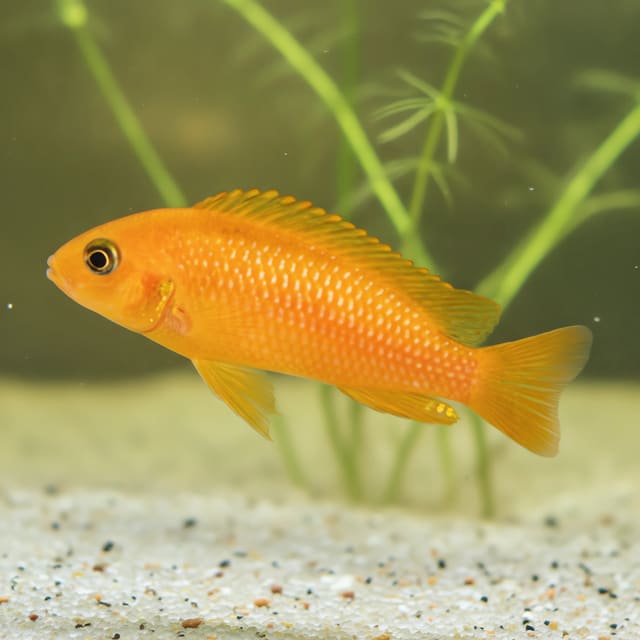
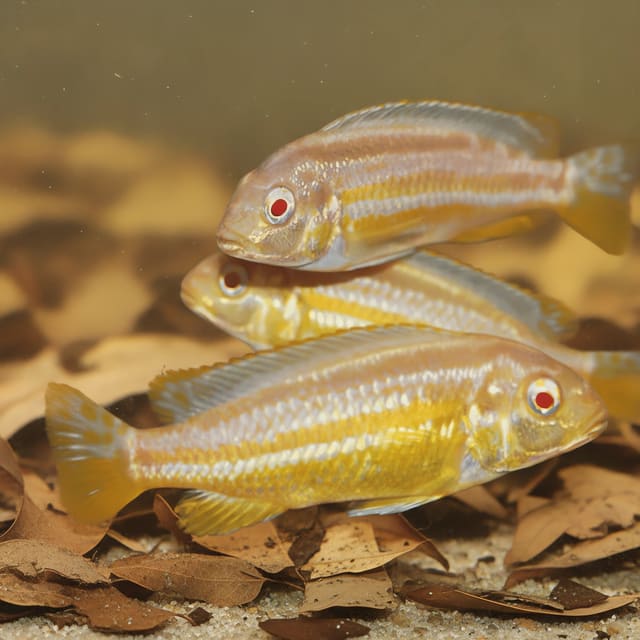
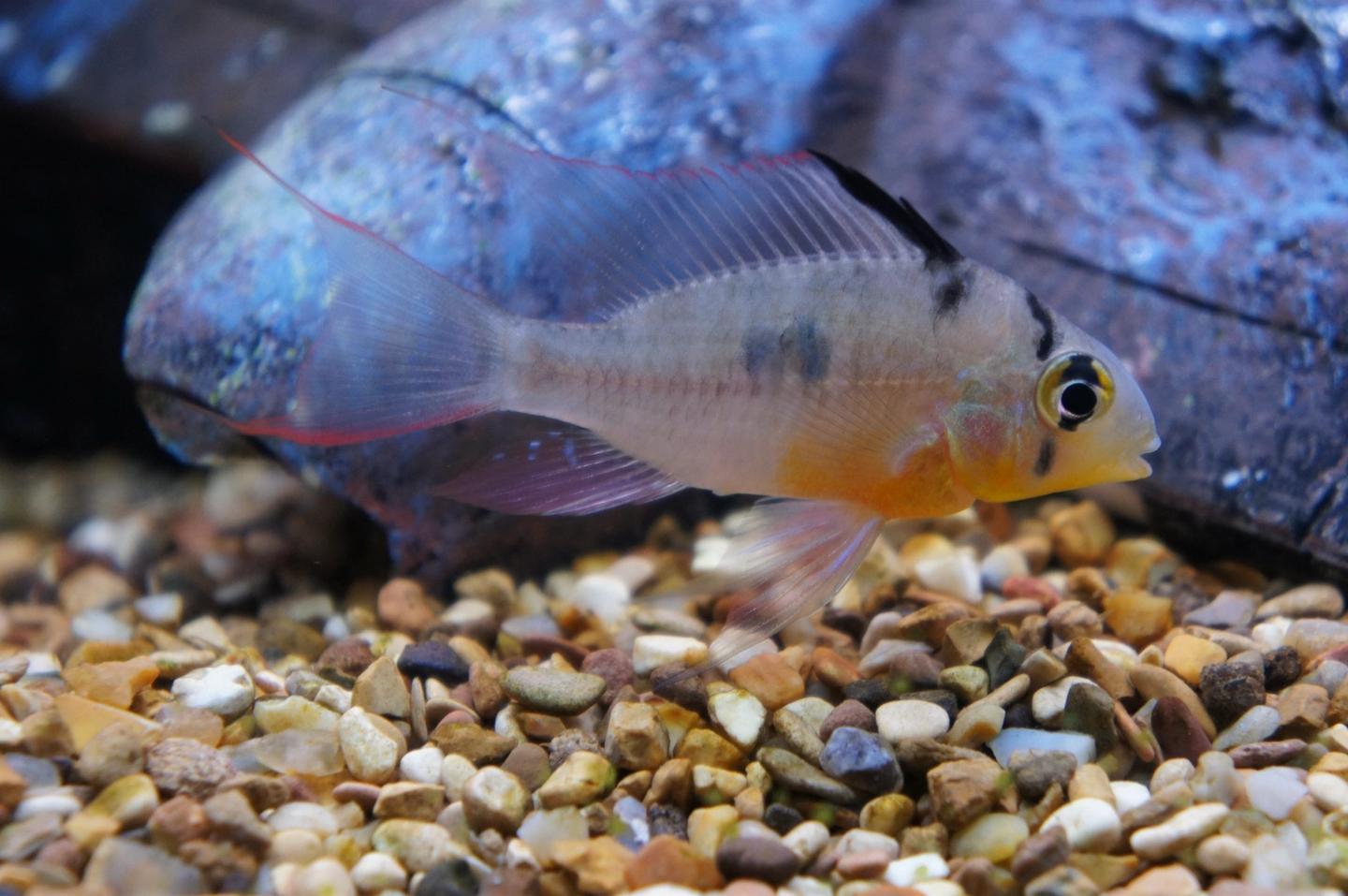
Albino Golden Mbuna (Melanochromis auratus albino)
24–28°C · pH 7.6–8.8 · 205L
£9.99

A striking, territorial Lake Malawi cichlid best suited to hard, alkaline water and a carefully planned African cichlid aquarium. Moderate care, aggressive. 24-26C, pH 7.5-8.5.
Adult size is the maximum length this species reaches at full maturity (scientific sources). The livestock you receive will be younger and smaller — pick a size above for the actual shipping size. Product-photo provenance and any image-specific limitations are stated on the listing.
Melanochromis lepidofage
Shoaling fish: kept in a group they feel safer, stay calmer and show their best colour.
Confirm your email, then we’ll send an availability message for this exact item if it returns within 180 days.
This request is only for this product—no newsletter or other promotions. A mail-provider retry may very rarely duplicate the same availability message. Unconfirmed addresses are removed after 48 hours. See our privacy policy.
A striking, territorial Lake Malawi cichlid best suited to hard, alkaline water and a carefully planned African cichlid aquarium. Moderate care, aggressive. 24-26C, pH 7.5-8.5.
Adult size is the maximum length this species reaches at full maturity (scientific sources). The livestock you receive will be younger and smaller — pick a size above for the actual shipping size. Product-photo provenance and any image-specific limitations are stated on the listing.
Cichlids are a family of roughly 1,800 accepted species, not one care type. Before buying, identify the exact species and source, then compare adult measurement, usable tank dimensions, social system, territory, tested water, diet and an exit plan. No family-wide minimum tank, water range or tank-mate list is safe.
Maintain these water conditions for optimal health and vibrant colors
The Melanochromis lepidofage is a striking, territorial Lake Malawi cichlid best suited to experienced aquarists who can provide hard, alkaline water and a carefully planned African cichlid aquarium. Endemic to Lake Malawi, this species displays vivid coloration, bold personality, and maternal mouthbrooding behaviour. With an adult size of around 4.5 cm, it is one of the smaller mbuna cichlids, but its aggressive temperament demands careful tankmate selection and adequate space.
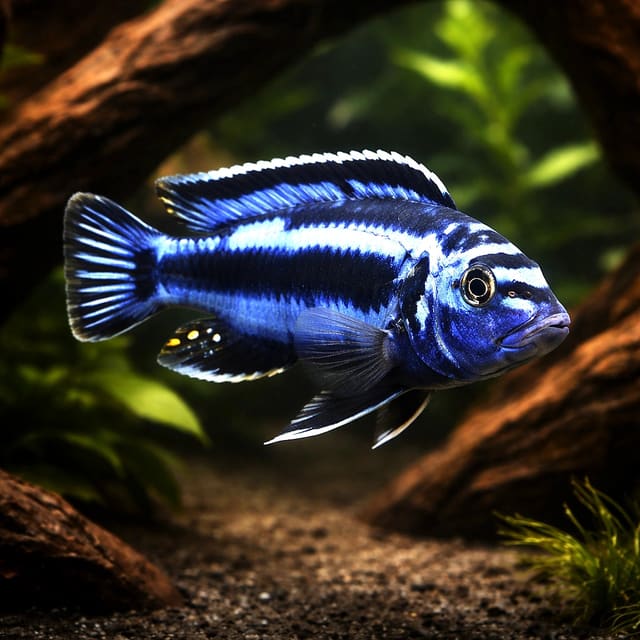
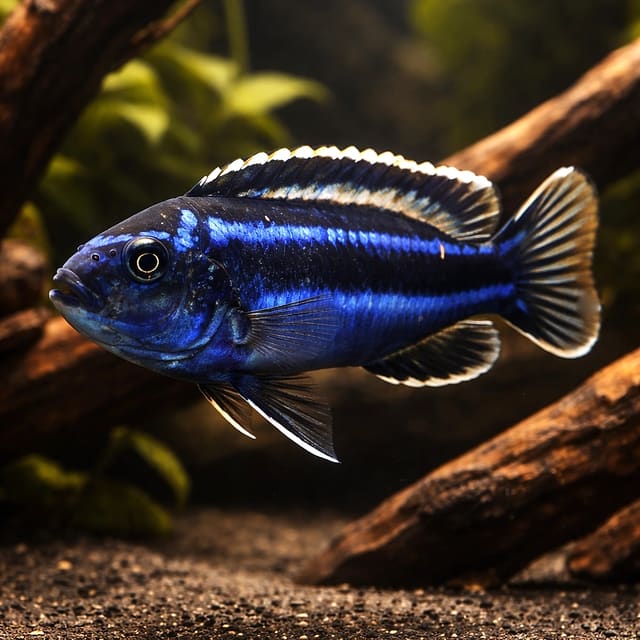
Melanochromis lepidofage displays vivid coloration with bold patterns that vary depending on sex and mood. Males typically exhibit darker, more intense colours with striking barring or iridescence, while females are more subdued. The body is compact and robust, with well-proportioned fins and a strong jaw adapted for grazing on aufwuchs and small invertebrates. The overall appearance is both striking and powerful, typical of Malawi mbuna.
This species inhabits the rocky shorelines of Lake Malawi, foraging among boulder fields and algae-covered rocks at shallow to moderate depths. The lake's ancient, stable chemistry—characterised by high mineral content, exceptional clarity, and warm temperatures—has shaped the evolution of hundreds of endemic cichlid species. In nature, Melanochromis lepidofage establish territories around suitable rocks and defend them vigorously, feeding on aufwuchs and small invertebrates.
Recreate a Malawi biotope with plenty of rockwork arranged to form caves, crevices, and territorial boundaries. Use a sandy or fine gravel substrate and ensure stable water chemistry: pH 7.5–8.5, hard water (GH 10–20°), and a temperature of 24–26°C. A minimum of 75 litres is recommended, though larger tanks are always preferable for aggressive cichlids. Provide strong filtration, regular water changes, and subdued lighting to bring out the fish's vibrant colours. Avoid overcrowding to reduce territorial disputes.
Like all Malawi cichlids, Melanochromis lepidofage demands pristine, stable conditions. Aim for 24–26°C, pH 7.5–8.5, and high hardness. Conduct weekly partial water changes (20–30%) to maintain low nitrate levels and replenish essential minerals. Use a high-quality filter rated for the tank volume, and consider adding crushed coral or Malawi cichlid salts to buffer water chemistry. Stability is critical—avoid sudden fluctuations in temperature or pH.
This species is primarily carnivorous or a micropredator. In captivity, offer a varied diet of quality cichlid pellets, frozen or live foods such as mysis, brine shrimp, krill, and other protein-rich foods. Avoid overfeeding and limit fatty foods to prevent obesity and digestive issues. Feed small portions once or twice daily. A balanced, protein-rich diet supports vibrant coloration, healthy growth, and successful breeding.
Melanochromis lepidofage is aggressive and highly territorial, especially when guarding a chosen territory or preparing to spawn. Males establish and defend territories vigorously, and may become particularly assertive towards rivals and other tankmates. This species is best suited to a species-specific tank or carefully planned Malawi cichlid community with robust, similarly sized cichlids. Provide ample rockwork and line-of-sight breaks to reduce aggression.
Due to limited compatibility data, tankmate selection should be approached with extreme caution. In general, avoid small fish, peaceful community species, shrimp and other small invertebrates, slow-moving or long-finned fish, and submissive cichlids. Best kept in a species-specific or carefully planned Malawi mbuna aquarium with robust, similarly sized and temperament-matched cichlids. Careful observation and adequate space are essential to prevent bullying and injury.
Melanochromis lepidofage is a maternal mouthbrooder. Provide a species tank or carefully managed Malawi cichlid setup with multiple females per male and plenty of rockwork. Females carry eggs and fry in the mouth for about 3–4 weeks, during which time they do not eat. Provide a quiet, stable environment and remove aggressive tankmates if needed. Fry can be fed newly hatched brine shrimp or specialist fry foods once released.
Tropical Fish Co is a leading UK specialist in African cichlids for sale UK, offering healthy, quarantined Lake Malawi species including the rare Melanochromis lepidofage. Every fish is carefully selected, acclimated to our expert holding systems, and dispatched with detailed care guidance. Our experienced team is passionate about Malawi cichlids and ready to support your aquarium goals. Order online today for fast, reliable delivery and discover why Tropical Fish Co is the trusted choice for specialist freshwater fish for sale UK.
No reviews for this item yet. Bought one? Honest reviews only, good or bad.
What customers say about ordering from us
I have a small group of long finned mountain minnows. So was delighted to be able to order ten of this variety to increase the genetics in my tank . The ones I recieved are healthy but it’s to early to give a verdict on wether they are of a long finned type since they are small currently.
Gordon Walker · 23 Sept 2026
100% success travel and "installation". Pleased with quality of purchase. The Siamese fighter a bit "shy" so have not yet seen him at his best yet but looking good. Happy customer. GG
George E Garratt · 21 Sept 2026
Reviews of our shop, collected by Judge.me, an independent third-party review collector. Newest first.