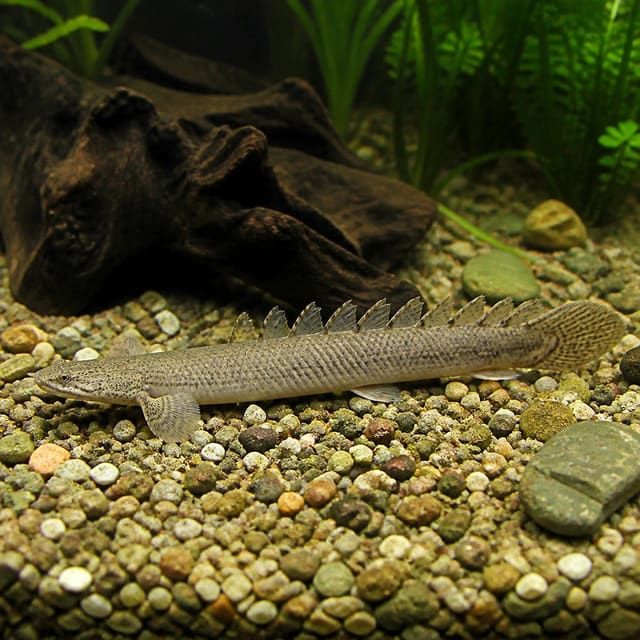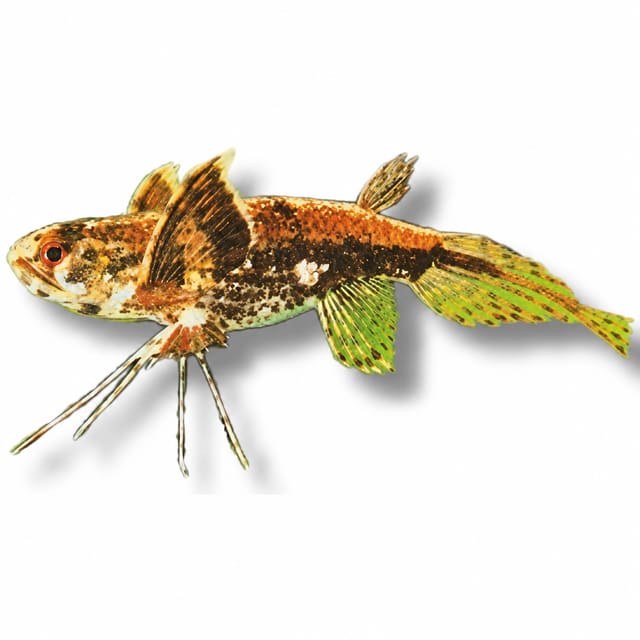
Freshwater Butterflyfish (Pantodon buchholzi)
23–30°C · pH 6–7.5 · 81L
£19.99

A striking, cryptic ambush predator with leaf-like camouflage that rewards experienced keepers with fascinating behavior. Difficult care, semi-aggressive. 24-29C, pH 6-7.8.
Adult size is the maximum length this species reaches at full maturity (scientific sources). The livestock you receive will be younger and smaller. Product-photo provenance and any image-specific limitations are stated on the listing.
Polycentrus schomburgki
Confirm your email, then we’ll send an availability message for this exact item if it returns within 180 days.
This request is only for this product—no newsletter or other promotions. A mail-provider retry may very rarely duplicate the same availability message. Unconfirmed addresses are removed after 48 hours. See our privacy policy.
A striking, cryptic ambush predator with leaf-like camouflage that rewards experienced keepers with fascinating behavior. Difficult care, semi-aggressive. 24-29C, pH 6-7.8.
Adult size is the maximum length this species reaches at full maturity (scientific sources). The livestock you receive will be younger and smaller. Product-photo provenance and any image-specific limitations are stated on the listing.
Maintain these water conditions for optimal health and vibrant colors
Polycentrus schomburgki, known as Schomburgk's Leaf Fish, is a striking cryptic ambush predator from South American blackwater habitats that brings fascinating behaviour and remarkable camouflage to specialized aquariums. Available for sale UK through Tropical Fish Co, this challenging species reaches 3.5cm and displays extraordinary leaf-like appearance allowing it to blend seamlessly with vegetation whilst hunting small prey. The difficult care level and semi-aggressive temperament make it suitable only for experienced aquarists prepared to provide species-specific setup, live foods, and appropriate tankmates. This predator rewards patient observation with intricate hunting strategies and remarkable mimicry behaviour.
The Leaf Fish displays extraordinary morphological adaptation for camouflage—compressed, deep-bodied form with irregular outline perfectly mimicking a dead leaf drifting in water. Coloration ranges from brown to olive-green with mottled darker markings and patches creating remarkable resemblance to decaying foliage. The protrusible mouth is capable of expanding dramatically to engulf prey items approaching half the fish's own size. Pectoral fins are positioned and shaped to enhance the leaf-like silhouette, whilst overall body profile shows asymmetric appearance further reinforcing the mimicry. Eyes are positioned and patterned to blend with overall camouflage. When hunting, the fish adopts head-down posture drifting slowly toward prey items like wind-blown vegetation before explosive strike.
Polycentrus schomburgki inhabits slow-moving blackwater swamps, flooded forest areas, and heavily vegetated river margins throughout the Guianas and adjacent Amazon-Orinoco drainages in northern South America. These environments feature extremely soft, highly acidic water heavily stained with tannins creating dark tea-coloured conditions. Substrates consist of leaf litter, submerged wood, and accumulated organic matter with dense aquatic and overhanging vegetation. Flow is minimal to absent, with habitats often being isolated pools or swamp systems. The aquatic environment is rich with small fish, invertebrates, and insect larvae that constitute primary prey. Water clarity is low, and lighting conditions are dim due to forest canopy and tannin staining.
Provide a minimum 80-litre aquarium with specialist blackwater biotope setup. Use dark sand or fine gravel substrate with generous amounts of driftwood, dried botanical materials (Indian almond leaves, oak leaves, alder cones), and leaf litter creating natural tannin-stained environment. Dense planting with broad-leaved species provides ambush sites and enhances the leaf fish's camouflage effectiveness. Subdued lighting is essential—use floating plants or surface cover to create dim conditions matching natural habitat. Gentle filtration with minimal flow suits their preference for virtually still water—sponge filters work excellently. A tight-fitting secure lid prevents escape. Avoid bright lighting and strong currents which stress this cryptic species and inhibit natural hunting behaviour.
Maintain temperatures between 24-29°C, with 26-28°C being optimal. Water must replicate natural blackwater conditions: very soft with pH 6.0-7.8 (ideally 6.0-7.0) and low hardness (1-5 dGH). Heavy tannin staining through botanical additions is beneficial and replicates natural chemistry. Despite preferring acidic conditions, maintain excellent water quality: zero ammonia and nitrite, with nitrates below 20ppm through regular 25% weekly water changes. The substantial protein consumption of carnivorous fish requires efficient biological filtration. Dissolved oxygen should be adequate despite still-water preference. Stability is critical—avoid parameter fluctuations that trigger stress in this sensitive specialist.
Polycentrus schomburgki is an obligate carnivore requiring live or frozen meaty foods exclusively. In nature, it ambushes small fish, large invertebrates, and aquatic insects using remarkable camouflage. In captivity, provide small fish (guppies, mosquito fish, or appropriate livebearer fry), large insect larvae, bloodworms, brine shrimp, and other substantial meaty foods 3-4 times weekly. The species may initially refuse all but live fish, requiring patient weaning onto frozen alternatives. Feed appropriate portion sizes—these fish can consume surprisingly large prey relative to body size due to expandable mouth. Remove uneaten food promptly as decomposition rapidly degrades water quality in their soft acidic environment. Many individuals eventually accept sinking carnivore pellets after extended acclimation period.
The Leaf Fish is a specialist ambush predator displaying fascinating hunting strategy. It drifts slowly toward prey adopting head-down posture perfectly mimicking dead leaf caught in current, approaching to within striking distance before explosive lunge engulfs the prey. Movement between hunting sessions is slow and deliberate, maintaining camouflage illusion. The species is largely sedentary, spending extended periods motionless amongst vegetation waiting for prey. Semi-aggressive temperament manifests primarily as predatory behaviour—any tankmate small enough to fit in the substantial mouth will eventually be consumed. Interactions with appropriately sized tankmates are generally peaceful provided they don't trigger feeding response. Nocturnal and crepuscular activity patterns mean peak hunting occurs during dawn, dusk, and throughout the night.
Tankmate selection is extremely challenging given this species' predatory nature and specialized requirements. Species-only setup is strongly recommended and safest approach. If tankmates are attempted, select only robust non-competing fish substantially too large to be eaten (minimum 8-10cm), non-nippy, and tolerant of blackwater conditions. Potential companions might include larger peaceful tetras, hatchetfish occupying surface zones, or peaceful catfish. Absolutely exclude all small fish, shrimp, small crustaceans, and any species small enough to trigger feeding response. Avoid fin-nippers that might harass the slow-moving Leaf Fish, and fast boisterous species that would outcompete during feeding or create excessive disturbance.
Captive breeding of Polycentrus schomburgki is uncommon though possible with appropriate conditions. Spawning occurs in secluded areas amongst dense vegetation or cave structures. Males typically assume parental duties, guarding eggs and newly hatched fry against predation. Breeding requires excellent water quality, abundant live foods for conditioning, and quiet dimly lit aquarium with suitable spawning sites. Trigger spawning through increased feeding followed by cooler water changes and possibly reduced water level mimicking seasonal variations. Fry are extremely small and require microscopic live foods initially—infusoria, paramecium, and similar cultures essential for early rearing. Separate breeding tank is advisable as adults may consume eggs or fry if stressed or hungry.
Tropical Fish Co supplies healthy, quarantined Polycentrus schomburgki specimens that have been carefully acclimated and are feeding on appropriate carnivorous diet. Each Leaf Fish is hand-selected for good body condition and normal hunting behaviour, ensuring you receive specialist predators ready to thrive in appropriate blackwater biotope setups. Our experienced team understands the challenging requirements of this species and can provide detailed guidance on blackwater aquarium creation, live food sources, and species-only or compatible tankmate selection. With specialist packaging designed for delicate predatory species and tracked UK delivery, your new Leaf Fish arrive safely in peak condition. We're committed to sustainable sourcing and work exclusively with responsible suppliers who prioritize fish welfare and conservation of threatened South American blackwater ecosystems.
No reviews for this item yet. Bought one? Honest reviews only, good or bad.
What customers say about ordering from us
I have a small group of long finned mountain minnows. So was delighted to be able to order ten of this variety to increase the genetics in my tank . The ones I recieved are healthy but it’s to early to give a verdict on wether they are of a long finned type since they are small currently.
Gordon Walker · 23 Sept 2026
100% success travel and "installation". Pleased with quality of purchase. The Siamese fighter a bit "shy" so have not yet seen him at his best yet but looking good. Happy customer. GG
George E Garratt · 21 Sept 2026
Reviews of our shop, collected by Judge.me, an independent third-party review collector. Newest first.