Moderate
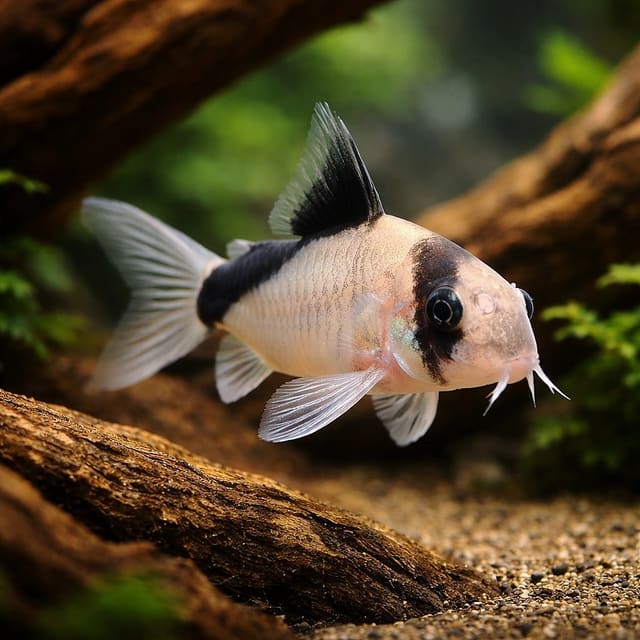
Masked Corydoras (Hoplisoma metae)
22–26°C · pH 6–8 · 75L
£15.99

A massive South American predatory catfish for only the most advanced keepers with pond-sized facilities. Expert care, semi-aggressive. 20-24C, pH 6.0-7.5.
Pseudopimedolus zungaro bufonius
Confirm your email, then we’ll send an availability message for this exact item if it returns within 180 days.
This request is only for this product—no newsletter or other promotions. A mail-provider retry may very rarely duplicate the same availability message. Unconfirmed addresses are removed after 48 hours. See our privacy policy.
A massive South American predatory catfish for only the most advanced keepers with pond-sized facilities. Expert care, semi-aggressive. 20-24C, pH 6.0-7.5.
Maintain these water conditions for optimal health and vibrant colors
Pseudopimedolus zungaro bufonius represents one of the most challenging and controversial species occasionally appearing in the UK aquarium trade. This massive South American predatory catfish originates from large river systems within the Amazon-Orinoco region, though exact distribution data remains unclear in available trade information. The species classification itself faces taxonomic uncertainty, with reported adult sizes and care requirements varying dramatically across sources — including the implausible 150cm figure that almost certainly represents misidentification or data error. Available for sale UK only through specialist suppliers to expert keepers, this semi-aggressive carnivore demands pond-sized facilities, industrial-strength filtration, and dedication far exceeding typical home aquarium capabilities. Prospective keepers must conduct exhaustive research and honestly assess their ability to provide appropriate long-term housing before considering this extraordinary catfish.
Pseudopimedolus zungaro bufonius displays the robust, elongated body typical of large predatory catfish, with powerful musculature supporting a lifestyle of active hunting. The broad, flattened head features prominent barbels that serve as sensitive chemoreceptors for locating prey in murky water conditions. Colouration typically comprises mottled browns, greys, and tans that provide effective camouflage against natural substrates, though exact patterning varies between individuals. The species possesses a large, terminal mouth capable of consuming substantial prey items, whilst sharp fin spines provide defensive capabilities. At sizes greater than 10cm in available specimens, juveniles already demonstrate the predatory proportions that expand dramatically with growth. Exact adult dimensions remain controversial due to potential taxonomic confusion, though any Pseudopimelodidae catfish reaching even half the reported 150cm length represents an enormous fish requiring specialised accommodations far beyond typical home aquarium capabilities.
Pseudopimedolus zungaro bufonius inhabits large river systems across South America's Amazon-Orinoco region, though precise native range data remains poorly documented in aquarium trade literature. Natural habitats likely include deep river channels, submerged structures, undercut banks, and areas with moderate to strong current where the species ambushes prey. These environments feature warm temperatures year-round with seasonal variations in water level, flow rate, and turbidity. The species' predatory lifestyle suggests association with areas supporting adequate prey fish populations. During daylight hours, large catfish typically shelter within caves, beneath overhangs, or amongst submerged debris, emerging primarily during low-light periods to hunt. The dynamic nature of large Amazonian rivers — with seasonal flooding, shifting channels, and variable water chemistry — creates habitats that favour adaptable, robust species capable of tolerating changing conditions whilst exploiting diverse prey resources.
Housing Pseudopimedolus zungaro bufonius appropriately exceeds the capabilities of conventional home aquariums, requiring custom-built systems or converted indoor pools measuring thousands of litres minimum. The exact minimum tank size cannot be verified from available data, though any predator potentially approaching even 100cm length demands truly massive accommodations. The setup must feature industrial-grade filtration capable of handling enormous bioload from a large carnivorous fish, with multiple oversized filters working in concert. Robust aquascaping using smooth boulders, large driftwood, and potentially artificial caves provides hiding places scaled to the fish's substantial size. All décor must be securely positioned to prevent injuries from displacement. A tight-fitting, weighted lid proves absolutely essential as large catfish demonstrate surprising jumping ability when startled. Substrate should comprise smooth sand or fine gravel that won't abrade the fish's delicate barbels. Water movement should be moderate, avoiding excessive turbulence whilst preventing dead spots where waste accumulates.
Maintaining appropriate water conditions for a massive predatory catfish requires commercial-scale filtration and maintenance protocols. Temperature should remain between 20-24°C, representing slightly cooler conditions than many tropical species whilst still providing adequate warmth for a South American catfish. pH values in the 6.0-7.5 range suit most large river species, though the fish likely demonstrates reasonable tolerance given its natural habitat's variable conditions. Water changes must be substantial and frequent to manage the enormous bioload — experienced keepers of large predators typically perform multiple 40-50% changes weekly, removing accumulated wastes before water quality deteriorates. Ammonia and nitrite must remain undetectable at all times despite the challenges of biological filtration in systems housing such large, messy feeders. Nitrates should be maintained below 30ppm through religious maintenance schedules. The combination of massive size, carnivorous diet, and substantial waste production makes water quality management the primary challenge in long-term care.
Before acquiring any giant catfish like Pseudopimedolus zungaro bufonius, secure backup housing arrangements with public aquariums or specialist facilities — rapid growth often exceeds even expert keepers' expectations, and responsible ownership requires contingency plans when fish outgrow available accommodations.
Pseudopimedolus zungaro bufonius demonstrates carnivorous or piscivorous feeding preferences, requiring a diet dominated by meaty protein sources. Large sinking carnivore pellets formulated for predatory fish provide convenient nutrition, though natural foods including whole fish, shrimp, mussels, squid, and earthworms offer superior nutritional profiles. Feed appropriately sized portions that the fish can consume in several minutes, adjusting frequency based on growth rate, water temperature, and activity level. Juvenile specimens may require daily feeding, whilst adults often thrive on 2-3 substantial meals weekly. Avoid over-reliance on feeder fish due to parasite risks and nutritional imbalances, instead offering variety through different prepared and frozen foods. Remove uneaten food promptly to prevent water quality deterioration. The powerful digestive system produces substantial waste, making feeding management critical to maintaining acceptable water conditions in even the largest systems.
This large predatory catfish exhibits typical ambush predator behaviour, spending extended periods motionless whilst waiting for prey opportunities. During inactive periods, the fish shelters within caves or beneath substantial cover, emerging primarily during low-light conditions to hunt. The species demonstrates awareness of feeding routines, often becoming active when keepers approach the aquarium at regular feeding times. Semi-aggressive temperament manifests through predation on smaller tankmates rather than overt territorial aggression towards appropriately sized companions. However, the sheer size and feeding response can intimidate or injure even robust tankmates during vigorous feeding sessions. Solitary keeping often proves most practical given space limitations and the challenges of maintaining multiple giant catfish. The species' cryptic nature means extended periods may pass without observations despite the fish's impressive size, requiring patience from keepers accustomed to more visible species.
Selecting appropriate companions for Pseudopimedolus zungaro bufonius presents extraordinary challenges given the species' massive size and predatory nature. Only very large, robust South American fish that cannot be swallowed qualify as potential tankmates, including substantial plecos, large armoured catfish, and peaceful cichlids of similar proportions. Large pacu, arowanas, or other peaceful giants may coexist in exceptionally spacious systems, though the combined bioload requires careful consideration. Avoid any fish small enough to be consumed, which encompasses the vast majority of aquarium species. Shrimp, snails, and all invertebrates will be eaten. Aggressive species might harass or injure the catfish, particularly during vulnerable periods immediately following feeding or water changes. Most expert keepers of giant catfish opt for single-species housing to eliminate compatibility concerns, ensure adequate space, and simplify the already substantial maintenance requirements.
Breeding information for Pseudopimedolus zungaro bufonius remains extremely limited in aquarium hobby literature, with successful captive spawning occurring rarely if at all outside specialised facilities. Achieving reproduction would likely require truly massive systems capable of housing multiple adults with excellent water quality, seasonal conditioning through temperature and water chemistry variations, and provision of appropriate spawning substrates. Many large catfish demonstrate complex reproductive behaviours tied to seasonal flooding patterns that prove nearly impossible to replicate in captivity. The challenges of housing even single specimens mean breeding attempts remain beyond the capabilities and resources of virtually all private aquarists. This species should be maintained solely for its impressive appearance and interesting predatory behaviours rather than any breeding potential, with reproduction representing an extraordinarily unlikely outcome even under optimal conditions in commercial breeding facilities.
Tropical Fish Co maintains the highest ethical standards when offering extraordinary species like Pseudopimedolus zungaro bufonius. We provide brutally honest assessments about long-term care requirements, potential adult size, and the massive commitments involved in housing giant predatory catfish. Our expert staff conduct thorough consultations before any sale, ensuring prospective keepers understand the challenges and possess appropriate facilities or concrete plans for custom systems. We refuse sales to inadequately prepared customers, prioritising animal welfare over commercial considerations. For suitably equipped expert keepers, we provide comprehensive guidance on filtration, feeding, and maintenance protocols essential for success with massive catfish. Ongoing support includes assistance securing backup housing arrangements should fish outgrow even substantial private systems. Specialist transport ensures safe delivery using insulated packaging and careful handling procedures. Trust Tropical Fish Co for genuine expertise in the most challenging species, transparent information about requirements and limitations, and unwavering commitment to responsible fishkeeping that serves both hobbyists and the extraordinary fish in our care.
No reviews for this item yet. Bought one? Honest reviews only, good or bad.
What customers say about ordering from us
I have a small group of long finned mountain minnows. So was delighted to be able to order ten of this variety to increase the genetics in my tank . The ones I recieved are healthy but it’s to early to give a verdict on wether they are of a long finned type since they are small currently.
Gordon Walker · 23 Sept 2026
100% success travel and "installation". Pleased with quality of purchase. The Siamese fighter a bit "shy" so have not yet seen him at his best yet but looking good. Happy customer. GG
George E Garratt · 21 Sept 2026
Reviews of our shop, collected by Judge.me, an independent third-party review collector. Newest first.