Moderate
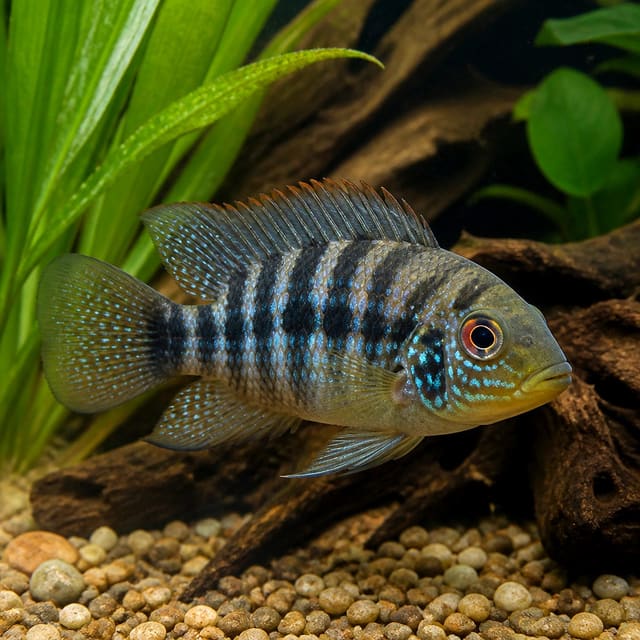
Paraguay Eartheater (Gymnogeophagus balzanii)
21–25°C · pH 6–8 · 250L
£37.99

A striking South American cichlid with bold markings and engaging behavior, ideal for a spacious, well-structured community setup. Moderate care, semi-aggressive. 24-28C, pH 6.0-7.5.
Acarichthys geayi
Save when buying more.
Confirm your email, then we’ll send an availability message for this exact item if it returns within 180 days.
This request is only for this product—no newsletter or other promotions. A mail-provider retry may very rarely duplicate the same availability message. Unconfirmed addresses are removed after 48 hours. See our privacy policy.
A striking South American cichlid with bold markings and engaging behavior, ideal for a spacious, well-structured community setup. Moderate care, semi-aggressive. 24-28C, pH 6.0-7.5.
Maintain these water conditions for optimal health and vibrant colors
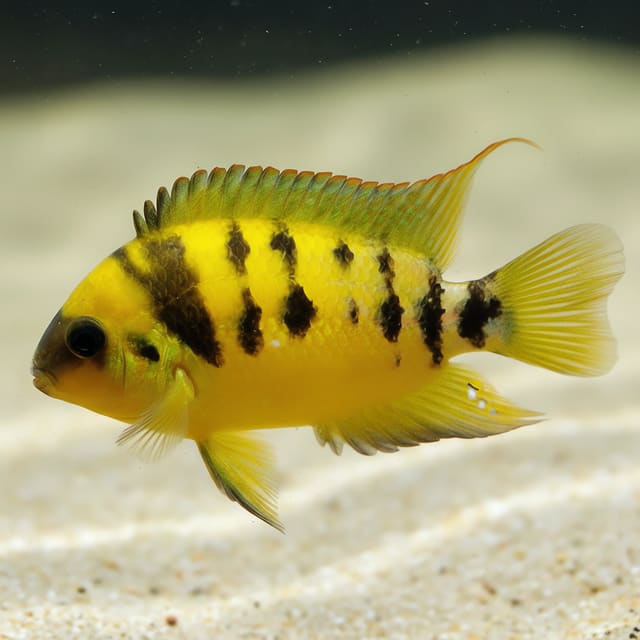
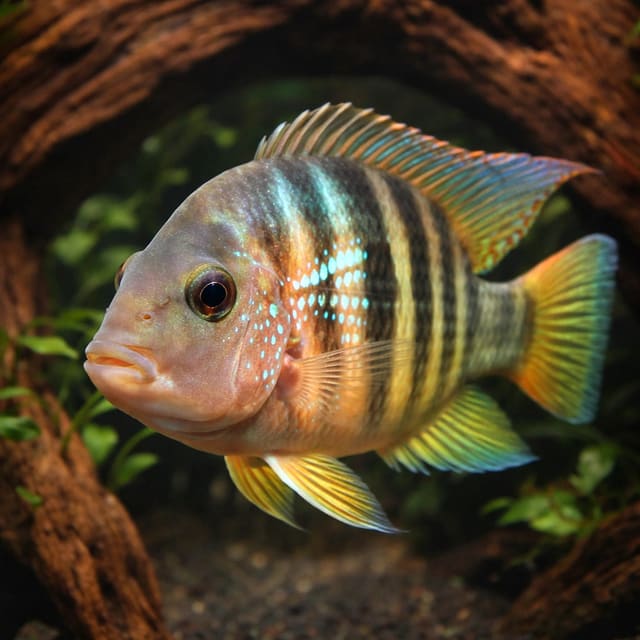
The Bandit Cichlid (Acarichthys geayi) is a striking South American cichlid native to the Amazon basin and adjacent river systems throughout Peru, Brazil, and surrounding regions. This attractive species is renowned for its bold bandit-like facial markings, engaging behaviour, and suitability for spacious community aquariums housing similarly sized robust fish. Available as cichlid for sale UK from specialist retailers like Tropical Fish Co, this rare tropical fish for sale UK brings authentic Amazonian character to well-planned setups.
Growing to approximately 20cm in adult size (juvenile listing shows 3.5cm data, which appears to be an error for adult requirements), the Bandit Cichlid requires spacious accommodation of at least 350 litres and thoughtful tankmate selection. While semi-aggressive, particularly during breeding, this south american cichlid can coexist successfully with appropriate companions in large, well-structured aquariums. This south american aquarium fish is best suited to experienced fishkeepers who can provide the space, water quality, and compatible tankmates these impressive cichlids require.
Acarichthys geayi is immediately recognizable by the distinctive dark vertical band across the face that gives it the common name "Bandit Cichlid". This prominent marking extends through the eyes, creating a mask-like appearance reminiscent of the stereotypical bandit disguise. The body base colour ranges from silvery-grey to golden-brown, often with subtle iridescent highlights and faint vertical barring along the flanks.
Adults develop a robust, deep-bodied profile with a slightly compressed shape typical of many South American cichlids. The dorsal and anal fins are proportionally large and feature subtle patterning, while the caudal fin is typically rounded to slightly pointed. Males tend to be larger than females with more pronounced finnage and slightly more intense coloration, though sexual dimorphism is not dramatic in this species.
Coloration intensifies during breeding periods and when fish are in optimal condition, with dominant individuals displaying the most vibrant colours. The distinctive facial mask remains prominent throughout the fish's life, making identification straightforward even in mixed cichlid communities.
The Bandit Cichlid inhabits various freshwater systems throughout the Amazon basin in South America, particularly in Peru, Brazil, and adjacent regions including Venezuela and the Guianas. These fish are typically found in slow to moderately flowing rivers, tributaries, flooded forests, and oxbow lakes with sandy or fine gravel substrates.
Water conditions in their natural habitat vary seasonally but generally feature soft to moderately hard water with neutral to slightly acidic pH. Temperatures remain consistently warm year-round, typically between 24-28°C. The environment includes abundant driftwood, submerged branches, leaf litter, and marginal vegetation providing shelter and foraging opportunities.
During the wet season, Bandit Cichlids move into flooded forest areas and shallow marginal zones where they forage for invertebrates, small fish, and organic detritus. They're often found in groups or loose aggregations, particularly when juvenile, though adults establish territories especially during breeding periods.
A minimum 350-litre aquarium is essential for adult Bandit Cichlids, with larger tanks of 450+ litres strongly recommended for community setups or groups. The aquarium should provide ample swimming space with an open layout while incorporating visual territory breaks. Use fine sand or smooth fine gravel substrate, as these fish will sift through substrate when foraging and may dig when breeding.
Incorporate substantial driftwood pieces, smooth rocks, and optional plants (hardy species like Java Fern, Anubias, or Amazon Swords work best as they tolerate some disruption). Arrange decor to create distinct territories with visual barriers, which helps reduce aggression in community setups. Avoid sharp-edged rocks or decorations that could injure fish during spawning or territorial disputes.
Strong, efficient filtration is essential, as these messy feeders produce considerable waste. Canister filters or sump systems with mechanical and biological filtration stages work excellently. Moderate water movement is appreciated, though avoid excessively strong currents. Perform regular water changes of 30-40% weekly to maintain excellent water quality, which is crucial for health and colour.
Secure the aquarium lid firmly, as large cichlids can jump, especially when startled or during breeding excitement. Ensure adequate space between the water surface and lid for gas exchange while preventing escape attempts.
Acarichthys geayi is an omnivore requiring a varied diet incorporating both protein and vegetable matter. Quality cichlid pellets or granules formulated for large omnivorous cichlids should form the dietary foundation, supplemented regularly with frozen and live foods including bloodworms, brine shrimp, mysis shrimp, krill, and insect larvae.
Incorporate vegetable matter through spirulina-based prepared foods, blanched vegetables like zucchini, cucumber, or spinach, and algae wafers. Earthworms are enthusiastically accepted and provide excellent nutrition, as do occasional feedings of shelled peas or other soft vegetables. Variety is key to maintaining optimal health, coloration, and breeding condition.
Feed adult fish once or twice daily, offering portions that can be consumed within 3-5 minutes. These fish have hearty appetites but overfeeding will rapidly degrade water quality and lead to health issues including bloat and obesity. During breeding periods, increase protein content with more frequent feedings of meaty foods to support egg production and parental energy demands.
Avoid mammal-based foods like beef heart as primary diet components, as these can be difficult to digest and contribute to water quality problems. Rotate between different food types daily to ensure complete nutrition and maintain feeding interest.
The Bandit Cichlid is a semi-aggressive species that displays typical cichlid behaviours including territoriality, social hierarchies, and increased aggression during breeding. In spacious aquariums with appropriate tankmates, they can be surprisingly peaceful for much of the time, becoming more assertive primarily when establishing territories or spawning.
These fish exhibit interesting foraging behaviour, sifting through substrate for food particles and investigating every crevice in search of edible items. They're moderately active, patrolling territories and interacting with both conspecifics and other fish species. Social dynamics are fascinating to observe, with dominant individuals displaying more vibrant colours and commanding preferred territories.
Juveniles are more social and can be kept in groups, though as fish mature, territoriality increases and space requirements grow accordingly. Breeding pairs become highly territorial, defending large areas around their spawning site and fry. Best kept as a single specimen, a proven pair, or in groups of 5+ individuals in very large aquariums (600+ litres) where territories can be properly established.
Top Tip: Create multiple distinct territory zones using substantial driftwood pieces positioned to break sightlines throughout the aquarium. This simple technique dramatically reduces aggression in South American cichlid tanks by allowing each fish to establish a "home base" without constant visual contact with rivals.
Acarichthys geayi is compatible with large peaceful to semi-aggressive South American cichlids of similar size including Severums, Uaru species, larger Geophagus, and similar-sized Acarichthys. Avoid housing with highly aggressive species like large pike cichlids or overly territorial substrate spawners that will create constant conflict.
Robust catfish including larger Corydoras species, Synodontis, and medium to large Loricariids (plecos) make suitable tankmates, as they occupy different ecological niches and can defend themselves if necessary. Fast, similarly sized midwater fish such as larger Silver Dollars, Leporinus species, or robust characins work well, though avoid species small enough to be eaten.
Incompatible tankmates include small fish that can fit in the Bandit Cichlid's mouth and will be eaten, very timid species that will be constantly stressed by the Bandit's active presence, fin-nipping fish like Tiger Barbs that will harass the cichlids, overly aggressive cichlids like Red Devils or Midas that will dominate or injure them, and tiny shrimp and small invertebrates which will be consumed. When breeding, even compatible tankmates may be attacked if they venture near the spawning area.
Acarichthys geayi is typically a substrate spawner that forms pair bonds and lays eggs on cleaned flat surfaces or prepared cave structures. Breeding pairs become highly territorial and aggressive, so breeding is best attempted in dedicated breeding tanks or very large aquariums where other fish can escape harassment.
Condition pairs separately on high-quality varied foods including plenty of protein for 2-3 weeks before introducing them to the breeding setup. Provide soft, clean water with pH 6.5-7.0 and temperature around 26-27°C. Include flat rocks, smooth slate, or overturned terracotta pots as potential spawning surfaces. The pair will select and meticulously clean a site before spawning.
Females lay several hundred eggs, which both parents guard diligently. Eggs hatch in 2-3 days at 26°C, and fry become free-swimming after approximately one week. Parents provide intensive care, moving fry to pre-dug pits and defending them against all perceived threats. Initial fry foods include infusoria and liquid fry food, progressing to newly hatched brine shrimp after several days.
Maintain excellent water quality during breeding and fry-rearing with gentle daily water changes of 10-15%. Parents may consume eggs or fry if excessively disturbed or if water quality deteriorates, so provide plenty of secluded areas and minimize disturbance during the critical first two weeks. Remove other fish if aggression becomes dangerous.
When you buy cichlid for sale UK from Tropical Fish Co, you're choosing a specialist retailer dedicated to providing healthy, robust livestock suitable for long-term success. Our Acarichthys geayi specimens are quarantined, acclimatised to UK water conditions, and feeding confidently on varied foods before dispatch. Each south american cichlid for sale is individually inspected for excellent health, proper coloration, and overall quality.
We provide comprehensive expert guidance on south american cichlid tank mates, tank setup requirements for larger species, water parameter management, and dietary needs specific to omnivorous South American cichlids. Fast, secure delivery throughout the UK ensures your rare tropical fish for sale UK arrive safely with minimal stress, carefully packaged with appropriate insulation. Our dedicated customer support team is available to answer questions about stocking, compatibility, breeding, and long-term care of your Bandit Cichlid. All livestock is backed by our health guarantee, giving you confidence when purchasing this impressive species from Tropical Fish Co.
No reviews for this item yet. Bought one? Honest reviews only, good or bad.
What customers say about ordering from us
I have a small group of long finned mountain minnows. So was delighted to be able to order ten of this variety to increase the genetics in my tank . The ones I recieved are healthy but it’s to early to give a verdict on wether they are of a long finned type since they are small currently.
Gordon Walker · 23 Sept 2026
100% success travel and "installation". Pleased with quality of purchase. The Siamese fighter a bit "shy" so have not yet seen him at his best yet but looking good. Happy customer. GG
George E Garratt · 21 Sept 2026
Reviews of our shop, collected by Judge.me, an independent third-party review collector. Newest first.