


−13%
Polypterus senegalus - Tropical Fish for Sale UK
£18.26£20.99

Add the striking Demon Eartheater to your tank. A moderate-care cichlid with bold character, ideal for experienced keepers. Buy online with UK delivery.
Adult size is the maximum length this species reaches at full maturity (scientific sources). The fish you receive will be younger and smaller — pick a size variant above for the actual shipping size. Photos are AI-enhanced, so the live fish may show subtle colour or marking differences.
Satanoperca daemon
Not home? Message us and we'll delay delivery.
Add the striking Demon Eartheater to your tank. A moderate-care cichlid with bold character, ideal for experienced keepers. Buy online with UK delivery.
Adult size is the maximum length this species reaches at full maturity (scientific sources). The fish you receive will be younger and smaller — pick a size variant above for the actual shipping size. Photos are AI-enhanced, so the live fish may show subtle colour or marking differences.
Maintain these water conditions for optimal health and vibrant colors
If you want a calm but impressive South American cichlid, the Demon Eartheater is one of the most rewarding choices in the current tropical fish for sale UK market. Known scientifically as Satanoperca jurupari, this elegant Eartheater Cichlid comes from the Amazon basin and is loved for its graceful swimming, constant sand-sifting, and surprisingly peaceful nature for a medium-large cichlid. Adult fish reach around 18 cm, can live close to 10 years with correct care, and suit aquarists looking for a more natural, behaviour-rich display rather than a hyper-aggressive show fish. See our detailed photos showing the refined body shape, soft earth-toned sheen, and expressive face that make this species stand out among large tropical fish for sale uk listings.
This fish is often searched as Demon Eartheater, Jurupari Eartheater, Jurupari Cichlid, and Demon Fish, but in the aquarium it is best known as a peaceful, sand-loving cichlid that thrives in groups. For aquarists wanting to buy fish online, buy tropical fish UK, or find unusual freshwater tropical fish for sale uk, this species offers something different from standard community fish. It is not one of the usual tropical fish for beginners, yet it is far more manageable than many aggressive cichlids when its needs are met. If you want a true Amazonian centrepiece with intelligent behaviour, strong presence, and a fascinating delayed mouthbrooding breeding strategy, this is an excellent fish to consider when you buy demon eartheater UK or shop for rare tropical fish for sale uk.
Satanoperca jurupari is a classic South American eartheater cichlid from the Amazon basin. In the hobby it sits among the more refined, behaviour-led cichlids rather than the brute-force species. Aquarists interested in a South American cichlid UK display often compare it with Geophagus, severums, and other peaceful large cichlid species because of its calm nature and beautiful sand-sifting habits.
The Demon Eartheater is native to tropical South America, especially the Amazon basin. In the wild, Satanoperca jurupari is found in slow-moving rivers, flooded forest margins, sandy shallows, and calm tributaries where fine sediment covers the bottom. These habitats are warm, soft, and often slightly acidic, which explains the preferred demon eartheater water parameters in the home aquarium. Wild fish spend much of the day taking mouthfuls of sand, filtering out edible particles, and expelling the rest through the gills. That natural feeding style is the reason a proper demon eartheater sand substrate matters so much.
Because this species comes from leaf-litter zones and gently stained water, it appreciates a setup that feels subdued rather than harshly bright. Aquarists searching tropical fish for sale online uk, live tropical fish for sale uk, or exotic tropical fish for sale uk are often drawn to the Demon Eartheater because it brings authentic Amazonian behaviour into the aquarium. It is also a strong choice for keepers wanting unusual tropical fish for sale uk without stepping into the much harder world of specialist blackwater species.
In nature, these fish feed on tiny invertebrates, organic detritus, small crustaceans, and edible material trapped in the substrate. That makes them omnivores, but not random scavengers. Their whole body plan is adapted to bottom feeding and sand sifting, so their captive diet should reflect that. Their natural environment also explains why they do best in groups and why a lone specimen often looks less confident. If you are comparing tropical fish uk for sale, tropical fish for sale in uk, tropical fish for sale in the uk, or tropical fish for sale uk delivery options, this species is ideal for aquarists building a calm Amazon-inspired display with room to swim and forage.
They are not the same as marine predators or novelty fish sometimes searched online under unrelated terms like home aquarium sharks uk. Nor are they comparable to cold water fish for sale uk species. This is a true tropical freshwater cichlid that needs warm, stable water and a properly planned setup. For fishkeepers in cities searching tropical fish for sale glasgow or tropical fish for sale online, a healthy, quarantined specimen is a far better start than taking chances on free tropical fish or free tropical fish to good home listings with unknown history.
Mimicking the natural habitat of a Demon Eartheater improves colour, confidence, and feeding response. Fine sand, warm soft water, dimmer lighting, and a group of 4-6 fish will usually produce much more natural behaviour than a sparse, brightly lit tank with gravel.
A proper demon eartheater care guide always starts with space and substrate. This species is peaceful, but it is still an 18 cm cichlid that should be kept in a social group. The demon eartheater minimum tank size is 300 litres, though a larger footprint is strongly recommended for a group. In practice, the best demon eartheater tank size for 4-6 specimens is 375 litres or more, especially if you want tank mates. Length matters more than height because these fish patrol the bottom and mid-lower levels while constantly foraging.
For a single pair, 300 litres is workable, but for proper social behaviour aim for a larger aquarium with open sand areas. A group spreads attention and reduces stress. This species is not ideal for a cramped tropical fish starter setup or a small mixed tank sold as a beginner bundle. If you are browsing tropical fish tanks for sale uk, choose a long tank with a broad base rather than a tall narrow one. Many keepers upgrading from standard community aquariums are surprised by how much calmer Demon Eartheaters become once they have floor space.
The ideal demon eartheater temperature is 25-28°C, with the best day-to-day target around 26-27°C. The demon eartheater ideal temperature should stay stable, not swing up and down. The recommended demon eartheater pH level is 5.5-7.0, and demon eartheater water hardness should remain soft to moderately soft at 2-12 dGH. These exact demon eartheater water parameters support healthy gill function, digestion, and breeding behaviour. As a demon eartheater freshwater species from the Amazon, it does not need salt and should not be treated like brackish fish.
Use strong biological filtration with gentle to moderate flow. These fish dislike being blasted around, but they do produce enough waste that under-filtering is a common mistake. A quality external canister filter is usually the best option for a large eartheater for sand substrate tank. Fine mechanical media helps trap suspended particles because sand-sifting naturally stirs debris. Weekly water changes of 30-50% are one of the best tools for long-term success.
This is the most important setup choice. The best substrate is smooth, fine silica or river sand. Demon eartheater sand sifting is not a side behaviour; it is central to the fish’s daily life. Sharp gravel can damage the mouth and gills, while coarse stones prevent natural feeding. If you want an eartheater with corydoras setup, sand benefits both species. A proper demon eartheater sand substrate should be at least a few centimetres deep so the fish can scoop and sort comfortably.
Many aquarists ask whether the demon eartheater for planted aquarium setup is realistic. The answer is yes, but choose hardy plants attached to wood or rocks rather than delicate rooted carpets. Their digging and sifting can uproot weak plants. Good options include Java fern, Anubias, and larger Amazon swords placed securely. If you are shopping tropical fish plants for sale uk or tropical fish tank plants for sale uk, think sturdy, broad-leaved species. Searches for tropco plants often come from aquarists trying to match soft-water fish with suitable planting schemes; for Demon Eartheaters, structure matters more than dense planting.
Use driftwood, rounded stones, and open sandy lanes. Avoid cluttering the floor. If you enjoy other eartheaters, the Gymnogeophagus Rhabdotus - Stripefin Eartheater offers an interesting contrast in body shape and temperament.
Moderate lighting works best. Very intense light can make this species appear washed out and cautious. A dimmer period at the start and end of the day often encourages more natural foraging. If your tank includes floating cover or tannin-stained decor, colours usually look richer and the fish settle faster.
Always cycle the aquarium for 4-6 weeks before adding a Demon Eartheater. This species handles stable mature systems far better than fresh tanks, and early ammonia or nitrite spikes can cause lasting stress and poor feeding response.
The demon eartheater diet is best described as omnivorous with a strong preference for foods that sink and can be searched out near the substrate. In the wild they sift sand for insect larvae, tiny crustaceans, worms, and edible organic matter. In the aquarium, the best demon eartheater feeding plan combines high-quality sinking cichlid pellets with frozen foods such as bloodworm, brine shrimp, mysis, and chopped krill in moderation. Their natural feeding style means they often ignore floating foods, especially when newly introduced.
Use a quality sinking pellet as the staple. Choose a formula made for South American cichlids rather than an ultra-high-protein predator pellet. This is not a fish that should be fed like a goliath tiger fish or other dramatic predators seen in viral searches such as tiger goliath fish eating crocodile. Demon Eartheaters need balanced nutrition, digestible ingredients, and a feeding rhythm that matches their calm behaviour.
Frozen foods are excellent 3-4 times per week. Good options include daphnia, brine shrimp, black mosquito larvae, and occasional bloodworm. Some keepers also use soft granules and gel foods to vary texture. For conditioning adults, a mixed menu supports body condition and stronger spawning response. If you are building a larger Amazon system rather than a freshwater fish bundle or generic tropical fish bundles package, this species rewards a more thoughtful diet.
Treat foods should be occasional, not daily. Avoid fatty mammal meats and oversized feeder items. This is one reason sensational searches like tiger fish or tiger fish attack are irrelevant to their real care. A healthy mouthbrooding eartheater cichlid needs steady nutrition, not shock-value feeding. During breeding attempts, increase variety rather than quantity.
Feed adults 2 small meals daily. Juveniles can take 3 smaller meals. Offer only what they can clear in 1-2 minutes, allowing some food to settle so natural foraging can occur. Watch each fish during feeding. Timid specimens in a group may need food spread across the tank. The best demon eartheater diet keeps the belly gently rounded but never bloated.
| Time | Food | Amount |
|---|---|---|
| Morning | Sinking cichlid pellets or soft granules | Small portion eaten in 1 minute |
| Evening | Frozen brine shrimp, mysis, or bloodworm | Small portion, no leftovers |
Avoid large floating sticks, poor-quality flake as a sole diet, and overuse of rich protein foods. Also avoid allowing food to rot in the sand. If you keep this species in an eartheater shop UK style display with multiple bottom feeders, monitor feeding carefully so shy fish are not outcompeted. Aquarists who buy fish online should be ready with suitable sinking foods before arrival.
Useful as a visual comparison species when planning a larger peaceful display, though they are not a food item and should not be mixed casually without considering size and temperature needs.
Overfeeding causes ammonia spikes, dirty sand, and bacterial problems. Because Demon Eartheaters sift the substrate all day, leftover food hidden in the sand can foul the whole tank faster than many keepers expect.
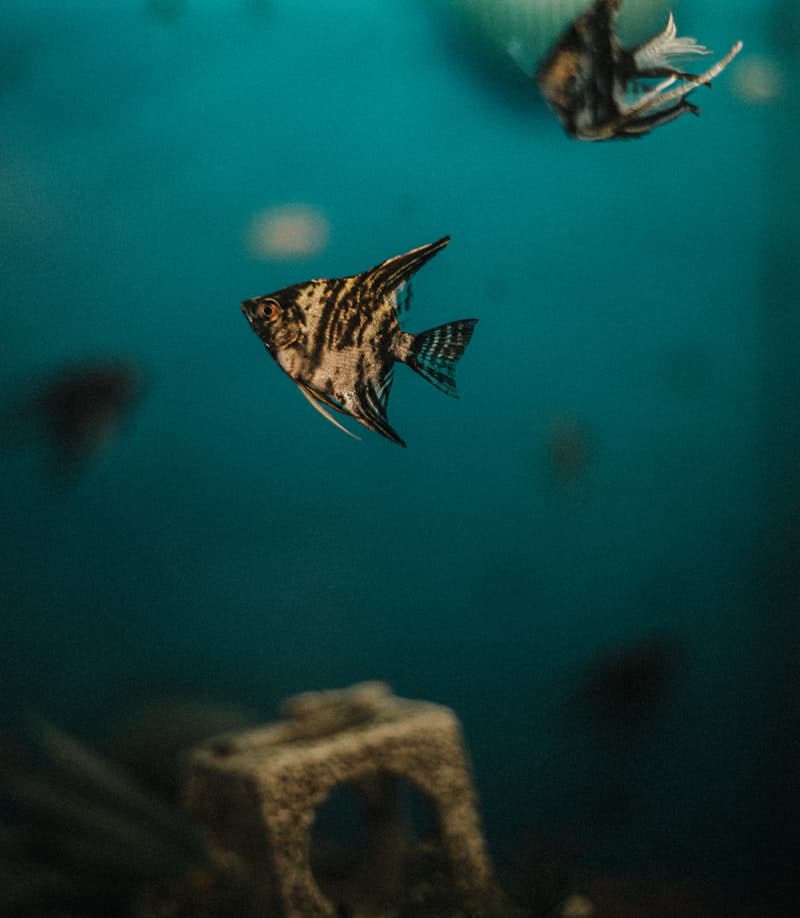
The Demon Eartheater has a long, elegant body, a gently sloping head, and large expressive eyes that give it a thoughtful look. Adults usually reach around 18 cm, though especially well-grown fish may appear larger due to finnage and body depth. Base colour is usually silver-beige to olive-brown with subtle iridescence, darker face markings, and soft patterning that becomes more obvious under calm lighting. Our photos show the refined sheen and earthy tones that make this species a standout among large tropical fish for sale uk and freshwater cichlid UK listings.
Many aquarists compare Satanoperca jurupari vs red head Tapajos because both are attractive eartheater types, but the Demon Eartheater is generally more understated and natural in colour. Its beauty comes from movement and behaviour as much as pattern. Against dark wood and pale sand, the body takes on a warm bronze glow. In a bright bare tank, that same fish can look plain. This is why aquascape matters so much.
Sexual dimorphism is subtle. Mature males may develop slightly longer finnage and a stronger head profile, while females often look a little fuller-bodied when carrying eggs. During breeding, both sexes can intensify in contrast. If you are comparing this fish with tropical discus fish for sale uk, discus tropical fish for sale uk, or even tropical puffer fish for sale uk, remember that the Demon Eartheater is not about flashy novelty. It is about poise, natural behaviour, and a calm Amazonian look.
For aquarists browsing tropical fish tank for sale uk or large tropical fish tanks for sale uk, this species rewards a wider display where its shape and group movement can really be appreciated. It also appeals to keepers who want tropical fish for sale online without choosing something overly delicate or aggressive.
One of the best features of Satanoperca jurupari is that it is among the more peaceful large cichlid species available to serious freshwater keepers. The usual demon eartheater behaviour is calm, social, and non-destructive, especially when kept in a proper group. This makes the fish suitable for a carefully planned demon eartheater community tank, though “community” here means larger, warm-water South American companions rather than tiny nano species.
Good demon eartheater compatible fish include larger peaceful tetras, angelfish, peaceful severums, and bottom fish that can handle warm soft water. Many aquarists ask about eartheater with corydoras; this can work well in a large tank with plenty of sand and enough feeding space. If you are looking at tetras for sale uk or tetra fish for sale uk, choose robust species rather than tiny delicate varieties.
For cichlid comparisons, a Red Head Severum Cichlid - Heros can work in a spacious setup if personalities are compatible. A Thorichthys Maculipinnis - Elliot'S Cichlid - is attractive but comes from different water preferences, so mixed cichlid communities need planning. The Gymnogeophagus Rhabdotus - Stripefin Eartheater is another eartheater-style fish often compared in mixed displays, though temperature needs should be checked carefully.
Avoid highly aggressive cichlids such as mbuna and very territorial Central American bruisers. Fish like Yellow Elongatus Cichlid - Chindongo Elongatus, Kiriza Yellow Cichlid - Tropheus Moorii, Orange I Blunthead Cichlid - Tropheus, and even the striking Aulonocara Sp Neon Red Calico Peacock come from very different water chemistry and social systems. They are not suitable companions for a soft-water Amazonian eartheater. This is one of the key points in any serious Satanoperca jurupari care discussion.
Also avoid tiny shrimp if you want guaranteed survival. Snails are usually safer than dwarf shrimp in a large cichlid tank. Searches like community tropical fish uk, tropical fish pets at home, and fish for sale pets at home often suggest broad compatibility, but larger cichlids always need more careful matching than standard shop labels imply.
In a 375-450 litre aquarium, a strong stocking plan could be 5 Demon Eartheaters with a school of medium-large tetras and a group of Corydoras. In 500 litres or more, you can consider 6 Demon Eartheaters with angelfish or a compatible severum pair. This is where terms like Satanoperca for community tank and Satanoperca jurupari tank mates become practical rather than theoretical: space, sand, and calm companions are the keys.
| Species | Compatible? | Notes |
|---|---|---|
| Red Head Severum Cichlid - Heros | ✅ Yes | Works in large tanks with careful monitoring and matched temperament. |
| Corydoras | ⚠️ Caution | Usually good in warm sand-bottom tanks; ensure enough feeding reaches the bottom. |
| Yellow Elongatus Cichlid - Chindongo Elongatus | ❌ Avoid | Too aggressive and requires very different water conditions. |
Always quarantine new arrivals for 2-4 weeks before adding them to a Demon Eartheater group. Peaceful fish still suffer badly from parasite introductions, and a calm cichlid community can unravel quickly if one new fish brings disease or stress.
Demon eartheater breeding is considered difficult to advanced, mainly because pair formation is not always obvious and the species uses a delayed mouthbrooding strategy. This means the fish may lay eggs on a surface first, then collect them later. The demon eartheater mouthbrooder behaviour is one of the most fascinating aspects of the species and a major reason experienced cichlid keepers seek it out.
Use a mature tank of at least 300 litres for a pair, though groups often work better for natural pairing. Soft, slightly acidic water and a stable demon eartheater temperature around 27°C help. Fine sand, flat stones, and excellent water quality are essential. Condition adults with a varied demon eartheater diet of pellets and frozen foods.
During courtship, fish may clean a flat site and display more intense body contrast. Although usually peaceful, they can become more assertive when spawning. This is why some keepers comparing demon eartheater vs severum or demon eartheater or blue acara notice that the Demon Eartheater is gentler most of the time but still protective in breeding mode. After eggs are laid, one or both parents may take them into the mouth later rather than immediately.
As a mouthbrooding eartheater cichlid, the parent carries the brood in the mouth after the initial stage. Disturbance during this period can lead to swallowed or dropped eggs. Keep lighting gentle, avoid chasing fish with nets, and maintain perfect water conditions. This is not a species to breed in a noisy, overstocked tank.
Once free-swimming, fry can take newly hatched brine shrimp, microworms, and finely crushed fry foods. Growth is steady rather than rapid. Frequent small water changes improve survival and shape. If you are used to simple community spawners from a freshwater fish bundle or beginner setup, this species requires more patience.
The biggest problems are stress, immature pairs, and poor water quality. Some hobbyists searching random terms like demon fish book, demon fish drawing, or even game-related phrases such as how to catch demon fish far cry new dawn, demon fish far cry 4 location, far cry 4 demon fish explosives, demon fish far cry new dawn, or demon fish terraria are not finding real care information. In aquarium reality, success comes from stable water, social structure, and minimal disturbance.
Rather than forcing a single suspected pair into a breeding tank too early, start with a group of young fish and let a pair form naturally. Once a stable pair shows repeated site-cleaning and coordinated defence, move tank mates instead of moving the pair whenever possible.
Choosing between similar cichlids matters because not all “peaceful” species use space in the same way. The Demon Eartheater is often compared in searches like demon eartheater vs Geophagus, Satanoperca vs Gymnogeophagus, and demon eartheater vs severum. In broad terms, the Demon Eartheater is ideal for keepers who value elegant group behaviour, sand-sifting, and softer Amazon conditions over bold colour or territorial dominance.
| Feature | Demon Eartheater | Red Head Severum |
|---|---|---|
| Max Size | 18 cm | 20-25 cm |
| Care Level | Moderate | Moderate |
| Temperature | 25-28°C | 24-28°C |
| Price | £16.45 | Varies |
| Best For | Natural sand-sifting groups | Bold centrepiece cichlid displays |
| Feature | Demon Eartheater | Stripefin Eartheater |
|---|---|---|
| Water Style | Warm soft Amazonian | Depends on species, often cooler tolerance |
| Behaviour | Calm, social, sand-sifting | Active eartheater behaviour |
| Substrate Need | Essential fine sand | Strongly recommended |
| Visual Appeal | Subtle earth tones | More pattern-focused |
| Best For | Authentic Amazon biotopes | Eartheater enthusiasts comparing genera |
If you want a fish with quieter beauty and less overt aggression, choose the Demon Eartheater. If you prefer a chunkier show cichlid, a severum may suit better. If you are comparing Satanoperca UK options with other large cichlid UK stock, the Demon Eartheater stands out for behaviour more than raw colour. It is also a better fit for a dedicated sand-bottom display than many species sold under generic eartheater UK or eartheater cichlid for sale UK searches.
A healthy Demon Eartheater is alert, feeds eagerly, sifts sand regularly, and shows smooth breathing with no clamped fins. Because this is a substrate-focused fish, the first signs of trouble often appear as reduced sifting, hanging back from the group, or spitting sand awkwardly. For any Satanoperca jurupari for sale UK specimen, mouth condition and gill comfort matter as much as body shape.
Look for clear eyes, intact fins, steady respiration, and confident foraging. A healthy Jurupari Cichlid should not hover in corners or gasp near the surface. In groups, they should interact calmly without one fish being constantly pinned away from food.
Like many warm-water cichlids, Demon Eartheaters can suffer from ich, bacterial infections, intestinal issues, and stress-related secondary disease. Poor substrate choice can also lead to mouth abrasion. Because they sift constantly, dirty sand and trapped waste are more dangerous here than with some midwater fish. This is especially important when people buy jurupari UK or buy Satanoperca jurupari UK without preparing the tank properly first.
Start with water quality correction: large water changes, substrate cleaning, and isolation if needed. Use medications appropriate for freshwater cichlids and always confirm diagnosis before treatment. A dedicated hospital tank is safer than medicating a full display. If invertebrates share the tank, treatment choice becomes even more important.
Prevention is simple but non-negotiable: stable heat, soft clean water, fine sand, varied food, and quarantine. This species is forgiving of calm tank mates but not of neglected maintenance. It is also wise to avoid impulse buys from vague sources such as tropical fish shop near me searches that provide no husbandry details, or random rehome ads for unwanted tropical fish.
Never use copper-based medications in tanks that contain shrimp or other sensitive invertebrates. Copper can be lethal, and it is better to move the fish to a treatment tank when possible.
Demon eartheater behaviour is the main reason many experienced aquarists fall in love with this fish. They are active without being frantic, social without being pushy, and constantly interesting because they sift, sort, and inspect the substrate all day. In a proper group, you will see loose shoaling, mild displays, and a calm pecking order rather than nonstop fighting.
This species is best kept in groups of 4-6, which helps spread social pressure and encourages natural confidence. A lone fish can become shy, while a pair may become too focused on each other and more defensive. Their reputation as a sand sifting cichlid for large tank is well deserved. Given the right setup, they turn the bottom of the aquarium into a living scene of constant but gentle activity.
They are usually peaceful, but breeding fish can become more assertive. That is normal and not a sign that the species is wrongly labelled. In a well-designed Satanoperca for community tank setup, this brief territorial phase is manageable. If you want a cichlid with intelligence and presence but without the relentless aggression of Rift Lake species, the Demon Eartheater is one of the most satisfying choices.
When you order a Demon Eartheater, condition matters more than hype. This species can arrive shy after transport, so careful holding, feeding, and packing make a real difference. Our Demon Eartheaters are selected for body shape, alert behaviour, intact mouths, and strong feeding response before listing. That matters because a fish that already sifts confidently and takes prepared foods settles much faster in the home aquarium than one sold too early after import. For aquarists looking to buy demon eartheater UK, live demon eartheater UK, demon eartheater online UK, or compare demon eartheater price UK, health and preparation are more important than a bargain headline.
Each fish is observed in warm, clean holding systems and checked for normal respiration, posture, and feeding behaviour. We prepare them for UK aquarium conditions and pack for transit in insulated boxes with professional fish bags, oxygen, and seasonal heat packs when required. This is especially important for customers searching best place to buy tropical fish online, best place to buy tropical fish online uk, buy live fish online uk free delivery, or tropical fish for sale near me but wanting the wider choice and consistency of specialist online stock.
If you are comparing us with generic listings for tropical fish pets at home, fish for sale pets at home, or broad searches like all pond solutions tropical fish, the difference is species-specific care. Demon Eartheaters are not packed as a generic cichlid. They are handled as soft-water, sand-sifting Amazon fish that need stable warmth and low-stress transit. That is why serious keepers searching Satanoperca UK, buy tropical fish UK, live tropical fish for sale uk, or rare tropical fish for sale uk choose specialist stock.
Order your Demon Eartheater today with confidence if you want a peaceful Amazonian cichlid with real personality, graceful movement, and fascinating natural behaviour.
Building a larger South American or cichlid-focused aquarium? Compare the Demon Eartheater with the Gymnogeophagus Rhabdotus - Stripefin Eartheater for another substrate-oriented species, or the Red Head Severum Cichlid - Heros if you want a bolder centrepiece fish. For aquarists exploring other cichlid styles, the Thorichthys Maculipinnis - Elliot'S Cichlid - offers a very different look and behaviour profile.
If you are comparing with Rift Lake species, see the Aulonocara Sp Neon Red Calico Peacock, Kiriza Yellow Cichlid - Tropheus Moorii, and Orange I Blunthead Cichlid - Tropheus—all beautiful fish, but suited to very different water chemistry and stocking plans. For contrast in a broader fishkeeping search, the Diamond Rosy Barbs - Pethia shows how different community fish can be from a true Amazonian eartheater.
Dispatched Tue or Wed, delivered Wed or Thu — every order tracked and insured.

24–28°C · pH 5.5–7 · 60L


24–28°C · pH 7.5–8.5 · 400L


22–26°C · pH 6–7.5 · 150L


23–27°C · pH 5.5–7.5 · 80L

22–26°C · pH 6–7.5 · 30L

24–28°C · pH 7.5–8.5 · 150L

24–28°C · pH 7.5–8.5 · 200L

18–25°C · pH 6–8 · 100L

18–28°C · pH 6.5–8 · 20L

24–27°C · pH 7.5–8.8 · 150L

22–26°C · pH 6–7.5 · 60L

24–28°C · pH 7.5–8.5 · 40L