

−13%
Moderate
Ocellated Shell-Dweller (Lamprologus ocellatus)
24–27°C · pH 7.5–9 · 40L
£16.52£18.99

Striking Blue Ocellated Shell-Dweller for Tanganyikan and shell-based setups. Moderate care and full of character. Order today with fast UK delivery.
Adult size is the maximum length this species reaches at full maturity (scientific sources). The livestock you receive will be younger and smaller — pick a size variant above for the actual shipping size. Photos are AI-enhanced, so the animal may show subtle colour or marking differences.
Lamprologus ocellatus blue
Blue Ocellated Shell-Dweller bond and breed in male/female pairs — buying a pair gives them the social structure they need.
Striking Blue Ocellated Shell-Dweller for Tanganyikan and shell-based setups. Moderate care and full of character. Order today with fast UK delivery.
Adult size is the maximum length this species reaches at full maturity (scientific sources). The livestock you receive will be younger and smaller — pick a size variant above for the actual shipping size. Photos are AI-enhanced, so the animal may show subtle colour or marking differences.

Cichlids are one of the most diverse fish families in the hobby. From tiny apistogrammas to massive oscars, this guide covers the basics of keeping them well.
Maintain these water conditions for optimal health and vibrant colors
The Blue Ocellated Shell-Dweller, Lamprologus ocellatus, is one of the most characterful tropical fish for sale UK hobbyists can add to a compact African cichlid setup. This tiny Lake Tanganyika cichlid rarely exceeds 5cm, yet it behaves like a fish ten times its size, defending its chosen shell, rearranging sand, and constantly interacting with its surroundings. For aquarists searching for tropical fish for beginners with real personality, this species stands out because it combines easy care with fascinating behaviour. It is a superb choice for anyone building a species-focused Tanganyika aquarium, a carefully planned community tropical fish uk display, or simply looking to buy tropical fish UK from a specialist source.
Originating from the shell beds of Lake Tanganyika in Africa, the Blue Ocellated Shell-Dweller thrives in hard, alkaline water, a sandy substrate, and a shell-rich layout. Its care is very different from soft-water fish such as tetras, so this is not a fish for a generic mixed setup. See our detailed photos showing the metallic blue sheen, bold eye markings, and compact cichlid body shape that make this Blue Ocellated Shell-Dweller Fish so popular with keepers of Lake Tanganyika cichlid UK species. If you want a rare cichlid UK option that fits smaller aquariums, offers easy spawning, and rewards close observation every day, this is one of the best small Tanganyikan choices available through our tropical fish for sale online range.
The Blue Ocellated Shell-Dweller belongs to the diverse cichlid family and is one of the classic shell-dwelling species from Lake Tanganyika. In the aquarium hobby it is valued for its compact size, strong parental instincts, and bold territorial displays. Among shell dwellers, L. ocellatus is especially well known for combining bright colour, manageable adult size, and reliable breeding behaviour.
The Blue Ocellated Shell-Dweller comes from Lake Tanganyika, one of the oldest and deepest rift lakes in the world. This lake stretches across several African countries and is famous for producing highly specialised cichlids. In the wild, Lamprologus ocellatus lives over sandy bottoms scattered with empty snail shells. Those shells are not optional shelter; they are central to the fish’s entire lifestyle. The fish uses them for safety, breeding, and territory.
This natural setting helps explain why a proper blue ocellated shell-dweller Tanganyika setup looks very different from a standard planted community aquarium. Instead of driftwood and soft acidic water, these fish come from a mineral-rich tropical fish tank ecosystem with hard water, high pH, and open sand. If you have ever wondered what is tropical fish tank design for a Tanganyika species, the answer is simple: mimic the lake bed, not a jungle stream.
Wild shell dwellers feed on tiny invertebrates, zooplankton, and meaty particles picked from the substrate. Their environment is clean, oxygen-rich, and stable, which is why sudden swings in chemistry can stress them in captivity. This is also why hobbyists asking why is my tropical fish tank cloudy, why my tropical fish tank is cloudy, or why does my tropical fish tank smell should focus first on overfeeding, poor maintenance, and immature filtration. Tanganyikan cichlids do best in clear, well-managed water with low organic waste.
Because this fish is a true African cichlid UK favourite and a specialist freshwater cichlid UK option, it appeals to aquarists who want natural behaviour rather than just bright colour. It is not an outdoor pond fish. It belongs indoors in a heated aquarium where the chemistry can be controlled. Aquarists comparing blue ocellated shell-dweller or alternative species often choose this one because it shows shell-dwelling behaviour clearly even in smaller tanks.
Mimicking the natural shell bed habitat improves confidence, colour, and breeding success. A sandy base with several empty shells per fish usually produces much more natural behaviour than a bare tank with random ornaments.
A successful setup starts by understanding the blue ocellated shell-dweller minimum tank size. The technical minimum is 40 litres for a pair or a carefully managed trio, but most keepers get better long-term results in a 60cm tropical fish tank with extra floor space. For a colony, a 100cm tropical fish tank is far better than a tall but narrow aquarium because this species uses the bottom area, not the upper water column. If you are asking what size tank for tropical fish, what size tropical fish tank, or what tank do you need for tropical fish in relation to shell dwellers, floor area matters more than height.
The ideal social group is one male with 2-3 females. That group structure reduces constant male pressure on a single female and allows natural territory formation. The listed blue ocellated shell-dweller tank size should be treated as a starting point, not a target for maximum stocking. In a small tank, each fish needs a shell cluster and visible boundary lines created with rocks or shell spacing.
The correct blue ocellated shell-dweller temperature is 24-27°C, with 25-26°C being a very practical day-to-day setting. If you are wondering what should tropical fish tank temperature be, what temp is tropical fish tank, or what temperature should a tropical fish tank be kept at, remember that Tanganyika species prefer the warmer side of many freshwater setups but not excessive heat. The right tropical fish temperature for this species is stable rather than fluctuating.
Use a reliable tropical fish tank heater and check the tropical fish tank heater setting with a separate thermometer. The tropical fish tank heater position should allow even heat distribution, usually near filter flow. A good tropical fish tank heater temperature target is 25°C. This sits within the tropical fish tank temperature range they tolerate and matches the blue ocellated shell-dweller ideal temperature for routine care. The temperature of tropical fish tank should remain steady overnight, especially in winter. For UK keepers checking tropical fish tank temperature uk celsius, 24-27°C is the useful working range.
pH should be 7.5-9.0, and hardness 10-20 dGH. If you ask what ph for tropical fish tank or what should tropical fish tank ph be, this species needs alkaline, mineral-rich water. It is not suitable for soft acidic community conditions. The tropical fish tank ideal temperature and chemistry should be matched together; heat alone will not compensate for incorrect hardness.
A quality tropical fish tank filter and heater combination is essential. Use a filter that turns the tank over several times per hour without creating a blasting current across the sand. In smaller aquariums, a sponge filter or compact internal filter works well. In larger setups, a balanced tropical fish tank heater and filter arrangement gives better oxygenation and more stable water quality. If you are planning a tropical fish tank complete setup, choose equipment that is easy to maintain rather than oversized hardware that strips the tank of calm bottom zones.
Fine sand is the best substrate because these fish dig constantly. Gravel can trap waste and prevents natural shell-moving behaviour. Provide at least 3-5 shells per fish, with extra empty shells to reduce disputes. Rock piles can be used at the back, but keep open sandy areas at the front.
People often ask what plants for tropical fish tank when keeping cichlids. The honest answer is that this species does not need heavy planting, and many shell-dweller keepers prefer a shell bed with minimal greenery. However, hardy edge plants can work. If you want to soften the look, use species attached to decor rather than rooted stems in the digging zone. The blue ocellated shell-dweller for planted aquarium question depends on expectations: light planting around the margins is possible, but this is not a lush aquascape fish.
Always cycle the tank for 4-6 weeks before adding shell dwellers. If you are following a tropical fish tank beginner's guide or learning tropical fish tank how to set up, mature biological filtration matters far more than decorative extras.
The blue ocellated shell-dweller diet is carnivorous. In nature, these fish pick tiny crustaceans and invertebrates from the substrate and surrounding water. In the aquarium, they do best on a varied menu of quality micro pellets, crushed cichlid pellets, frozen cyclops, daphnia, brine shrimp, and occasional bloodworm in moderation. Their small mouths mean food size matters. Large pellets are often ignored or spat out.
A fine carnivore pellet should form the base diet. Feed once or twice daily in portions they can finish quickly. This helps maintain condition without fouling the water. If you are comparing options while searching a pet fish food shop near me or tropical fish shop near me, choose foods aimed at small carnivorous cichlids rather than generic flake.
Frozen foods add variety and help bring out breeding condition. Brine shrimp, cyclops, and mysis are excellent. Feed frozen foods 2-4 times weekly depending on tank temperature and activity. In a small tropical fish tank with heater, avoid heavy feeding because waste builds up quickly.
These fish are not algae eaters, so hobbyists asking what tropical aquarium fish eat snails, tropical fish tank algae eaters, or tropical fish tank bottom feeders should not expect Blue Ocellated Shell-Dwellers to perform that role. They may investigate tiny snails, but they are not a cleanup crew. If you have tropical fish tank green algae, tropical fish tank brown algae, tropical fish tank hair algae, or tropical fish tank black hair algae, solve the root cause with lighting control, reduced overfeeding, and better maintenance rather than adding unsuitable fish. For planted margins, careful use of tropical fish tank plant food is fine, but avoid overdosing in a shell-dweller tank.
| Time | Food | Amount |
|---|---|---|
| Morning | Small carnivore pellet | What they finish in 30-60 seconds |
| Evening | Frozen cyclops or brine shrimp | Small pinch, no leftovers |
Overfeeding causes ammonia spikes, cloudy water, and territorial stress. In shell-dweller tanks, excess food also sinks into the sand around shells, which quickly damages water quality.
Use small carnivore pellets and frozen foods sized for shell dwellers to support colour, breeding condition, and clean feeding response.
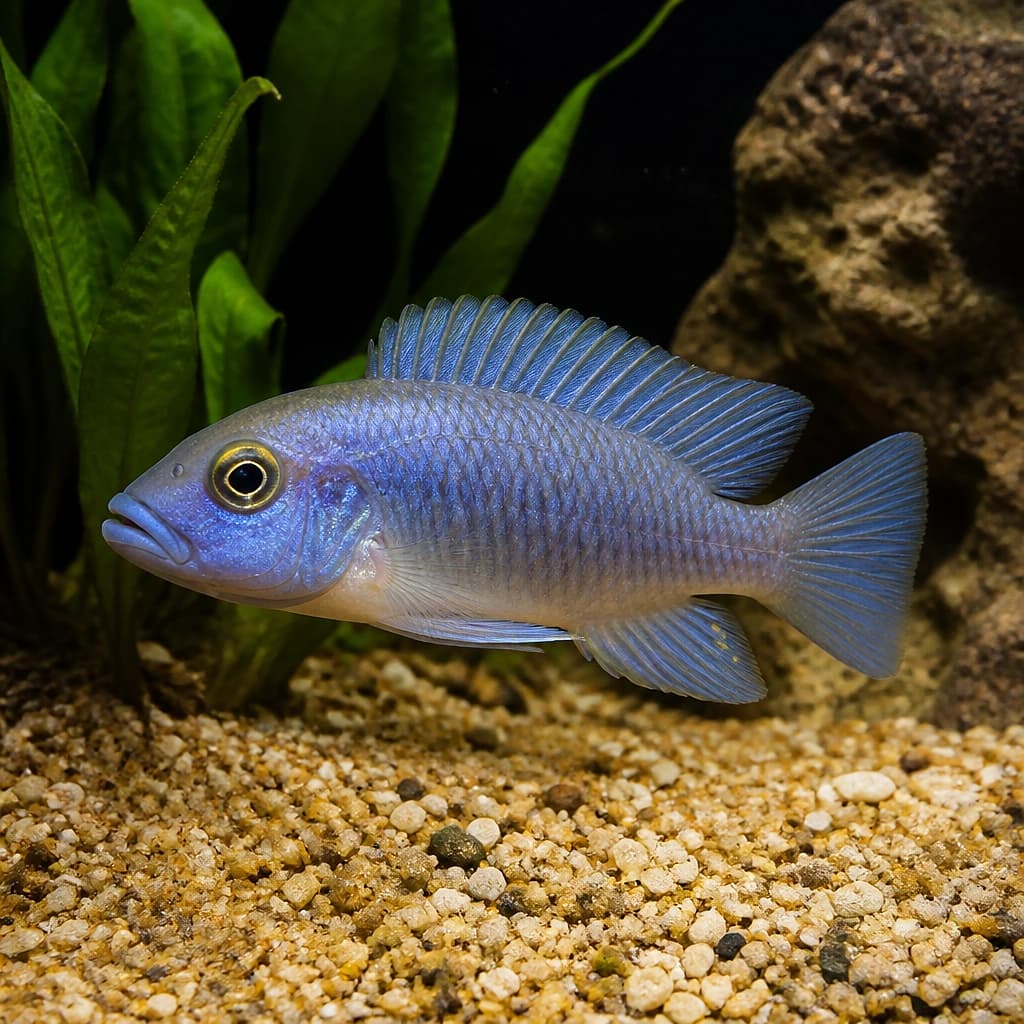
The Blue Ocellated Shell-Dweller is a compact, deep-bodied cichlid with a large head, strong jaws, and a bold eye for such a small fish. Adults usually reach around 5cm, though dominant males may appear bulkier due to heavier body mass and more assertive posture. The body shows a metallic blue to silver-blue sheen over a warm tan or gold base, with iridescent spotting and subtle barring depending on mood, sex, and lighting.
One of the most attractive features is the ocellus-like marking near the gill area and the bright facial patterning that gives the fish its “ocellated” name. Fins are often edged with pale blue or white highlights, and healthy fish display a polished, reflective look under moderate lighting. This is why the species is often chosen by hobbyists looking for a blue ocellated shell-dweller care guide before investing in a dedicated shell bed aquarium.
Sexual dimorphism is present but not dramatic. Males are usually larger, broader-headed, and more territorial. Females are smaller and often spend more time close to shells, especially when breeding. The species is ideal for keepers interested in blue ocellated shell-dweller hard water care, because correct mineral content strongly affects colour, finnage, and overall condition. Our photos show the best colour contrast when fish are kept over pale sand with clean water and a stable blue ocellated shell-dweller water conditions profile.
People sometimes ask about blue ocellated shell-dweller school size, but this is not a schooling fish. It is better thought of as a colony-forming shell dweller with territories. It can work in a blue ocellated shell-dweller for large tank colony layout, but even then each fish still wants its own shell zone.
Compatibility is one of the most misunderstood parts of shell-dweller care. Although small, this species is territorial and fearless. The best blue ocellated shell-dweller tank mates are fish that occupy different levels of the aquarium and do not compete for shells or bottom territory. If you are searching for blue ocellated shell-dweller compatible fish or the best tank mates for blue ocellated shell-dweller, think open-water Tanganyika species rather than random community fish.
In larger aquariums, peaceful midwater Tanganyikans such as Cyprichromis are classic companions. Among cichlids available in the broader hobby, species from different lake zones may be compared, but many are not true matches for a shell-dweller setup. If you enjoy African cichlids and want to explore related options, species such as Yellow Elongatus Cichlid - Chindongo Elongatus, Rubin Red Peacock Cichlid - Aulonocara, and Aulonocara kandeense show very different behaviour and usually need larger, different rock-based setups. They are useful comparison species, not automatic companions.
For aquarists building a themed cichlid fish room, other African species like Kiriza Yellow Cichlid - Tropheus Moorii or Orange I Blunthead Cichlid - Tropheus can be excellent separate display options, but they are not suitable in the same small shell-dweller tank. Likewise, South and Central American fish such as Thorichthys Maculipinnis - Elliot'S Cichlid - and Guianacara Dacrya - South American Cichlid have very different water chemistry needs.
Avoid large aggressive cichlids, boisterous bottom fish, and shell-stealing species. Most generic tropical fish tank mates sold for soft-water community tanks are poor choices. This is not a normal tetra or guppy aquarium, so searches like tetras for sale uk or tetra fish for sale uk are usually pointing you toward unsuitable tank mates. Likewise, home aquarium sharks uk and similar large fish should never be mixed with shell dwellers.
Invertebrate compatibility is mixed. Small shrimp are at risk, and snails may be harassed if they enter the shell zone. If you are asking what tropical fish clean the tank, what tropical fish keep the tank clean, or which tropical fish clean the tank, the answer is that no fish replaces maintenance. Choose tank mates for compatibility, not for cleanup myths.
| Species | Compatible? | Notes |
|---|---|---|
| Cyprichromis spp. | ✅ Yes | Best in larger Tanganyika tanks; uses upper levels |
| Aulonocara Sp Neon Red Calico Peacock | ⚠️ Caution | Different lake style and usually needs more space |
| Large aggressive cichlids | ❌ Avoid | Will outcompete or injure shell dwellers |
If you want a blue ocellated shell-dweller community tank, think carefully about tank size and zones. A blue ocellated shell-dweller for community tank setup works only when the community is built around Tanganyika rules. Use a simple tropical fish tank mates chart approach: bottom shell dwellers, upper-level open-water fish, no shell competitors, and matched water chemistry.
Always quarantine new arrivals for 2-4 weeks in a separate tank before adding them to a Tanganyika display. This reduces disease risk and helps you observe feeding response before territorial interactions begin.
Blue ocellated shell-dweller breeding is one of the reasons this species is so rewarding. It is considered easy once water chemistry, shell availability, and group structure are correct. A proven blue ocellated shell-dweller breeding pair or a trio with one male and multiple females often spawns readily in a mature aquarium.
Use a species tank or quiet Tanganyika setup with sand and multiple shells. Stable alkaline water is essential. If you are asking what do you need for a tropical fish tank for breeding, the answer here is simple: shells, sand, clean water, and low stress. The best results come when what should my tropical fish tank levels be and what should tropical fish tank levels be are kept consistent rather than chasing exact daily numbers.
The female usually selects and cleans a shell, then entices the male to spawn. Eggs are laid deep inside the shell where they are protected from view. Many owners never see the eggs directly and only notice increased guarding or fry appearing later. If you do glimpse tropical fish tank eggs inside a shell, avoid disturbing the site. Not every pale object in a tank is a spawn; some keepers mistake debris or fungus for yellow eggs in tropical fish tank situations.
The female guards the shell while the male patrols the territory. Once fry emerge, feed newly hatched brine shrimp, powdered fry food, or crushed fine pellets. Frequent small feeds and excellent water quality are key. Gentle siphoning around, not into, the shell bed helps keep waste low. This is where knowing how to maintain tropical fish tank conditions really matters.
For best fry survival, place extra empty shells around the nursery area before the spawn. As fry grow, they often adopt nearby shells, which reduces crowding and lowers aggression from older siblings.
Many aquarists compare the Blue Ocellated Shell-Dweller with other small cichlids before buying. The main decision is whether you want a shell-dwelling Tanganyika specialist or a more conventional rock-dwelling or open-water cichlid. If your goal is compact size, visible personality, and breeding in a small footprint, L. ocellatus is hard to beat.
| Feature | Blue Ocellated Shell-Dweller | Yellow Elongatus Cichlid |
|---|---|---|
| Max Size | 5cm | Larger |
| Care Level | Easy | Moderate |
| Temperature | 24-27°C | Warm Malawi range |
| Price | £17.42 | Varies |
| Best For | Shell beds and small Tanganyika tanks | Rocky Malawi setups |
| Feature | Blue Ocellated Shell-Dweller | Rubin Red Peacock |
|---|---|---|
| Temperament | Territorial at the shell | More open-water display cichlid |
| Tank Size | 40L minimum | Much larger tank needed |
| Breeding Style | Shell spawner | Mouthbrooder |
| Best For | Behaviour-focused nano cichlid keepers | Showy larger African cichlid displays |
| Visual Appeal | Subtle metallic blue detail | Bold red and blue colour |
Choose the Blue Ocellated Shell-Dweller if you want a small, intelligent cichlid with visible territory building and easy colony management. Choose larger Malawi species like Yellow Elongatus Cichlid - Chindongo Elongatus or Rubin Red Peacock Cichlid - Aulonocara if your focus is bigger tanks and more dramatic open-water colour. For aquarists who want something unusual but manageable, this remains one of the most convincing blue ocellated shell-dweller for beginners choices in specialist African cichlids.
Healthy shell dwellers are alert, territorial, and responsive to food. They should hold position near shells, display clear eyes, and show clean fins without clamping. Common problems usually trace back to unstable water, incorrect hardness, overfeeding, or stress from unsuitable tank mates. If you are learning tropical fish tank care, this species rewards consistency more than constant adjustment.
Like many cichlids, they can suffer from bacterial infections, external parasites, and digestive stress if kept in poor conditions. General tropical fish tank diseases such as ich, fin damage, or bloat-like symptoms may appear after transport stress or sudden chemistry changes. Watch for flashing, loss of appetite, faded colour, or hiding away from the shell bed.
Good prevention starts with testing. If you are asking how to test tropical fish tank water, use reliable liquid tests for ammonia, nitrite, nitrate, and pH. If you wonder what chemicals do i need for a tropical fish tank or what chemicals do you need for a tropical fish tank, the essentials are dechlorinator and, where needed, mineral support suited to Tanganyika fish. Avoid random additive use. A proper tropical fish tank water treatment routine should be targeted and minimal.
Maintenance matters just as much. Learn how to clean tropical fish tank, how to clean small tropical fish tank, and how to keep tropical fish tank clean by siphoning waste from open sand, rinsing filter media in old tank water, and replacing water weekly. This also answers how to keep tropical fish tank water clear and how to change tropical fish tank water: small, regular changes are safer than large, irregular ones.
Never medicate blindly. Shell dwellers are small fish, and overdosing is easy in compact aquariums. Always calculate treatment volume accurately and remove carbon if the medication instructions require it.
This species is active, bold, and highly territorial around its shell. It spends much of the day hovering just above the sand, inspecting nearby objects, moving substrate, and making short dashes to challenge intruders. That behaviour is exactly why shell dwellers are so addictive to watch. A well-set-up colony feels busy and interactive even in a modest aquarium.
They are not schooling fish, so terms like blue ocellated shell-dweller school size can be misleading. Instead, think in terms of territory spacing and social structure. One male with several females is usually the most stable arrangement. During breeding, females become especially defensive of the shell entrance while males patrol the wider area.
Natural behaviour is best encouraged with open sand, multiple shells, and stable water. In cramped or overstocked tanks, the same confidence can turn into constant harassment. This is why the species works best in a dedicated setup rather than a random mixed aquarium. For keepers who enjoy observation and fish with real attitude, few small cichlids offer this much personality per litre.
When people search tropical fish for sale near me, best place to buy tropical fish uk, best place to buy tropical fish online, or buy aquarium fish online uk, they are usually looking for healthy stock, accurate care advice, and safe delivery rather than just the lowest price. That matters even more with specialist fish like the Blue Ocellated Shell-Dweller. This species needs the right water profile from day one, so we focus on condition, feeding response, and stable acclimation before dispatch.
Our Blue Ocellated Shell-Dwellers are selected for alert behaviour, clean finnage, and strong shell-oriented instincts. Before sale, they are observed for feeding consistency and general condition, then prepared for transport in insulated fish boxes with secure bagging and seasonal heat packs where needed. This makes a real difference for customers wanting to buy live fish online uk, buy live fish online uk cheap, or compare live fish for sale uk options without compromising fish welfare.
We know many buyers compare specialist stores with searches like aquarium fish shop near me for sale, aquarium fish shop near me home delivery, aquarium fish shops near me open now, and even broad terms such as fish for sale pets at home or tropical fish pets at home. The difference with a species like this is in the detail: shell-dweller social grouping, alkaline water readiness, and practical aftercare guidance. If you have been trying to find the best place to buy tropical fish online uk for Tanganyika fish, this is exactly the kind of species where specialist handling matters.
Order your Blue Ocellated Shell-Dweller today with confidence if you want a small cichlid that behaves like a centrepiece fish. It is one of the most rewarding options in our tropical fish for sale UK collection for aquarists who value behaviour, breeding potential, and efficient use of tank space.
If you enjoy shell dwellers and African cichlids, you may also like Aulonocara kandeense for a larger Malawi display, Aulonocara Sp Neon Red Calico Peacock for bright show colour, or Kiriza Yellow Cichlid - Tropheus Moorii if you want an active herbivorous Tanganyika species in a separate setup. For contrast outside African cichlids, Guianacara Dacrya - South American Cichlid offers a very different South American style.
If you are still planning your setup, browse our wider tropical fish for sale online range for compatible stocking ideas, specialist cichlid options, and aquarium essentials for a stable shell-dweller tank.
24–27°C · pH 7.5–9 · 40L

24–27°C · pH 7.5–9 · 40L

24–27°C · pH 7.8–9 · 40L

24–27°C · pH 7.8–9 · 40L

18–26°C · pH 6.5–8 · 30L

23–27°C · pH 7.4–8.4 · 500L

20–27°C · pH 6–7 · 54L

23–27°C · pH 7.4–8.4 · 150L

24–28°C · pH 6.5–7.8 · 300L

20–24°C · pH 7–8 · 45L

24–28°C · pH 6.5–7.5 · 2000L

24–28°C · pH 7.5–8.5 · 200L

24–28°C · pH 5.5–7 · 60L

18–25°C · pH 6–8 · 100L

24–28°C · pH 7–8 · 120L

18–28°C · pH 6.5–8 · 20L

24–27°C · pH 7.5–8.8 · 150L

22–26°C · pH 6–7.5 · 60L

24–28°C · pH 7.5–8.5 · 40L

24–28°C · pH 7.5–8.5 · 500L