Moderate
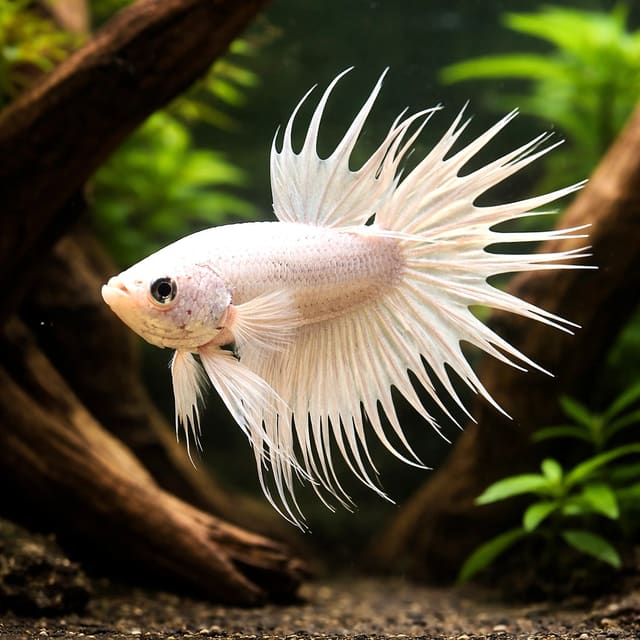
Crowntail White Male Betta (Betta splendens)
22–30°C · pH 6–8 · 41L
£22.99

A striking white double-tail betta with flowing fins and bold personality, ideal for a warm, well-maintained solo aquarium. Moderate care, aggressive. 24-30C, pH 6.0-7.5.
Adult size is the maximum length this species reaches at full maturity (scientific sources). The livestock you receive will be younger and smaller. Product-photo provenance and any image-specific limitations are stated on the listing.
Betta splendens
Confirm your email, then we’ll send an availability message for this exact item if it returns within 180 days.
This request is only for this product—no newsletter or other promotions. A mail-provider retry may very rarely duplicate the same availability message. Unconfirmed addresses are removed after 48 hours. See our privacy policy.
A striking white double-tail betta with flowing fins and bold personality, ideal for a warm, well-maintained solo aquarium. Moderate care, aggressive. 24-30C, pH 6.0-7.5.
Adult size is the maximum length this species reaches at full maturity (scientific sources). The livestock you receive will be younger and smaller. Product-photo provenance and any image-specific limitations are stated on the listing.
For one typical domestic Betta splendens, start with at least 20 litres, a mature filter, thermostatic heater, separate thermometer, gentle flow, a secure lid with surface access, and plants or refuges. Keep one male per aquarium.
Maintain these water conditions for optimal health and vibrant colors
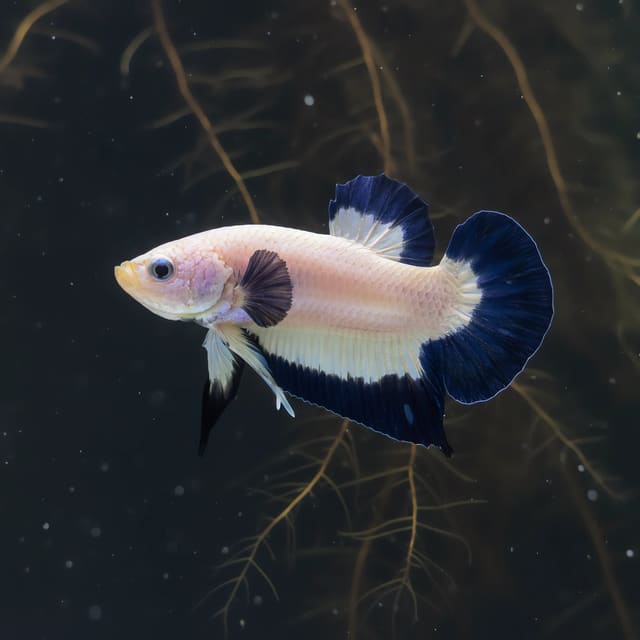
In all-white form the double tail reads almost sculptural: two full caudal lobes and the type's tall dorsal, every fin rendered in the same unbroken white on a 6 cm male. Where coloured bettas catch the eye with contrast, a white double tail does it with shape and movement alone — a minimalist's showpiece, especially against dark aquascaping where the outline does all the work.
This is a moderate-care fish with an aggressive temperament, so build the tank around him rather than adding him to an existing community. The record permits small peaceful snails, peaceful shrimp in some setups with hunting an accepted risk, and very carefully selected peaceful tank mates only in larger, heavily planted aquariums. It rules out other male bettas, fin-nipping species such as tiger barbs, aggressive cichlids, large predators, long-finned fish that provoke displays, and overly active or boisterous company. Keep him in 25 litres or more at 24–30 °C, pH 6.0–7.5, hardness 1–15 dGH. He rides the upper water; white finnage also makes any nip or tear obvious early, which is one quiet advantage of the colourway for an attentive keeper. Breeding condition raises his territorial edge.
Keeping white finnage white is the particular craft of this fish. Pristine water keeps the fins bright; declining water dulls them days before a test kit would have told you, which makes him his own early-warning system. Weekly changes inside the recorded pH 6.0–7.5 and 1–15 dGH bands, a heater pinned in the 24–30 °C range and measured carnivore feeding are the whole formula. His 25-litre minimum leaves room for the gentle, surface-calm filtration double tails need. Settle him with subdued lighting for the first day or two; white fish show arrival stress visibly, and giving him a quiet start gets the finnage carried high noticeably sooner. Expect his territorial side to surface mainly around breeding condition.
White double tails surface in our stock irregularly; when listed, the fish shown as available is on-site and ready for despatch by licensed live-animal courier under our live arrival guarantee, UK-wide.
No reviews for this item yet. Bought one? Honest reviews only, good or bad.
What customers say about ordering from us
I have a small group of long finned mountain minnows. So was delighted to be able to order ten of this variety to increase the genetics in my tank . The ones I recieved are healthy but it’s to early to give a verdict on wether they are of a long finned type since they are small currently.
Gordon Walker · 23 Sept 2026
100% success travel and "installation". Pleased with quality of purchase. The Siamese fighter a bit "shy" so have not yet seen him at his best yet but looking good. Happy customer. GG
George E Garratt · 21 Sept 2026
Reviews of our shop, collected by Judge.me, an independent third-party review collector. Newest first.