Moderate
Whiptail Catfish (Dasyloricaria filamentosa)
23–28°C · pH 6–7.5 · 150L
£7.59

A graceful, peaceful whiptail catfish with a slender body and unique royal patterning, ideal for a well-maintained South American community tank. Moderate care, peaceful. 22-28C, pH 6.0-7.5.
Adult size is the maximum length this species reaches at full maturity (scientific sources). The livestock you receive will be younger and smaller. Product-photo provenance and any image-specific limitations are stated on the listing.
Loricaria sp.
Confirm your email, then we’ll send an availability message for this exact item if it returns within 180 days.
This request is only for this product—no newsletter or other promotions. A mail-provider retry may very rarely duplicate the same availability message. Unconfirmed addresses are removed after 48 hours. See our privacy policy.
A graceful, peaceful whiptail catfish with a slender body and unique royal patterning, ideal for a well-maintained South American community tank. Moderate care, peaceful. 22-28C, pH 6.0-7.5.
Adult size is the maximum length this species reaches at full maturity (scientific sources). The livestock you receive will be younger and smaller. Product-photo provenance and any image-specific limitations are stated on the listing.
Maintain these water conditions for optimal health and vibrant colors
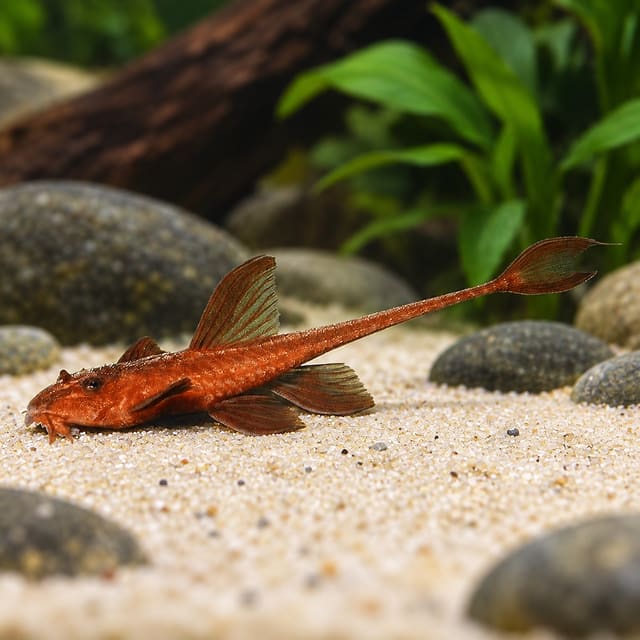
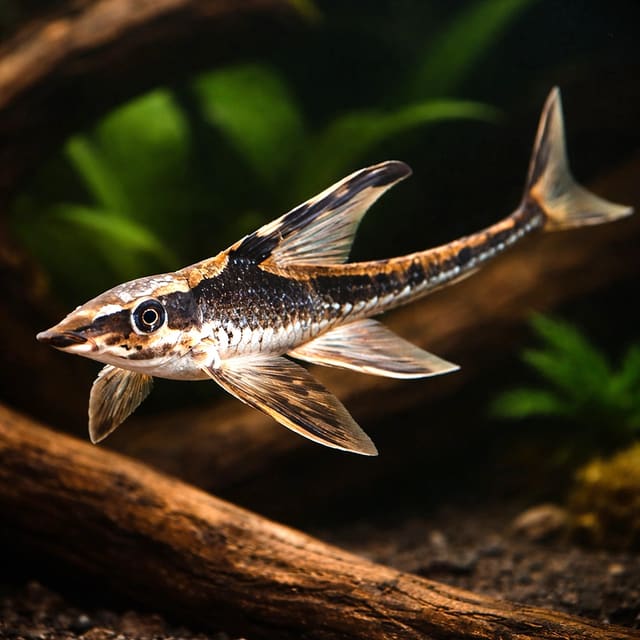
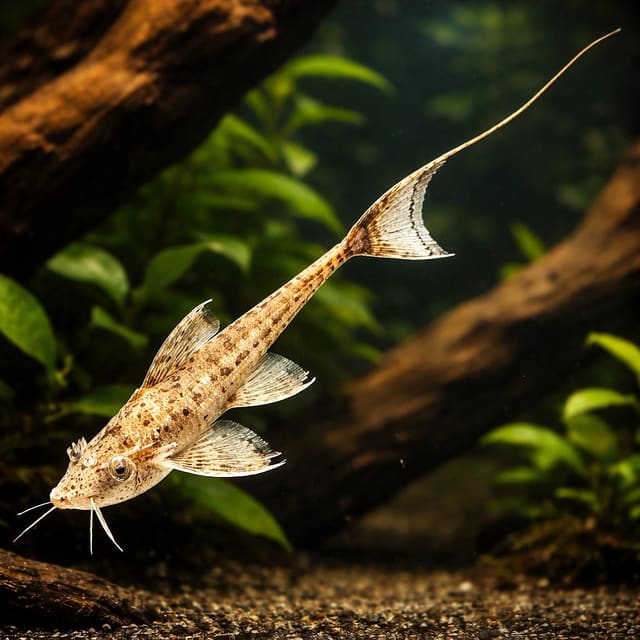
The Loricaria royal sp. is a graceful whiptail catfish from South America that brings elegant form and peaceful behaviour to planted community aquariums. This slender loricariid features unique royal patterning along its elongated body, making it a visually striking addition for aquarists seeking something beyond standard algae-eating catfish. Available for sale UK through Tropical Fish Co, this moderate-care species reaches 8-10cm and thrives in well-maintained tanks with soft water and gentle flow. As a benthic micro-predator rather than pure herbivore, it requires a more protein-focused diet than many whiptails, adding interest to its husbandry requirements.
This Loricaria displays the classic whiptail body plan: extremely elongated and laterally compressed with a flattened ventral surface adapted for clinging to submerged surfaces. The head is broad and armoured with bony plates, whilst the body tapers dramatically to a filamentous caudal fin that can equal the body length. The "royal" designation refers to the distinctive patterning of dark stripes or vermiculations against a lighter base colour—typically tan, brown, or grey tones. Males often develop more pronounced odontodes (small tooth-like projections) on the pectoral fin spines and head as they mature, particularly during breeding condition. The eyes are positioned dorsally, allowing the fish to monitor for predators whilst maintaining bottom contact.
Whilst the exact collection locality for this particular Loricaria sp. is undocumented, the genus inhabits clear, flowing rivers and streams throughout the Amazon and Orinoco basins. These environments typically feature sandy or fine gravel substrates with scattered driftwood, submerged branches, and leaf litter. Water is soft, slightly acidic, and well-oxygenated with gentle to moderate current. Dense riparian vegetation overhangs the water, creating dappled lighting conditions and contributing organic matter that supports biofilm growth and micro-invertebrate populations. During seasonal variations, water levels fluctuate significantly, concentrating fish populations in deeper channels during dry periods whilst flood seasons provide access to nutrient-rich inundated forests.
Provide a minimum 100-litre aquarium with fine sand substrate to protect the delicate barbels and ventral plates. Create a naturalistic biotope with multiple pieces of smooth driftwood arranged to form resting surfaces at various angles—Loricaria spend much of their time clinging to vertical or inclined surfaces. Add dried Indian almond leaves or similar botanical material to promote biofilm growth and release beneficial tannins. Moderate lighting with floating plants to diffuse brightness suits this naturally shy species. Filtration should provide gentle flow without creating strong currents that stress the fish; a spray bar can distribute flow evenly. Live plants such as Amazon swords, Anubias, and Java moss complement the setup whilst providing additional grazing surfaces. Ensure stable water parameters, as fluctuations can trigger stress responses in this sensitive catfish.
Maintain stable temperatures between 22-28°C, with 24-26°C being ideal for routine keeping. This species requires soft, slightly acidic water with pH 6.0-7.5 and low to moderate hardness (2-10 dGH). Water quality must be excellent: zero ammonia and nitrite, with nitrates maintained below 20ppm through weekly 25-30% water changes. Loricaria are sensitive to dissolved metabolites and declining water quality, so consistent maintenance is non-negotiable. Good oxygenation through surface agitation or gentle aeration supports respiratory health, though avoid creating turbulent flow. Blackwater conditions created through botanical additions (almond leaves, alder cones) are beneficial but not essential, though they do replicate natural habitat chemistry.
Unlike many loricariids, this Loricaria sp. is primarily a benthic micro-predator rather than strict herbivore. The diet should centre on high-quality sinking carnivore pellets or wafers, supplemented 4-5 times weekly with frozen or live meaty foods: bloodworms, blackworms, daphnia, brine shrimp, and small insect larvae. Whilst they will graze biofilm and aufwuchs from surfaces, this alone is insufficient nutrition. Occasional vegetable matter such as blanched courgette provides dietary variety and roughage. Feed in the evening when these crepuscular fish become active. Target feeding with sinking foods near their resting areas ensures they receive adequate nutrition without competition from more aggressive feeders. Avoid overfeeding, as excess decomposing food rapidly degrades water quality in their sensitive environment.
Royal Loricaria are predominantly nocturnal or crepuscular, becoming most active during dawn, dusk, and night hours. During bright periods they typically rest motionless on wood or vertical surfaces, relying on camouflage to avoid detection. The flattened body allows them to maintain position in gentle current with minimal energy expenditure. Locomotion is characteristically jerky when moving between surfaces—a quick dash followed by firm reattachment. These catfish are peaceful and non-territorial, rarely interacting with conspecifics except during breeding. They occasionally perform amusing "headstands" whilst feeding on vertical surfaces, and may venture into the water column briefly when particularly hungry or during courtship displays.
This peaceful whiptail coexists harmoniously with small, non-aggressive fish that occupy mid-water zones. Excellent companions include small tetras like neons or ember tetras, peaceful rasboras such as harlequins, and dwarf cichlids with non-territorial dispositions (Apistogramma species). Other peaceful bottom dwellers like smaller Corydoras species can share the aquarium provided there's adequate floor space. Avoid large aggressive cichlids that may harass or injure the delicate whiptail, and exclude notorious fin-nippers that might damage the extended filamentous tail. Highly territorial bottom dwellers such as large plecos should also be avoided, as should very boisterous species that outcompete the shy Loricaria during feeding time.
Captive breeding of Loricaria species is uncommon though not impossible. Sexual dimorphism becomes apparent in mature specimens: males develop more prominent odontodes on pectoral fins and broader heads, whilst females appear more robust when gravid. Spawning is typically triggered by simulated seasonal changes—cooler water changes following a period of higher temperatures and increased feeding. Eggs are usually deposited on hard surfaces or within sheltered cavities, with males assuming egg-guarding duties. The clutch consists of relatively large amber-coloured eggs that hatch after 6-8 days depending on temperature. Fry are challenging to raise, requiring microscopic foods initially before accepting newly hatched brine shrimp. Water quality during rearing must be impeccable, with frequent small water changes and gentle filtration.
Tropical Fish Co supplies healthy, quarantined Loricaria royal sp. that have been carefully acclimated to UK water conditions and are feeding readily on prepared foods. Each specimen is hand-selected for excellent body condition, intact finnage, and active behaviour, ensuring you receive robust catfish ready to thrive in your aquarium. Our knowledgeable team understands the specific requirements of whiptail species and can provide detailed guidance on setup, diet, and compatible tankmates. With specialist packaging and tracked UK delivery, your new catfish arrive safely in peak condition. We're committed to sustainable sourcing and responsible fishkeeping practices, working only with ethical suppliers who prioritize fish welfare and environmental conservation.
No reviews for this item yet. Bought one? Honest reviews only, good or bad.
What customers say about ordering from us
I have a small group of long finned mountain minnows. So was delighted to be able to order ten of this variety to increase the genetics in my tank . The ones I recieved are healthy but it’s to early to give a verdict on wether they are of a long finned type since they are small currently.
Gordon Walker · 23 Sept 2026
100% success travel and "installation". Pleased with quality of purchase. The Siamese fighter a bit "shy" so have not yet seen him at his best yet but looking good. Happy customer. GG
George E Garratt · 21 Sept 2026
Reviews of our shop, collected by Judge.me, an independent third-party review collector. Newest first.