Tiger Teddy Livebearer (Neoheterandria elegans) – Tiny Planted-Tank Livebearer
24–28°C · pH 7–8 · 12L
£10.99

Rare Mexican blue-eye livebearer for mature planted aquariums with clean, oxygen-rich water, peaceful tank mates and a secure lid.
Priapella intermedia
Shoaling fish: kept in a group they feel safer, stay calmer and show their best colour.
Confirm your email, then we’ll send an availability message for this exact item if it returns within 180 days.
This request is only for this product—no newsletter or other promotions. A mail-provider retry may very rarely duplicate the same availability message. Unconfirmed addresses are removed after 48 hours. See our privacy policy.
Rare Mexican blue-eye livebearer for mature planted aquariums with clean, oxygen-rich water, peaceful tank mates and a secure lid.
Maintain these water conditions for optimal health and vibrant colors
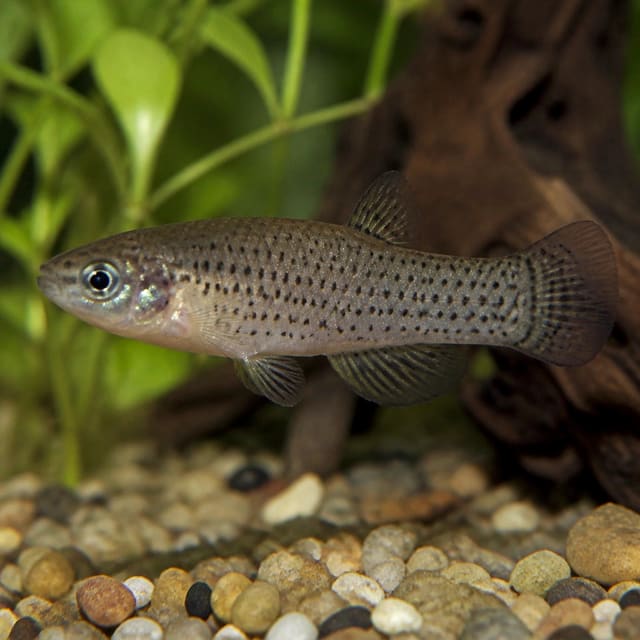
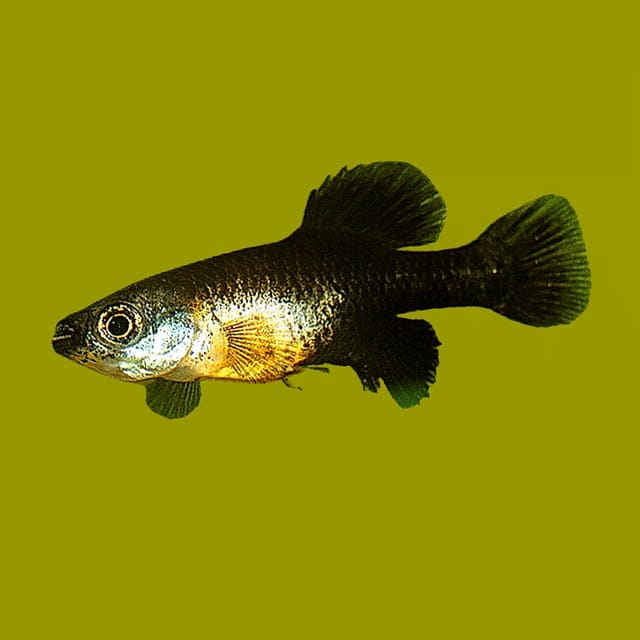
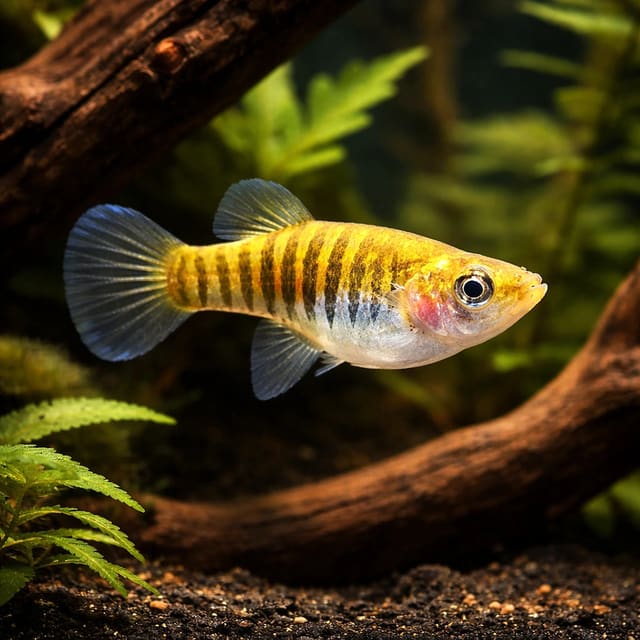
Oaxacan Blue-Eye (Priapella intermedia), also known as the Isthmian Priapella, is a small Mexican livebearer with bright blue eyes, a pale silver-gold body and constant surface-to-midwater activity. It is best treated as a specialist peaceful livebearer rather than a generic community fish: hardy once settled, but much better in clean, mature water with cover, oxygen and a secure lid.
SKU 6081 is the 4-5 cm form of Priapella intermedia, with the original reference photo added to the gallery so the listing, image, care facts and stock record all stay tied to the same fish.
| Product | Oaxacan Blue-Eye |
|---|---|
| Scientific name | Priapella intermedia |
| Also known as | Isthmian Priapella, Mexican blue-eye livebearer |
| Supplier size | 4-5 cm |
| Adult size | Commonly around 5 cm, with larger females/source records up to about 7 cm |
| Care level | Moderate: stable mature water, cover and oxygen matter |
| Temperament | Peaceful, active, social livebearer |
| Minimum aquarium | 60 litres for a small group; a longer 80 litre or larger aquarium is easier |
| Temperature | 24-26 C from our stock records; FishBase lists tropical warm water around 25-28 C |
| pH | 7.0-8.0 from FishBase source data |
| Hardness | 5-20 dGH from our stock records; moderate water is suitable |
| Diet | Small insect and invertebrate foods, quality micro pellets, fine flakes and occasional vegetable/algae foods |
| Tank region | Upper and middle water |
Priapella intermedia is endemic to Mexico. FishBase describes it in loose aggregations around eddying currents and rapids, with fish even leaping from the water to catch flying insects. That behaviour is a useful aquarium clue: this is an active surface-aware livebearer that should not be kept in a bare, stagnant tank. A covered aquarium is important, because startled livebearers and surface-feeding fish can jump.
In the aquarium the Oaxacan Blue-Eye is peaceful, alert and social. Keep it in a small group rather than as a single specimen so it can show natural confidence. Males may display, but serious aggression is not the normal issue; stress is more likely to come from poor water quality, bullying tank mates or sudden parameter changes.
Use a mature, well-filtered aquarium with steady temperature, good oxygenation and a mixture of open swimming space and plant cover. Fine-leaved plants, floating plants, roots and smooth stones all work well. Gentle to moderate current is useful, but avoid blasting the whole tank so the fish cannot rest. The wild-current notes suggest they appreciate movement and oxygen, while the young using bank crevices point toward cover and broken sight lines.
A 60 litre aquarium is the starting point for a small group, but a longer 80 litre or larger layout is more forgiving. Keep the lid secure. Do not keep this species in unstable new setups, tiny desktop tanks or aquariums with aggressive fish that dominate the surface.
Offer small foods because the mouth and body size are modest. A fine quality flake or micro pellet can be the staple, supported with frozen daphnia, cyclops, brine shrimp, mosquito larvae and other suitably small invertebrate foods. Because FishBase notes surface insect feeding, floating or slowly sinking foods can encourage natural feeding behaviour. Use small portions and remove leftovers so water quality stays high.
Choose calm fish that enjoy similar warm, neutral-to-alkaline water. Suitable companions can include small peaceful livebearers, small rainbowfish, calm rasboras or tetras that tolerate similar conditions, and peaceful bottom dwellers kept in compatible water. Avoid fin nippers, large predators, aggressive cichlids and very boisterous fish. This is not a fish for rough mixed tanks where surface-feeding species are chased all day.
Oaxacan Blue-Eyes are livebearers. FishBase records a gestation period of about 28 days and relatively small broods of 5-20 young. Dense planting, moss and calmer edges help fry survival if breeding happens in the main aquarium. If you want to rear young deliberately, use a dedicated rearing setup with stable water and very small foods. If you do not want fry, plan stocking carefully before mixing sexes.
Choose this listing if you want a less common blue-eyed Mexican livebearer for a planted, mature community aquarium. It is a better fit for keepers who enjoy small active fish and are willing to maintain stable water than for someone wanting a rugged impulse-buy fish for a brand new tank. When kept well, its appeal is subtle but constant: blue eyes, active group movement and natural surface-feeding behaviour.
Your order is packed for live-fish courier travel with insulated packaging chosen for the weather and route. The Live Arrival Guarantee applies when the delivery and acclimation instructions are followed. Use WELCOME10 at checkout if this is your first order and the code is currently available.
When the fish arrive, dim the aquarium lights, float the bag to equalise temperature, then acclimate slowly into a mature, covered aquarium. Do not pour transport water into the tank. Give the group a quiet first day before feeding heavily.
Care and identity were checked against our stock records and source photo for SKU 6081 /, FishBase for Priapella intermedia, secondary aquarium context for Isthmian Priapella husbandry.
No reviews for this item yet. Bought one? Honest reviews only, good or bad.
What customers say about ordering from us
I have a small group of long finned mountain minnows. So was delighted to be able to order ten of this variety to increase the genetics in my tank . The ones I recieved are healthy but it’s to early to give a verdict on wether they are of a long finned type since they are small currently.
Gordon Walker · 23 Sept 2026
100% success travel and "installation". Pleased with quality of purchase. The Siamese fighter a bit "shy" so have not yet seen him at his best yet but looking good. Happy customer. GG
George E Garratt · 21 Sept 2026
Reviews of our shop, collected by Judge.me, an independent third-party review collector. Newest first.