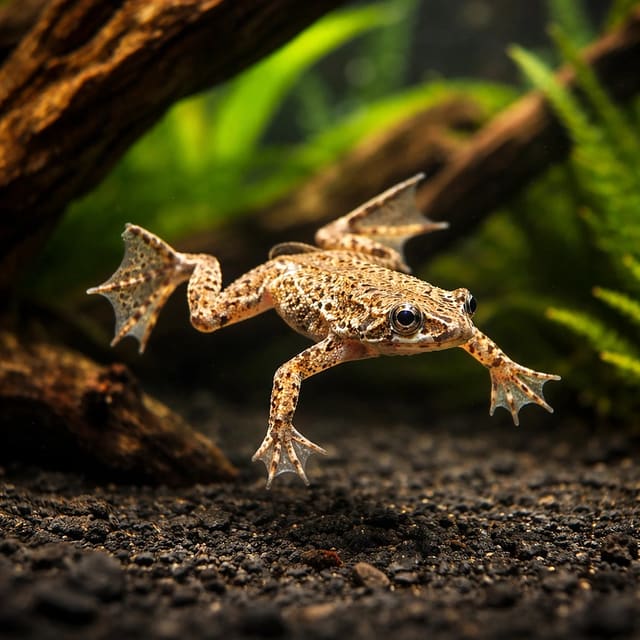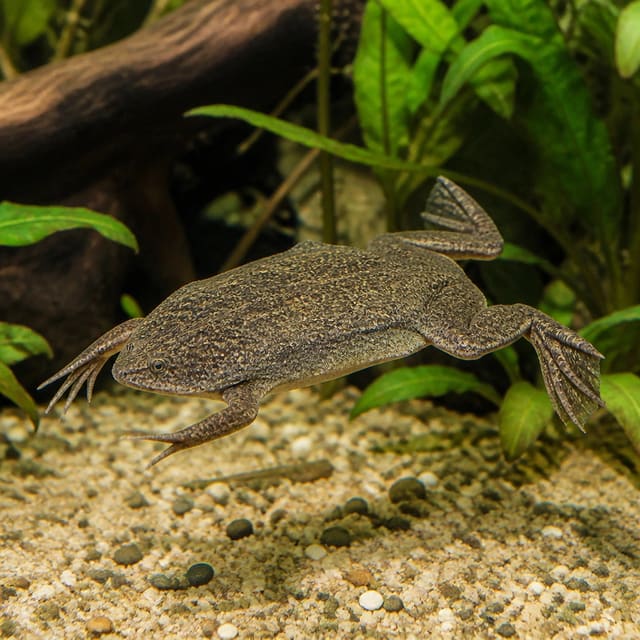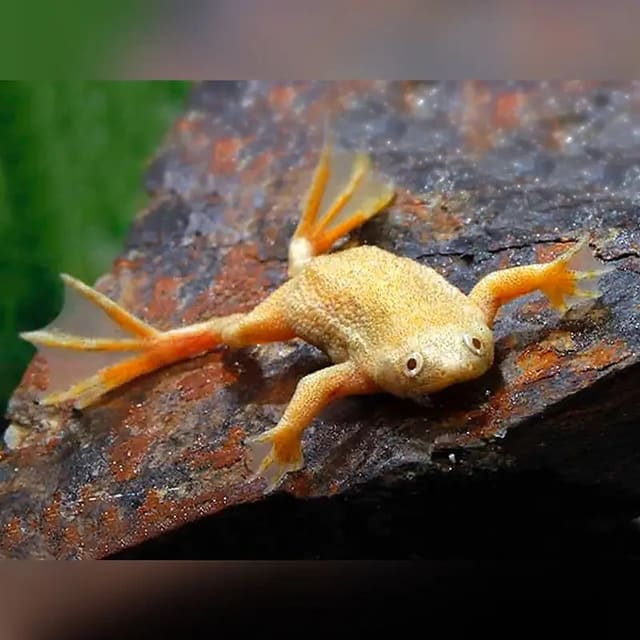
Gold African Dwarf Frog (Hymenochirus sp. "Gold")
22–25°C · pH 7–8
£5.99

A striking, cool-water Chinese newt with rugged warty skin and a calm nature, ideal for a carefully maintained species tank. Moderate care, peaceful. 16-22C, pH 6.5-7.5.
Adult size is the maximum length this species reaches at full maturity (scientific sources). The livestock you receive will be younger and smaller. Product-photo provenance and any image-specific limitations are stated on the listing.
Paramesotriton chinensis
Confirm your email, then we’ll send an availability message for this exact item if it returns within 180 days.
This request is only for this product—no newsletter or other promotions. A mail-provider retry may very rarely duplicate the same availability message. Unconfirmed addresses are removed after 48 hours. See our privacy policy.
A striking, cool-water Chinese newt with rugged warty skin and a calm nature, ideal for a carefully maintained species tank. Moderate care, peaceful. 16-22C, pH 6.5-7.5.
Adult size is the maximum length this species reaches at full maturity (scientific sources). The livestock you receive will be younger and smaller. Product-photo provenance and any image-specific limitations are stated on the listing.
Maintain these water conditions for optimal health and vibrant colors
Paramesotriton chinensis, commonly known as the Chinese Warty Newt, is a striking cool-water amphibian from Central China that brings unique character to specialized aquatic setups. Available for sale UK through Tropical Fish Co as adults, this impressive salamander reaches 18cm and displays characteristic warty skin texture providing distinctive appearance. The moderate care level and peaceful temperament make it suitable for aquarists with cool-water aquarium experience seeking unusual amphibian species. The preference for cooler temperatures (16-22°C) and specific care requirements mean this species demands dedicated specialist accommodation rather than standard tropical community housing.
The Chinese Warty Newt displays robust salamander morphology reaching 18cm total length. The common name derives from distinctive warty or granular skin texture covering much of the body—raised tubercles creating rough surface unlike smooth-skinned amphibians. Coloration typically shows dark brown to black dorsal surfaces with bright orange or red ventral colouration—aposematic warning colours advertising the species' toxic skin secretions to potential predators. The tail is laterally compressed for swimming propulsion. Four limbs are well-developed for both aquatic and terrestrial locomotion. Adult males may develop more prominent tail crests during breeding season. Small lidded eyes are positioned dorsally. The skin contains granular glands producing toxic secretions as defense mechanism—handlers must wash hands thoroughly after any contact.
Paramesotriton chinensis inhabits cool mountain streams, ponds, and associated wetlands throughout Central China, including Chongqing, Hunan, Anhui, Zhejiang, Fujian, Guangdong, and Guangxi provinces. These subtropical to temperate environments feature cool clean water year-round, with temperatures remaining substantially below tropical levels. Natural habitats include clear flowing streams with rocky substrates, still ponds with abundant aquatic vegetation, and surrounding moist terrestrial areas. The species is primarily aquatic though may venture onto land during cooler wet periods. Water chemistry tends toward slightly acidic to neutral with moderate hardness. Seasonal temperature variations are significant, with cool winters and warm but not hot summers. These newts are opportunistic predators feeding on aquatic invertebrates, small fish, and various prey items.
Provide minimum 57-litre aquarium designed as cool-water aquatic setup. Substrate can be fine sand or smooth gravel allowing natural foraging behaviour. Furnish with smooth rocks, caves, slate arrangements, and driftwood creating hiding places and climbing structures. Dense aquatic planting provides cover and improves water quality—use cold-tolerant species such as Elodea, Java fern, and Anubias. Filtration should be efficient whilst avoiding excessive current—these newts prefer calm to gentle flow. Lighting should be subdued to moderate; bright lighting stresses these naturally shade-dwelling amphibians. Cool temperature maintenance is absolutely critical—avoid heating, and in warm climates consider chiller units to prevent overheating. A secure tight-fitting lid is essential as newts are accomplished escape artists capable of climbing vertical surfaces and squeezing through surprisingly small gaps. Consider incorporating a land area if space permits, though adults are primarily aquatic.
Maintain cool temperatures between 16-22°C—substantially cooler than tropical aquariums. This is the single most critical parameter; failure to provide cool conditions leads to stress, disease susceptibility, and death. Water should be slightly acidic to neutral with pH 6.5-7.5 and low to moderate hardness. Ammonia and nitrite must remain at absolute zero, with nitrates kept below 20ppm through regular 25-30% weekly water changes. These sensitive amphibians are particularly vulnerable to declining water quality—maintain excellent filtration and consistent maintenance. Dissolved oxygen should be adequate through gentle surface agitation. Absolutely critical: avoid all exposure to chlorine, chloramine, and heavy metals—use dechlorinator treating both chlorine and chloramine, and avoid copper-based medications which are lethal to amphibians. The cooler water naturally holds more dissolved oxygen than warm water, suiting amphibian respiratory requirements.
Paramesotriton chinensis is a carnivorous predator requiring varied meaty diet. Adult newts accept earthworms, blackworms, bloodworms (frozen or live), small aquatic invertebrates, and appropriately sized frozen/thawed meaty foods. Juveniles may require smaller prey items such as daphnia, baby brine shrimp, and small bloodworms. Feed 3-4 times weekly in moderate portions appropriate for body size. Use feeding tongs to offer food directly, ensuring each newt receives adequate nutrition. Remove uneaten food after 30 minutes to prevent water quality degradation. These deliberate feeders may not compete successfully with fast aggressive tankmates, hence species-only setup is strongly recommended. Variety in diet ensures nutritional completeness and maintains feeding response. Never feed mammalian meats which cause digestive issues.
Chinese Warty Newts are peaceful toward conspecifics and potential tankmates, displaying no territorial aggression. They are primarily aquatic adults spending most time underwater, occasionally surfacing to breathe atmospheric air—all amphibians retain lung breathing throughout life. Activity patterns are crepuscular with increased movement during dawn and dusk periods, though they may forage at any time if hungry. Locomotion underwater involves walking along substrate using all four limbs combined with lateral tail undulations for swimming. Movement is deliberate rather than rapid. During rest periods they remain motionless in hiding places or amongst vegetation. Breeding behaviour involves courtship displays where males attempt to guide females to spermatophore deposits. Handle minimally as stress from handling causes skin secretions and compromises mucus barrier protecting against infection.
Due to specialized cool-water requirements, specific dietary needs, and vulnerability to competition, Chinese Warty Newts are best kept in species-only setups. The temperature requirement (16-22°C) excludes virtually all tropical fish, whilst their slow deliberate feeding style means they lose competition with faster feeders. Additionally, the toxic skin secretions pose potential risk to fish attempting to nip or harass newts. If tankmates are considered (not recommended), only select cool-water species of appropriate size that won't outcompete during feeding: perhaps white cloud mountain minnows or similar temperate species in very large aquariums. Absolutely exclude all fish that might nip newts, small crustaceans that might be eaten, warm-water amphibians requiring different temperatures, and aggressive or fast-feeding species. Species-only accommodation allows focused attention on meeting exacting care requirements.
Captive breeding of Paramesotriton chinensis is possible and typically seasonal, encouraged by cool winter period (12-15°C for 6-8 weeks) followed by gradual warming and increased feeding. This temperature cycling mimics natural seasonal patterns triggering reproductive behaviour. Males develop breeding characteristics including swollen cloacal region and intensified colouration. Courtship involves male performing displays and depositing spermatophore (sperm packet) which female picks up with her cloaca. Females lay eggs individually on aquatic plants, broad leaves, or other surfaces—each egg attached separately rather than in masses. Eggs hatch within 2-3 weeks into aquatic larvae (tadpoles) with external gills. Larvae require separate rearing with microscopic live foods initially, graduating to larger prey as they develop. Metamorphosis from aquatic larva to terrestrial juvenile occurs over several months. Juveniles require terrestrial setup before returning to primarily aquatic adult lifestyle.
Tropical Fish Co supplies healthy, well-acclimated Paramesotriton chinensis adults that have been carefully maintained in appropriate cool-water conditions and are feeding confidently. Each Chinese Warty Newt is hand-selected for good body condition, intact skin, and normal behaviour, ensuring you receive robust amphibians ready to thrive in specialist cool-water setups. Our experienced staff understand the critical temperature requirements and can provide detailed guidance on cool-water aquarium setup, chiller equipment if needed, appropriate diet, and realistic assessment of compatibility (species-only strongly recommended). With specialist packaging designed for delicate amphibians and tracked UK delivery with appropriate temperature control, your new newts arrive safely in excellent condition. We're committed to sustainable sourcing and work only with responsible suppliers who prioritize amphibian welfare and support conservation of increasingly threatened Chinese mountain stream ecosystems.
No reviews for this item yet. Bought one? Honest reviews only, good or bad.
What customers say about ordering from us
I have a small group of long finned mountain minnows. So was delighted to be able to order ten of this variety to increase the genetics in my tank . The ones I recieved are healthy but it’s to early to give a verdict on wether they are of a long finned type since they are small currently.
Gordon Walker · 23 Sept 2026
100% success travel and "installation". Pleased with quality of purchase. The Siamese fighter a bit "shy" so have not yet seen him at his best yet but looking good. Happy customer. GG
George E Garratt · 21 Sept 2026
Reviews of our shop, collected by Judge.me, an independent third-party review collector. Newest first.