Moderate
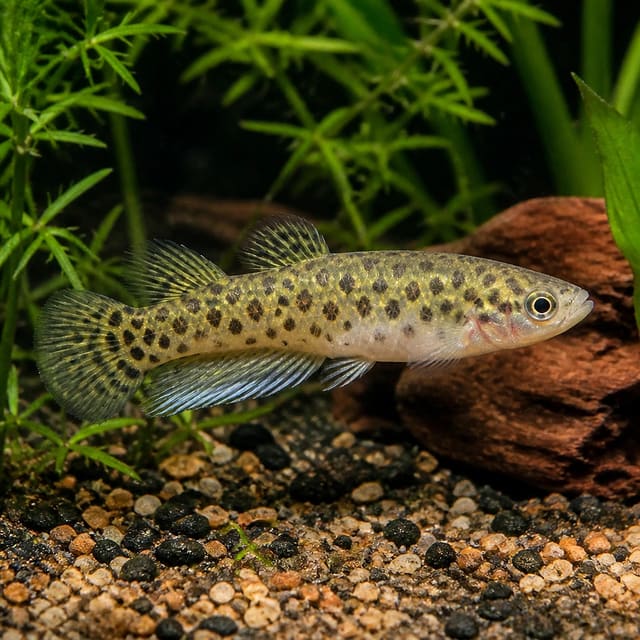
Twoline Skiffia (Skiffia bilineata; Neotoca bilineata)
18–24°C · pH 7–7.5 · 80L
£36.99

A tiny, hardy, and peaceful livebearer ideal for planted nano aquariums. Easy care, peaceful. 18-28C, pH 6.5-8.0.
Adult size is the maximum length this species reaches at full maturity (scientific sources). The livestock you receive will be younger and smaller. Product-photo provenance and any image-specific limitations are stated on the listing.
Heterandria formosa
Shoaling fish: kept in a group they feel safer, stay calmer and show their best colour.
Confirm your email, then we’ll send an availability message for this exact item if it returns within 180 days.
This request is only for this product—no newsletter or other promotions. A mail-provider retry may very rarely duplicate the same availability message. Unconfirmed addresses are removed after 48 hours. See our privacy policy.
A tiny, hardy, and peaceful livebearer ideal for planted nano aquariums. Easy care, peaceful. 18-28C, pH 6.5-8.0.
Adult size is the maximum length this species reaches at full maturity (scientific sources). The livestock you receive will be younger and smaller. Product-photo provenance and any image-specific limitations are stated on the listing.
Maintain these water conditions for optimal health and vibrant colors
The Mosquito Fish (Heterandria formosa), also known as the least killifish or dwarf topminnow, is a tiny, hardy, and peaceful livebearer ideal for planted nano aquariums. Native to the southeastern United States, especially slow-moving freshwater habitats in Florida and nearby coastal plain regions, this species reaches just 2.5 cm in length and is one of the smallest livebearing fish in the world. Despite the common name "mosquito fish," this species is not the same as Gambusia affinis, the true mosquito fish; H. formosa is far more peaceful and better suited to community aquariums. This charming nano species displays subtle olive-brown coloration with a distinctive dark lateral stripe and thrives in heavily planted setups with gentle conditions. Available for sale UK from specialist suppliers, this species is perfect for nano enthusiasts and aquarists seeking a unique, diminutive livebearer.
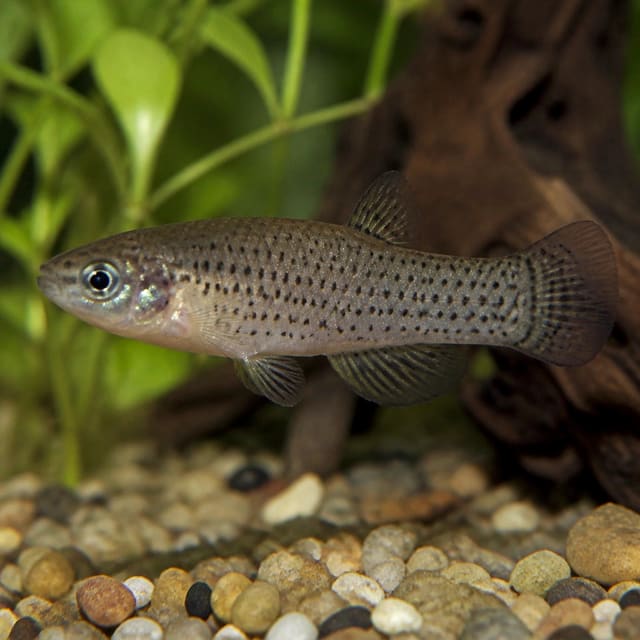
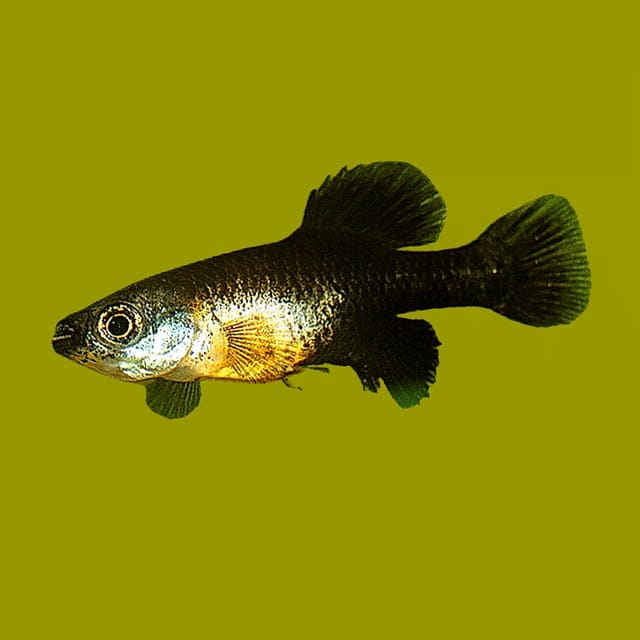
Heterandria formosa exhibits a slender, streamlined body shape with a slightly upturned mouth adapted for surface feeding. The body coloration is subtle: olive-brown to pale tan on the dorsal surface, fading to silvery-white on the ventral surface, with a distinctive dark horizontal stripe or series of blotches running along the lateral line from the operculum to the base of the tail. The fins are generally clear to faintly amber-tinted. Females are larger (up to 2.5 cm) and fuller-bodied, especially when gravid, while males are smaller (1.5-2 cm) and more slender, with a modified anal fin (gonopodium) used for internal fertilization. Both sexes are delicate and refined in appearance. Coloration intensifies slightly in well-fed, unstressed fish, though this species is never brightly colored. The small size and subtle beauty reward close observation.
Heterandria formosa is native to the southeastern United States, especially slow-moving freshwater habitats in Florida and nearby coastal plain regions including Georgia, South Carolina, and Louisiana. They inhabit marshes, swamps, ditches, slow-moving streams, and heavily vegetated ponds with dense aquatic and emergent vegetation. These fish are found among submerged plants, floating vegetation, and algae-covered surfaces where they forage for microinvertebrates, algae, and organic detritus. The substrate is usually muddy or silty, and water chemistry ranges from slightly acidic to slightly alkaline (pH 6.5-8.0) with soft to moderately hard water. Temperatures can vary seasonally from cool (18°C) to warm (28°C). Understanding these natural conditions—calm, heavily vegetated waters with gentle flow—is essential for successful captive husbandry.
A minimum aquarium capacity of 38 liters is suitable for a small group of 6-10 Mosquito Fish, though smaller nano tanks (20-30 liters) can house smaller groups if heavily planted and well-maintained. The tank should be densely planted with fine-leaved and floating species such as Ceratophyllum, Cabomba, Java moss, Salvinia, Pistia, and Najas to provide cover, foraging surfaces, and fry protection. A dark substrate (sand or very fine gravel) enhances their subtle coloration and reduces stress. Include driftwood and smooth rocks to create additional hiding spots. Filtration should be very gentle—sponge filters or air-driven box filters are ideal to avoid strong currents that stress these tiny, delicate fish. Lighting can be moderate; these fish appreciate shaded areas provided by floating plants. A tight-fitting lid is recommended, as these fish can jump when startled.
Mosquito Fish are highly adaptable and tolerant of a wide range of water parameters. Maintain temperatures between 18-28°C; they tolerate cooler temperatures than most tropical species and can even be kept in unheated aquariums in temperate climates (18-22°C). The pH can range from 6.5-8.0, with neutral (pH 7.0-7.5) being ideal. Water hardness can vary from soft (5 dGH) to moderately hard (15 dGH). Stability is more important than exact values—avoid sudden fluctuations. Maintain zero ammonia and nitrite at all times, and keep nitrates below 20 ppm through regular weekly water changes (20-30%). Excellent water quality is essential for these tiny fish, as they are sensitive to poor conditions despite their hardiness.
Heterandria formosa is an omnivore with a diet centered on microinvertebrates and algae. Offer high-quality micro pellets or finely crushed flakes as the staple, supplemented daily with frozen or live foods such as daphnia, baby brine shrimp, microworms, grindal worms, and other small invertebrates. These fish also graze continuously on biofilm, soft algae, and microorganisms on plant surfaces and décor, so a well-established, mature aquarium with algae growth is beneficial. Feed small portions 2-3 times daily, as their tiny stomachs require frequent small meals. Provide variety to ensure complete nutrition. These fish are slow, deliberate feeders and can be outcompeted by faster tankmates, so ensure food reaches them and monitor feeding closely.
Heterandria formosa is a peaceful, shy species that thrives in groups and spends most of its time exploring plants, grazing on biofilm, and foraging for microinvertebrates. They are non-aggressive and completely safe with other peaceful nano species. These fish are most confident when kept in small groups of 6-10 individuals in heavily planted tanks with plenty of cover. They are diurnal but relatively calm and deliberate in their movements compared to more active species. Females give birth to a small number of fry continuously over time (a process called superfetation), rather than dropping a large brood at once, which is unique among livebearers. Fry are born over several days or weeks, and if heavy planting is provided, some will survive to adulthood even in the presence of adults. Their gentle demeanor and fascinating reproductive biology make them rewarding for patient observers.
Suitable tank mates for Mosquito Fish must be very small, peaceful, and non-competitive. Excellent companions in nano setups include other very small peaceful fish such as ember tetras, chili rasboras (Boraras brigittae), pygmy corydoras (Corydoras pygmaeus), or small peaceful livebearers (endlers, small guppies). Peaceful snails such as nerite snails or ramshorn snails are ideal. Adult shrimp (Amano shrimp, larger Neocaridina) may coexist, though juveniles and very small shrimp may be eaten. Avoid all large predatory fish, aggressive fish, fin-nippers, and any fish large enough to eat them (anything over 4-5 cm). Fast competitive feeders will outcompete them for food. The safest and most rewarding approach is a species-only nano tank or a carefully chosen peaceful nano community.
Heterandria formosa is a livebearer that breeds readily in well-kept aquaria. Unlike most livebearers, females exhibit superfetation, giving birth to tiny, fully formed fry over an extended period (days to weeks) rather than dropping a large brood at once. This unique reproductive strategy results in a continuous trickle of fry rather than periodic large batches. Fry are extremely small (3-4 mm) but are born fully functional and ready to forage. Dense planting and floating vegetation such as Java moss, Ceratophyllum, and Riccia provide essential fry protection and improve survival rates, even in the presence of adults. Fry should be fed infusoria, liquid fry food, and newly hatched brine shrimp initially, progressing to microworms and finely crushed flakes as they grow. Growth is slow, and fry take 3-4 months to reach maturity. With good cover and regular feeding, a self-sustaining population can establish in a well-planted aquarium.
Tropical Fish Co is the UK's trusted source for healthy, vibrant Mosquito Fish, carefully selected for size, vigor, and genetic quality. Every fish is quarantined upon arrival, conditioned on a varied diet of micro foods, and health-checked before dispatch to ensure you receive robust, disease-free specimens ready to thrive in your nano aquarium. Our expert team provides comprehensive care guides, personalized nano setup advice, and ongoing support to help you create the ideal heavily planted environment these tiny fish deserve. We offer a live arrival guarantee on all orders, backed by secure, insulated packaging and tracked courier delivery to your door. Whether you're building a planted nano aquarium or seeking a unique, diminutive livebearer, our commitment to quality, ethical sourcing, and customer service ensures you receive the finest livestock available. Order your Mosquito Fish today and discover the charm and fascination of one of the world's smallest livebearers.
No reviews for this item yet. Bought one? Honest reviews only, good or bad.
What customers say about ordering from us
I have a small group of long finned mountain minnows. So was delighted to be able to order ten of this variety to increase the genetics in my tank . The ones I recieved are healthy but it’s to early to give a verdict on wether they are of a long finned type since they are small currently.
Gordon Walker · 23 Sept 2026
100% success travel and "installation". Pleased with quality of purchase. The Siamese fighter a bit "shy" so have not yet seen him at his best yet but looking good. Happy customer. GG
George E Garratt · 21 Sept 2026
Reviews of our shop, collected by Judge.me, an independent third-party review collector. Newest first.