Sun Nerite Snail (Neritina sp.) - UK
22–28°C · pH 7–8.5 · 10L

Caridina spongicola
A tiny, striking Sulawesi dwarf shrimp prized for its delicate appearance and expert-level care requirements. Expert care, peaceful. 26-30C, pH 7.5-8.5.
Maintain these water conditions for optimal health and vibrant colors
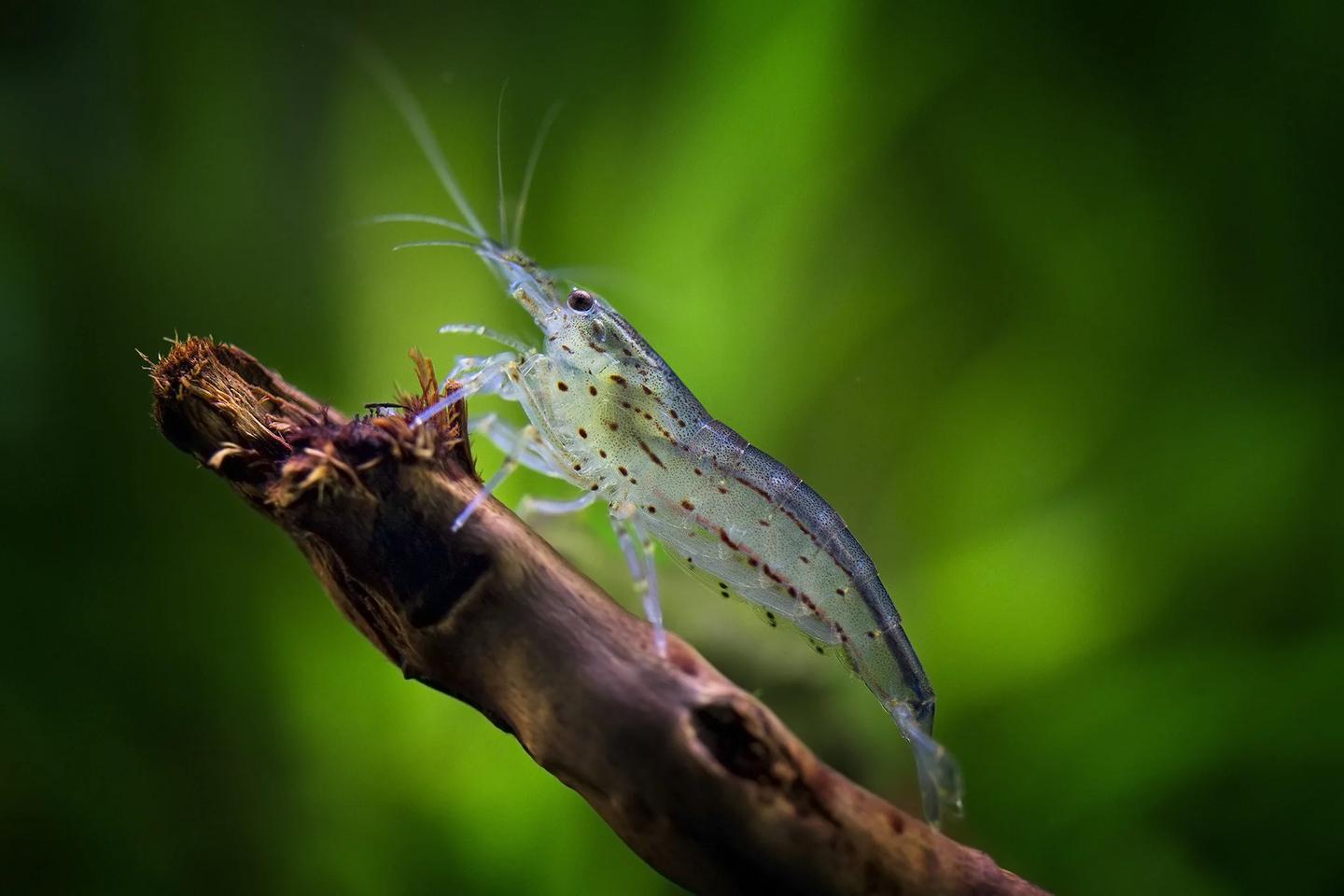
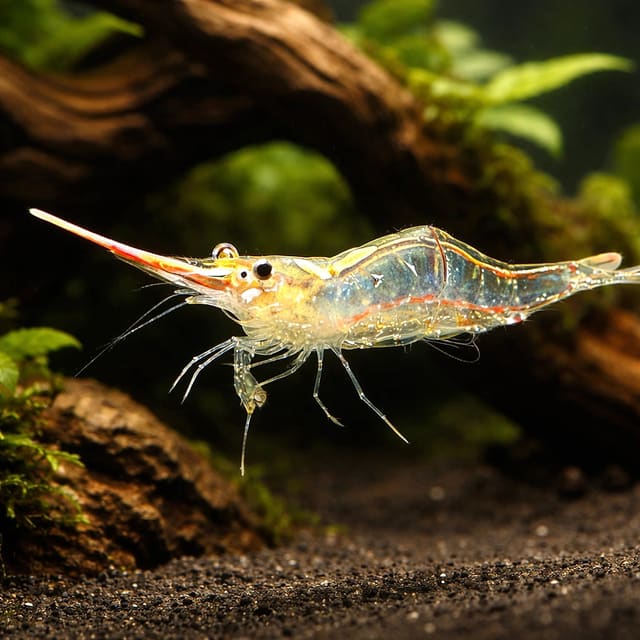
The purple zebra shrimp, scientifically classified as Caridina spongicola, represents one of the most visually striking and ecologically fascinating freshwater invertebrates available to specialist aquarists. This tiny shrimp originates exclusively from the ancient lakes of Sulawesi, Indonesia, where it has evolved remarkable adaptations to highly specific water chemistry and a unique commensal relationship with freshwater sponges. The species displays bold purple-and-white striped patterning that makes it instantly recognisable and highly sought-after among dedicated shrimp keepers. However, Caridina spongicola is emphatically not a beginner species; it requires expert-level husbandry, exceptionally stable water parameters, and specialised care that places it firmly in the realm of advanced invertebrate keeping. With an adult size of just 1 cm, this delicate species thrives only in mature, meticulously maintained specialist setups with alkaline, mineral-rich water chemistry vastly different from most freshwater aquariums. Now available for sale UK-wide, the purple zebra shrimp offers a rewarding challenge for experienced aquarists prepared to meet its exacting requirements.
\n\nCaridina spongicola is immediately recognisable by its spectacular purple-and-white banded patterning, which gives the species its common name. The body features alternating stripes of deep purple to violet and clean white, creating a bold, high-contrast appearance that is visually stunning in well-planted or carefully aquascaped nano setups. Adults reach a maximum size of just 1 cm, making this one of the smallest freshwater shrimp species commonly available in the hobby. The body is semi-transparent, allowing observation of internal structures, and the rostrum (the pointed extension of the carapace) is relatively short compared to some Caridina species. The legs and antennae are long and delicate, adapted for navigating the complex surfaces of freshwater sponges in the wild. Sexual dimorphism is subtle, with mature females typically displaying a slightly rounder, fuller abdomen when carrying eggs (berried). The overall appearance is delicate, refined, and highly ornamental.
\n\nIn its native Sulawesi lakes, Caridina spongicola inhabits a highly specialised ecological niche, living in close association with undescribed species of freshwater sponge. This commensal relationship is obligate in the wild, with the shrimp depending on the sponge for shelter, food, and protection from predators. The lakes of Sulawesi are ancient, geologically stable environments characterised by exceptionally high pH (7.8-8.8), elevated mineral content, warm temperatures (26-30°C), and crystal-clear, highly oxygenated water with minimal organic pollution. The substrate consists of volcanic rock, sand, and accumulated mineral deposits, and the water chemistry is remarkably stable year-round due to the lakes' depth and geological buffering. Natural food sources include biofilm, algae, microscopic organic matter, and detritus accumulated on sponge surfaces. Replicating these unique conditions in captivity is essential for the species' survival and represents a significant challenge even for experienced aquarists.
\n\nA minimum aquarium volume of 30 litres is recommended for Caridina spongicola, with nano setups suitable provided water parameters can be maintained with exceptional stability. The species requires alkaline water with pH maintained between 7.8-8.8, significantly higher than most freshwater aquariums, and moderate to high mineral content (GH and KH) to replicate natural Sulawesi lake chemistry. Temperature must remain stable between 26-30°C, and dissolved oxygen levels should be kept high through gentle aeration or surface agitation. The tank must be fully cycled and mature before introducing these delicate shrimp, as they are extremely sensitive to ammonia, nitrite, and nitrate fluctuations. Use specialised Sulawesi mineral salts or prepared remineralised water to achieve correct parameters, as tap water is typically unsuitable. The aquascape should feature smooth volcanic rock, inert substrates such as sand or fine gravel, and hardy plants compatible with alkaline conditions (Java fern, Anubias). Avoid copper-based medications, fertilisers, or decor, as shrimp are highly sensitive to copper toxicity. Weekly water changes of 10-15% with temperature- and chemistry-matched water are essential to prevent parameter swings.
\n\nCaridina spongicola is an omnivorous grazer, feeding primarily on biofilm, algae, and microscopic organic matter in the wild. In captivity, the species thrives on high-quality specialised shrimp foods, powdered foods designed for dwarf shrimp, and finely crushed spirulina-based pellets. Blanched vegetables such as spinach, courgette, and cucumber can be offered in very small amounts, though biofilm and natural grazing surfaces should form the dietary foundation. The tank should contain abundant surfaces for biofilm growth, including rocks, driftwood, and plant leaves. Avoid overfeeding, as excess food rapidly degrades water quality and is particularly harmful to sensitive Sulawesi species. Feed sparingly, offering only what can be consumed within 2-3 hours, and remove uneaten food promptly. Provide variety through rotating food types and supplementing with occasional frozen foods such as cyclops or daphnia in very small portions.
\n\nCaridina spongicola is entirely peaceful and poses no threat to tankmates, other shrimp, or aquatic plants. The species is highly social and thrives when kept in small groups, displaying more confident foraging behavior and natural activity patterns when not isolated. The shrimp are primarily diurnal, remaining active throughout the day as they graze across surfaces in search of biofilm and microscopic foods. Movement is slow and deliberate, and the species spends much of its time on rocks, plant leaves, and other surfaces rather than swimming through open water. Molting occurs regularly as the shrimp grow, and individuals are vulnerable immediately after shedding their exoskeleton until the new shell hardens. The species does not exhibit aggressive behavior toward conspecifics or other peaceful inhabitants and is best suited to specialised, low-competition environments.
\n\nDue to the highly specialised water chemistry requirements and delicate nature of Caridina spongicola, tankmate selection is extremely limited. Ideal companions are restricted to peaceful nano fish that can tolerate alkaline water, other peaceful Sulawesi shrimp species in very stable, species-appropriate setups, and snails that share similar parameter requirements. Most commonly available fish are incompatible due to either unsuitable water chemistry requirements or predatory risk. Large or predatory fish, loaches, cichlids, barbs that may harass shrimp, and crayfish must all be excluded, as these pose direct threats to the shrimp's survival. In practice, species-only setups or carefully curated Sulawesi biotope aquariums are strongly recommended to maximise success and minimise stress.
\n\nNever introduce Caridina spongicola to newly established aquariums. The species requires a fully mature, cycled tank with stable parameters, established biofilm, and minimal fluctuation in water chemistry. Allow the aquarium to mature for at least 8-12 weeks before introducing these delicate shrimp, and test parameters daily during the acclimation period to ensure stability.
\nBreeding Caridina spongicola in captivity is uncommon and presents significant challenges due to the species' exacting environmental requirements. Successful reproduction depends on exceptionally stable water chemistry, excellent food availability, and the survival of tiny, delicate juveniles in a pristine environment. Females carry eggs beneath the abdomen until hatching, and the larvae develop directly into miniature versions of adults rather than passing through a planktonic larval stage. Fry require abundant biofilm, microscopic foods, and stable parameters to survive, and mortality rates can be high even in well-maintained setups. Breeding attempts should only be undertaken by experienced shrimp keepers with proven success in maintaining stable Sulawesi setups. Provide dense planting, ample grazing surfaces, and minimal disturbance to maximise breeding success.
\n\nAt Tropical Fish Co, we specialise in sourcing rare and specialist invertebrates like Caridina spongicola, ensuring every shrimp we supply is healthy, well-acclimated, and ready to thrive in expertly maintained setups. Each specimen undergoes careful quarantine and assessment to guarantee optimal condition upon arrival. Our knowledgeable team provides comprehensive care guidance specific to Sulawesi shrimp, helping you achieve and maintain the precise water chemistry and stable conditions these delicate species demand. We use professional-grade packing methods with insulated containers and heat packs to ensure safe delivery across the UK, even during temperature extremes. Whether you're an advanced shrimp keeper seeking rare species or building a specialised Sulawesi biotope, our commitment to quality livestock, expert support, and ethical sourcing makes Tropical Fish Co your trusted partner in invertebrate keeping excellence.
Healthy, vibrant fish from trusted suppliers
Detailed care guides and support
Your fish arrives healthy or we'll replace it
Properly quarantined and ready for your tank

22–28°C · pH 7–8.5 · 10L

26–30°C · pH 7.5–8.5 · 40L

26–30°C · pH 7.5–8.5 · 40L

18–30°C · pH 6.5–8.5 · 20L

22–28°C · pH 7–8.5 · 10L

22–28°C · pH 7–8.5 · 10L

18–28°C · pH 6.5–8 · 10L

26–30°C · pH 7.5–8.5 · 40L

22–28°C · pH 7.5–8 · 40L

24–28°C · pH 7.5–8.5 · 200L

24–28°C · pH 7.5–8.5 · 500L

24–28°C · pH 5.5–7 · 60L

22–28°C · pH 6.5–8 · 20L

22–26°C · pH 6–7.5 · 30L

22–28°C · pH 6–7.5 · 60L

24–28°C · pH 7.5–8.5 · 150L