Moderate
Acei Cichlid (Pseudotropheus sp. 'Acei')
24–26°C · pH 7.5–8.5 · 300L
£7.99
A striking white Lake Malawi mbuna with bold personality, ideal for hard, alkaline African cichlid setups. Moderate care, semi-aggressive. 24-26C, pH 7.5-8.5.
Adult size is the maximum length this species reaches at full maturity (scientific sources). The livestock you receive will be younger and smaller — pick a size above for the actual shipping size. Product-photo provenance and any image-specific limitations are stated on the listing.
Pseudotropheus calanois
Shoaling fish: kept in a group they feel safer, stay calmer and show their best colour.
Confirm your email, then we’ll send an availability message for this exact item if it returns within 180 days.
This request is only for this product—no newsletter or other promotions. A mail-provider retry may very rarely duplicate the same availability message. Unconfirmed addresses are removed after 48 hours. See our privacy policy.
A striking white Lake Malawi mbuna with bold personality, ideal for hard, alkaline African cichlid setups. Moderate care, semi-aggressive. 24-26C, pH 7.5-8.5.
Adult size is the maximum length this species reaches at full maturity (scientific sources). The livestock you receive will be younger and smaller — pick a size above for the actual shipping size. Product-photo provenance and any image-specific limitations are stated on the listing.
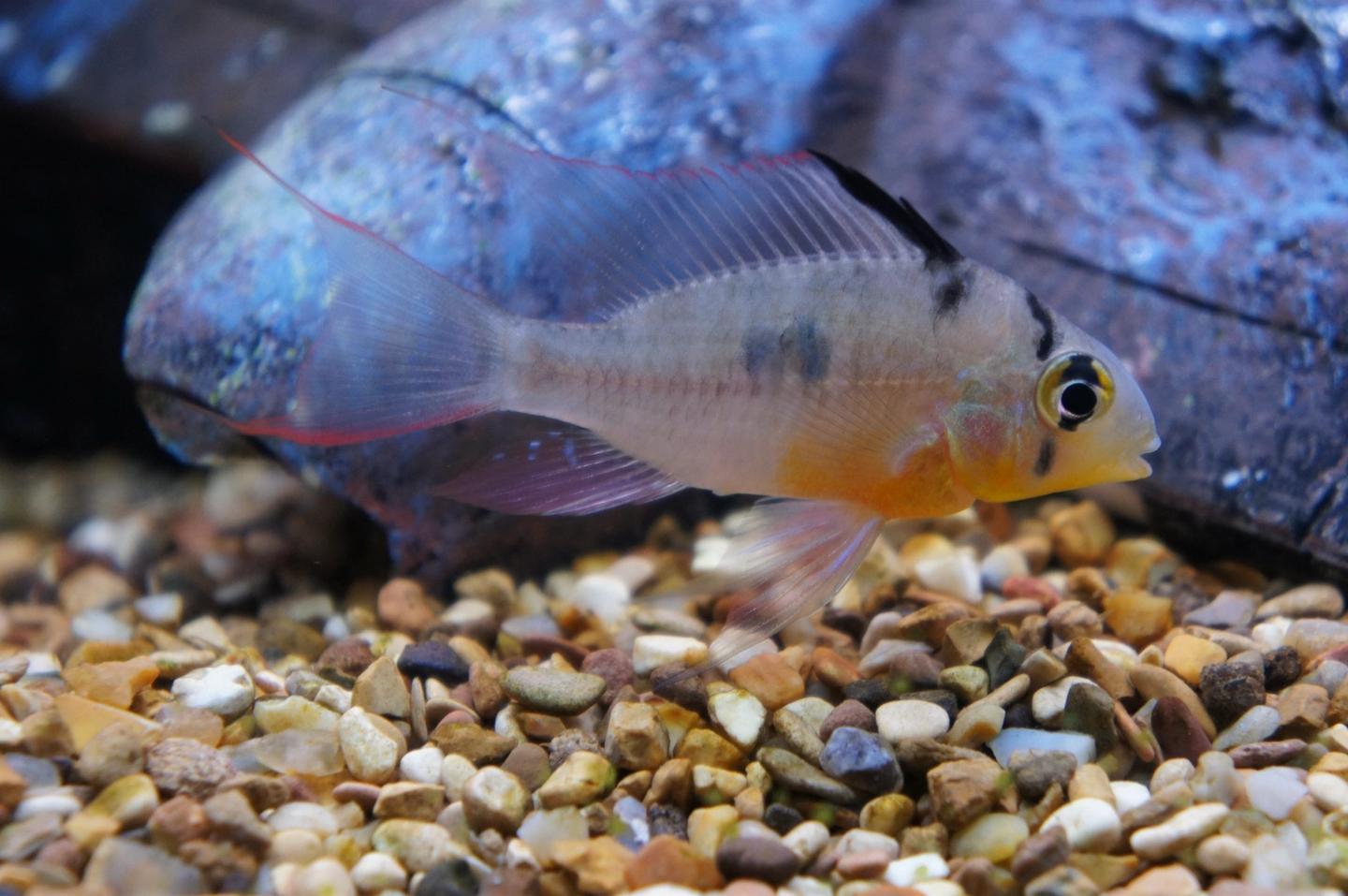
Cichlids are a family of roughly 1,800 accepted species, not one care type. Before buying, identify the exact species and source, then compare adult measurement, usable tank dimensions, social system, territory, tested water, diet and an exit plan. No family-wide minimum tank, water range or tank-mate list is safe.
Maintain these water conditions for optimal health and vibrant colors
Freshwater fish for sale UK enthusiasts seeking a striking white African cichlid will find Pseudotropheus calanois 'Pearl White' an eye-catching choice for Lake Malawi mbuna aquariums. This species is endemic to Lake Malawi in East Africa, where it inhabits rocky shorelines and rubble zones. Available for sale UK in sizes from 4-7cm, the species reaches approximately 5cm at maturity, making it one of the smaller mbuna suitable for medium-sized African cichlid setups. Semi-aggressive temperament, specialized care requirements for hard alkaline water, and reliable breeding in captivity appeal to aquarists with experience maintaining Malawi mbuna communities. Moderate care level suits those familiar with African rift lake conditions and mbuna behavior.
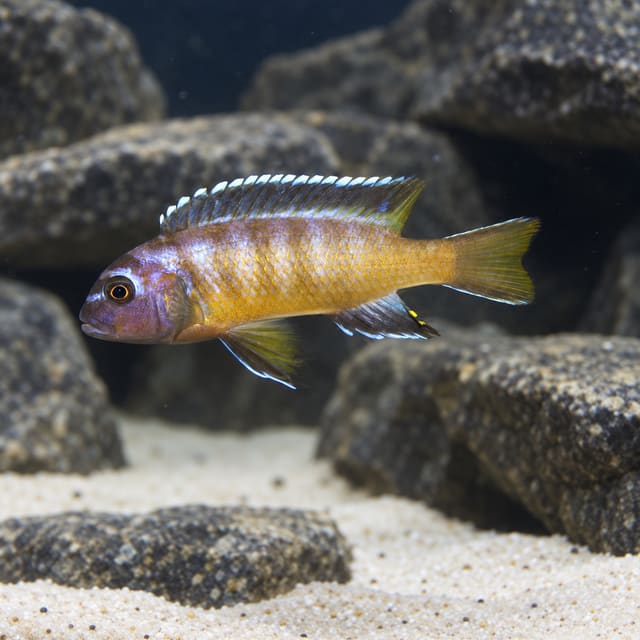
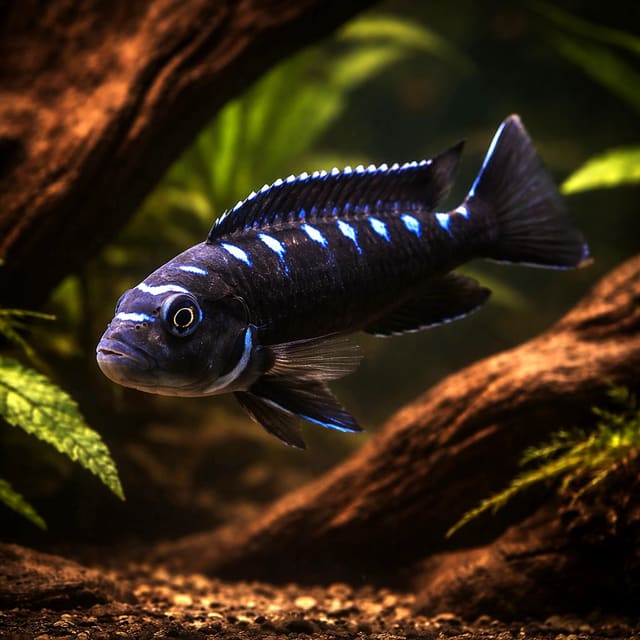
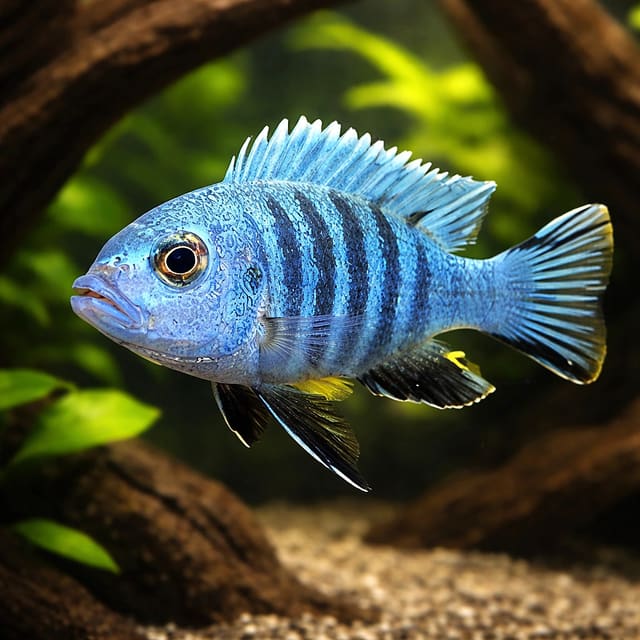
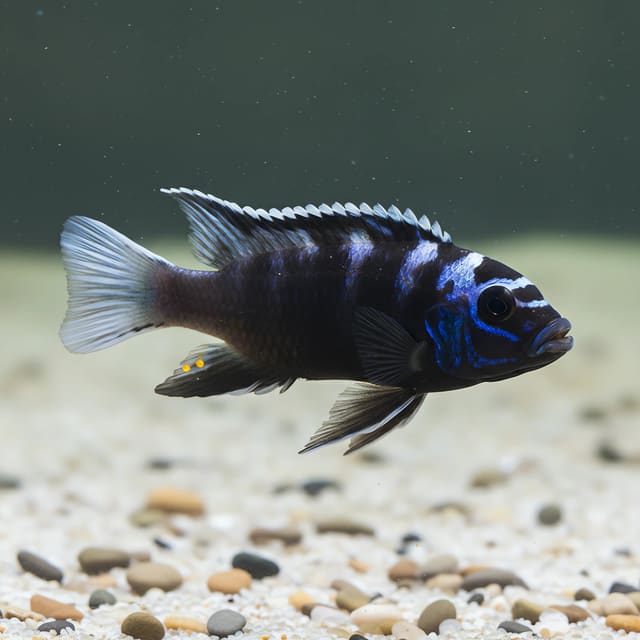
Pseudotropheus calanois 'Pearl White' displays striking solid white or cream coloration across the entire body, creating a dramatic visual impact against dark substrates and rocky aquascapes. Some individuals show subtle pearlescent highlights or very faint barring, particularly under stress or subdued lighting. Males and females appear similar in coloration, though males typically develop slightly larger size and more robust build. The fins are white or translucent, matching the body coloration. Eyes are dark, contrasting sharply with the pale body. Overall appearance is bold and unmistakable, particularly in groups where the shoal creates a striking white accent against colorful Malawi community tankmates. Coloration remains vivid in well-maintained water with appropriate diet and stable conditions.
This species is endemic to Lake Malawi, inhabiting rocky shorelines, rubble zones, and intermediate areas between rocks and sand. Water conditions are highly stable year-round: hard, alkaline (pH 7.8-9.0), warm (24-26°C), and extremely well-oxygenated. Natural habitat features include piles of rocks, crevices, caves, and algae-covered surfaces where mbuna graze continuously. The species forages among rocks for aufwuchs (algae, biofilm, microorganisms), scraping surfaces with specialized teeth adapted for herbivorous feeding. Lake Malawi's unique chemistry, clarity, and biodiversity support one of the world's most diverse cichlid communities.
A minimum 200-litre aquarium with dimensions emphasizing length provides appropriate space for a group of Pseudotropheus calanois 'Pearl White' or a mixed mbuna community. Use fine sand or crushed coral substrate and arrange rocks, slate, and ceramic caves to create multiple territories, visual barriers, and grazing surfaces. Provide numerous hiding places and caves to reduce aggression and allow subordinate fish to escape dominant individuals. Complex rockwork with caves, overhangs, and broken sight lines helps distribute territoriality and minimize conflict. Maintain excellent water quality with efficient filtration and strong water movement to replicate Lake Malawi's well-oxygenated conditions. Moderate to bright lighting supports algae growth on rocks, providing natural grazing opportunities. Ensure the tank is well-covered, as mbuna occasionally jump when startled.
Expert Tip: Overstock slightly (not excessively) to distribute aggression across multiple individuals rather than allowing a single dominant fish to harass one target. This strategy reduces focused bullying in mbuna tanks.
Maintaining proper water chemistry is critical for Pseudotropheus calanois. Keep temperatures between 24-26°C, with 25°C representing optimal conditions. pH must remain between 7.5-8.5, with values around 8.0-8.2 ideal to replicate Lake Malawi's alkaline conditions. Water hardness should be moderately hard to very hard (10-20 dGH), with high carbonate hardness (KH) essential for pH stability. Ammonia and nitrite must be undetectable, while nitrates should stay below 40 ppm through efficient biological filtration and substantial weekly water changes of 30-40%. Use Malawi-specific salts or buffer additives to maintain proper mineral content and pH. Avoid soft, acidic water, which stresses the fish and causes health decline. Stability is paramount—abrupt changes in pH or hardness can shock or kill Malawi cichlids.
Pseudotropheus calanois is primarily herbivorous, requiring a diet dominated by plant-based foods. Offer high-quality spirulina-based flakes or pellets, algae wafers, and regular vegetable matter such as blanched spinach, zucchini, cucumber, and peas. Occasional protein-rich foods—small amounts of brine shrimp, mysis, or quality carnivore pellets—can be offered but should not dominate the diet. Overfeeding protein causes digestive issues, bloating, and increased aggression in mbuna. Feed small portions 1-2 times daily in amounts consumed within 2 minutes. Encourage natural grazing by allowing algae to grow on rocks and decorations, providing supplemental nutrition and reducing boredom. A primarily herbivorous diet supports long-term health, proper digestion, and vibrant coloration.
Pearl white cichlids are semi-aggressive and territorial, displaying typical mbuna behavior including chasing, posturing, and defending rock territories. Males establish and defend small territories, particularly during breeding, while females and subdominant males form loose groups. Aggression is typically more intense toward conspecifics and similarly colored species, so housing with diverse tankmates reduces focused harassment. Activity levels remain high throughout the day, with fish constantly patrolling territories, grazing on rocks, and interacting with tankmates. The species is intelligent and responsive, quickly learning feeding routines and recognizing keepers. Stress or inadequate territories cause increased hiding, faded coloration, or heightened aggression. In optimal conditions with appropriate tank size and rockwork, the species displays confident, natural behavior.
Selecting tankmates for Pseudotropheus calanois requires careful consideration of size, temperament, and water chemistry requirements. Suitable companions include other Lake Malawi mbuna of similar size and temperament, robust peacock cichlids (in larger tanks), and Synodontis catfish. Avoid small peaceful fish, slow-moving species, long-finned fish, non-African community fish, and species requiring soft acidic water. Highly aggressive mbuna much larger than the calanois may bully or injure them. In appropriately sized aquariums with extensive rockwork and visual barriers, diverse Malawi mbuna communities thrive. However, overstocking beyond filtration capacity or undersized tanks lead to chronic aggression, poor water quality, and health decline.
Pseudotropheus calanois is a maternal mouthbrooder. Males establish territories among rocks and display to attract females. After spawning, the female collects and incubates the eggs in her mouth for approximately 3-4 weeks, during which she does not feed. Provide multiple caves and rockwork territories, and remove fry if needed to protect them from predation by tankmates. Once released, fry are relatively large and accept newly hatched brine shrimp and finely crushed spirulina pellets. Rearing fry requires excellent water quality and frequent small feedings. Breeding occurs readily in stable hard alkaline water with appropriate setup and low stress. Females may spawn every 4-6 weeks once mature.
Tropical Fish Co supplies healthy, active Pseudotropheus calanois 'Pearl White' specimens carefully selected for vivid white coloration and strong behavior. We ensure all fish are feeding confidently on herbivore-based prepared foods and displaying normal mbuna behavior before dispatch. Our expert team provides comprehensive care guidance covering the critical importance of hard alkaline water, herbivorous diet, tank setup, and suitable tankmate selection. With reliable UK delivery using specialist livestock couriers, your cichlids arrive safely in insulated packaging with oxygen. We support specialist Malawi fishkeeping and offer ongoing advice to help you succeed with this striking white mbuna. Choose Tropical Fish Co for quality African cichlids and expert customer support.
No reviews for this item yet. Bought one? Honest reviews only, good or bad.
What customers say about ordering from us
Easy website plenty of info on fish your buying great to pick a time slot
TRACEY DURRANT · 7 Oct 2026
Got some lovely fish thank you
Kevin Mackie · 7 Oct 2026
Reviews of our shop, collected by Judge.me, an independent third-party review collector. Newest first.