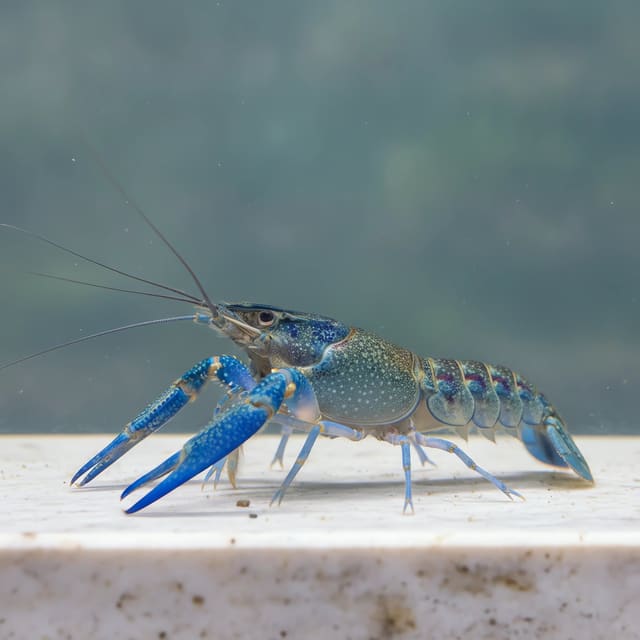
Red Claw Blue Lobster (Cherax quadricarinatus)
22–27°C · pH 7–8
£12.49

A striking, critically endangered Australian crayfish with vivid blue coloration that demands expert-level care and a species-focused setup. Expert care, aggressive. 18-24C, pH 6.5-8.0.
Adult size is the maximum length this species reaches at full maturity (scientific sources). The livestock you receive will be younger and smaller. Product-photo provenance and any image-specific limitations are stated on the listing.
Cherax tenuimanus
Confirm your email, then we’ll send an availability message for this exact item if it returns within 180 days.
This request is only for this product—no newsletter or other promotions. A mail-provider retry may very rarely duplicate the same availability message. Unconfirmed addresses are removed after 48 hours. See our privacy policy.
A striking, critically endangered Australian crayfish with vivid blue coloration that demands expert-level care and a species-focused setup. Expert care, aggressive. 18-24C, pH 6.5-8.0.
Adult size is the maximum length this species reaches at full maturity (scientific sources). The livestock you receive will be younger and smaller. Product-photo provenance and any image-specific limitations are stated on the listing.
Maintain these water conditions for optimal health and vibrant colors
Cherax tenuimanus, known as the Electric Blue Marron or Hairy Marron, is a striking critically endangered Australian crayfish with vivid blue coloration that demands expert-level care in specialized aquariums. Available for sale UK through Tropical Fish Co from legally sourced captive-bred stock only, this rare species reaches 10cm and represents one of the most beautiful freshwater crayfish in the hobby. The expert care level and aggressive temperament make it suitable only for highly experienced aquarists prepared to provide species-only accommodation with cool clean water meeting exacting requirements. This species combines stunning aesthetics with conservation significance, requiring dedicated commitment to support captive breeding efforts whilst threatened wild populations recover.
The Electric Blue Marron displays spectacular vivid electric blue coloration that gives this endangered species its common name—intensity ranges from pale powder blue through to deep brilliant cobalt depending on genetics, water parameters, and diet. This represents one of the most striking coloration patterns seen in any freshwater crayfish species. The robust carapace reaches 10cm, whilst substantial chelipeds (claws) show impressive proportional development. The species displays characteristic "hairy" appearance—fine setae (hair-like structures) cover parts of the body and appendages, more pronounced than in many crayfish species. Sexual dimorphism apparent in mature specimens: males develop larger broader claws and narrower abdomen compared to females. The exoskeleton must be periodically moulted for growth, with freshly moulted individuals showing particularly intense coloration before hardening occurs.
Cherax tenuimanus is critically endangered and endemic to an extremely restricted range within the Margaret River region of southwestern Australia. Natural habitat consists of permanent freshwater streams and rivers with cool clean highly oxygenated water, rocky substrates with crevices, and abundant hiding places. Water temperatures remain cooler than tropical systems year-round reflecting temperate southwest Australian climate. Wild populations have declined catastrophically due to habitat loss, invasive species competition, disease, and collection pressure—the species is now critically endangered and legally protected with collection from wild strictly prohibited. Captive breeding programs represent critical conservation tool for this species' survival. Natural diet includes aquatic vegetation, detritus, invertebrates, and organic matter.
Provide minimum 100-litre aquarium for single specimen—larger strongly recommended given aggressive nature. Use sand or fine gravel substrate with extensive rockwork creating numerous caves and crevices for hiding. Secure stable rock arrangements are critical as these strong crayfish will test and potentially dislodge unstable structures. Avoid live plants as they will be destroyed; artificial plants or no plants work best. Powerful efficient filtration providing 10-15x tank volume turnover per hour is essential—this species demands pristine water quality with high oxygenation. Consider supplementary aeration or powerheads creating water movement and maximizing dissolved oxygen. Cooler water temperatures naturally hold more oxygen than warm water. Absolutely critical is escape-proof secure lid with no gaps—Electric Blue Marrons are persistent escape artists. Subdued to moderate lighting suits their preference for shaded conditions.
Maintain cool temperatures between 18-24°C reflecting temperate southwestern Australian origins—substantially cooler than most tropical aquariums. This species cannot tolerate warm water above 24°C; overheating causes severe stress and mortality. Water must be pristine with pH 6.5-8.0 and moderate hardness (8-15 dGH) supporting exoskeleton health. Critical parameters: zero ammonia, zero nitrite, nitrates below 20ppm through substantial weekly water changes of 40-50%. Dissolved oxygen must be near saturation—these crayfish inhabit highly oxygenated streams and suffocate in poorly oxygenated water. Test dissolved oxygen regularly or maintain continuous vigorous aeration. Water quality degradation rapidly compromises health in this sensitive specialist species. Consistency in parameters is absolutely essential—fluctuations trigger stress responses. The demanding water quality requirements represent primary challenge in keeping this expert-level species.
Cherax tenuimanus is an opportunistic omnivorous scavenger requiring varied balanced high-quality diet. Provide quality sinking crayfish pellets as staple (3-4 times weekly), supplemented with blanched vegetables (courgette, spinach, peas, sweet potato), leaf litter (Indian almond leaves, oak leaves), algae wafers, and occasional protein foods such as earthworms or high-quality frozen foods. Feed moderate portions as these are messy eaters. Remove uneaten food after 24 hours to prevent water quality degradation—particularly critical given this species' sensitivity to declining water quality. Reduce feeding immediately before and during moulting when appetite decreases. Calcium supplementation through cuttlebone or mineral blocks is essential supporting successful moulting and vibrant coloration. Varied high-quality diet ensures nutritional completeness critical for this demanding species.
Electric Blue Marrons are highly territorial and aggressively defensive of established territories. They establish domains around preferred hiding places, defending vigorously against any intruders through threat displays and physical combat. Primarily nocturnal though bolder individuals may emerge during feeding regardless of lighting. Activity includes territory patrolling, foraging, substrate excavation, persistent escape attempts, and rearranging decorations. Aggressive interactions with tankmates are inevitable—opportunistic predation on smaller species, active hunting of accessible fish, defensive attacks on larger fish venturing too close. Inter-crayfish aggression is extreme—housing multiple specimens together typically results in serious injury or death even in very large systems. Moulting periods occur regularly requiring secure hiding whilst extremely vulnerable new exoskeleton hardens over several days.
Due to critically endangered status, aggressive temperament, and demanding care requirements, Cherax tenuimanus must be kept in dedicated species-only setup. Attempting tankmates is inappropriate for multiple reasons: predation risk to tankmates, stress to the rare crayfish, and potential for injury to valuable conservation specimens. Species-only accommodation allows focused attention on meeting exacting water quality requirements without complications from tankmates. The conservation significance of captive-bred specimens means they deserve specialized care maximizing survival and potential breeding contribution. Absolutely exclude all fish regardless of size, shrimp, snails, and particularly other crayfish. The aggressive nature combined with conservation status makes species-only setup the only ethical and practical approach.
Captive breeding of Cherax tenuimanus is critically important for species conservation and possible though challenging. Sexual dimorphism in mature specimens: males possess larger broader claws and narrower abdomen, whilst females show broader abdomen for egg carrying. Successful breeding requires excellent water quality, ample space, mature specimens, and appropriate separate shelter for egg-carrying females. Female carries developing eggs attached to swimmerets under abdomen for several weeks. Juveniles hatch as miniature versions of adults and are vulnerable to cannibalism—separate immediately to dedicated rearing systems with impeccable water quality. Juveniles require microscopic foods initially, graduating to larger fare as they grow. Successful captive breeding represents significant conservation contribution; document breeding carefully and consider coordinating with conservation programs or specialist keepers supporting species recovery.
Tropical Fish Co supplies legally sourced captive-bred Cherax tenuimanus specimens with full documentation confirming captive-bred origin—wild collection is illegal. Each Electric Blue Marron is hand-selected for spectacular coloration, excellent body condition, and intact appendages, ensuring you receive rare crayfish ready to thrive in expert-level specialist setups. Our experienced staff understand the conservation significance, demanding care requirements, and aggressive nature of this critically endangered species. We provide detailed guidance on maintaining cool pristine water, appropriate specialist equipment, and realistic long-term commitment required. With specialist packaging designed for delicate rare specimens and tracked UK delivery, your new marron arrives safely in peak condition. We're committed to supporting conservation through responsible captive breeding and work exclusively with ethical suppliers contributing to species recovery rather than wild exploitation.
No reviews for this item yet. Bought one? Honest reviews only, good or bad.
What customers say about ordering from us
I have a small group of long finned mountain minnows. So was delighted to be able to order ten of this variety to increase the genetics in my tank . The ones I recieved are healthy but it’s to early to give a verdict on wether they are of a long finned type since they are small currently.
Gordon Walker · 23 Sept 2026
100% success travel and "installation". Pleased with quality of purchase. The Siamese fighter a bit "shy" so have not yet seen him at his best yet but looking good. Happy customer. GG
George E Garratt · 21 Sept 2026
Reviews of our shop, collected by Judge.me, an independent third-party review collector. Newest first.



