Advanced
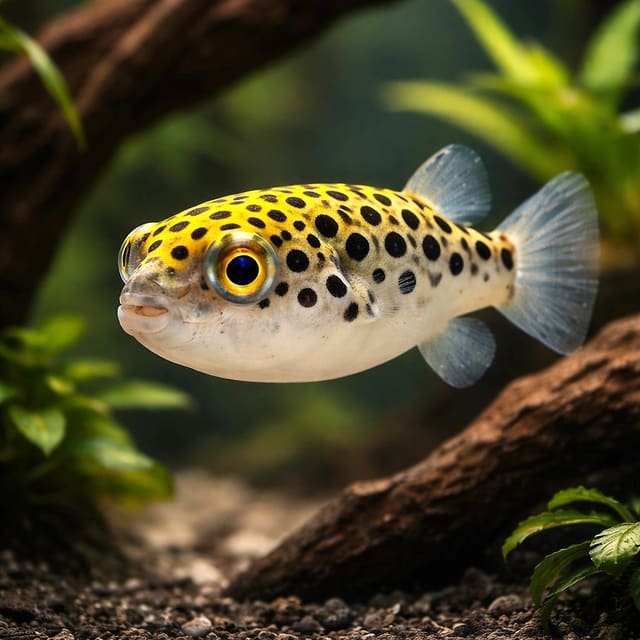
Green Spotted Pufferfish (Dichotomyctere nigroviridis)
24–28°C · pH 7.5–8.5
£8.99

The Eyespot pufferfish (Tetraodon biocellatus) is a freshwater puffer from Indochina, Malaysia and Indonesia that reaches 8 cm. It suits a keeper prepared to provide shell-on foods, keep one alone as the lower-risk plan and maintain 22–26°C, pH 6.5–7.5 and 5–12 dGH. Sold individually in dispatch sizes from 2–3 cm to 7–9 cm.
Adult size is the maximum length this species reaches at full maturity (scientific sources). The livestock you receive will be younger and smaller — pick a size above for the actual shipping size. Product-photo provenance and any image-specific limitations are stated on the listing.
Tetraodon biocellatus
The Eyespot pufferfish (Tetraodon biocellatus) is a freshwater puffer from Indochina, Malaysia and Indonesia that reaches 8 cm. It suits a keeper prepared to provide shell-on foods, keep one alone as the lower-risk plan and maintain 22–26°C, pH 6.5–7.5 and 5–12 dGH. Sold individually in dispatch sizes from 2–3 cm to 7–9 cm.
Adult size is the maximum length this species reaches at full maturity (scientific sources). The livestock you receive will be younger and smaller — pick a size above for the actual shipping size. Product-photo provenance and any image-specific limitations are stated on the listing.
Maintain these water conditions for optimal health and vibrant colors
The Eyespot pufferfish (Tetraodon biocellatus) is a freshwater member of the puffer family Tetraodontidae from Indochina, Malaysia and Indonesia. It reaches 8 cm and suits a keeper prepared to manage shell-on feeding, water quality and compatibility deliberately. Keeping one fish is the lower-risk social plan, while any community needs careful screening and observation. FishBase now lists it as Dichotomyctere ocellatus, treating Tetraodon biocellatus as a synonym.
FishBase records a maximum length of 8 cm total length for male or unsexed fish. Plan around that maximum rather than the smaller dispatch measurement. This is an active, substantial fish despite its modest length, and its aquarium must provide both open swimming room and enough structure to provide cover.
In nature it feeds on snails and other organisms living on or near the bottom. Its beak-like mouthparts crush shelled prey, and its teeth continue to grow. Aquarium feeding therefore has two connected jobs: provide suitable nutrition and give the fish regular work against shells. Soft frozen food can add variety, but it cannot replace snails and unshelled shellfish as the central teeth-management foods.
FishBase identifies the species as freshwater and explicitly distinguishes it from brackish-water puffers. Build its aquarium as a freshwater system rather than adding marine salt by habit. Its recorded distribution covers Indochina, Malaysia and Indonesia.
| Suits | Not suited to |
|---|---|
| A keeper able to obtain shell-on foods and observe feeding closely | A plan based mainly on soft foods |
| A mature freshwater aquarium with regular testing and partial water changes | An immature or unfiltered aquarium |
| A solitary plan or a carefully screened community | Slow-moving or long-finned companions |
| A layout with cover and open swimming space | A cramped layout without a clear swimming route |
Puffers may inflate in response to a threat. Do not provoke this behaviour or lift the fish into air to see it happen. Arrange routine work calmly and keep the fish submerged during any necessary transfer.
One purchase supplies one animal of the option selected. The live size selector may show the dispatch labels 2–3 cm, 3–4 cm, 5 cm and 7–9 cm; use that selector for the choice presented when you order. The size you select is the size supplied, not the adult size. Every option therefore needs the same adult aquarium plan rather than a smaller permanent home for a smaller dispatch grade.
Sex is guaranteed only when the selected option explicitly states male or female. This Eyespot pufferfish listing has no sex-guaranteed option.
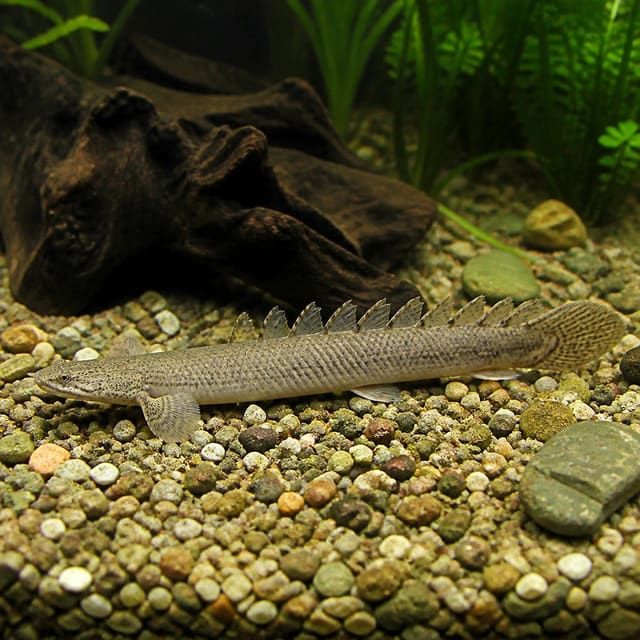
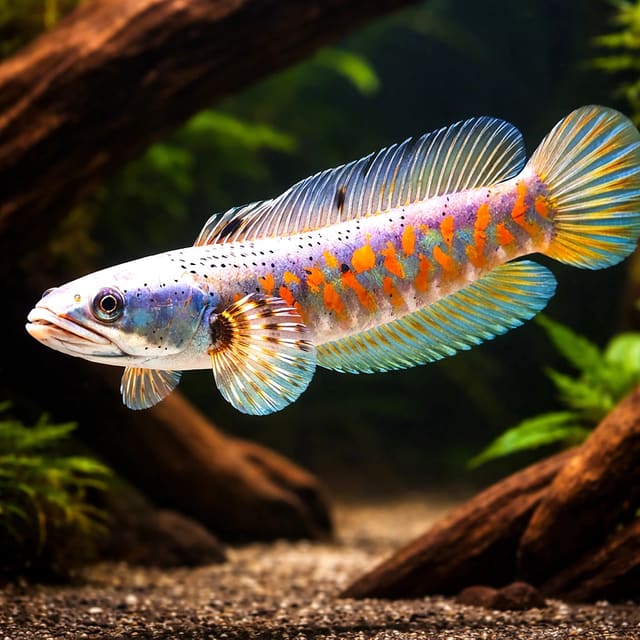
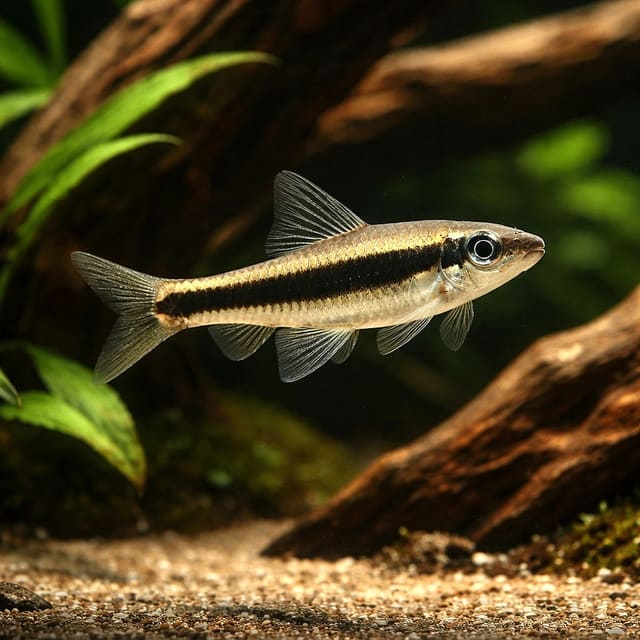
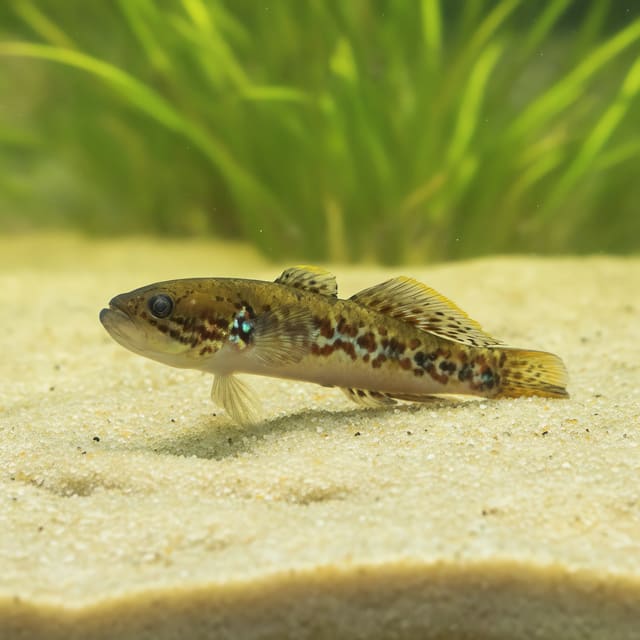
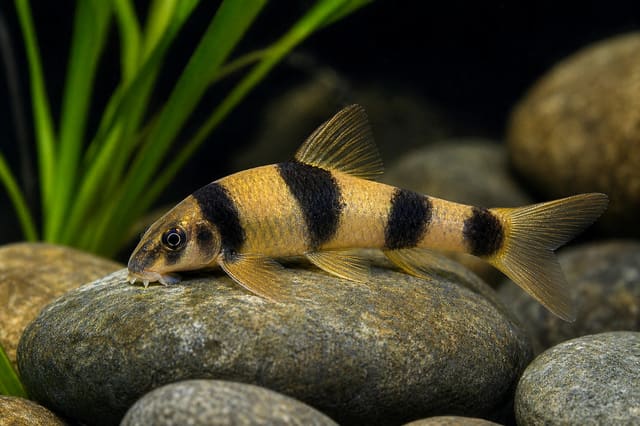
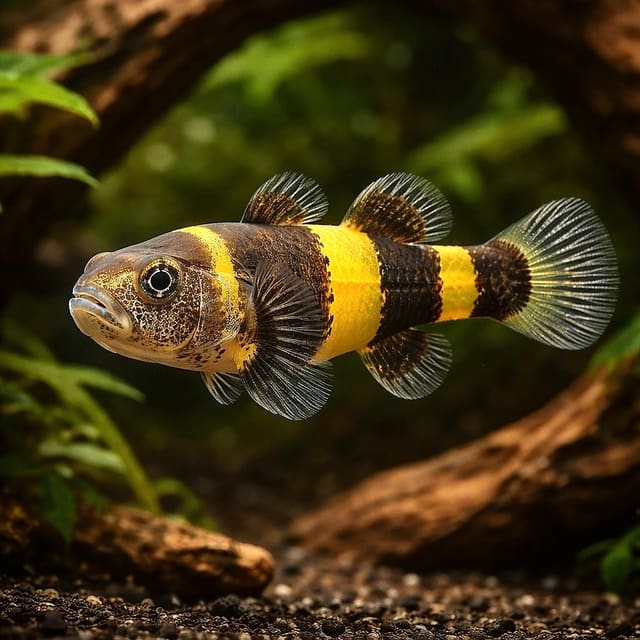
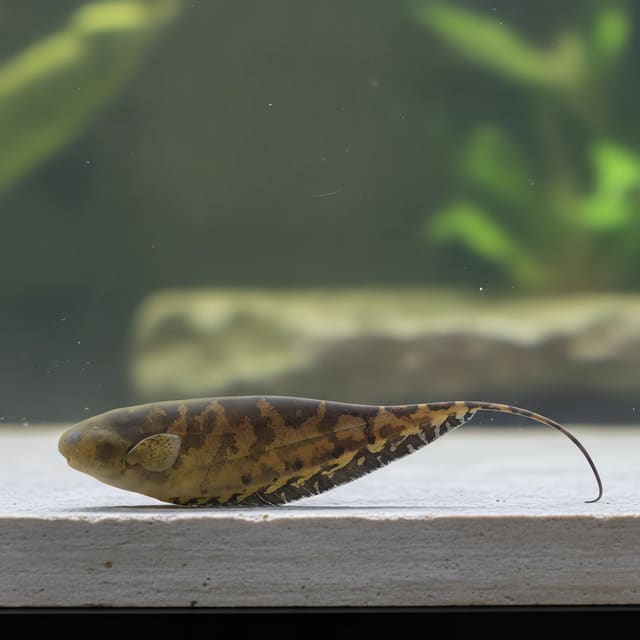
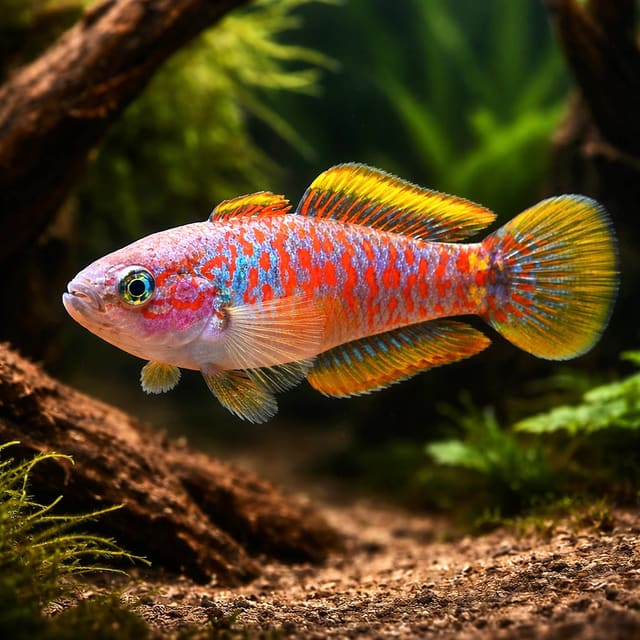
The gallery images are representative, based on reference photographs of this species, so colours can look slightly different from the live animal.
Seriously Fish recommends an aquarium base of at least 75 × 30 cm, equivalent to about 68 litres in the cited 75 × 30 × 30 cm example, for a fish planned around 8 cm standard length. Base dimensions matter because they determine the usable swimming area and the room available for roots, branches, plants and separate routes around the aquarium.
| Decision | Planning figure |
|---|---|
| Maximum recorded length | Up to 8 cm |
| Minimum aquarium base | At least 75 × 30 cm |
| Example volume | About 68 litres |
| Temperature | 22–26°C |
| pH | 6.5–7.5 |
| General hardness | 5–12 dGH |
These figures form a starting point for one fish. Extra companions increase the need for usable floor area, cover and filtration capacity; litres alone do not show whether the layout can separate animals or let a pursued fish retreat.
This puffer suits an established freshwater aquarium built around its needs, not an impulse addition to a mixed tank. Keep the biological demands, shell-on diet and compatibility screen together when comparing it with fish in the loaches and oddballs collection.
Use a freshwater aquarium with a base of at least 75 × 30 cm and an example volume of about 68 litres for one. Do not judge suitability by volume alone: a tall, narrow aquarium can hold the same litres while offering less horizontal room than the recommended footprint. Measure the internal base and account for large décor that removes usable space.
| Area | Purpose |
|---|---|
| Structured cover | Twisted roots, branches and plants provide sheltered areas. |
| Open route | Clear space lets this active fish swim without repeatedly meeting barriers. |
| Feeding area | An accessible patch makes shell remains easier to find and remove. |
A heavily planted arrangement with roots and branches provides cover, while open gaps prevent the aquarium becoming a maze with no sustained swimming route. Look through the aquarium from each end. If décor blocks every route, remove or reposition a piece.
Choose a sandy substrate for the recommended layout. Floating plants can diffuse the light, while rooted and attached plants give the fish cover at different heights. Soft-leaved plants may be chewed, so check their condition during routine observation and remove loose pieces before they collect around the filter intake.
For more than one puffer, the same décor must create genuinely separate routes rather than one central cave that every fish must contest. A larger aquarium is essential, but more litres only help when the layout also reduces repeated face-to-face encounters. Complete the hardscape before arrival so the fish enters a settled environment rather than one undergoing repeated redesign.
A working biological filter is essential. The RSPCA explains that fish release toxic ammonia; beneficial bacteria in a mature filter convert it first to nitrite, which is also toxic, and then to the safer nitrate. This puffer is particularly sensitive to deteriorating water conditions, so the aquarium must be mature and stable before the fish is introduced.
If this is a new aquarium, follow the steps in our first tropical tank guide before choosing an arrival date. Running a filter for a short time is not the same as establishing the bacterial population needed to process animal waste. Test during maturation and only introduce livestock when the filter is demonstrably handling the waste load.
For the cited aquarium of about 68 litres, Seriously Fish uses a turnover of four to five times the aquarium volume per hour and gives a filter rating of roughly 270–340 litres per hour. Treat the manufacturer’s rating as a selection guide: filter media, pipework, debris and head height can reduce actual flow.
| Check | Action |
|---|---|
| Outlet movement | Confirm that water circulates without eliminating sheltered areas. |
| Intake safety | Keep plants and shell remains away from the intake. |
| Media condition | Inspect for blockage without replacing all mature media together. |
| Feeding debris | Remove remains before they decay and add to the filter load. |
Choose filtration for biological capacity as well as headline flow. Shellfish feeding can leave fragments that need manual removal; the filter should not be expected to hide poor feeding hygiene. Observe where debris settles during the first few feeds and make that area part of the siphoning route.
Add livestock gradually whenever the aquarium population changes. A mature filter supports a known waste load, and a sudden rise in feeding can outpace its bacterial population. Test after any significant stocking or feeding change rather than assuming yesterday’s stable result still applies.
Maintain this puffer at 22–26°C, pH 6.5–7.5 and 5–12 dGH. FishBase’s recorded freshwater environment and the Seriously Fish aquarium range agree on these values. Stability within the range is more useful than repeatedly adjusting water towards a single point.
| Value | Routine range |
|---|---|
| Temperature | 22–26°C |
| pH | 6.5–7.5 |
| General hardness | 5–12 dGH |
Begin with measured tap and aquarium water rather than choosing products first. Our water chemistry guide explains what the main values mean, and the water matcher can compare your measured results with this range. Check temperature with a separate aquarium thermometer as well as the heater setting.
Set the aquarium up as freshwater. Do not add marine salt merely because some puffers are brackish-water fish. Salinity changes affect plants, biological filtration and every intended companion, and FishBase identifies this animal as a freshwater species rather than a brackish one.
For the approximately 68-litre example, Seriously Fish suggests roughly 50–75 W of heating when the room is around 20°C. Heater power depends on aquarium volume and room temperature, so use that figure as a worked example rather than a universal wattage. Position the heater where circulation distributes warmth and verify the result at the opposite end of the aquarium.
Build the diet around snails and unshelled shellfish, with worms and other live or frozen foods for variety. Seriously Fish specifically names snails, crab legs and prawns among appropriate foods. The shell is functional as well as edible because the puffer’s teeth grow continuously and need regular wear.
| Food type | Role |
|---|---|
| Snails | Natural benthic prey and regular shell resistance. |
| Unshelled prawns or crab legs | Meaty food with tooth-wearing structure. |
| Worms and frozen foods | Dietary variety alongside, not instead of, shell-on items. |
Offer a portion the fish can work through while you observe it, then remove uneaten flesh and shell fragments before they decay. Adjust the next portion according to what was actually eaten rather than adding more because the fish remains attentive at the glass. Shellfish remains can quickly become a water-quality problem in a warm aquarium.
Present foods in the accessible feeding area planned during aquascaping. This lets you confirm that the fish has found the meal and makes later siphoning practical. Rotate suitable foods, but keep shell-on prey regular; a sequence of soft foods may provide calories without doing the mechanical work needed by the teeth.
Do not treat snails or other shelled invertebrates as ornamental companions in the same aquarium. FishBase records snails and other bottom-living organisms as natural prey, so their presence may trigger feeding rather than peaceful coexistence.
Regular partial water changes are essential because this puffer is sensitive to deteriorating conditions. For the general weekly routine, OATA’s freshwater guidance for tetras and pencilfish is broad rather than puffer-specific: it recommends changing 25% at least once a week, testing at least once a week, keeping ammonia and nitrite at zero, and preventing nitrate from rising more than 20 mg/l above the normal tap-water level. Use that as a baseline and increase attention when feeding, stocking or test results demand it.
Treat replacement tap water with a conditioner that addresses chlorine or chloramine before it enters the aquarium. Sudden changes in temperature or chemistry undermine the stability that the maintenance routine is meant to protect.
If filter media needs cleaning, do not run it under the tap. Rinse it lightly in the aquarium water removed during a partial water change. Do not replace every mature medium at the same time. The beneficial bacterial population is part of the aquarium’s waste-processing system, not dirt to be sterilised away.
If ammonia or nitrite appears, reduce the immediate pollution source, remove food remains, make an appropriate partial water change and inspect the filter. Follow with further tests until the result returns to zero. If nitrate rises faster than usual, review portion size, waste removal and total animal load before simply making each water change larger.
Record results in the same units each week. A short sequence of readings reveals gradual change more clearly than memory and helps connect a shift with a blocked filter, heavier feeding or an alteration to the aquarium population.
Prepare the aquarium and testing equipment before delivery. Someone must be present to receive the live fish, and the aquarium should already be heated, filtered and within 22–26°C, pH 6.5–7.5 and 5–12 dGH.
Follow the current delivery and Live Arrival Guarantee policy for every arrival.
Keep the aquarium layout unchanged while the fish settles. Seriously Fish recommends planted cover, roots or branches and open swimming space, so the prepared aquarium should already provide shelter and a clear route through the layout.
| Checkpoint | What to do |
|---|---|
| First hours | Observe balance, breathing and use of cover without repeated disturbance. |
| First feeds | Offer an appropriate modest portion and remove remains promptly. |
| Daily | Compare swimming, colour, breathing and hiding with the previous day. |
| After feeding changes | Test water and inspect the feeding area for fragments. |
| End of week | Complete the normal test-and-maintenance routine. |
A newly introduced fish may use cover while it adjusts. Judge change by the combination of behaviour, breathing, feeding and water results rather than one brief moment. Avoid adding further livestock during this observation period because each addition changes both social pressure and filter demand.
Learn the fish’s normal swimming, breathing, feeding response, colour and preferred resting places. A daily comparison is more useful than expecting every healthy puffer to behave identically. Observe before feeding as well as during the meal, because food anticipation can temporarily change activity.
| Change | First response |
|---|---|
| Hanging at the surface | Test water promptly and inspect circulation and filter operation. |
| Sitting unusually on the bottom | Compare breathing and balance, then check temperature and water results. |
| Erratic swimming | Reduce disturbance and test the aquarium before feeding again. |
| Faster or slower gill movement | Check water quality, temperature and flow without delay. |
| Reduced interest in food | Remove leftovers and compare mouth use, body condition and other behaviour. |
| White spots, fluffy growths or damaged skin | Record what is visible and seek prompt health guidance. |
When a change appears, start with measured water results because ammonia, nitrite, temperature and rapid chemistry shifts can produce urgent problems. Confirm that the filter is running, the intake is clear and no shellfish remains are decaying behind décor. Do not add food to test appetite repeatedly when water quality may already be deteriorating.
Contact us promptly if the change persists or the fish shows altered breathing, balance, feeding or body condition. Share the aquarium volume and base dimensions, temperature, pH, hardness, recent ammonia and nitrite results, maintenance history, foods offered and the timing of the change. Those details make the next decision more precise.
Keeping one Eyespot pufferfish is the lower-risk social plan. FishBase records aggression towards its own species, while Seriously Fish reports that individuals kept alone usually live longer in captivity. A single fish also makes it easier to monitor food intake, mouth function and waste from shell-on meals.
Do not buy a casual pair or trio as a compromise. If you decide to keep more than one, Seriously Fish advises trying at least four so aggression is distributed through the group, and only in a suitably large aquarium. This is not a claim that four will always coexist: personalities and pressure within the group still require close observation.
| Question | Required decision |
|---|---|
| Is the aquarium larger than the single-fish plan? | Provide extra usable base area, not just extra height. |
| Can fish leave one another’s sight? | Create several routes and covered areas. |
| Can every fish reach food? | Use separated feeding positions and observe each animal. |
| Can one fish be removed? | Have a mature alternative aquarium ready before conflict begins. |
Watch for repeated chasing, one animal controlling the feeding area, persistent hiding, fin damage, colour change or declining condition. A brief pause behind cover is different from being prevented from swimming and feeding normally. Intervene according to the repeated pattern rather than waiting for visible injury.
The 75 × 30 cm footprint and approximately 68-litre example are the planning minimum for one fish, not a formula for four. Group planning requires more space, more cover, additional feeding positions and filtration that can handle the increased waste. Do not multiply 68 litres mechanically and assume the result guarantees compatible territories; the shape and arrangement of the aquarium remain decisive.
A community aquarium is possible only with careful selection and observation. Seriously Fish warns that this puffer tends to nip slow-moving or long-finned fish, so avoid those body and fin types. In freshwater it has been kept with fast-moving characins, rasboras and barbs, but those examples are a screening direction rather than universal tank-mate approval.
Snails and shelled invertebrates belong in the prey assessment, not on a peaceful companion list. FishBase records snails and other bottom-living organisms in the natural diet, and the aquarium diet deliberately uses shelled prey. Avoid adding ornamental snails or similar invertebrates that you intend to keep as display animals.
Other Eyespot puffers require the separate group plan rather than the ordinary community screen. Aggression towards its own species makes a pair especially poor as an automatic choice. If several are attempted, start with at least four in a substantially larger, structured aquarium and keep a mature separation option ready.
Check who controls the open route, feeding area and cover. Repeated pursuit, nipping, exclusion from food or persistent hiding means the combination is failing even if the fish share water values. Separate animals before declining body condition or extensive fin damage develops.
For a stocking and compatibility assessment, contact us with the aquarium’s base dimensions and volume, current inhabitants with adult sizes, measured water values and the proposed number of puffers. The honest uncertainty is individual behaviour: a species that passes the initial screen still needs observation after introduction.
It reaches 8 cm. Plan the aquarium around that adult maximum rather than its dispatch size.
Plan at least a 75 × 30 cm aquarium base, about 68 litres in the cited 75 × 30 × 30 cm example, with mature filtration, sand, planted cover, roots or branches and open swimming space.
Keeping one alone is the lower-risk plan. If several are attempted, Seriously Fish advises at least four in a suitably larger aquarium, with several covered routes and a mature separation aquarium ready if aggression persists.
Choose it only if you can provide regular shell-on foods, maintain a mature freshwater aquarium, test the water and assess compatibility carefully. Its teeth, sensitivity to deteriorating water and potential fin nipping require deliberate daily observation.
Feed snails and unshelled shellfish such as prawns or crab legs regularly, with worms and other live or frozen foods for variety. The shell helps wear its continuously growing teeth, and uneaten remains should be removed promptly.
Maintain freshwater at 22–26°C, pH 6.5–7.5 and 5–12 dGH. FishBase’s recorded environment and the Seriously Fish aquarium range agree on these values.
FishBase records aggression towards its own species, and Seriously Fish warns that it tends to nip slow-moving or long-finned fish. Keeping one puffer is the lower-risk plan, and those companion types should be avoided.
Fast-moving characins, rasboras and barbs are the freshwater examples named by Seriously Fish, but every candidate needs screening for shared water needs, swimming speed, adult size and feeding access. Avoid slow-moving or long-finned fish, ornamental snails and similar shelled invertebrates intended as companions.
Start filming every delivery continuously while the parcel is still sealed, then show it being opened and the animal still inside the sealed bag. Someone must be present to receive it; float the bag for 20–30 minutes before releasing the fish, and never pour the bag water into the aquarium.
No reviews for this item yet. Bought one? Honest reviews only, good or bad.
What customers say about ordering from us
I have a small group of long finned mountain minnows. So was delighted to be able to order ten of this variety to increase the genetics in my tank . The ones I recieved are healthy but it’s to early to give a verdict on wether they are of a long finned type since they are small currently.
Gordon Walker · 23 Sept 2026
100% success travel and "installation". Pleased with quality of purchase. The Siamese fighter a bit "shy" so have not yet seen him at his best yet but looking good. Happy customer. GG
George E Garratt · 21 Sept 2026
Reviews of our shop, collected by Judge.me, an independent third-party review collector. Newest first.