Gunther's Nothobranch (Nothobranchius guentheri)
22–25°C · pH 6–7
£11.99

Brazilian annual killifish supplied at 2.5-4 cm. Best in a covered species setup at 20-23 C with soft, clean water and peat or coir spawning media.
Adult size is the maximum length this species reaches at full maturity (scientific sources). The livestock you receive will be younger and smaller. Product-photo provenance and any image-specific limitations are stated on the listing.
Nematolebias whitei
Save when buying multiple fish. Each quantity is one fish; sex and pair formation are not guaranteed unless the selected variant explicitly states them.
Confirm your email, then we’ll send an availability message for this exact item if it returns within 180 days.
This request is only for this product—no newsletter or other promotions. A mail-provider retry may very rarely duplicate the same availability message. Unconfirmed addresses are removed after 48 hours. See our privacy policy.
Brazilian annual killifish supplied at 2.5-4 cm. Best in a covered species setup at 20-23 C with soft, clean water and peat or coir spawning media.
Adult size is the maximum length this species reaches at full maturity (scientific sources). The livestock you receive will be younger and smaller. Product-photo provenance and any image-specific limitations are stated on the listing.
Maintain these water conditions for optimal health and vibrant colors
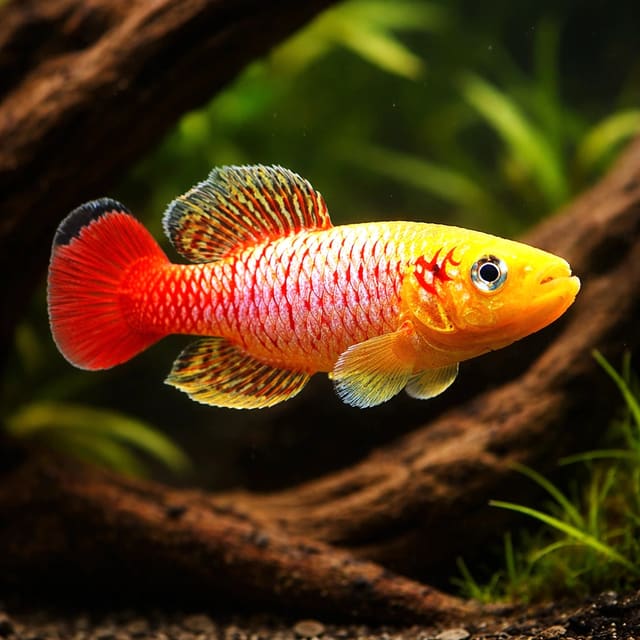
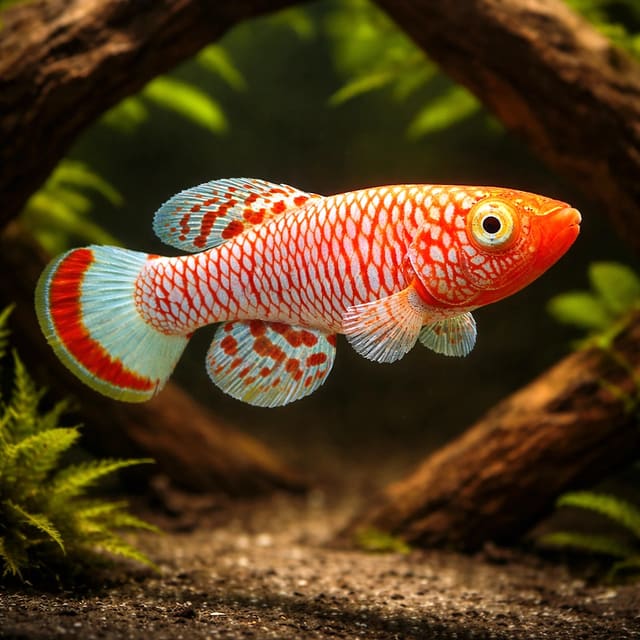
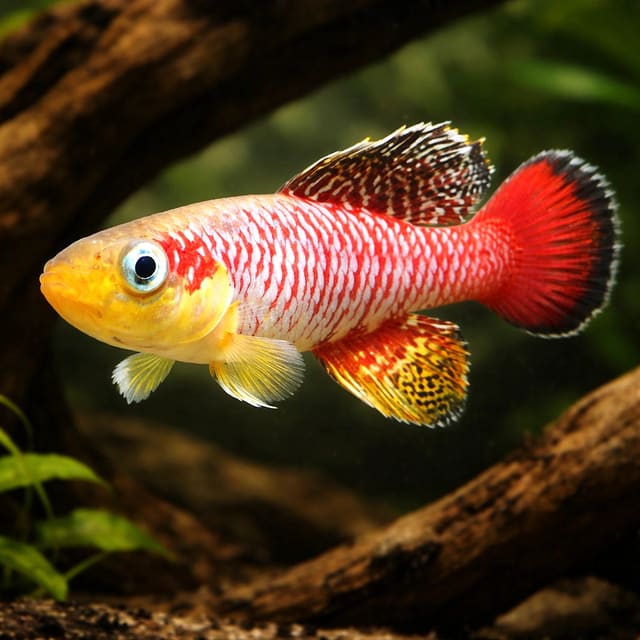
White's Cynolebias, also known as the Rio Pearlfish, is a specialist Brazilian annual killifish currently listed as Nematolebias whitei. Older trade and supplier data may still use Cynolebias whitei, so that name is kept here as synonym context rather than pushed into the title or repeated as a keyword. This listing is for fish supplied around 2.5-4 cm when available.
This is the kind of fish that rewards a keeper who enjoys behaviour, biology and careful observation. It is not a generic warm community fish. It comes from seasonal pools that can dry out, so the adult fish live fast, feed hard and spawn into soft substrate while the eggs survive the dry period. The appeal is the whole story: pearly males, smaller patterned females, soft-water specialist care and a breeding method that feels very different from ordinary aquarium fish.
Males are the display fish, with a tapered body, strong finnage and pearly spotting that can shimmer across the body and fins. The exact colour varies with mood, age, light and condition. A settled male over a darker base can show a soft metallic sheen with warm red, green or blue highlights, while a stressed or subordinate fish may look much plainer. Females are smaller and more subdued, usually brownish with darker spotting and shorter rounded fins.
Subdued light, floating cover and a darker base help this fish look its best.
FishBase places Nematolebias whitei in the Laguna de Araruama basin, the Das Ostras River basin and coastal plains near the mouth of the Sao Joao River in Rio de Janeiro State, Brazil. The species lives in small temporary freshwater pools on floodplains of streams and lagoons. These pools are shallow, muddy and seasonal, and the dry periods can remove the adult fish from the habitat entirely.
That explains the annual life cycle. Adults spawn into the substrate, the eggs enter diapause in the mud, and hatching follows when water returns. Aquarium keepers should respect that biology rather than treating the fish as a long-lived community species. A well-kept group can be fascinating, but continuity usually depends on collecting and incubating eggs.
Use a secure, covered aquarium with gentle filtration and calm water. A sponge filter or guarded low-flow filter is ideal. The lid matters because killifish can jump, especially during feeding, chasing or water-change disturbance. Floating plants, Java moss, leaf litter and shaded areas all help the fish settle.
For display, fine sand with a removable spawning container is often easier than a full peat base. For breeding, provide a deep container of prepared peat moss or coir so the pair can dive and deposit eggs. Keep the medium removable because annual-killifish eggs are normally stored moist outside the aquarium for an incubation period before being re-flooded.
Keep the tank clean without making it harsh. These fish enjoy rich foods, but rich food in a small aquarium can spoil the water quickly. Feed well, remove leftovers and use regular small water changes. Stable clean water is more important than chasing a dramatic blackwater look.
Nematolebias whitei is a carnivorous micro-predator. Daphnia, brine shrimp, mosquito larvae, bloodworm, whiteworm, grindal worm and similar small foods are all useful. BKA notes that dried foods are seldom taken by this species, so do not buy it expecting ordinary dry food to be enough.
Feed little and often while keeping water quality high. Good food brings better colour, growth and spawning condition, but overfeeding can cause trouble. Watch the fish eat, remove leftovers and vary the diet rather than relying on one food.
Although this fish can look calm outside spawning, it should not be treated as a simple peaceful community choice. FishBase describes males as territorial and very aggressive during courtship and spawning, and the safer aquarium recommendation is a species-focused setup. A pair or one male with two females is usually a better starting point than several males in a small tank.
Avoid warm busy community tanks, fin nippers, aggressive fish, fast feeders and anything large enough to intimidate them. Tiny shrimp and fry may also be eaten. If any tank mates are attempted, they should be very calm, similar-sized fish that share the same soft-water conditions, but a species tank remains the best route for behaviour, feeding and breeding.
White's Cynolebias is an annual bottom-spawning killifish. Condition the pair with live and frozen foods, then offer peat or coir in a container deep enough for proper diving behaviour. FishBase records bottom spawning and a four-month incubation reference; breeder reports vary, so treat incubation as a monitored process rather than a fixed calendar.
The storage medium should stay moist, not flooded and not bone dry. Fry need very small foods, frequent feeding and clean water. Killi.co.uk breeder reports describe peat spawning, mostly soft and acidic water, and rapid fry growth. This is one of the more approachable South American annuals, but it still needs a keeper willing to manage eggs rather than simply hoping adults live for years.
This livestock listing is suitable for keepers who can provide a covered specialist aquarium, soft clean water, small live or frozen foods and a plan for the short annual life cycle. Tropical Fish Co uses licensed live-animal courier services for eligible livestock and backs live fish with our Live Arrival Guarantee, subject to the current delivery terms at checkout.
If you want a colourful, unusual annual killifish with a real breeding story, White's Cynolebias is a strong choice. If you want a long-lived, low-maintenance community fish for a warm mixed tank, choose a different species.
No reviews for this item yet. Bought one? Honest reviews only, good or bad.
What customers say about ordering from us
I have a small group of long finned mountain minnows. So was delighted to be able to order ten of this variety to increase the genetics in my tank . The ones I recieved are healthy but it’s to early to give a verdict on wether they are of a long finned type since they are small currently.
Gordon Walker · 23 Sept 2026
100% success travel and "installation". Pleased with quality of purchase. The Siamese fighter a bit "shy" so have not yet seen him at his best yet but looking good. Happy customer. GG
George E Garratt · 21 Sept 2026
Reviews of our shop, collected by Judge.me, an independent third-party review collector. Newest first.