Flake Food with Spirulina 1 kg
£63.99
Photo coming soon
The size, price and care details on this page are for this listing.
Macro-flake daily food for tiny mini fish and young livebearer-sized fish, with a 40g tub for clean portions.
Macro-flake daily food for tiny mini fish and young livebearer-sized fish, with a 40g tub for clean portions.
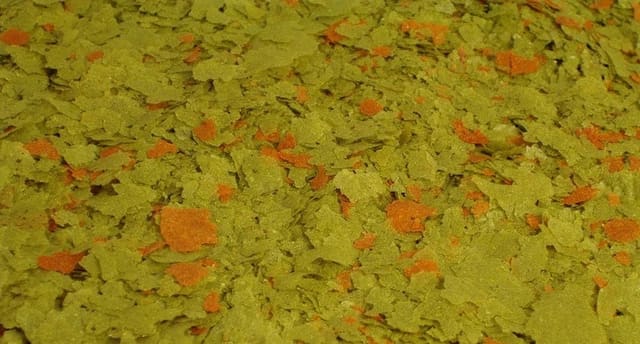
Aqua-Tropica Minifisch-VITAL 1 Flakes 40g is a small-fish flake food for tiny mini fish and young livebearer-sized fish that can take fine flakes. It is a dry daily food for aquariums where standard community flakes feel too coarse or leave too many uneven fragments.
The exact old product information identifies Minifisch-VITAL 1 as grade 1 macro flakes and a complete food for the smallest mini fish, including newborn guppy, platy and molly sized fish. Aqua-Tropica's current mini-fish guidance supports the same idea: small fish need food with the right structure and particle size, not simply smaller portions of a normal food.
| Brand | Aqua-Tropica |
|---|---|
| Product | Minifisch-VITAL 1 Flakes |
| Pack size | 40g |
| Food type | Small-fish flake dry food |
| Best for | Tiny mini fish and young guppy, platy or molly sized fish that can take fine flakes |
| Feeding style | Several small portions, cleared quickly |
| Use | Daily staple within a varied feeding routine |
| Storage | Keep tightly closed, dry and away from heat or aquarium spray |
Use Minifisch-VITAL 1 when you keep very small community fish or young livebearers that need an easy flake but are large enough to feed at the surface. It is useful for Endler-type livebearers, young guppies, young platies, young mollies and similar tiny fish where a full-size adult flake can be awkward.
This is not a universal fry starter for every species. Very new or tiny fry may need powdered fry food, infusoria, live foods or specialist starter foods before they can manage flakes. Larger cichlids, goldfish, bottom feeders and fish with very different diets should have food matched to their size and feeding style.
Feed a tiny amount and watch the response. Small aquariums can be affected quickly by leftover food, so several light feeds are better than one heavy pinch. The right amount is the portion the fish clear quickly without flakes drifting past them and settling in the substrate.
If you are feeding a mixed group of young fish, start with the smallest practical pinch. Confident fish will feed first, and quieter fish often come forward once the first rush settles. Reducing the portion size is usually better than trying to fix waste after the food has already broken down in the tank.
Minifisch-VITAL 1 can be the regular flake in a varied routine for suitable small fish. Rotate it with other appropriately sized foods when useful, such as micro granules, colour foods, small frozen foods or species-specific feeds. Variation helps cover different feeding behaviours while keeping the base routine simple.
For young livebearers, watch growth and mouth size over time. As they grow, they may move from very fine foods to slightly larger flakes, micro granules or the rest of the adult feeding routine. Keeping the food size matched to the fish is more important than repeating one keyword or product label.
Keep the tub closed between feeds and avoid dipping wet fingers into dry food. Moisture, aquarium spray and warm lights shorten freshness. The 40g pack is practical for smaller aquariums because it is easier to finish while the food is still in good condition.
We have rewritten this listing around what the product is actually for: small-fish flake feeding for tiny mini fish and young livebearer-sized fish. Dry goods are packed for dispatch, and delivery options are shown at checkout without using live-animal guarantee wording on a non-livestock product.
It is best for tiny mini fish and young guppy, platy or molly sized fish that can already take fine flakes.
Only for newborn or young fish large enough to take flakes. Very tiny fry often need powdered, liquid or live starter foods first.
Use very small portions and feed only what the fish clear quickly. Leftover food should be a sign to reduce the next feed.
Yes, Endler-type livebearers and similar small fish can use it as part of a varied feeding routine.
It can be a staple for suitable small fish, but rotating with other tiny foods is usually better for variety.
No. This is dry fish food, so it ships as a standard dry-goods order rather than as livestock.
No reviews for this item yet. Bought one? Honest reviews only, good or bad.
What customers say about ordering from us
Easy website plenty of info on fish your buying great to pick a time slot
TRACEY DURRANT · 7 Oct 2026
Got some lovely fish thank you
Kevin Mackie · 7 Oct 2026
Reviews of our shop, collected by Judge.me, an independent third-party review collector. Newest first.