
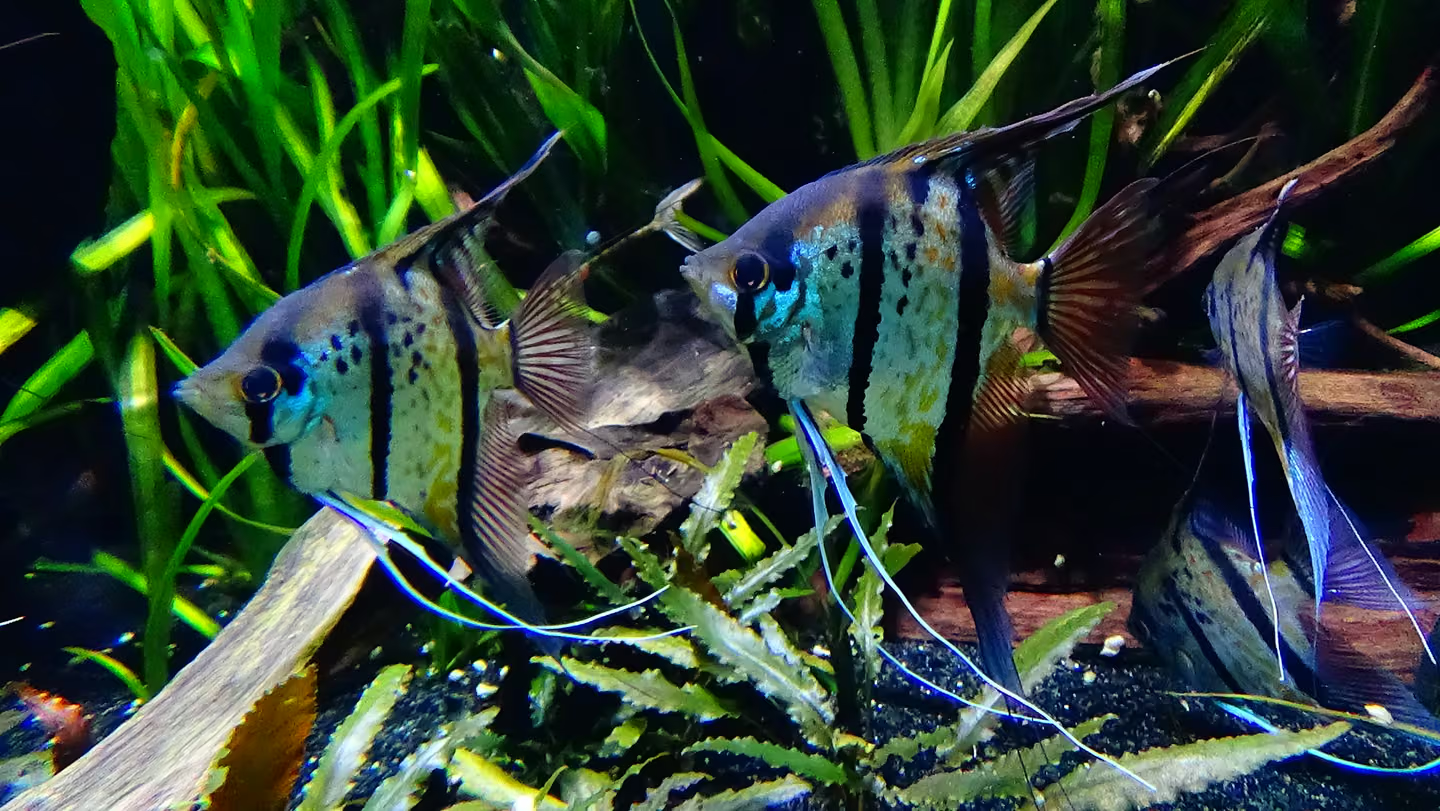
Freshwater Angelfish Care: Pterophyllum scalare

The shop-size juvenile is deceptive: published sources commonly describe about 15 cm total length, while extended fins can make an adult roughly 20–25 cm tall. Tank height and social planning therefore matter as much as litres.
Peer-reviewed development studyOATA's 120 L is a general UK industry floor for a compatible pair of smaller American cichlids, not a universal guarantee. Our preferred adult-pair plan is roughly 200 L with about a 100 × 40 cm footprint and 50 cm usable height. Routine 24–27 °C, pH 6.5–8.0 and 5–12 dGH deliberately overlap FishBase and OATA guidance; match the supplier's water and avoid abrupt changes.
Live stock
Angelfish for sale— see live stock & today’s prices
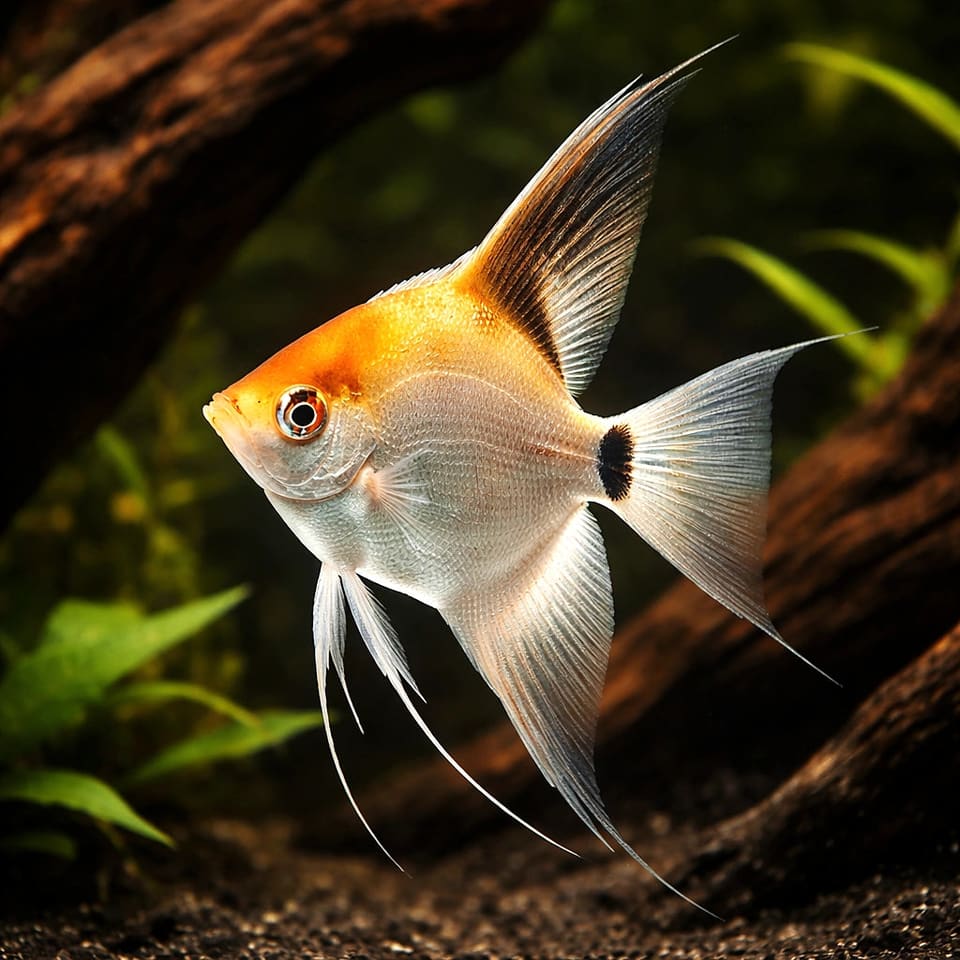
The most useful fact is visible before you read a parameter chart: freshwater angelfish grow upward as well as forward. The extended dorsal and anal fins can make an adult roughly 20–25 cm tall even when sources describe around 15 cm total length. That is why a short, shallow “starter” aquarium can be unsuitable despite looking adequate for the juvenile in a shop.
See live angelfish availability and current sizes after checking the welfare decisions below. Stock and prices belong on the shop page; this guide remains the evidence-checked care resource.
- OATA gives 120 litres as a general industry floor for a compatible pair, with sufficient height.
- We prefer planning around roughly 200 litres, a 100 × 40 cm footprint and about 50 cm usable height for an adult pair.
- Choose a compatible pair or a deliberately planned group; two random fish are not automatically a pair.
- Use 24–27 °C as our routine target and measure water rather than chasing an “ideal” number.
- Expect territorial behaviour during pair formation and breeding; keep a separation or rehoming plan.
Is an angelfish right for your aquarium?
| A reasonable match | Reconsider or change the plan |
|---|---|
| Mature, cycled aquarium with zero detectable ammonia and nitrite | New aquarium chosen by elapsed weeks rather than test results |
| Tall tank with useful footprint and adult turning room | Shallow tank sized only for a shop juvenile |
| Compatible pair, or a group with substantially more space and an exit plan | One isolated fish by default, or two random fish assumed to be bonded |
| Calm, appropriately sized companions with overlapping water needs | Tiny prey-sized fish, fin-nippers or highly aggressive competitors |
| Complete food plus measured variety | One treat food used as the entire diet |
| Stable measured source water and gradual acclimation | Fixed RO/tap recipes copied without testing GH, KH and pH |
This is a decision framework, not a universal stocking calculator. Adult behaviour, sex, pair bonds, tank dimensions, visual barriers, filtration and other inhabitants can change the outcome at the same number of litres.
Identity, origin and why the name matters
The accepted name is Pterophyllum scalare (Schultze, 1823), in the cichlid family Cichlidae. Eschmeyer's Catalog of Fishes records the lower Amazon in Brazil as the type locality and ZMB 2833 as the lectotype.[1][2] Its documented native distribution spans the Amazon basin in Brazil, Colombia, French Guiana, Guyana and Peru; a Suriname occurrence is introduced rather than native.[1]
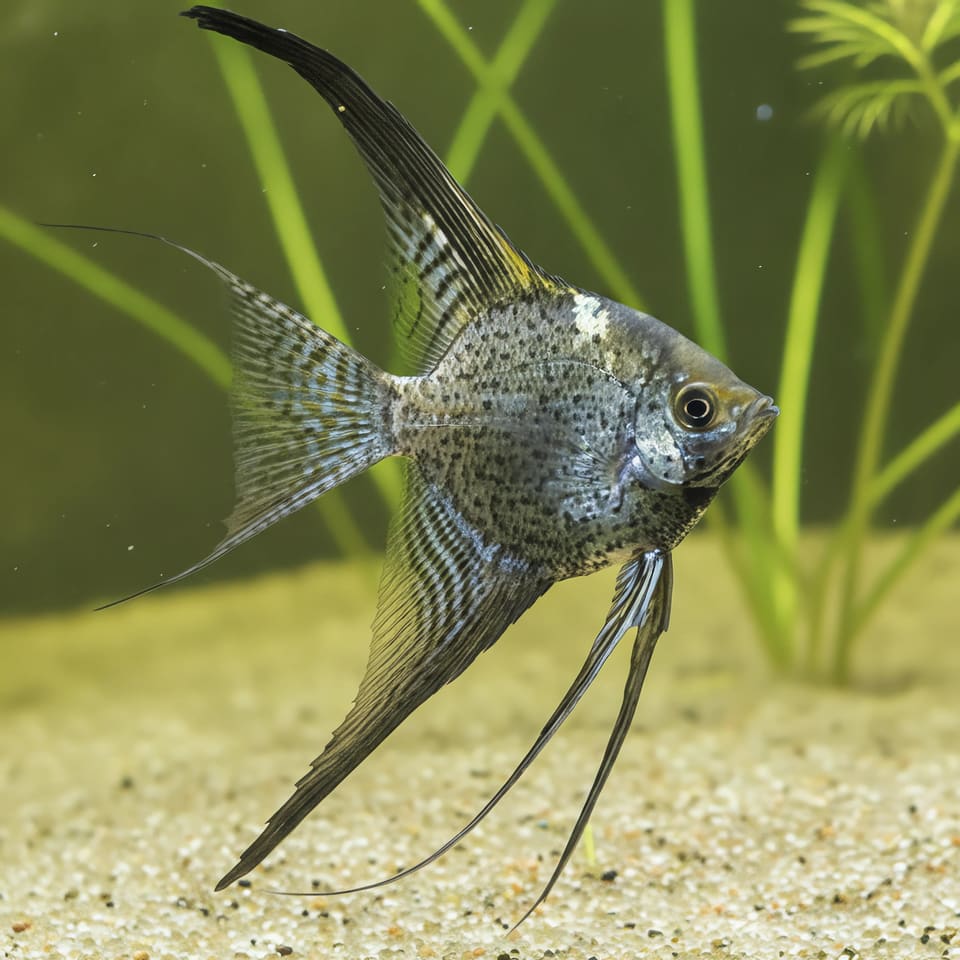
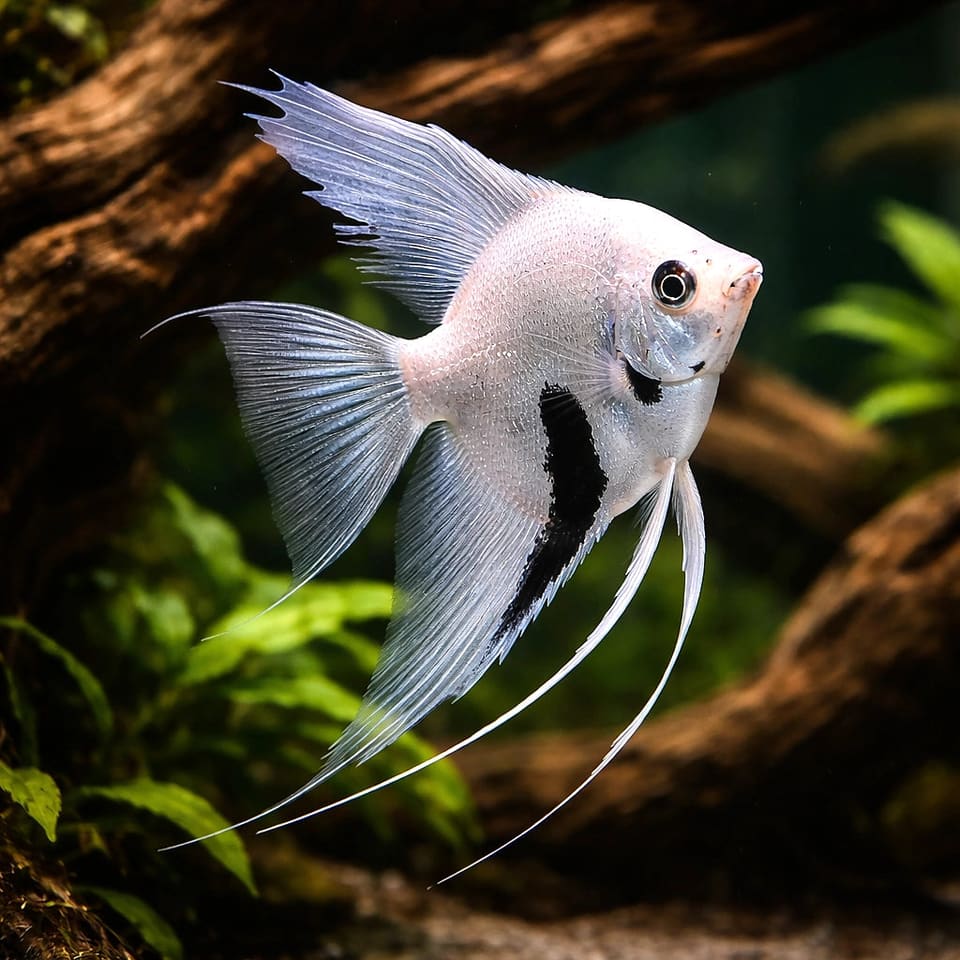
This guide is specifically about P. scalare. Altum angelfish, Pterophyllum altum, is a distinct species—not merely a premium colour strain. Marble, koi, gold, black, platinum and veil forms sold as P. scalare are domestic colour or finnage variants. Our angelfish types guide is the better place to compare those visual forms.
FishBase describes a laterally compressed, disc-shaped body and vertical barring, and records adults in densely vegetated swamps or flooded ground with clear or silty water.[3] Plants, roots and vertical structure are therefore reasonable layout inspiration. They are not proof that one exact plant, substrate colour or tannin level is medically necessary.
How big do freshwater angelfish get?
Size claims online often mix total length, body length, body height and fin-tip height. FishBase currently gives a 10.5 cm total-length field maximum, but it also retains an older 15 cm total-length value from an aquarium reference.[3] A peer-reviewed development paper describes adults around 15 cm total length and about 25 cm total height, again drawing partly on secondary sources.[9]
The honest consumer answer is a range, not false precision: plan for around 15 cm total length and often 20–25 cm total height including extended fins, while expecting individual and domestic-strain variation. Do not interpret the small size listed on a live product as the adult size.
A fish can be 15 cm from snout to tail and still stand much taller from dorsal-fin tip to anal-fin tip. FishBase's present field record and the familiar aquarium figure also come from different records. We disclose that uncertainty instead of silently selecting the largest number for drama or the smallest number to make a tank look suitable.
Tank size, height and social plan
OATA recommends at least 120 litres for a pair of smaller American cichlids, specifically says an adult angelfish aquarium must be sufficiently tall, and treats a pair or group as the social minimum.[4] That 120-litre figure is a broad UK trade-body floor, not proof that every nominal 120-litre tank can house every pair.
Tropical Fish Co's more conservative planning point for an adult pair is roughly 200 litres, with about a 100 × 40 cm footprint and 50 cm usable height. This is our husbandry policy, informed by the OATA floor and lower-tier species-focused guidance—not a number established by a controlled welfare trial. Tall dimensions must still leave horizontal turning and territory space.
Social planning is more difficult than selecting a number:
- A compatible pair can be a workable adult plan, but two fish selected at random may fight.
- A juvenile group can allow natural pair formation, but research shows social rank changes feeding and aggression. More fish is not automatically safer.[6]
- A group of adults needs substantially more space, visual barriers and close observation. Have a second suitable aquarium or a realistic rehoming route before conflict begins.
- A single angelfish should not be the default convenience option. OATA warns that isolated angelfish may become stressed, while the welfare literature finds meaningful social and environmental effects.[4][5]
No research justifies “six is always correct” or “one is always fine.” Observe feeding access, fin condition, hiding, chasing and use of space. Persistent exclusion is a welfare problem, not a hierarchy to ignore.
Water: overlap the evidence and keep it stable
FishBase lists 24–30 °C, pH 6.0–8.0 and 5–13 dGH; its temperature and aquarium values come from referenced compilations rather than a field-temperature experiment.[3] OATA's explicitly general American-cichlid guidance gives 22–27 °C, pH 6.5–8.0 and 4–12 dGH.[4]
Our routine care target deliberately uses the overlap: 24–27 °C, pH 6.5–8.0 and about 5–12 dGH. Match the water in which the fish is currently held, acclimate gradually and prioritise stability. Breeding or wild-origin stock may justify a more specific plan, but that plan needs measured source and target water—not assumptions based on a postcode.
If GH, KH and pH are unfamiliar, use the water chemistry guide before changing the source water. The existing site-wide matcher is not embedded here because its broad species ranges are not a substitute for the qualified evidence above.
Before adding fish, use tests to confirm zero detectable ammonia and nitrite. A calendar cannot prove a tank is cycled. Check temperature with a thermometer rather than relying only on a heater dial, and test regularly enough to see changes before behaviour deteriorates.[10][4]
Do not copy a fixed “50/50 RO and tap” recipe. Tap water and RO preparation differ, so measure GH, KH and pH, define the source and target conditions, and obtain competent advice before changing chemistry. Reserve gradual adjustment for elective pH, hardness or temperature changes—not an ammonia or nitrite emergency.
Layout, filtration and routine care
Use vertical plants or wood to break sight lines, plus open water where an adult can turn without dragging its fins. Structural complexity can support behavioural choice and reduce uninterrupted lines of aggression; the welfare literature supports providing environmental complexity rather than a bare box.[5] Secure decor so digging cannot destabilise it, and avoid sharp edges around long fins.
Choose filtration for water quality and oxygen exchange without forcing the fish to fight a harsh current continually. Cover hazardous intakes, keep a secure lid and leave access for maintenance. “Low-flow fish” never means stagnant or poorly oxygenated water.
Water-change percentage is not a magic species trait. Test results, stocking, feeding, plant growth and filter performance determine frequency. OATA's general sheet suggests regular testing and roughly 25% weekly changes as a starting routine; adjust using measured conditions rather than waiting for cloudy water.[4]
What should angelfish eat?
Use a nutritionally complete cichlid pellet, granule or suitable flake as the staple, in a size the fish can swallow. Add appropriate frozen or freeze-dried foods for variety. OATA recommends a complete staple, suitable variety and portions consumed within a few minutes; a controlled angelfish feeding study also supports that feed composition matters, but it does not create one universal household menu.[4][8]
Feed so that every fish—including subordinate animals—gets access. Remove uneaten food and watch body profile over time. Bloodworm, brine shrimp or another attractive food is a supplement, not a complete diet by itself. Do not use fasting, peas, vitamins or medicated food as a diagnosis for a fish that swims abnormally.
Tank mates: evaluate risk, not a “safe” list
Angelfish can sometimes live in a robust community, but they remain cichlids that may defend a pair or spawning site. OATA recommends calmer American cichlids such as angelfish only with appropriately robust, larger shoaling fish and compatible conditions.[4] The specialist angelfish tank-mates guide covers the decision in more depth.
Assess each proposed companion on five questions:
| Check | Why it matters |
|---|---|
| Adult body size | A fish small enough to swallow may become prey; juvenile appearance is misleading. |
| Fin behaviour | Persistent fin-nippers can damage long dorsal, anal and ventral fins. |
| Temperament and territory | Breeding pairs and other territorial fish may compete for the same space. |
| Water and temperature overlap | “Peaceful” does not make incompatible water requirements disappear. |
| Feeding speed and level | Fast surface feeders can leave slower or subordinate fish underfed. |
Corydoras and bristlenose plecos are often considered because they use different levels of the aquarium, but that is not a guarantee. Species, adult size, floor space and water needs still matter. Very small tetras, shrimp and fry remain at predation risk. Never promise that a companion is “perfect,” “100% safe” or immune to individual behaviour.
Health: test first, then obtain a diagnosis
Healthy fish normally show steady swimming, regular breathing, clear eyes, open fins, a consistent body profile and reliable feeding. Clamped or damaged fins, gasping, flashing, white spots, wounds, unusual balance, isolation or a sudden appetite change are warning signs—not a diagnosis.[11]
When something changes:
- Test ammonia, nitrite, nitrate, temperature and, where relevant, pH immediately.
- Compare the result with the fish's established conditions. Treat detectable ammonia or nitrite as urgent and obtain immediate competent advice; avoid abrupt elective pH, hardness or temperature swings.
- Isolate affected fish only where the separate setup is mature, suitable and will not create more stress.
- Photograph the signs, record the timeline and contact a specialist aquatic retailer or fish vet.
- In the UK, use only a lawful product labelled for the species and system, following its instructions or veterinary direction.[14]
There is no safe universal “raise to 32 °C” white-spot recipe. The ich parasite has protected and treatment-susceptible life stages, and temperature changes its timing; the appropriate response depends on a confirmed problem, the fish, water and authorised product.[13] Head lesions, abnormal faeces or white spots are signs to document and escalate, not proof of one cause or a reason to copy an online medicine recipe. Merck's veterinary guidance recommends quarantine and discourages prophylactic treatment without diagnosis.[12]
If a fish jumps out, return it to suitable aquarium water immediately, minimise handling and monitor breathing, balance and visible injury. Current UK fish-welfare standards say air exposure should be kept to an absolute minimum and, when it cannot be avoided, wet hands or wet gloves help protect scales and mucus.[15] Check the lid and obtain fish-veterinary advice if recovery is abnormal.
Breeding behaviour without the folklore
Freshwater angelfish clean and lay adhesive eggs on a surface such as a broad leaf, and both parents may guard eggs and young.[3][9] Pair choice matters. A behavioural study supports serial monogamy under its captive conditions, meaning a pair can change; “mates for life” is too absolute.[7]
Breeding can sharply increase territorial defence. A dedicated, mature setup gives the pair and any fry a safer plan than relying on a crowded community aquarium. Clutch size, hatch time and parenting success vary with fish and conditions. Laboratory timings are observations, not promises for a home tank, and preventive methylene-blue or antibiotic recipes are not part of this guide.
OATA notes that sexing varies among American cichlids and that some show no clear difference unless breeding.[4] For P. scalare, do not sell forehead shape, fin angle or temperament as a reliable juvenile sex test. A visible breeding papilla can assist during active spawning, but it is not a guarantee outside that context.
Colour forms, buying checks and retail disclosure
Domestic P. scalare occurs in silver, marble, koi, gold, black, platinum, zebra, smokey and long-fin forms. This evidence review does not support claiming that one colour is universally hardier, calmer or more disease-resistant. Choose the individual fish, provenance, adult form and welfare fit rather than treating colour as a care rating.
Before purchase, check:
- the stated current size and the adult plan;
- steady swimming, clear eyes, open fins and a normal body profile;
- whether the fish is currently kept as part of a pair or group;
- the seller's temperature and water chemistry;
- whether the listing is P. scalare, a distinct Pterophyllum species or a trade label;
- a mature quarantine plan; Merck recommends at least 30 days and separate equipment.[12]
Tropical Fish Co sells fish, so commercial links are a conflict worth stating plainly. The care recommendation does not depend on stock being available. Use the live angelfish shop for current products and prices, the types guide for visual strain comparison, and this page for care decisions.
How this guide was checked
The editorial team compared a current taxonomic catalogue, FishBase, peer-reviewed behaviour and development papers, UK OATA guidance, RSPCA welfare advice and veterinary material. Scientific records establish identity, distribution, morphology and studied behaviour; aquarium numbers from trade or hobby sources are labelled as guidance or store policy. We removed unverifiable first-person experience, fixed medical recipes and unsupported guarantees.
If you find a conflicting primary source or a care statement that needs correction, use the visible Suggest an edit contact on this page. Editorial feedback is not counted as a lead, add-to-cart event or purchase.
Freshwater angelfish shape and colour


Frequently asked questions
Shop current Pterophyllum scalare
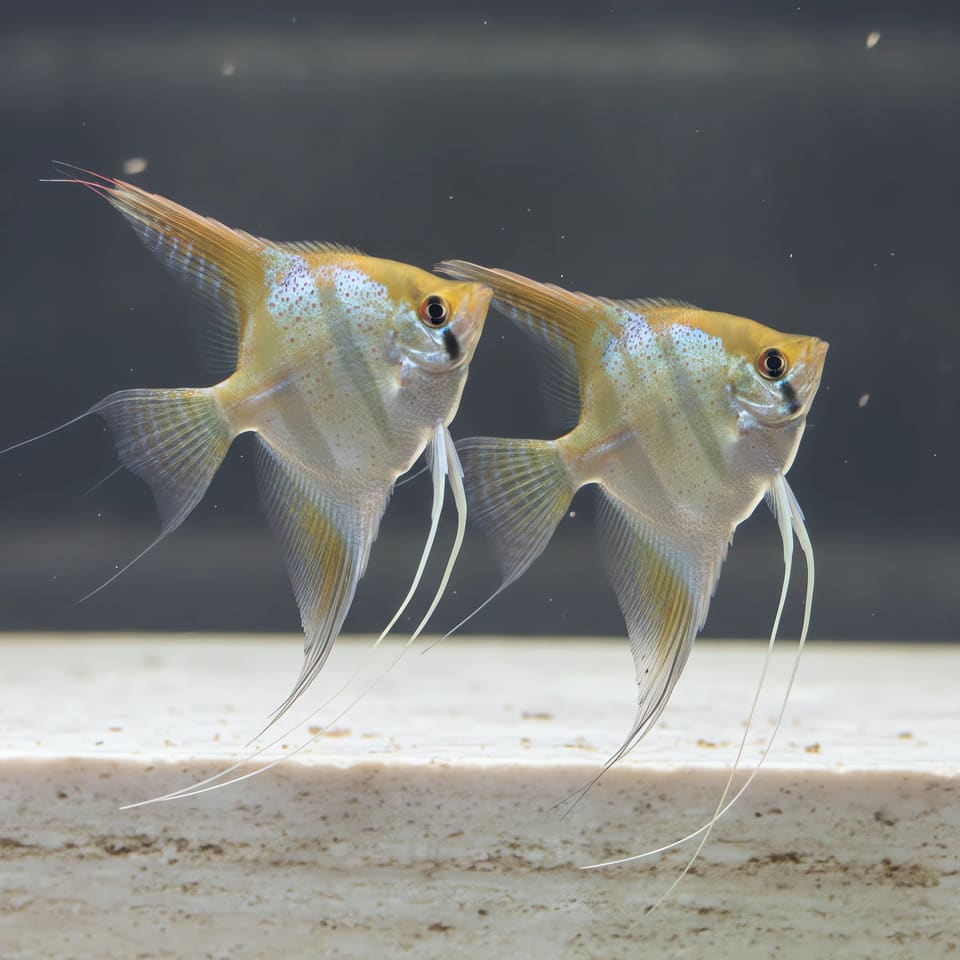
Marble Angelfish (Pterophyllum scalare)
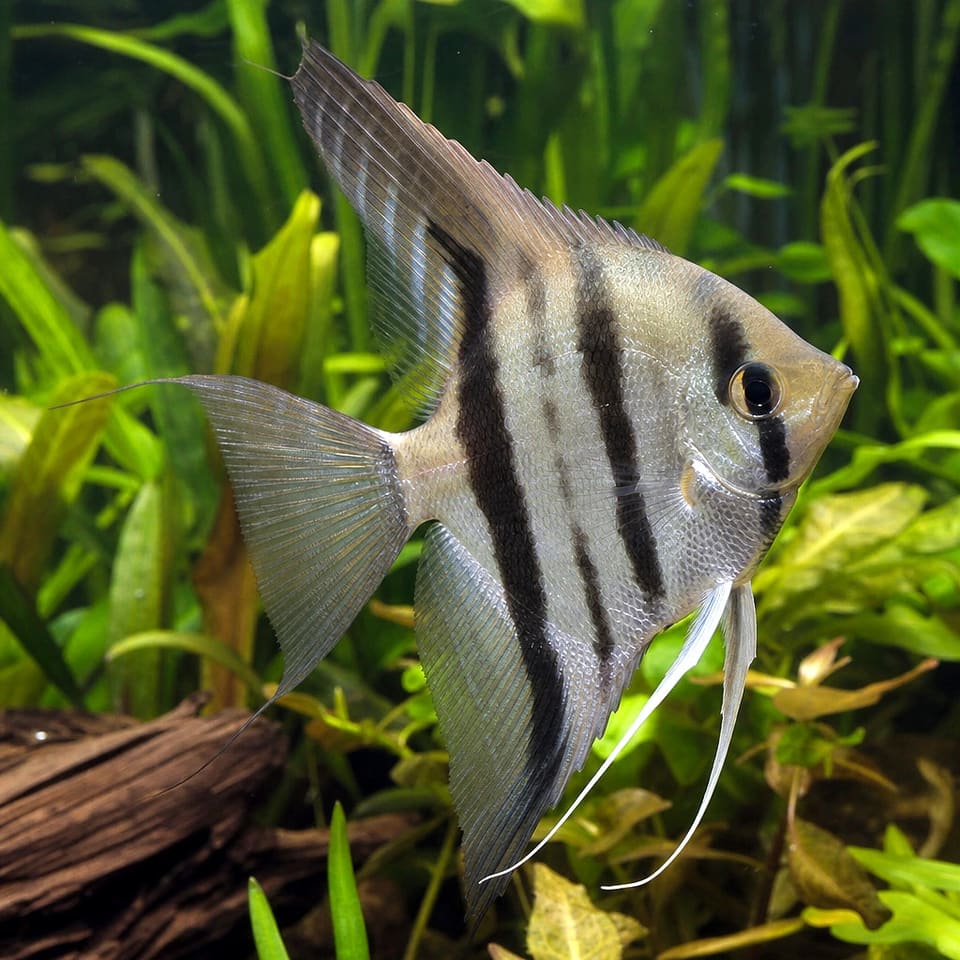
Rio Nanay Angelfish (Pterophyllum scalare)
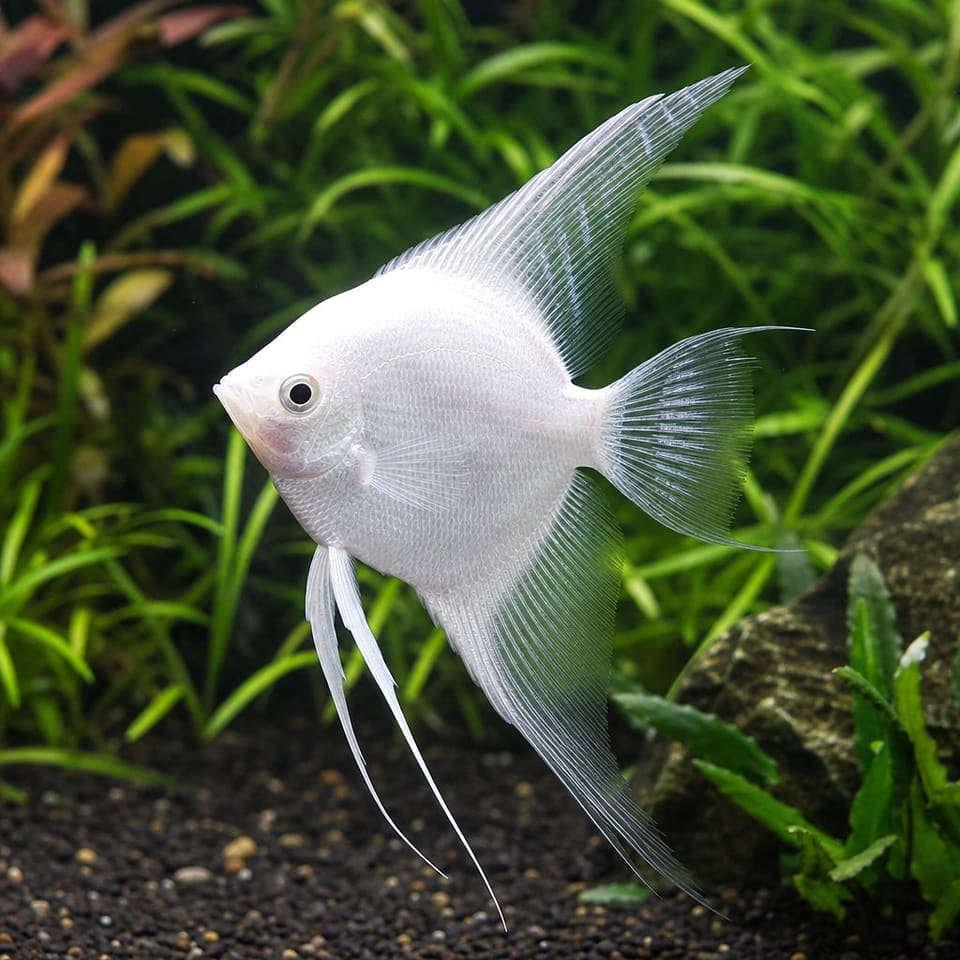
Platinum White Angelfish (Pterophyllum scalare)
Ghost Angelfish (Pterophyllum scalare)
California Angelfish (Pterophyllum scalare)
Dalmatian Angelfish (Pterophyllum scalare)
Shop Angelfish & related
From this care guide straight into our UK live-fish catalogue.
South American Cichlids
South American Cichlids for sale UK — Apistogramma, Rams, Oscars, Severums, Geophagus, Pikes, Discus and Angelfish.
Discus Fish
Premium Discus Fish (Symphysodon spp.) for sale UK — Red Melon, Blue Diamond, Pigeon Blood, Checkerboard. The king of the aquarium, live arrival guarantee.
Sources & further reading
Material factual claims cite the sources below; store policy and cautious inference are labelled in the article. Sources are grouped by type so you can judge their weight at a glance.
Peer-reviewed study (6)
- [2]Paepke, H.-J. & Schindler, I. (2002). Zur Erstbeschreibung von Pterophyllum scalare (Schultze in Lichtenstein, 1823) (Pisces, Cichlidae). Zoosystematics and Evolution. DOI: 10.1002/mmnz.20020780109. View source
Lectotype and type-locality clarification.
- [5]Brandão, M. L. et al. (2021). Understanding behaviour to improve the welfare of an ornamental fish. Journal of Fish Biology. DOI: 10.1111/jfb.14802. View source
Welfare review of angelfish social and environmental needs; it does not establish one universal group size.
- [6]Gómez-Laplaza, L. M. & Morgan, E. (2003). The influence of social rank in the angelfish, Pterophyllum scalare, on locomotor and feeding activities in a novel environment. Laboratory Animals. DOI: 10.1258/00236770360563741. View source
Controlled evidence that isolation and social rank affect behaviour and feeding; not proof that every aquarium should contain exactly six fish.
- [7]Cacho, M. S. R. F., Yamamoto, M. E. & Chellappa, S. (2007). Mating system of the Amazonian cichlid angel fish, Pterophyllum scalare. Brazilian Journal of Biology. DOI: 10.1590/S1519-69842007000100022. View source
Pair choice and serial monogamy under the studied captive conditions; not evidence of lifelong pairing.
- [8]Kasiri, M., Farahi, A. & Sudagar, M. (2012). Growth and reproductive performance by different feed types in fresh water angelfish (Pterophyllum scalare Schultze, 1823). Veterinary Research Forum. View source
Controlled feeding study; useful for diet variety, not a universal household feeding schedule.
- [9]Korzelecka-Orkisz, A. et al. (2012). Early ontogenesis of the angelfish, Pterophyllum scalare Schultze, 1823 (Cichlidae). Neotropical Ichthyology. DOI: 10.1590/S1679-62252012005000017. View source
Development and parental-care observations; cited laboratory conditions are not aquarium welfare minima.
Scientific database (2)
- [1]Fricke, R., Eschmeyer, W. N. & Van der Laan, R. (eds.). Eschmeyer's Catalog of Fishes: Pterophyllum scalare. California Academy of Sciences. View source
Current accepted name, authorship, family placement, type locality and distribution.
- [3]Froese, R. & Pauly, D. (eds.). FishBase: Pterophyllum scalare. FishBase. View source
Distribution, morphology, current maximum-length record, conservation record, aquarium ranges and cited reproductive observations; aquarium values are not treated as field measurements.
University extension (1)
- [13]Francis-Floyd, R., Yanong, R. P. E. & Pouder, D. B. (2026). Ichthyophthirius multifiliis (White Spot) Infections in Fish. University of Florida IFAS Extension. DOI: 10.32473/EDIS-fa006-1991. View source
Explains the parasite life cycle, temperature dependence, treatment-stage limits and risks; it does not provide one universal household heat recipe.
Veterinary reference (1)
- [12]Merck Veterinary Manual. Management of aquarium fish. Merck Veterinary Manual. View source
Quarantine, cycling and veterinary management guidance; discourages treatment without diagnosis.
Animal-welfare charity (2)
- [10]Royal Society for the Prevention of Cruelty to Animals. Creating the ideal environment for your fish. RSPCA. View source
Cycling by measured ammonia/nitrite, temperature monitoring and general environment guidance.
- [11]Royal Society for the Prevention of Cruelty to Animals. Fish health and welfare. RSPCA. View source
Visible health signs and water-quality-first escalation.
Trade-body guidance (1)
- [4]Ornamental Aquatic Trade Association. How to look after American cichlids. OATA. View source
UK trade-body guidance; water ranges and most husbandry figures are explicitly general rather than species-specific.
Government / regulatory (2)
- [14]Veterinary Medicines Directorate. Exemption from authorisation for medicines for small pet animals. GOV.UK. View source
UK legal context for small-pet medicines; included to support lawful labelled-use wording, not a diagnosis or dosing instruction.
- [15]UK Home Office (2026). Advisory standards for the care and accommodation of animals bred, supplied or used for scientific purposes. GOV.UK. View source
Current UK fish-welfare handling guidance: minimise time in air and use wet hands or gloves where out-of-water handling cannot be avoided.
Spotted something that needs a fix?
Fishkeeping moves fast and we want every guide spot-on. If you think something here is wrong, out of date, or could be clearer, tell us — our team reads every message and updates the page.
Suggest an editKeep exploring
Shop related
- South American Cichlids
South American Cichlids for sale UK — Apistogramma, Rams, Oscars, Severums, Geophagus, Pikes, Discus and Angelfish.
- Discus Fish
Premium Discus Fish (Symphysodon spp.) for sale UK — Red Melon, Blue Diamond, Pigeon Blood, Checkerboard. The king of the aquarium, live arrival guarantee.
Care guides
- Cichlid Care Guide: A UK Aquarist's Introduction to the Cichlidae Family
Complete cichlid care guide covering freshwater cichlid types, tank setup, water parameters, and tank mates. From dwarf cichlids to discus, written for UK hobbyists.
- Corydoras Care Guide: Choose the Right Cory Catfish
Corydoras care for UK aquariums: compare popular cory catfish by adult size and temperature, then check tank, group, substrate, food and tank mates.
- Bristlenose Pleco Care Guide: Ancistrus sp. for UK Aquarists
Complete Bristlenose Pleco (Ancistrus sp.) care guide — tank size, water parameters, diet, driftwood, breeding, tank mates. Written by a UK aquarist, cited sources.
Related care guides

Cichlid Care Guide: A UK Aquarist's Introduction to the Cichlidae Family
Cichlids are one of the most diverse fish families in the hobby. From tiny apistogrammas to massive oscars, this guide covers the basics of keeping them well.
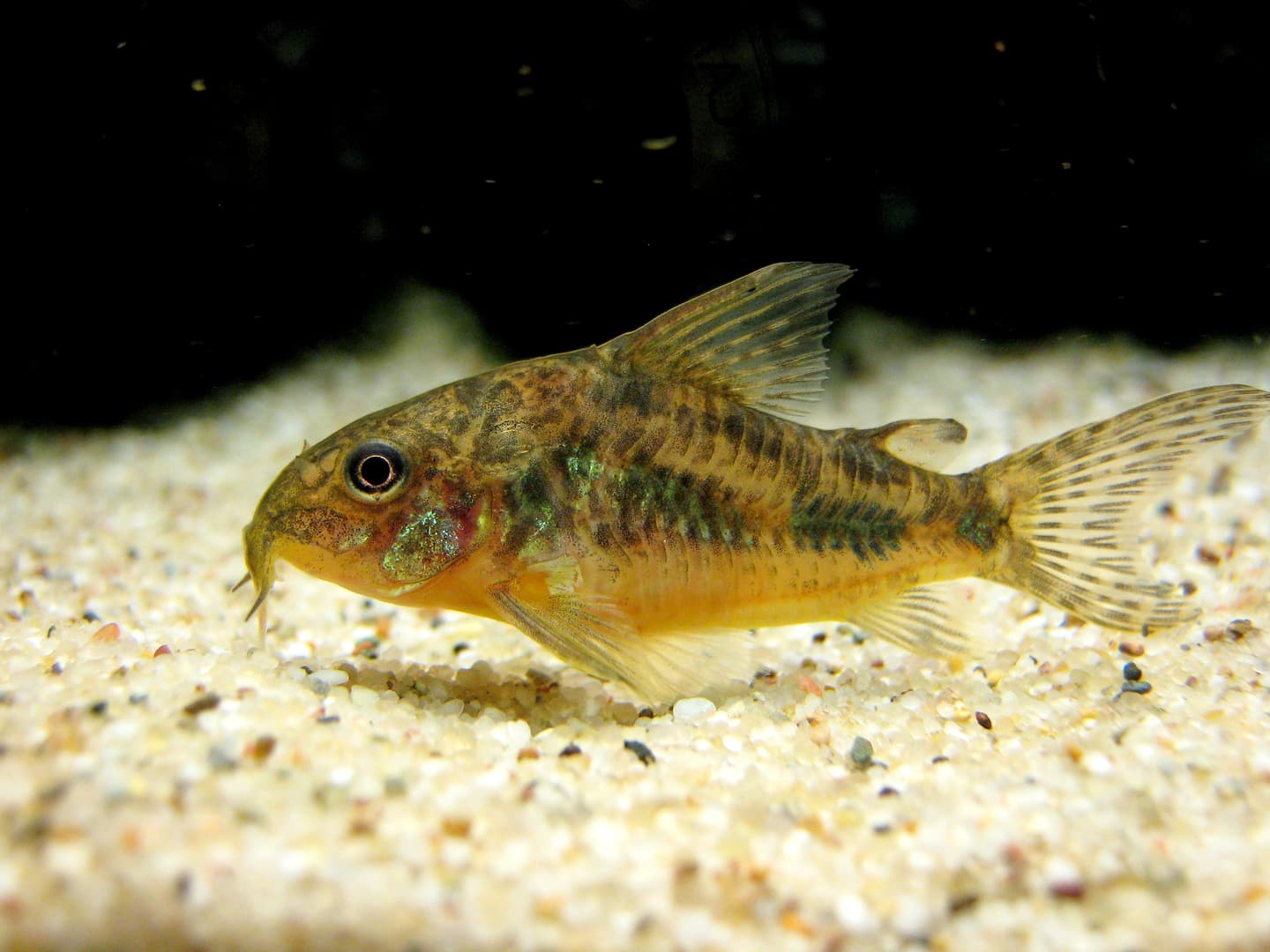
Corydoras Care Guide: Choose the Right Cory Catfish
Identify the exact cory catfish before choosing care. Our starting policy for many common medium species is six compatible conspecifics, a mature 60 x 30 cm aquarium of about 60 litres, smooth fine sand and measured species-appropriate water.
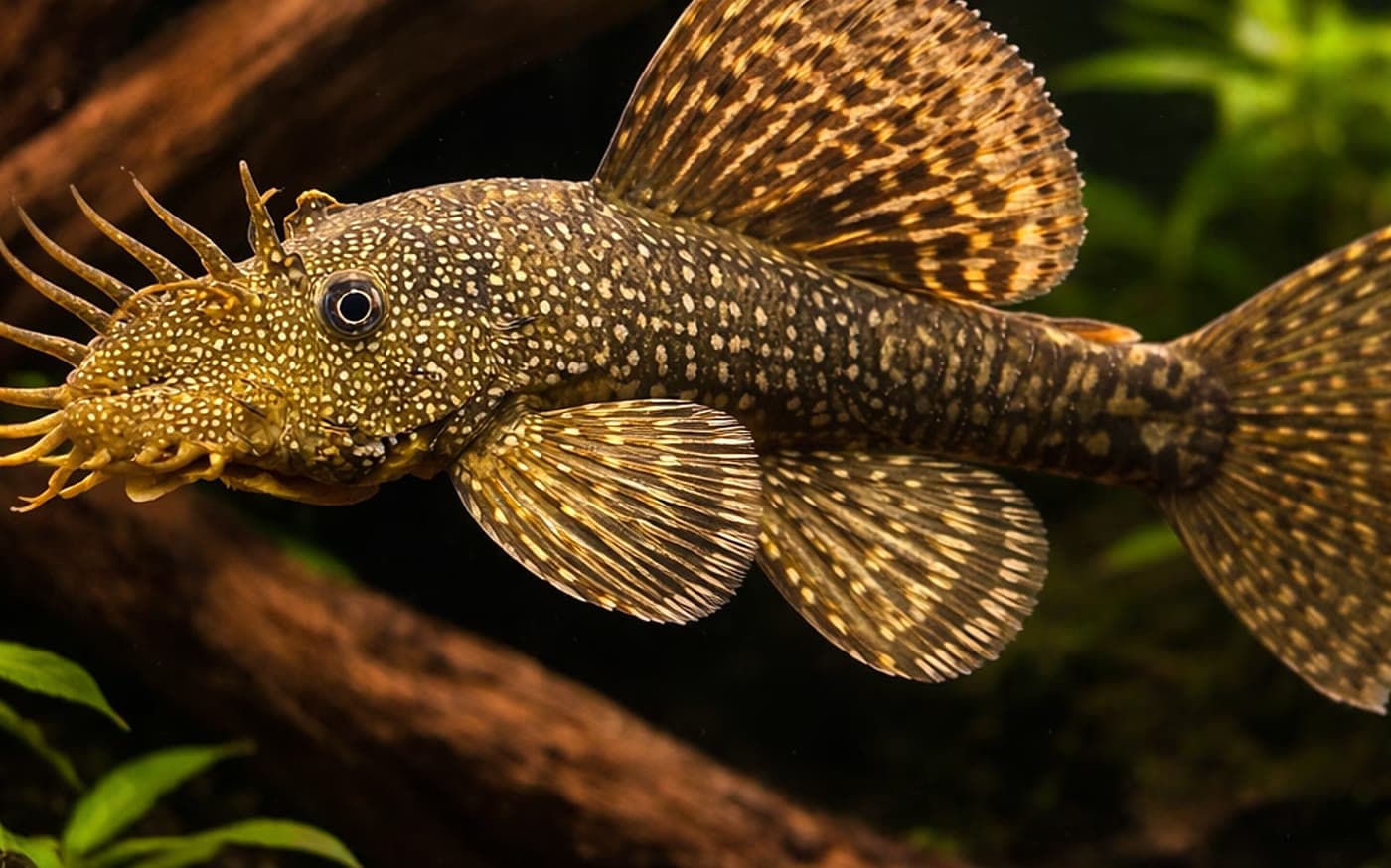
Bristlenose Pleco Care Guide: Ancistrus sp. for UK Aquarists
Peaceful algae-grazing catfish ideal for UK community tanks. Stays small (12-15 cm), loves driftwood, easy to breed. Sent by licensed live-animal courier with Live Arrival Guarantee.