Gunther's Nothobranch (Nothobranchius guentheri)
22–25°C · pH 6–7
£11.99

Specialist South American annual killifish supplied at 3-4 cm. Current name Matilebias alexandri, with Cynolebias alexandri retained as supplier/original-name context.
Adult size is the maximum length this species reaches at full maturity (scientific sources). The livestock you receive will be younger and smaller. Product-photo provenance and any image-specific limitations are stated on the listing.
Matilebias alexandri
Save when buying multiple fish. Each quantity is one fish; sex and pair formation are not guaranteed unless the selected variant explicitly states them.
Confirm your email, then we’ll send an availability message for this exact item if it returns within 180 days.
This request is only for this product—no newsletter or other promotions. A mail-provider retry may very rarely duplicate the same availability message. Unconfirmed addresses are removed after 48 hours. See our privacy policy.
Specialist South American annual killifish supplied at 3-4 cm. Current name Matilebias alexandri, with Cynolebias alexandri retained as supplier/original-name context.
Adult size is the maximum length this species reaches at full maturity (scientific sources). The livestock you receive will be younger and smaller. Product-photo provenance and any image-specific limitations are stated on the listing.
Maintain these water conditions for optimal health and vibrant colors
The older Cynolebias name and the intermediate Austrolebias alexandri combination are retained here because they are still common in supplier, hobby and search references.
This is a South American annual killifish supplied at 3-4 cm. It is peaceful, colourful and fascinating, but it should not be sold in the copy as a general community-fish shortcut. It suits a keeper who wants a species-first aquarium, a tight lid, small live or frozen foods, calm tank mates only if any, and the option to work with peat or coco-coir spawning media. FishBase gives a maximum size of up to 9 cm total length, with about 5 cm more typical in older hobby references, so these should be treated as young fish with colour and body depth still to develop.
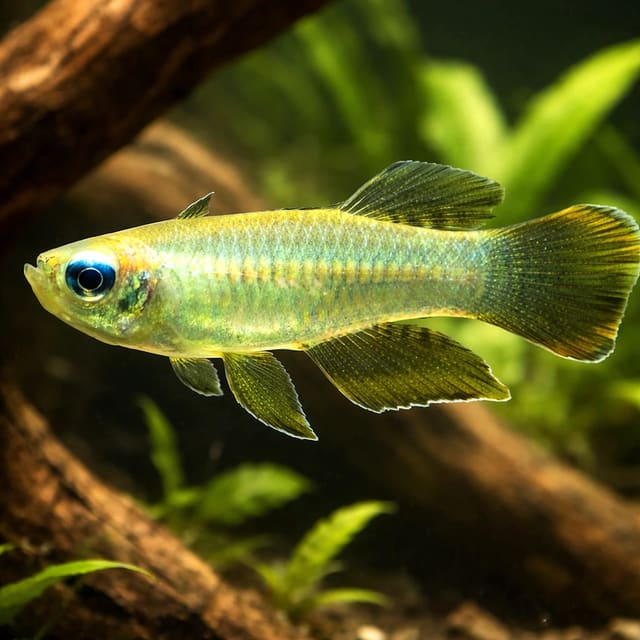
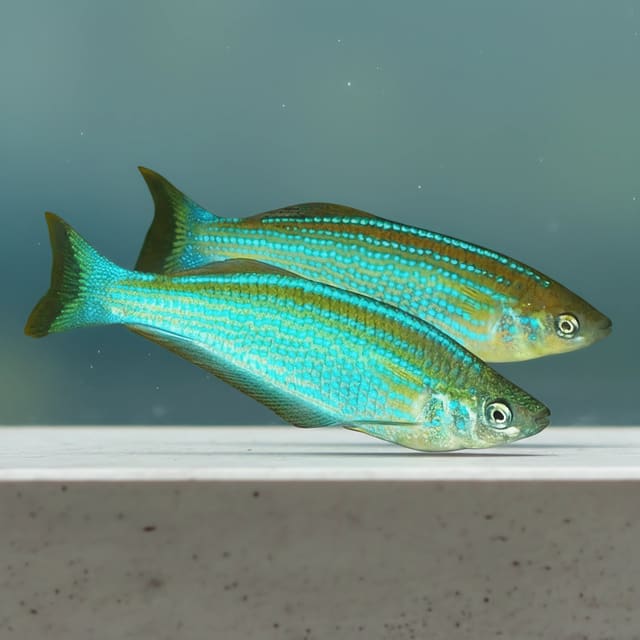
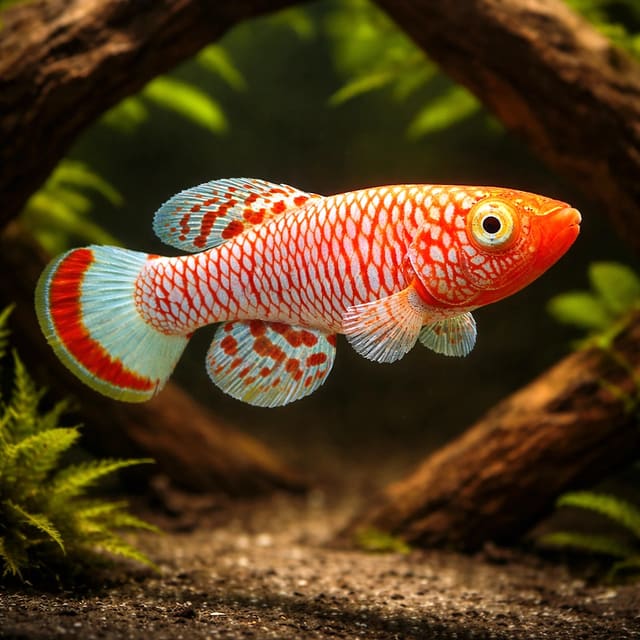
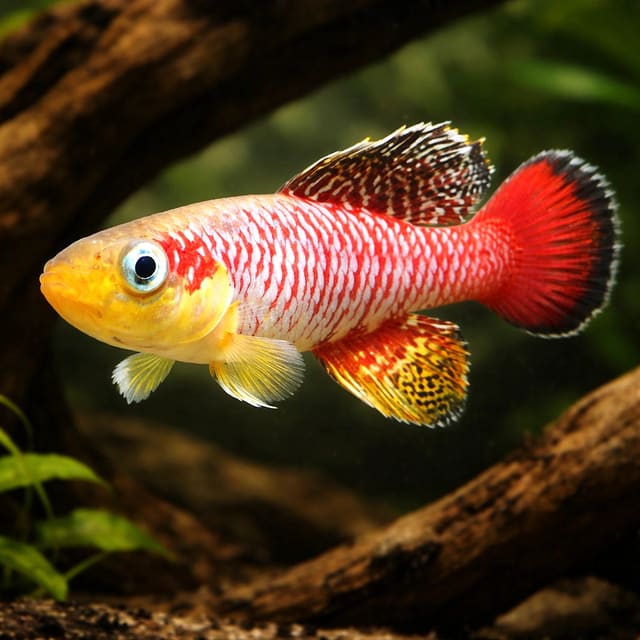
The original reference photo for SKU 3084 shows a compact annual killifish with a rounded caudal fin, blue to violet body tone, pale pearly spotting and deeper blue fin colour. It is a small source image, but it is the factual media reference for this product and is being added to Shopify as an extra image rather than replacing the existing gallery.
Matilebias alexandri is an annual killifish from the Uruguay River basin. Eschmeyer's Catalog of Fishes records the type locality at Parque Unzue, Gualeguaychu, Entre Rios Province, Argentina, and lists the current valid name as Matilebias alexandri. FishBase places the species in freshwater, benthopelagic habitat and gives the range as Argentina, Brazil and Uruguay.
Like other South American annual killifish, this species is associated with temporary or seasonal waters. Adults live, feed and spawn while water is present. Eggs are placed into soft substrate and can continue developing during a drier resting period before hatching when conditions return. That life cycle is the reason the listing needs specialist guidance instead of generic community-fish wording.
A 45 litre or larger covered aquarium is a sensible starting point for a pair or small group, with more space preferred if males are showing strongly or if the group is larger. Use a dark, fine substrate or a bare-bottom setup with removable spawning containers, depending on whether the keeper is prioritising display or breeding control. Java moss, fine-leaved plants, floating cover and subdued lighting all help reduce stress.
Filtration should be gentle and mature. Avoid strong flow, uncovered gaps and rough decor. These fish can jump, and annual killifish often do best when the aquarium feels quiet rather than busy. Keep ammonia and nitrite at zero, keep nitrate low, and make small regular water changes rather than large swings.
Killi.co.uk breeder reports for this species include cooler 16-19 C and 20-23 C maintenance, with comments to keep the fish and incubating eggs cool. That is why the practical advice here is conservative: stable, clean, moderately cool conditions are safer than pushing the warm end of the published range all year.
This is a carnivorous annual killifish. Offer small live and frozen foods such as daphnia, mosquito larvae, bloodworm, brine shrimp and suitably sized worms. Quality micro granules may be accepted by some individuals, but live and frozen foods should remain the core of the diet, especially when conditioning adults for breeding.
Feed lightly once or twice daily and remove uneaten food. A small specialist tank can foul quickly if rich food is overused, so the best results come from fresh food, small portions and steady water quality.
Alexandri's Pearl Fish is peaceful in the sense that it is not a predatory community bruiser, but that does not make it a perfect community fish. It is best kept species-first, or with only very calm, similarly sized fish that will not outcompete it for food or disturb breeding. Avoid large fish, boisterous livebearers, fast-feeding barbs, fin-nippers, aggressive cichlids and anything that needs hard alkaline water or strong current.
Males may display to each other, especially in breeding condition. Provide visual breaks and watch the group rather than assuming every pair or trio will behave the same way.
Use peat, coco coir or a similar soft spawning medium in a removable container. Adults deposit eggs into the substrate. Breeder reports summarised by Killi.co.uk list peat or similar substrate as the successful spawning method, with temperatures around 16-23 C in reported cases. Egg production and egg survival can be the main challenge, so incubation should be handled carefully and not overheated.
Fry are small and need appropriately fine first foods before moving onto newly hatched brine shrimp and other small live foods. This is rewarding work, but it is not the same as simply putting a pair into a general tropical community tank.
We pack live fish for licensed live-animal courier delivery and this product is covered by our Live Arrival Guarantee when the delivery instructions are followed. Choose this fish if you want a specialist annual killifish with current taxonomy, real source-photo support and clear care expectations. Choose a hardier general community fish instead if you want a low-maintenance beginner aquarium.
Care and taxonomy were checked against FishBase, Eschmeyer's Catalog of Fishes, FishBase synonym detail, Killi.co.uk breeding reports, SIB Argentina and our stock records. The older Cynolebias alexandri name remains in the listing as supplier and original-combination context, not as the current accepted name.
No reviews for this item yet. Bought one? Honest reviews only, good or bad.
What customers say about ordering from us
I have a small group of long finned mountain minnows. So was delighted to be able to order ten of this variety to increase the genetics in my tank . The ones I recieved are healthy but it’s to early to give a verdict on wether they are of a long finned type since they are small currently.
Gordon Walker · 23 Sept 2026
100% success travel and "installation". Pleased with quality of purchase. The Siamese fighter a bit "shy" so have not yet seen him at his best yet but looking good. Happy customer. GG
George E Garratt · 21 Sept 2026
Reviews of our shop, collected by Judge.me, an independent third-party review collector. Newest first.