Cold Water Fish for Sale UK: The Complete 2026 Buying Guide
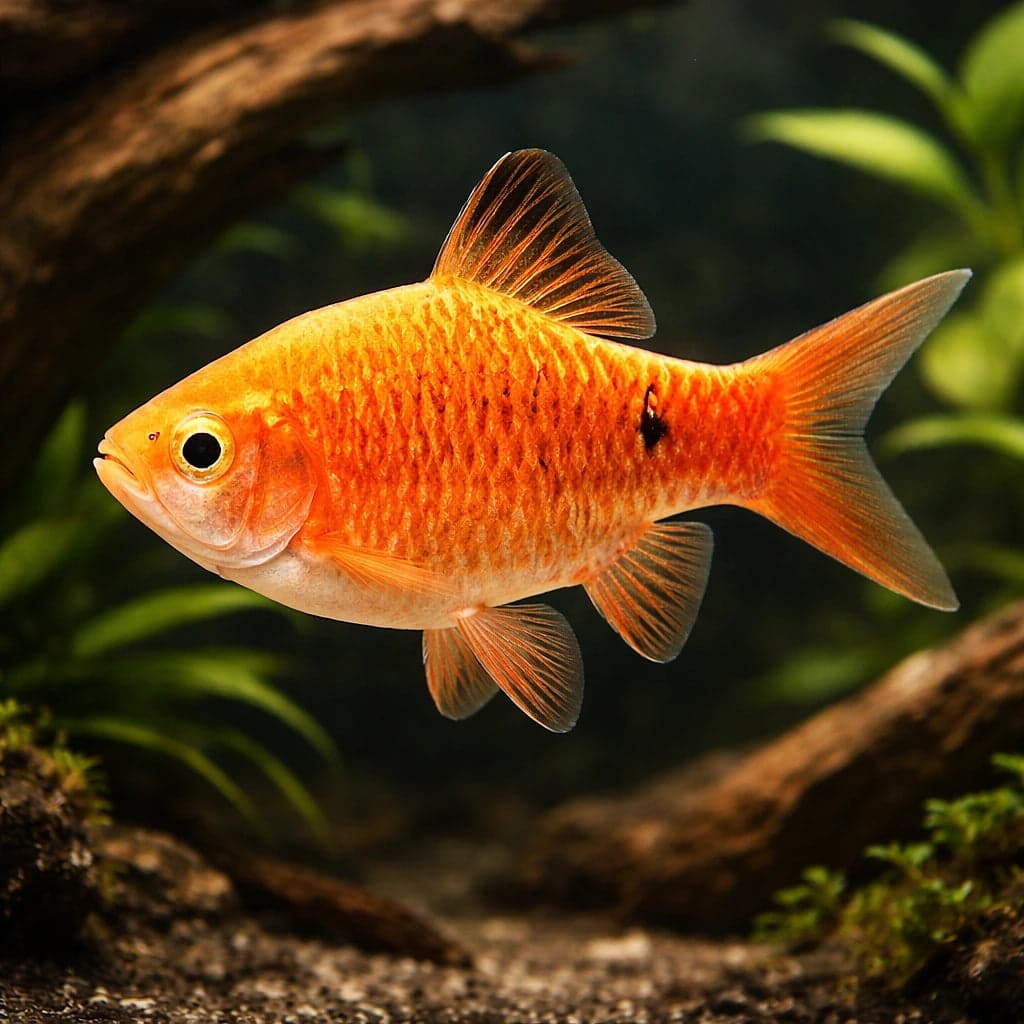
Cold water fish (more accurately: temperate and sub-tropical species) thrive in UK homes without a heater. Rosy barbs, white cloud mountain minnows, pearl danios, goldfish, and several other species handle 16–22 °C comfortably. Fancy goldfish and wild minnows need different setups — we cover both.
Why "cold water fish" isn't what you think it is
Most newcomers to UK aquaristics see "cold water fish" and imagine goldfish in a bowl. That's three decades out of date. The modern interpretation: species that thrive at 16–22 °C without a heater, suitable for unheated UK home aquariums.
I'm Connor. I haven't owned an aquarium heater in seven years and my fish are all perfectly happy. This guide covers the species that actually work in a UK unheated setup, the tank sizing you need, and the compatibility rules that separate this from tropical community keeping.
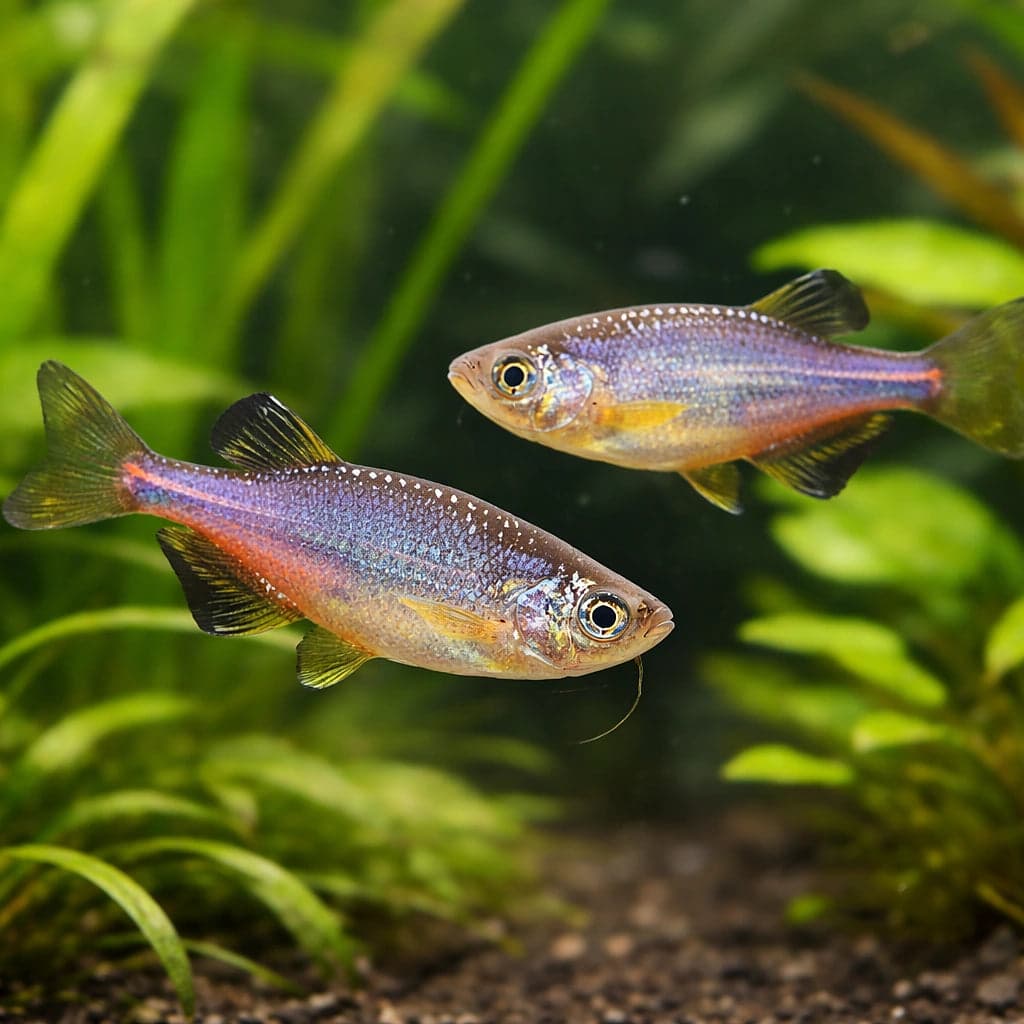
A Pearl Danio. One of the four most-available cool-water schoolers in the UK trade, and arguably the most graceful. Silvery body with a subtle iridescent sheen. Photo: Tropical Fish Co warehouse.
Five things most "cold water fish" guides get wrong
- "Cold water" in UK aquaristics means 16–22 °C, not actually cold. The category is more accurately called "temperate" or "sub-tropical". True cold-water fish (trout, native UK stream species) need 10–16 °C and chillers [?].
- UK homes are warm enough for most "cold water" species without heating. Average UK living room sits at 18–22 °C year-round which is ideal for rosy barbs, white clouds, pearl danios. Only conservatories and unheated garages are problematic [?].
- White Cloud Mountain Minnow is Critically Endangered in the wild. But 99% of UK stock is tank-bred, making it one of the most sustainable wild-threatened species to buy [?]. Buying from the ornamental trade does NOT harm wild populations.
- Goldfish need 120 L minimum per fish. The small-bowl goldfish image common in UK culture pre-1990s is incompatible with modern animal welfare standards. Goldfish Society of Great Britain standards recommend 120 L for singletails, 200 L+ for fancies [?].
- UK native fish are legal to keep with Environment Agency compliance. Minnows, sticklebacks, bullheads, three-spined sticklebacks — all can be legally kept in aquariums, but stocking from the wild requires awareness of the Wildlife & Countryside Act [?].
The 10 cool-water species in UK stock
Head-to-head: the cool-water species in UK trade
| Species | Scientific name | Min tank | Temp range | UK price |
|---|---|---|---|---|
| Rosy Barb | Pethia conchonius | 60 L | 16–24 °C | £1–£3 |
| White Cloud Mountain Minnow | Tanichthys albonubes | 40 L | 14–22 °C | £2–£3 |
| Pearl Danio | Danio albolineatus | 60 L | 16–24 °C | £2–£4 |
| Zebra Danio | Danio rerio | 60 L | 15–24 °C | £2–£3 |
| Blue Danio | Danio kerri | 40 L | 18–24 °C | £3–£4 |
| Common Goldfish | Carassius auratus | 120 L | 14–22 °C | £4–£15 |
| Fancy Goldfish (oranda, ryukin) | Carassius auratus | 200 L+ | 16–22 °C | £15–£80 |
| Paradise Fish | Macropodus opercularis | 60 L | 16–26 °C | £5–£12 |
| Hillstream Loach | Multiple genera | 90 L | 20–24 °C | £9–£25 |
| Metallic Topminnow | Girardinus metallicus | 40 L | 20–25 °C | £3–£4 |
Rosy barbs + white clouds + danios are the three easiest entry-level choices. Goldfish need a dedicated setup.
The unheated-tank setup
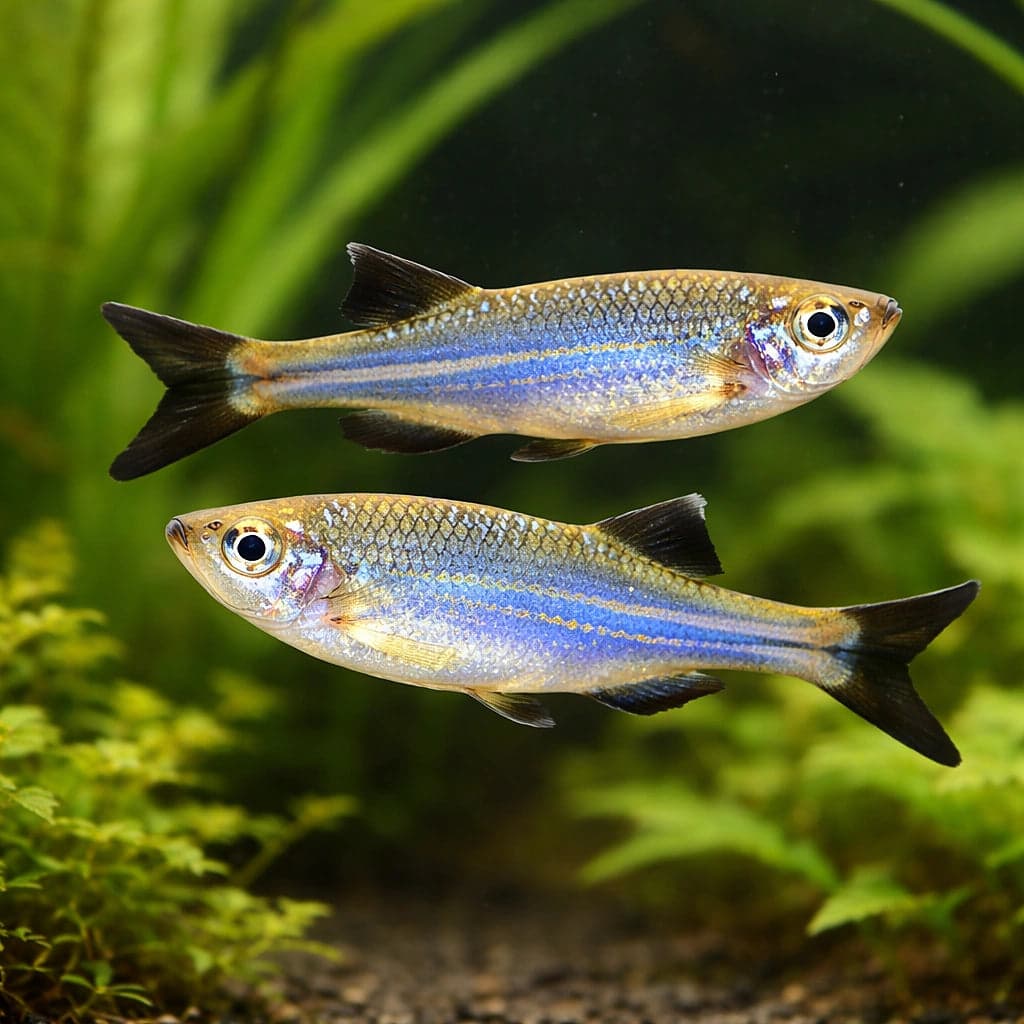
A Blue Danio. Zebra's lesser-known cousin — more subtle colouration, similar schooling behaviour, equally cool-tolerant. Photo: Tropical Fish Co warehouse.
Hardware differences vs a tropical tank
- No heater — main difference from tropical setups
- Thermometer still required — to confirm room-temp tracks tank-temp properly
- Standard filtration — 4–6× turnover per hour, no change
- Lighting + planting — identical to a tropical setup
- Substrate — same options; choose based on fish preference (goldfish like rounded gravel, barbs don't care)
Tank-size planning
- 60 L — 6–8 rosy barbs + 6 cherry shrimp
- 90 L — 8 rosy barbs + 8 white cloud minnows + 6 shrimp
- 120 L — single common goldfish + invertebrates
- 200 L — pair fancy goldfish + invertebrates
- 400 L+ — community goldfish group (3+ fancies) or stream biotope (white clouds + hillstream loaches + corydoras)
Goldfish — their own category
Goldfish need their own rulebook because they share nothing husbandry-wise with tropical community fish:
Goldfish tank sizing (Goldfish Society standards)
- Common + comet goldfish (single-tail): 120 L single, +80 L per additional fish. Grow to 20–30 cm.
- Fancy goldfish (oranda, ryukin, fantail, ranchu): 200 L minimum. Slower-swimming, can't compete with single-tails for food, keep fancies separate.
- Never a bowl. Bowls are incompatible with goldfish welfare — insufficient filtration, insufficient oxygen surface area, insufficient volume [?].
Goldfish-specific differences
- Filtration: 8–10× turnover per hour (double the tropical standard) because of waste output
- Feeding: high-protein pellets + vegetables (blanched peas, courgette) — NOT flake food alone
- Plants: live plants get eaten. Use java fern + anubias tied to hardscape only.
- Tank mates: single-tails with other single-tails; fancies with other fancies; mixing single-tails and fancies leads to fancy starvation
Watch: an unheated temperate community tank
Tank mates across the cool-water species
The three cool-water species that school together reliably:
- Rosy barbs + pearl danios + white clouds — classic UK-unheated community, all peaceful, similar water parameters
- Hillstream loaches + white clouds + zebra danios — the Asian stream biotope combo
- Blue danios + pearl danios + metallic topminnow — a subtler-colour community for aquascape display
Plus shrimp: Amano and neocaridina cherry shrimp both tolerate cool-water tanks. Nerite snails work. Mystery snails can too.
Buying cold water fish from UK shops
Cool-water fish are stocked more widely than most specialist tropicals — but the husbandry gap between a well-kept shop tank and a poorly-kept one is bigger than for tropicals. Cold water forgives more mistakes but exposes neglect faster.
Welfare check before any cold-water purchase
| Marker | Good | Bad |
|---|---|---|
| Substrate | Smooth gravel or sand | Sharp crushed quartz |
| Stocking density | < 1 cm fish per 2 L | Overcrowded, cloudy water |
| Shared water system | Species-isolated | Central sump across all tanks |
| Fish behaviour | Active mid-water swimming | Hanging at surface or bottom |
| Goldfish size | 8+ cm well-finned | 4 cm pinched specimens |
| Staff knowledge | Names the species at genus | "Just a goldfish" |
| Tank cycling | Established 6+ weeks | New-feeling, clear glass everywhere |
Use this for any shop — ours included. The best retailer for cold-water fish is the one that passes the welfare check, not the one with the biggest sign or the lowest prices.
APHA + Environment Agency — the UK rules most buyers don't know
| Species category | UK legal to keep? | Notes |
|---|---|---|
| Goldfish varieties | ✓ Yes | Welfare rules apply; pond licence for large outdoor stock |
| White cloud minnows (tropical) | ✓ Yes | Tank-bred trade only |
| Common native UK fish (sticklebacks, minnows, bullheads) | ✓ Yes with care | Environment Agency guidance applies [4] |
| Non-native species listed on EU IAS | ✗ No | Some catfish + fish formerly in the trade now banned |
| Wild-caught UK native fish | ✓ with conditions | Check local Wildlife & Countryside Act restrictions |
| Koi carp | ✓ Yes | Import + movement rules apply via APHA |
| Piranha + other banned species | ✗ No | Multi-species Dangerous Wild Animals Act restriction |
Before buying any unusual cold-water species, check the current Environment Agency + APHA lists — the "banned species" register updates occasionally and a dealer stocking a banned species is operating outside the law.
UK coldwater + native-fish community
- Goldfish Society of Great Britain — UK's primary goldfish organisation, show standards + husbandry guides
- UK Aquatic Plant Society — though plant-focused, has active temperate-fish keepers
- Native Fish Project — UK native species interest group
- Practical Fishkeeping Pond Features — goldfish + koi coverage
- Reddit r/goldfish — international but UK-active
When your cool-water fish arrive — delivery protocol
Cool-water fish ship better than most tropicals because lower metabolic rates produce less ammonia in the bag.
- Float bag 20 minutes sealed — temperature equalisation
- Drip-acclimate 30 minutes (shorter than tropical — cool species tolerate pH/TDS shifts better)
- Check bag water temperature against tank — release if within 2 °C, otherwise re-float
- Net into tank (not pour)
- Lights off 2 hours
- No feeding 24 hours
Ready for more?
For broader beginner coverage, see our best beginner tropical fish guide — some of those species overlap with cool-water tolerance.
For setup basics, the first tropical tank care guide and the water chemistry care guide apply directly to cool-water tanks.
Shopping the full range? The goldfish & coldwater hub has every species in stock today, including fancy goldfish varieties not listed above.
Frequently asked questions
Related guides
Amano Shrimp UK: Algae-Eating Specialist Every Planted Tank Needs
Amano shrimp (Caridina multidentata) — the algae crew every UK planted tank needs. Why they can't breed in freshwater, what they actually eat, welfare-first delivery.
Ancistrus Pleco UK: The Complete 2026 Bristlenose Guide
Everything UK aquarists need to buy and keep bristlenose plecos — size, tank mates, colour morphs (albino, longfin, super red, L-number). The only pleco that fits a 90 L tank.
Angelfish UK: Species Biology, Welfare & The Colour Strains In Stock
Angelfish (Pterophyllum scalare) — South American cichlid biology, pairing behaviour, strain genetics, UK welfare requirements, and the 10 colour strains we ship.