Betta Fish Temperature UK: The Complete 2026 Care Guide
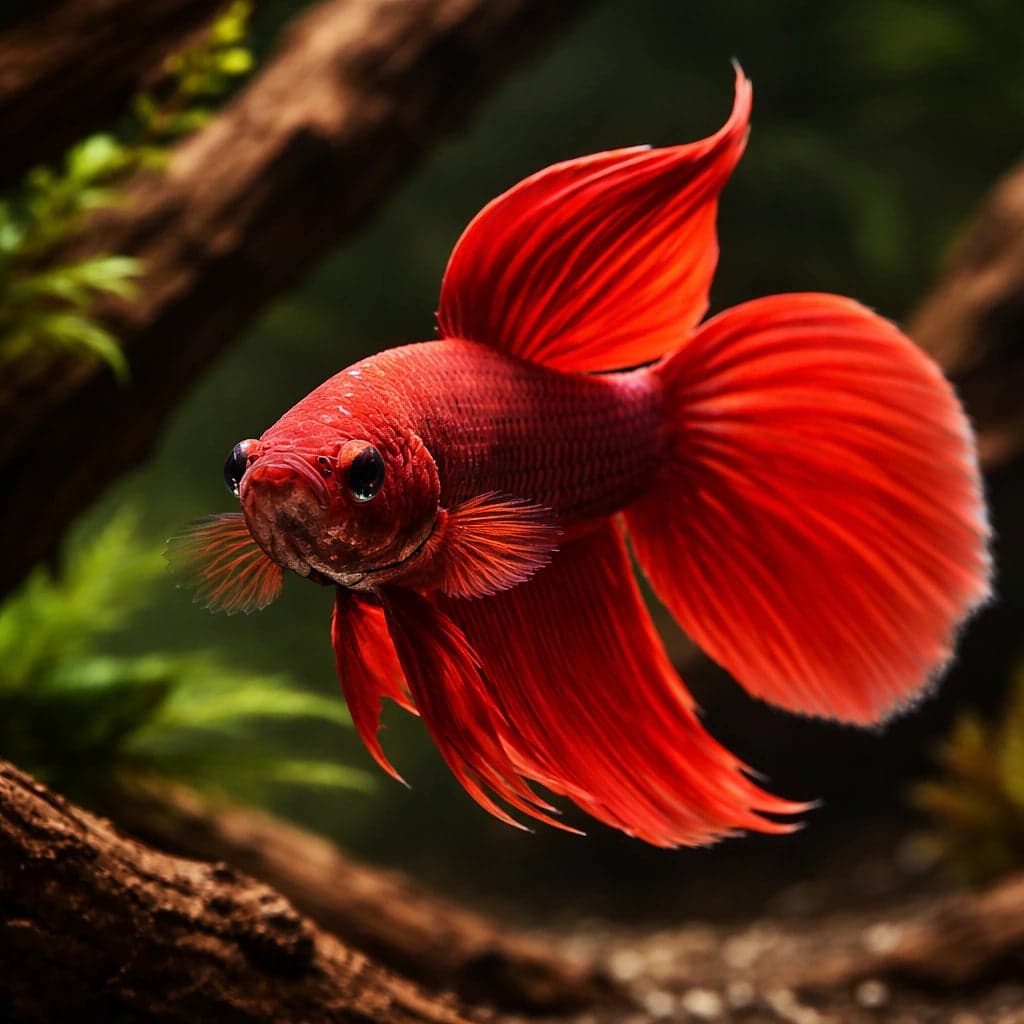
Betta fish need stable 25–27 °C water year-round in the UK. Below 23 °C they stop feeding and become susceptible to swim-bladder issues. Above 28 °C their lifespan shortens measurably. A decent heater is non-negotiable even in a warm UK flat.
Why temperature is the #1 betta care question
Because everything else — feeding frequency, water chemistry, tank mates, breeding — depends on getting the temperature right first. A betta at 22 °C feeds less and shows less colour than the same fish at 26 °C, regardless of every other variable.
I'm Kevin. I've kept bettas for 15 years across solo setups and sororities. This is the guide that answers "what temperature should my betta tank be" in plain UK numbers.
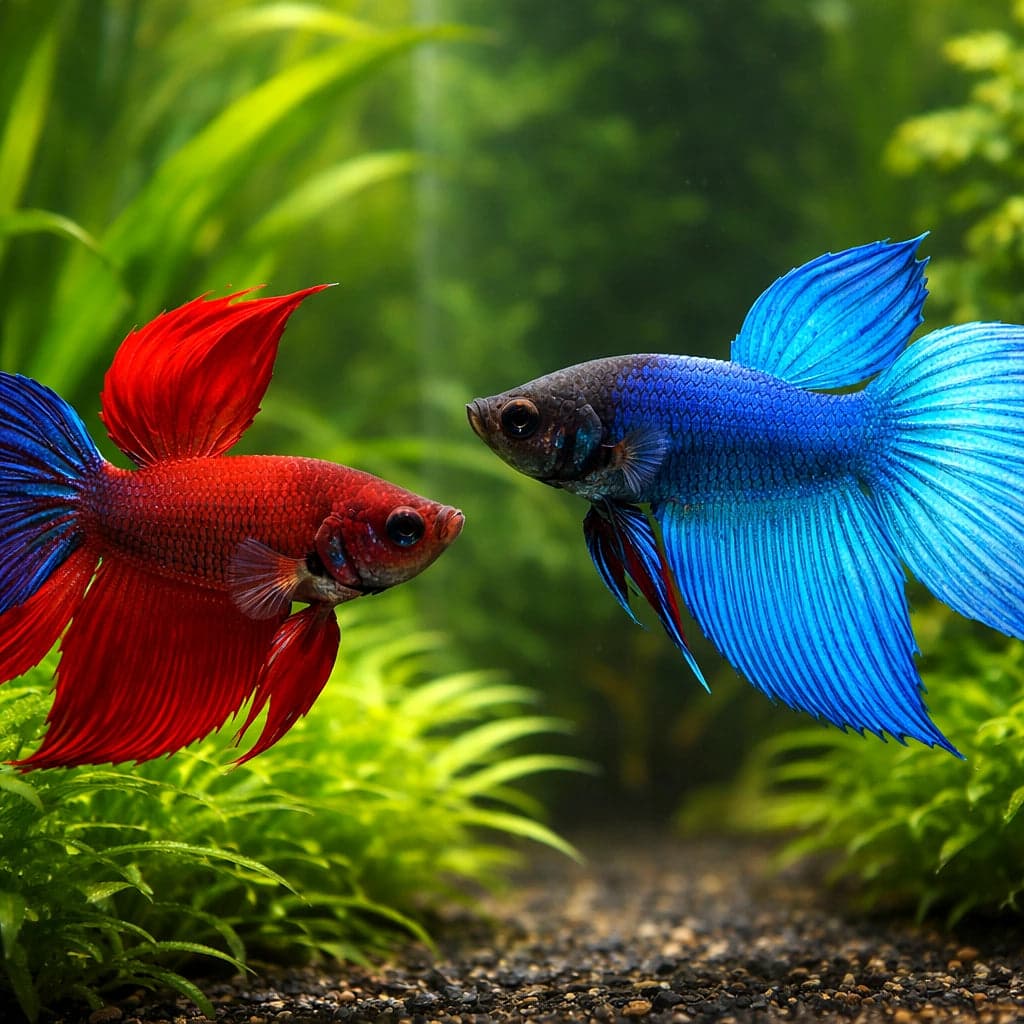
A Cambodian Longfin Male Betta at the ideal 26 °C tank temperature. Full colour saturation, active fin display, mid- water posture. Photo: Tropical Fish Co warehouse.
Five temperature facts most UK betta keepers miss
- Wild bettas live in 24–30 °C water. The Mekong basin rice paddies where Betta splendens originates swing dramatically by season, but daily variation is small [?]. Captive bettas inherit the thermal-stability preference, not the range.
- Tank temperature varies by 1–2 °C across the tank volume. In a 20 L tank with a corner-mounted heater, the corner is 1–2 °C warmer than the opposite wall. A well-placed circulation pump or sponge filter evens this out [?].
- Room temperature is NOT water temperature. A room at 22 °C gives tank water at ~21 °C (evaporation + glass heat loss). An un-heated 20 L tank in a typical UK living room will sit 2–3 °C below ambient [?].
- Winter heater run-time is longer than summer. A 50 W heater in a 20 L tank runs ~15 minutes per hour in summer and ~35 minutes per hour in winter. If your heater runs continuously, it's undersized [?].
- UK tap water in winter is cold. A 20% water change using straight tap water during January (tap water often 6–9 °C) can drop a betta tank from 26 °C to 21 °C in minutes. Always temperature-match refill water to within 2 °C of tank temp [?].
The heater sizing guide
Heater size by tank volume (UK average-temperature rooms)
| Tank volume | Minimum heater | Recommended | Cold-room upgrade |
|---|---|---|---|
| 10 L | 25 W | 50 W | 75 W |
| 20 L | 50 W | 75 W | 100 W |
| 30 L | 75 W | 100 W | 150 W |
| 40 L | 100 W | 150 W | 200 W |
| 60 L | 150 W | 200 W | 250 W |
Recommended is slightly oversized — the heater cycles less often, lasts longer, and handles winter + cold rooms without issue.
Reliable UK heater brands (verified from our own tanks)
- Fluval Marina (10–30 L range) — £9–£16, widely stocked
- Eheim Jager (25–300 W) — £20–£45, premium reliability
- Aquael Platinum Heater (25–300 W) — £15–£25, accurate
- Tropical Marine Centre V2 Heater — £18–£30, less common
Avoid unbranded eBay heaters — thermostat tolerances can be ±5 °C, which is fatal for a betta tank.
Seasonal management — UK winter + summer
Winter checklist (October–March)
- Test heater weekly by unplugging + reading the temp drop
- Temperature-match water changes — add warm dechlorinated tap water, not cold
- Close curtains near the tank at night if it sits near a cold single-glazed window
- Backup heater — keep a spare 25 W in a drawer. Heaters fail; UK winters are the worst time for it to happen
Summer checklist (June–August)
- Turn heater OFF when the tank consistently reads 27 °C+
- Clip-on fan — £12 from Screwfix, point at water surface
- Floating ice bags (sealed, never loose ice) during heatwaves
- Lids OFF (or cracked) to enable evaporation — watch for jumping bettas
- Water changes matter more — warm water holds less oxygen
Signs your betta is too cold
- Sitting at the bottom and not coming up to feed
- Colour fading — bright reds/blues turning grey
- Clamped fins — fins held tight against the body
- Fast gill breathing at the surface (though this can also signal low oxygen — check both)
- No bubble nest in males that previously built them
Signs your betta is too hot
- Constantly at the surface gulping air (low oxygen + high metabolic demand)
- Rapid colour fading over 1–2 days
- Erratic swimming bursts of speed followed by rest
- Stops eating in late afternoon when temperature peaks
Watch: a stable betta tank setup
Tank-mate temperature compatibility
Not every peaceful tropical fits the betta temperature range comfortably. Good matches:
- Ember tetras — tolerant of 25–28 °C
- Corydoras habrosus / pygmaeus — fine at 26 °C
- Amano shrimp — happy 22–28 °C
- Nerite snails — tolerate full betta range
- Otocinclus — 22–26 °C (cool end of betta range)
Poor matches (different thermal comfort):
- Hillstream loaches — want cooler (20–24 °C)
- White cloud minnows — want cooler
- Most goldfish — want much cooler (18–22 °C)
Buying bettas + heaters from UK shops
Most UK aquatic shops carry bettas + compatible heaters. When buying a heater:
- Check the wattage matches your tank volume (use the table above)
- Ensure the thermostat is integrated — no separate thermostat units for aquarium heaters in 2026
- Look for "fully submersible" — cheap heaters often need partial-submersion which fails when water drops
- Get the receipt + box warranty — UK heater warranties are typically 2 years; save them
Heater-failure signs + response guide
Heaters fail. Even branded, even recent. Spot failure fast and your betta survives; miss it and you lose the fish in 48 hours.
| Symptom | Cause | Immediate action |
|---|---|---|
| Water temp reads too high (29 °C+) | Thermostat failure (stuck on) | Unplug heater immediately, add fan |
| Water temp reads too low (below 23 °C) | Heater element failed | Replace heater same-day |
| Thermometer fluctuates ±3 °C in hours | Thermostat hysteresis widening | Heater ageing; replace within weeks |
| Visible crack in heater glass | Mechanical failure + electrical hazard | Unplug at mains, remove from tank |
| Heater running 100% of the time | Undersized for tank volume | Upgrade wattage |
| Heater never runs (winter) | Thermostat stuck open | Test with external probe, replace if faulty |
Backup-heater rule
Keep a spare 25 W heater in a drawer. Total cost: £8. When your primary heater fails on a Friday evening in January — and it will, eventually — you have hours, not days, to fix it before betta metabolism crashes. The spare is insurance, not luxury.
UK betta community
- Betta Fish UK Facebook group — 15K members, UK-focused
- International Betta Congress (IBC) — UK chapter for show standards
- r/bettafish — international but UK-active
- Practical Fishkeeping features bettas regularly
Ready for more?
For broader betta husbandry, our betta fish care guide covers every aspect of keeping the species. For sorority-specific setups, see our female betta fish guide.
Water chemistry basics: the water chemistry care guide and the first tropical tank care guide are essential reading if you're new to fishkeeping.
Shopping the full range? The betta hub has every colour strain + sex currently in stock.
Frequently asked questions
Related guides
Amano Shrimp UK: Algae-Eating Specialist Every Planted Tank Needs
Amano shrimp (Caridina multidentata) — the algae crew every UK planted tank needs. Why they can't breed in freshwater, what they actually eat, welfare-first delivery.
Ancistrus Pleco UK: The Complete 2026 Bristlenose Guide
Everything UK aquarists need to buy and keep bristlenose plecos — size, tank mates, colour morphs (albino, longfin, super red, L-number). The only pleco that fits a 90 L tank.
Angelfish UK: Species Biology, Welfare & The Colour Strains In Stock
Angelfish (Pterophyllum scalare) — South American cichlid biology, pairing behaviour, strain genetics, UK welfare requirements, and the 10 colour strains we ship.